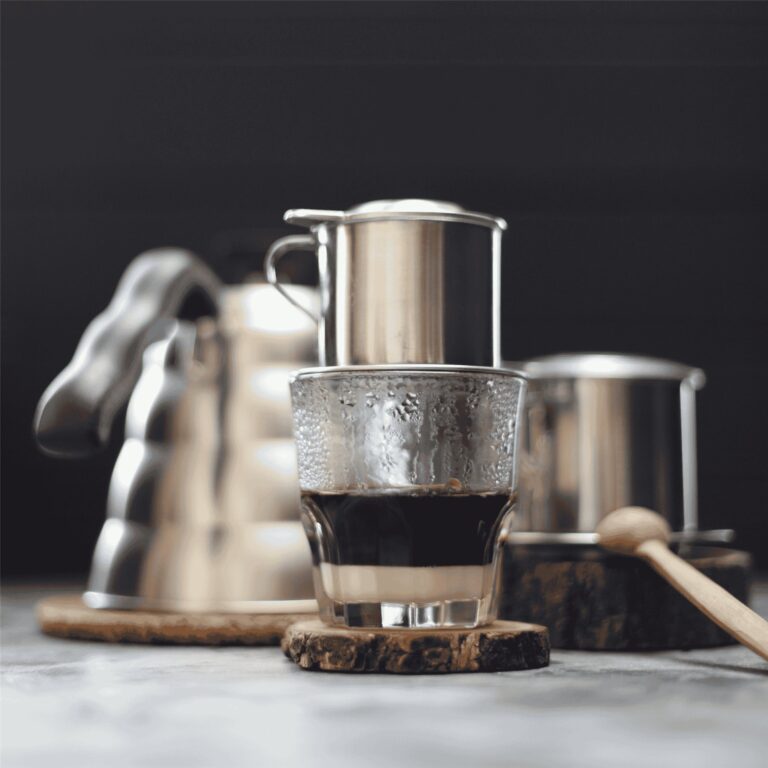
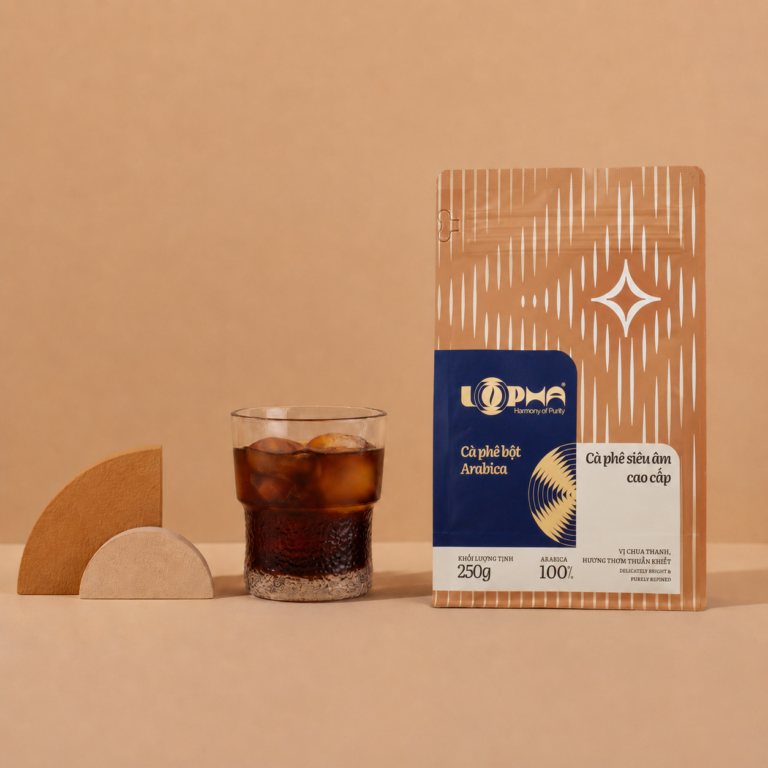
Coffee-to-Water Ratio for Vietnamese Phin: How Many Grams for a Balanced, Strong Cup?
For an individual phin, you can start with around 20 g of coffee and 80–100 g of hot water, then adjust for your beans and how you drink the coffee. This is a recipe to explore, not a fixed ratio for every phin or every palate.
1. How Much Coffee and Water Should You Use in a Phin?
Some mornings, you make phin coffee by eye: scoop in two spoonfuls, pour water almost to the top, and wait. One day the coffee is richly aromatic; the next it tastes so weak that even condensed milk cannot rescue it. Before buying a different phin or switching beans repeatedly, try weighing the coffee and water for a few brews. Those two small numbers often tell you much more about the cup you are making.
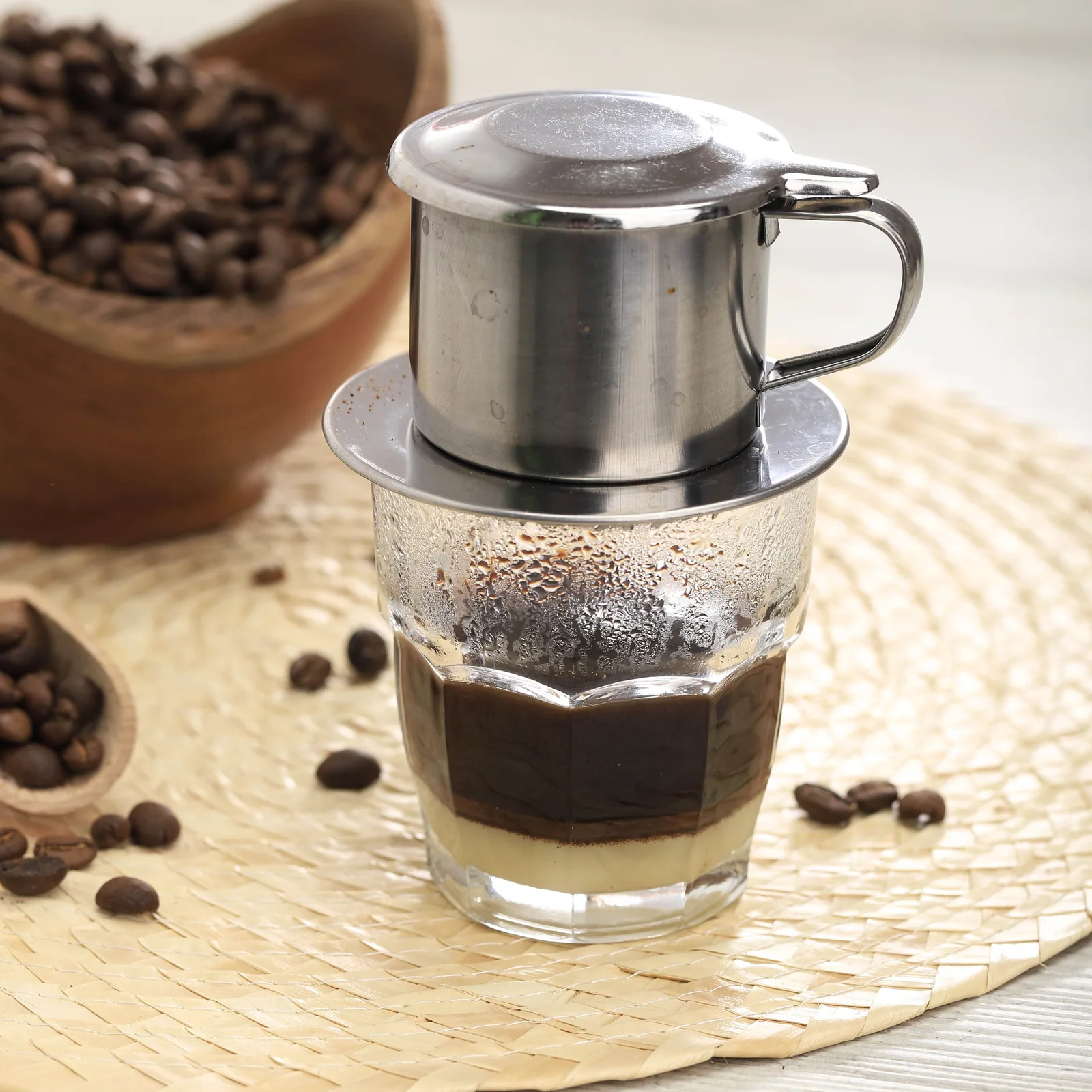
For an individual phin, an easy place to begin is roughly 20 g of ground coffee and 80–100 g of hot water in total. The finished yield will generally be smaller because the grounds retain some water. If you add plenty of condensed milk or ice, you may prefer a stronger coffee concentrate; for hot black coffee, more water may suit your palate. This is a practical recipe suggestion, not a compulsory standard for every brand or brewer.
One common confusion is thinking that “20 g of grounds brewed with 100 ml of water” must produce exactly 100 ml of coffee. The grounds absorb water, some stays in the phin, and retention changes with grind size. To compare today's brew with yesterday's, record the water you poured into the phin, rather than looking only at the level of finished coffee in the cup.
2. Why Do Measuring Spoons Make the Cup Inconsistent?
Two spoonfuls of finely ground coffee may weigh differently from two spoonfuls of coarse grounds, particularly if one is heaped and the other level. Smaller particles fill the gaps differently, while scooping technique and how tightly the coffee packs into the spoon also change the weight. Someone measuring with spoons may think the dose is constant even as the cup changes from day to day.
If you do not have a kitchen scale, you can still use a spoon. Just choose the same spoon, level it in the same way, and note how much water you add. That can work for an everyday household routine when precision is not essential. If you want better consistency, a small scale can save time spent guessing; you only need to weigh the grounds and the water, not dozens of ingredients.
A scale also makes it easier to understand how quickly you use a bag. A 250 g bag brewed at 20 g per serving works out to roughly twelve servings by weight, though actual use depends on spills and recipe adjustments. Knowing the coffee dose per cup is more useful than assuming a new bag disappears quickly because the packaging seems small.
3. How Should You Adjust the Ratio for Black Coffee, Milk or Ice?
3.1. Hot Black Coffee
People who drink hot black coffee often want to appreciate the aroma and finish, so there is no need to force the brew to be extremely concentrated. Try 20 g of coffee with about 100 g of water and taste once it has cooled to a comfortable temperature. If it is too strong, adjust the water in your next brew instead of immediately adding boiling water after the phin has drained and treating the result as a new brewing recipe.
A phin that is too small creates a deep coffee bed, makes even water flow difficult and can prolong the final drips. If your phin cannot comfortably hold 20 g, reduce both coffee and water to suit its capacity. There is no reason to pack a tiny phin with excess grounds merely to match a number shared online.
3.2. Vietnamese Iced Coffee with Condensed Milk
When you add condensed milk and ice, the coffee base needs enough character not to disappear beneath sweetness and melted ice. If you prefer a bold drink, try 20 g of coffee with 80–90 g of water, then adjust the milk and ice. But using less water does not guarantee a good concentrate if the flow is clogged, the grind is too fine or the water passes through unevenly. Strength should come from balanced extraction, not thickness at any cost.
Try keeping the dose at 20 g and changing just one detail: use 25 g of condensed milk the first time, reduce it to 20 g the next, or keep the milk constant and change the ice. Water ratio is only one part of the finished drink. A beautifully aromatic concentrate can become diluted quickly with too much crushed ice; adding more grounds again and again will not address that cause.
4. A Step-by-Step Trial Recipe Using 20 g of Coffee
Prepare a clean individual phin, 20 g of coffee ground for it, about 90 g of hot brewing water, a receiving cup and a scale if available. Warm the phin with hot water and discard the rinse. Add the grounds and level them gently. Position the filter press lightly as designed; do not press down so firmly that you compact the coffee as if making an espresso puck.
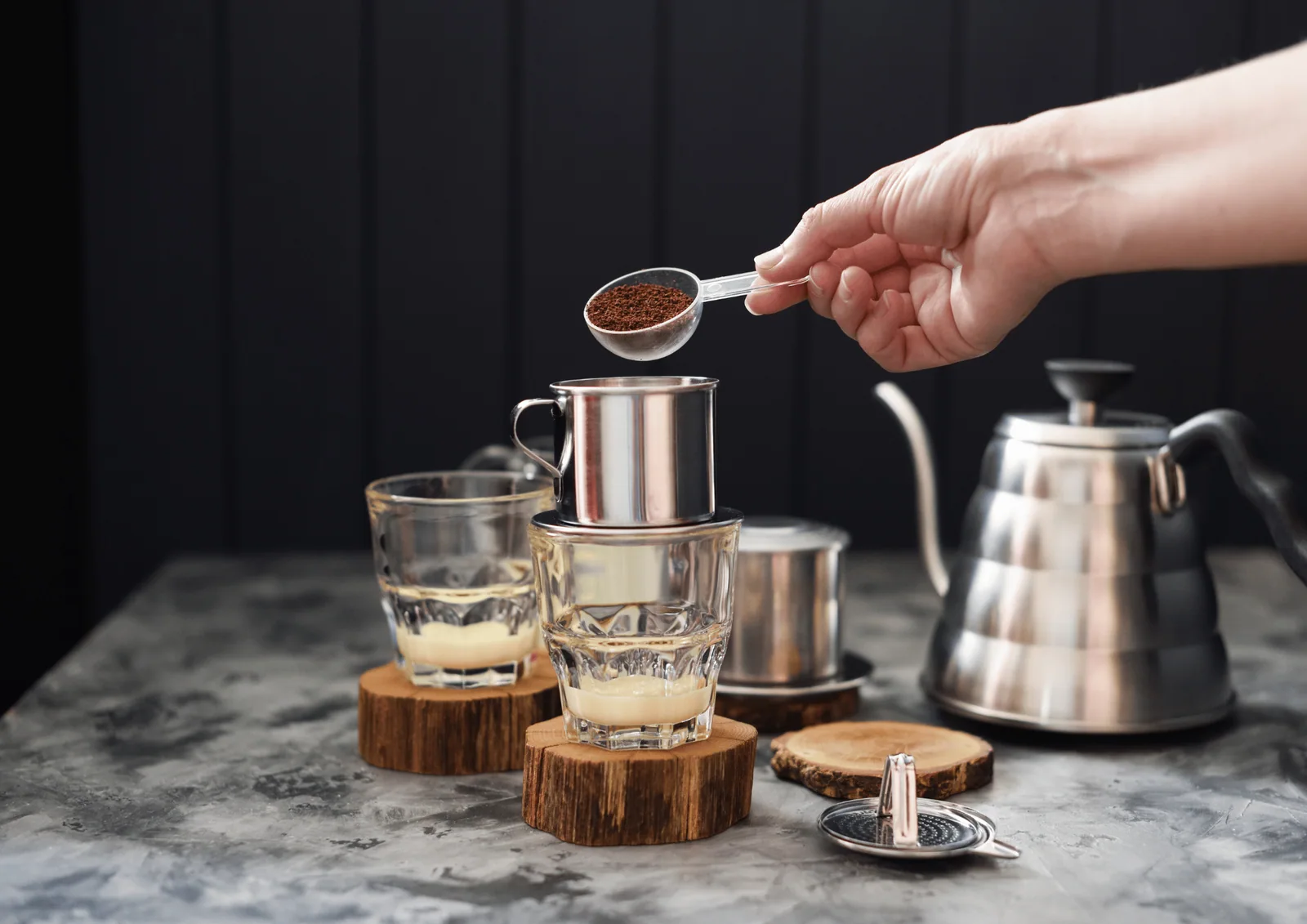
Pour in just enough water to wet the surface evenly; around 20–30 g is a starting trial for this dose. Wait 20–30 seconds for the grounds to absorb the water, then pour the remainder slowly and evenly. Put the lid on and let the coffee drip without repeatedly picking up and shaking the phin. If water sits above the grounds for a very long time, check grind size and pressure from the filter press before adding more water.
Once dripping finishes, stir the coffee gently in the cup for an even flavor, then taste. Record the amount of water poured, approximate drip time and impressions: clear aroma or a faint one, pleasant bitterness or harshness, a lingering finish or one that fades quickly. You do not have to meet one universal brewing time; different phins have different holes, materials and sizes, so they flow differently.
5. If the Phin Drips Too Fast or Too Slowly, Should You Add More Coffee?
A phin that drains unusually fast may contain grounds that are too coarse, a coffee bed that is too shallow, or gaps where water slips between the bed and the phin wall. Adding coffee can sometimes slow the flow, but it is not necessarily the best first fix. Review the grind, how evenly the grounds are spread and how the filter press sits. Every change affects flavor, so adding another 5 g while also grinding finer makes results difficult to assess.
At the other extreme, a phin that drips for ages is not proof of “perfectly strong” coffee. Very fine grounds can create excessive resistance, fines can accumulate at the bottom, or the filter press may be too tight. A longer brew can then produce little more than unpleasant bitterness. Try a slightly coarser grind or a lighter filter-press position, leaving the coffee and water amounts unchanged to see whether the flow improves.
If you normally use 20 g but want to brew for two people, a larger phin and a proportionally increased recipe are often easier to manage than forcing twice the coffee into a small one. When equipment size changes, do not expect flow time and flavor to remain identical: bed depth and bottom surface area change too.
6. What Grind Should You Use with This Ratio?
Even at the same 20 g dose, very fine grounds and coarse grounds will not produce the same cup. A Vietnamese phin needs a grind suited to its outlet holes: too fine can clog it, while too coarse can drain quickly and taste weak. If buying pre-ground coffee, say it is for a phin rather than requesting a “strong grind.” Strength is not a technical grind specification; the seller needs to know the equipment.
For everyday brewing, whole-bean and ground coffee offer different levels of control. With a grinder, you can adjust the setting a little at a time; with pre-ground coffee, the right size needs to be selected from the outset. Both can taste good if you understand the ratio and store the grounds so they do not absorb moisture or lose aroma too quickly.
In flavor terms, Robusta usually provides a bold base and a longer finish; Arabica typically has more pronounced acidity, while a Blend combines characteristics according to its composition. Do not dramatically increase the dose just to make Arabica taste like Robusta. If you want a different flavor profile, choose the beans to suit your taste and adjust the ratio moderately. That makes it easier to tell whether the change came from the coffee or the recipe.
7. Three Common Situations That Call for Recipe Adjustments
First situation: your hot black coffee smells pleasant but tastes slightly thin. Keep the dose at 20 g and reduce the water from 100 g to 90 g next time. If it remains weak and the phin drains quickly, check the grind. Avoid jumping straight to 30 g, because such a large change may upset balance and substantially increase daily coffee use.
Second situation: iced coffee with condensed milk is bold at first but turns weak a few minutes later. Try larger ice cubes, less ice, or coffee that has cooled slightly before pouring, so the ice melts more slowly. If the concentrate was already balanced, making it stronger merely to counter melting ice can make the first sips unpleasantly harsh. Changing the cup or how you prepare the ice may help more than changing beans.
Third situation: you previously used an aluminum phin but switch to stainless steel and notice a difference despite keeping the same ratio. Material, bottom holes and the way the filter press sits on the grounds can vary. Treat the new phin as equipment that needs dialing in. Begin with your familiar recipe, watch the drip rate and then adjust grind or water gradually.
8. Frequently Asked Questions about Phin Ratios
Can you use just 10 g of coffee for one person? Yes, provided the phin and water quantity suit the smaller dose. A large phin with a very shallow coffee bed may distribute water unevenly, so a smaller brewer is preferable. For 10 g, try around 40–50 g of water, taste and adjust rather than expecting a full cup.
Does 20 g of coffee always require 100 ml of water? No. The ratio depends on how you drink it, grind size, phin design and personal preference. Some people prefer a concentrate made with 80 g of water for milk drinks, while others use 100 g for black coffee. Recording these figures helps you repeat a recipe; it does not replace tasting.
Does adding more ground coffee always make a better cup? Not necessarily. Too much coffee in a small phin can obstruct flow, create uneven extraction and waste beans. A good cup has clear flavor, the strength you enjoy and a recipe you can repeat; it is not necessarily the one using the most coffee. If your current recipe works, there is no need to increase the dose because another guide uses a larger number.