Choosing a Coffee Supplier for Your Café: A Checklist and Scoring Guide Before Partnering
A suitable coffee supplier needs to offer more than attractive pricing or a great first tasting. A checklist covering product quality, delivery reliability, support policies, and partnership terms helps café owners compare their options more clearly.
Sometimes a café finds beans it loves during the very first tasting. Yet the relationship does not end with that cup. A few weeks later, the owner will need answers to less glamorous questions: will the next batch maintain the chosen flavour profile, will deliveries arrive before stock runs out, and who resolves an order delivered in the wrong format? These questions are best asked before signing, while the café still has time to consider its options.
When weighing two or three wholesale coffee suppliers, the café can create a scorecard with criteria, weights, and supporting evidence. The idea is not to turn coffee purchasing into an examination, but to make it clear which supplier is being chosen and why. Recording the reasons early also makes future reviews less dependent on memory or personal impressions from a meeting.
1. What should your café clarify before approaching suppliers?
1.1. A short brief helps both parties focus on the right needs
A café serving mainly Vietnamese iced coffee with condensed milk and bac xiu operates differently from one offering espresso, cappuccino, and pour-over. Without a clear description of the menu, a supplier may bring its own best-selling beans instead of those suited to the café's signature drinks. The owner will also struggle to assess the offer without shared criteria.
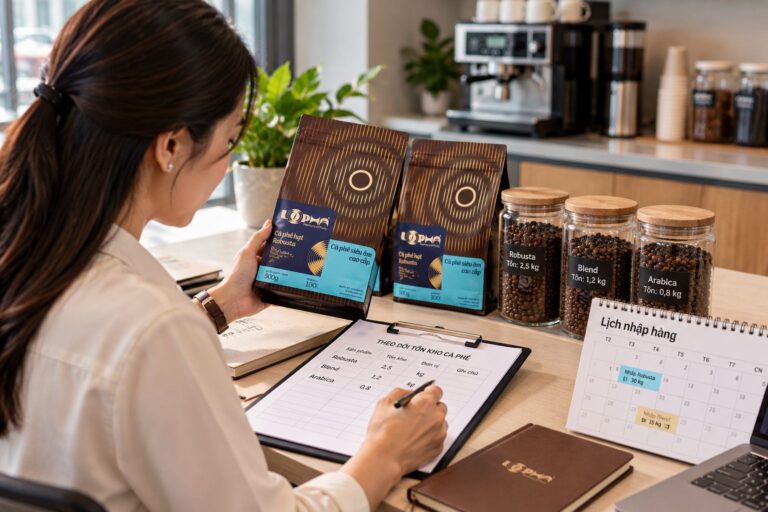
Before meeting, gather only information that genuinely affects supplier selection: daily coffee sales, a few core drinks, the phin or machines in use, monthly purchasing volume, and the desired date for the first delivery. For a new café, state clearly that volumes are estimates. A target bean cost per cup is more helpful than simply asking for “a good wholesale price.”
One page is enough: café concept, top three drinks, current equipment, expected order quantity, first delivery date, and final decision-maker. When every supplier receives the same brief, quotations are easier to compare than if each proposes a different pack size and volume bracket.
1.2. Decide what is essential and what is flexible
For an espresso-focused café, grinder compatibility and stability during rush hours may be top priorities. For a garden café selling mostly phin coffee, customer preferences, the ground-coffee format, and delivery schedule may matter more. No single priority ranking fits every business model.
Choose three things the café cannot compromise on, such as receiving the exact product tested, a workable delivery schedule, and a contact for defective goods. Packaging appearance and attractive promotional materials can still be considered, but they rarely replace these essentials. When every criterion has equal importance, the scorecard ultimately helps little with the final decision.
2. Two questions to assess quality and transparency
2.1. Does the sample represent what the café will actually receive?
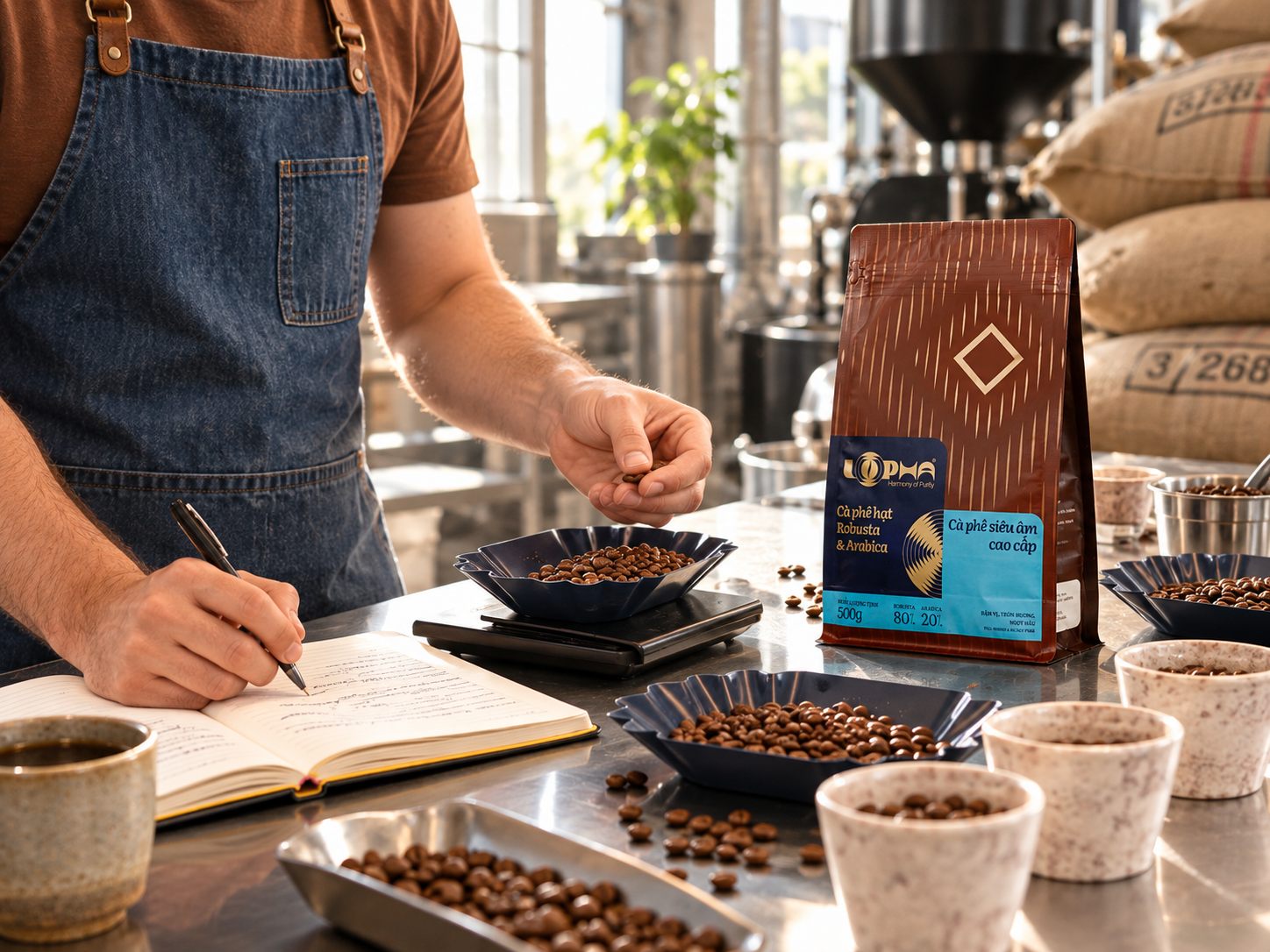
A cup prepared by the salesperson on their own equipment does not fully represent what your café will serve. Confirm the coffee name, whole-bean or ground format, package size, and batch identifier of the sample. If the sample uses whole beans but the café will buy pre-ground coffee, test the intended format: a different grind can significantly change flow and flavour.
A tasty sample alone cannot guarantee that later deliveries will suit the café. Ask how batches are identified, which parameters the supplier controls, and how discrepancies are reported and handled. A clear inspection-and-response process is usually more credible than a promise that every batch will be identical.
2.2. Is the product information sufficient for daily operations?
Product name, ingredients, weight, best-before date, storage instructions, and batch identification are practical operational data. The manager can compare the label on the sample with the bags actually delivered. These details also tell staff which bags to use first and help identify the relevant batch if feedback is needed.
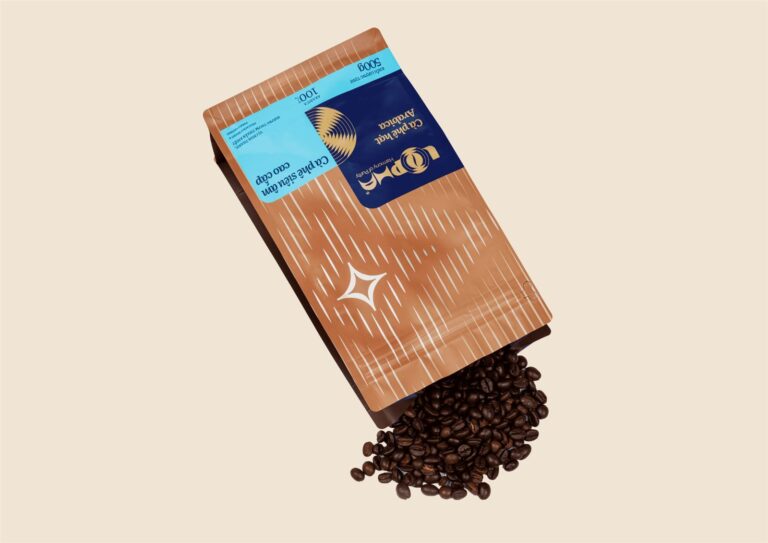
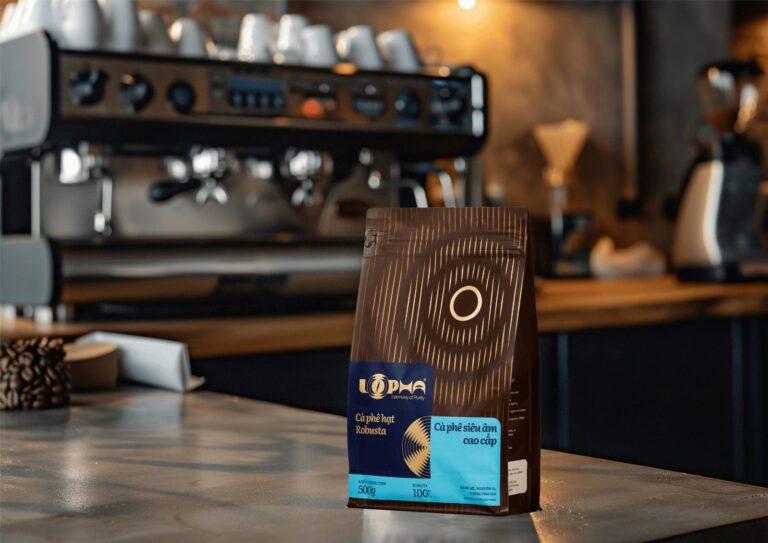
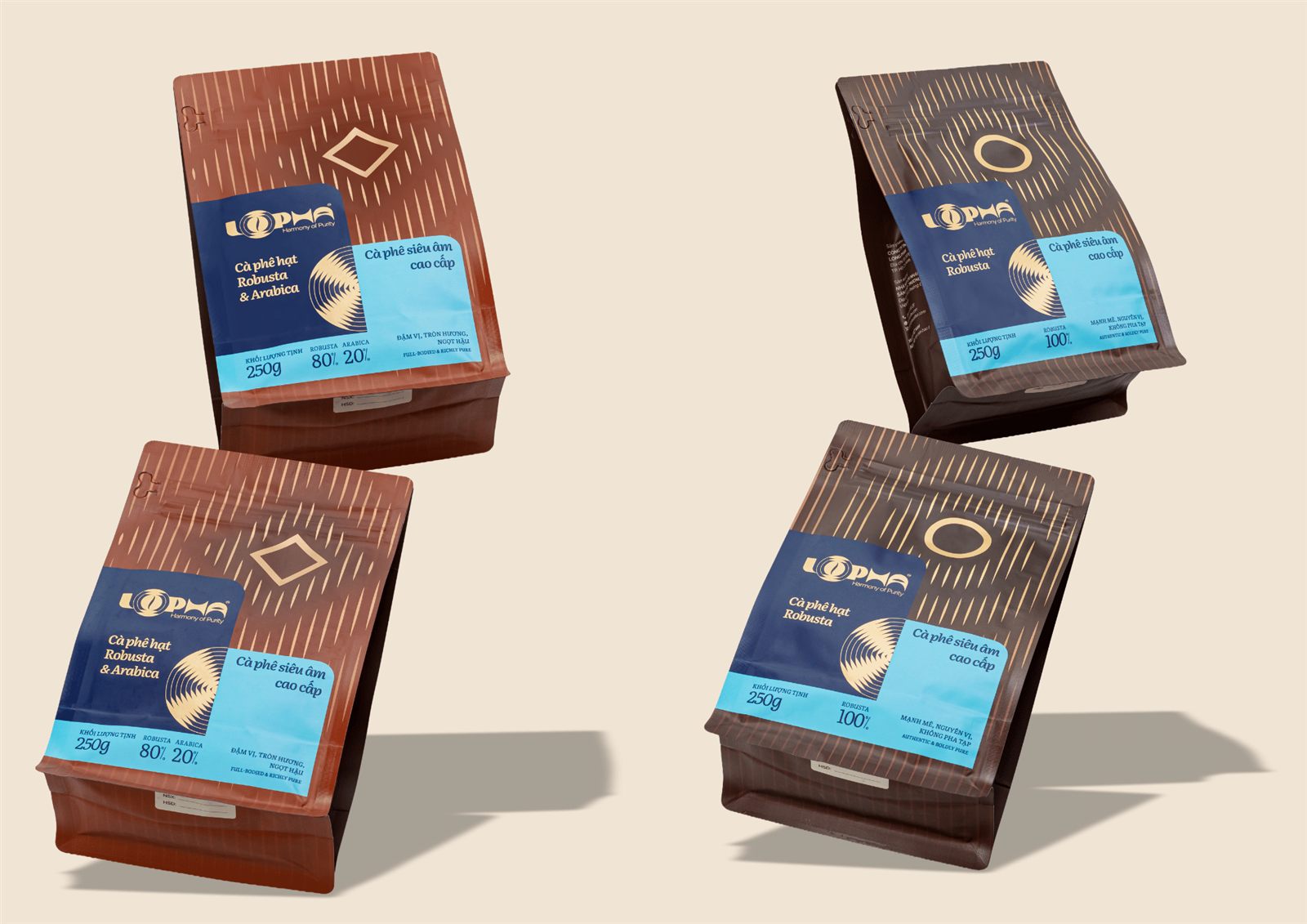
When evaluating a supplier, a café can look at what the company discloses about its ingredients and production. LOPHA's 15-step journey from farm to cup, for example, includes ultrasonic cleaning of green coffee beans before roasting. This gives the café more specific questions to ask about the process; the purchase decision should still rest on real samples, labels, and results brewed at the counter.
3. Three issues that often emerge only after regular orders begin
3.1. Delivery schedules and safety stock
A café using a steady 40 kg a month but with limited storage may prefer deliveries in several instalments instead of holding an entire month's supply. The supplier should clearly explain ordering cut-offs, preparation lead time, delivery areas, and how changes will be communicated. For multiple outlets, record the recipient and handover point separately.
Ask about less favourable scenarios too: if delivery is delayed, how far in advance will the seller give notice, can the order be split or rescheduled, and who approves the final arrangement? Do not assume that a promotional claim of “delivery support” covers every route, time slot, or order size.
3.2. Who helps investigate when the bean batch changes?
If coffee tastes different when a new batch is opened, beans may not be the only cause. Grind size, machine condition, water, and the shift's recipe also need checking. Ideally, the café records the coffee, batch code, opening date, and brew settings so both parties work from the same information.
Before signing, ask directly: “If a later delivery tastes different from the sample, how will you receive and investigate our feedback?” A named contact and an agreed response period give the café more confidence when something goes wrong during service. Record specific commitments rather than relying on memories of a conversation.
3.3. What operational support is included?
At a new café, employees may need training to keep recipes consistent across shifts. At an established café, the issue may simply be different espresso flow when a bean batch changes, or iced milk coffee losing its coffee flavour. Good support solves the issue the café actually faces; it does not need to involve many visits or a long list of services.
A newly opened café may need standardized preparation across shifts, while an established one may struggle with a new batch. When considering LOPHA's coffee solutions for cafés, the owner should explain the problem to be solved and ask which support can be agreed in the partnership.
4. Evaluate wholesale prices without being distracted by a single number
4.1. Compare equal delivery, volume, and payment terms
Quotations of VND 240,000 and VND 255,000 per kilogram can only be compared on equivalent terms. One may charge shipping separately while the other requires a higher minimum order. Put the exact product and pack format, unit price, VAT, shipping, payment conditions, and delivery schedule side by side before judging which difference matters.
There is no need to demand an excessively long quotation. A quote listing the product, quantity, unit price, additional charges, and expected delivery date addresses most essential questions. Any support offered should be described separately, so a service the café may never use is not automatically treated as part of the product value.
4.2. Put bean cost alongside results from the actual menu
The price per kilogram does not tell you whether beans will work smoothly at the counter. A sample that is hard to reproduce may require multiple attempts; another might need a higher dose to reach the preferred flavour. On a supplier scorecard, record the actual menu-test results and beans used, without turning the supplier evaluation into a second full cost-of-goods spreadsheet.
If the café already has a drink-costing sheet, bring those figures to the quotation comparison. In the supplier scorecard, record the bean cost per acceptable cup and the verified differences. Milk, sugar, packaging, and selling prices can stay in a separate worksheet so the manager is not overwhelmed by numbers.
5. A sample supplier scorecard to use before signing
A 1–5 scoring scale is enough for most cafés: 1 means a criterion has been checked and not met; 3 means basic compliance with limitations; and 5 means strong performance supported by clear evidence. If information has not been supplied, mark it “not verified” rather than assigning 1 or 3. Separating missing evidence from actual failure makes the assessment fairer.
The scorecard below uses four criteria groups with example weights. A café far from central areas may give delivery a higher weight; a busy multi-shift operation may prioritize consistency across menu tests. Agree on weights before opening suppliers' quotations so an attractive discount cannot determine the entire result.
Correct sample and menu suitability: Suggested weight: 30% — Question requiring evidence: Has it been tested on the café’s actual machine, recipe, and menu drinks?
Supply reliability and issue handling: Suggested weight: 25% — Question requiring evidence: Are delivery arrangements, batch identification, and response contacts clear?
Price and payment terms: Suggested weight: 25% — Question requiring evidence: Are VAT, volume, delivery charges, and payment periods comparable?
Relevant operational support: Suggested weight: 20% — Question requiring evidence: Have the scope, timing, and conditions of support been confirmed?
For example, supplier A scores 4, 3, 5, and 3: 4×30% + 3×25% + 5×25% + 3×20% = 3.80/5. Supplier B scores 4, 5, 4, and 4, equivalent to 4.25/5. B has an advantage on this illustrative scale, but should only proceed if mandatory conditions, such as batch identification and delivery schedules, are backed by confirmed evidence.
5.1. Fields that must not be left blank on the scorecard
Beside each score, include three fields: evidence reviewed, outstanding questions, and the person responsible for confirmation. Each criterion can use a short entry such as “Delivery schedule – proposal received – late-notice period not yet agreed – confirmation owner: sales team.” This makes the scorecard a list of work to complete before signing, not merely a number.
5.2. When a critical question remains unanswered
If a critical criterion lacks evidence, the café should not make a long-term commitment solely because the total score is high. A supplier with an excellent sample but no firm delivery schedule still poses an operational risk. Requiring confirmation before signing is how the scorecard protects the decision-maker.
6. Five terms that should be confirmed in writing
Before the first order, agree on five things in writing: product and pack format; price and validity period; ordering and delivery schedule; handling of short, incorrect, or defective deliveries; and payment. Any services beyond the goods should be recorded separately so both parties know which are binding responsibilities and which remain proposals.
For the first order, do not rush to accept terms you do not understand. Clarify who pays for re-delivery, incorrect batches, or schedule changes; how soon the café must report defects; and whether volumes are calculated from orders placed or orders paid. For monthly or quarterly benefits, establish how qualification is assessed and when entitlements begin. These questions prevent disagreements early on.
If a term is unclear, ask before confirming the order. Both sides can agree on a short email or addendum spelling out volume thresholds, benefit reviews, and responsibility for short or incorrect deliveries. This helps avoid disputes on the first order and makes later purchases smoother.
7. Test a small order before committing to a long-term partnership
A trial order can run across several normal café shifts. Record the baseline recipe, number of acceptable drinks, beans used for machine adjustment, condition of goods on arrival, and employee feedback. The findings are more useful when they cover delivery and problem-solving cooperation as well as flavour tasted during a quiet moment.
A trial order should resemble a real delivery: receive the agreed pack format, inspect bag condition, record delivery time, brew across normal shifts, and keep feedback if support is needed. A tasty promotional sample does not show how a supplier will work with the café on busy days.
At the end of the trial, return to the scorecard. A supplier with suitable coffee, reliable delivery, and helpful coordination may be worth choosing even at a slightly higher price. If delivery remains unclear or the trial batch is unsatisfactory, the café can request further checks. The scorecard does not replace judgment; it anchors decisions in verified facts.