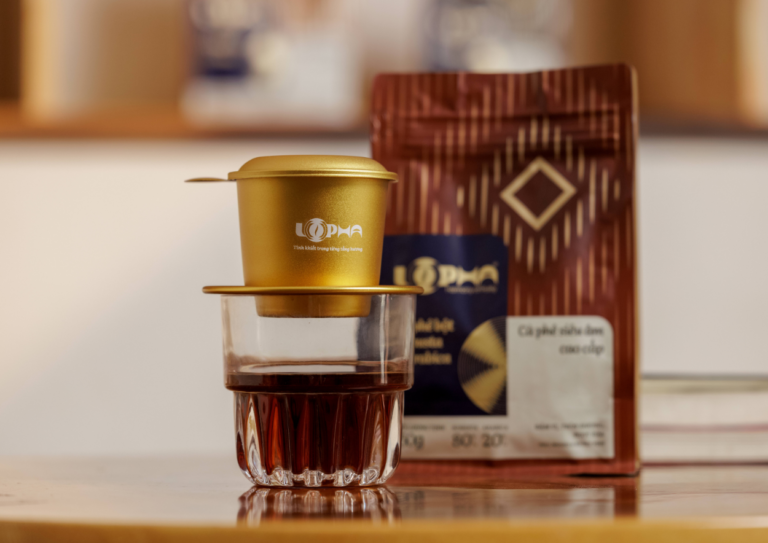

How Many Kilograms of Coffee Does an Office of 30, 50 or 100 People Use Each Month?
Employee headcount alone cannot tell you how much coffee an office needs. By considering who actually drinks coffee, how many cups they have and the amount used per cup, a company can estimate its monthly kilograms and arrange a practical delivery schedule.
An office with fifty employees will not necessarily consume twice as much coffee as one with twenty-five. In some workplaces, almost everyone enjoys a morning cup; in others, half the staff work remotely and the machine sees heavy use only on meeting days. To estimate kilograms per month reliably, count actual drinkers, brewing cycles and coffee used per cycle rather than multiplying the headcount by a fixed allowance.
A simple calculation can help administration plan the first order. But useful figures for the longer term come from observing bean consumption over several weeks. Those results can guide deliveries and machine discussions, rather than forcing demand to fit a particular partnership threshold.
1. Why Are 30, 50 or 100 Employees Not Enough to Calculate Coffee Demand?
1.1. Employees Present and Coffee Drinkers Are Two Different Groups
A company may have thirty people on site each day, but only twelve drink coffee regularly. Another with fifty employees may have more than thirty-five frequent drinkers. Applying the same assumption to both makes the forecast inaccurate from the outset. Total headcount is particularly misleading in hybrid workplaces: everyone may come in on Monday, while the office is quiet midweek.

Administration can ask three quick questions over a working week: who usually drinks coffee at the office, how many cups they have each day and which days they work on site. There is no need for a lengthy taste survey. These answers already separate the employee list from the actual user group. If the information is unavailable, use an assumed range and label it clearly rather than treating it as the company’s fixed drinking rate.
Service arrangements matter too. A self-service automatic machine beside the work area may be visited several times daily, while a phin kept in a meeting room is used differently. Accurate forecasting starts with knowing where and when people drink coffee.
1.2. Two Cups per Person Do Not Always Mean Two Identical Brewing Cycles
One employee might choose an espresso in the morning and an americano after lunch. Another may have a latte containing two espresso shots. Counting cups alone overlooks differences in coffee consumption. Automatic machines may use different amounts for different recipes, so the number of button presses is not necessarily the number of coffee doses used.
Instead of asking only “How many cups per person?”, ask “Approximately how many grams of coffee go into each drink?” Check the programmed recipes or ask the machine operator, then record the average dose. If a drink uses two extractions, count the beans for both rather than grouping it with a small single espresso.
No office needs to measure every bean each morning. But distinguishing cups, shots and ground-coffee doses avoids errors that can accumulate over months.
2. Formula for Estimating Monthly Coffee Consumption
2.1. From Coffee Users to Bean Weight
Where no consumption history exists, begin with: Coffee needed (kg/month) = number of employees × proportion drinking coffee on site × cups per person per day × average coffee per cup (g) × days of use ÷ 1,000. For remote working, use actual attendance days or adjust the user proportion accordingly; avoid counting the same reduction twice.
For example, consider forty employees, thirty of whom drink coffee on site. At 1.2 cups per person per day, 16 g per cup and twenty working days, the calculation is 40 × 75% × 1.2 × 16 × 20 ÷ 1,000 = 11.52 kg per month before waste. Here 1.2 is the average across the whole group: some people have one cup and others more. It is an illustrative scenario, not a general consumption standard.
If many people drink iced milk coffee containing two espresso portions, or the machine dispenses 12 g rather than 18 g per drink, the result can change significantly. Verify the actual dose before using an estimate to select a supply arrangement.
2.2. Include Meeting Guests, Test Drinks and Waste
Serving eight meeting visitors uses coffee beyond employees’ normal demand. After a machine is installed, a few test drinks may be needed to settle on recipes, and mistakes can occur while people learn. Allow for these uses, but do not assume every business has the same waste percentage.
The clearest spreadsheet uses three separate rows: employees’ daily drinks; meetings and guests; and contingency plus waste. Without real data, a provisional allowance such as 5–10% may help with planning, but it is not a technical standard. Adjust it once actual consumption is known. By the second month, comparing incoming beans with remaining and carried-over stock gives a better view of use.
Keep both cup counts and kilograms in the calculation. Purchasers may remember how many bags were ordered, while users remember brewing cycles. These are different measures and must be brought onto the same basis before the next order.
3. Three Scenarios: Offices of 30, 50 and 100 People
3.1. A Common Set of Assumptions for Easy Comparison
Compare three offices using one cup per drinker per day, 16 g per cup and twenty-two days, but different proportions of staff drinking coffee. In a thirty-person office, 50% drink coffee (fifteen people), giving 5.28 kg per month. For fifty employees, 70% (thirty-five people) gives 12.32 kg. An office of one hundred, with only 45% drinking (forty-five people), uses about 15.84 kg. All three are hypothetical examples before guest service and waste.
The results show that coffee demand does not grow in direct proportion to headcount: the hundred-person office uses only about 3.52 kg more than the fifty-person office in this example. Different drinking rates or cups per day would change that gap. A workplace where most people attend headquarters differs from one with widespread remote working.
Use these scenarios to start a supplier conversation. They are not LOPHA service packages, prices or machine-eligibility thresholds. A company can change each assumption to see how its first-month purchase quantity responds.
3.2. When Are Machine Records More Reliable Than an Assumption Table?
If a machine records drinks, extractions or usage history, two to four weeks of data can reveal the pattern reasonably well. First check what it counts: button presses, extraction cycles or finished beverages. Cleaning, trial brews and cancelled cycles may mean the counter does not match the beans consumed exactly.
An office can also weigh coffee bags before and after a week. That is simpler, but beans added to the hopper and remaining stocks must be recorded too. If half a bag remains in the cupboard and almost another in the hopper, assuming all purchased bags have been consumed will lead to a wrong total.
Once real consumption figures are available, use them to improve the plan. Even an elegant hypothetical spreadsheet should not override employees’ actual habits.
4. From Bean Consumption to Deliveries and Reorder Points
4.1. Calculate Daily Use Before Splitting Deliveries
An office expecting to use 12 kg over twenty-two working days will consume about 0.55 kg per occupied day. If storage is limited and the company wants to open one bag at a time, several smaller deliveries may help. A remote address or a difficult receiving schedule could make a larger order more practical. No single delivery cycle is right for every company.

Ask suppliers how long it takes from order confirmation until goods arrive, because this determines reserve stock. Reorder point = average daily consumption × delivery lead time + safety stock. At 0.55 kg per day, a three-working-day lead time and two days of safety stock give a suggested reorder point of about 2.75 kg. If the warehouse is closed on weekends, adjust the calculation to the actual receiving calendar.
A small stock sheet with just three columns—receipt date, quantity remaining and expected reorder date—is often enough to spare administration a daily “Are we out of beans?” discussion.
4.2. Interpret the Consumption Bands on LOPHA’s Website Correctly
LOPHA’s office coffee solution describes three monthly consumption bands: 5–14 kg, 15–29 kg and 30–50 kg. Companies can use their forecast to identify which band to discuss, then ask about coffee, equipment and deliveries. This starts a consultation; it does not mean a particular machine is guaranteed as soon as a threshold is reached.
If demand is only 4 kg a month, do not rush to order extra beans to reach 5 kg just to try a package. Overbuying can increase stock and storage costs. At the 14–15 kg boundary, explain both the average and monthly variation; a few weeks of usage history is more useful than a rounded figure.
Machine selection and its terms must be discussed against the actual equipment, not inferred from a kilogram table alone.
5. Use the Forecast to Choose Coffee, Equipment and a Responsible Person
5.1. Monthly Kilograms Do Not Tell You How Fast Drinks Must Be Served
Two offices each consuming 15 kg a month may need very different machines. In the first, a few dozen shift workers make drinks throughout the day. In the second, fifty people reach the pantry at 8:30 a.m. For the latter, queueing is a key part of the equipment assessment.
When requesting advice, provide the number of drinks needed in the busiest half-hour, how many people prefer milk drinks, and who refills water and cleans the machine. This is more useful than a marketing label saying “suitable for fifty people.” If a demonstration machine is available, observe consecutive-drink speed and end-of-day tasks rather than tasting only the first cup.
A convenient coffee corner lets users reach their drinks easily, while the manager knows what must be done after the final brew.
5.2. Start with Drinking Habits, Not Bean Names
An office where most people drink americanos may need a different coffee profile from one where cappuccinos dominate. When tasting, gather views from people with different preferences and choose something that works consistently. If the machine includes a grinder, whole-bean selection should follow its compatibility guidance, not just a label saying “for espresso.”
LOPHA’s three main coffee choices are Robusta, Arabica and an 80/20 Blend. They provide starting points for sampling, but the roast, machine and recipe will still shape the cup. An office need not buy all three simply to offer variety; one dependable choice and a backup may be much easier to manage.
Administration should assign someone to monitor stock and receive deliveries. Without a clear owner, even a perfect forecast can leave the machine ready but the bean supply empty.
6. Turn a First-Month Estimate into Useful Ongoing Data
A simple spreadsheet is most useful when it lets staff enter headcount, drinking rate, average cups, grams per cup, days of use and contingency. Total kilograms should change automatically as the inputs change. Keep guests and waste in separate fields so they are not folded into the staff drinking rate. Managers can save a normal-month scenario and an event-month scenario to avoid surprises when ordering.
After the first month, compare three figures: forecast volume, volume purchased and actual consumption. If the gap is large, check the number of drinkers, attendance days, machine dose and guest drinks before increasing or reducing orders. This need not become a complicated report; it simply provides a reason the next person in the role can understand.
Once average consumption and busy days are known, administration can discuss volumes and delivery timing with LOPHA using real numbers. Existing machines, delivery addresses and monthly fluctuations will make the conversation about genuine needs rather than a single threshold on a chart.
Offices of thirty, fifty and one hundred people can start with the same formula and still arrive at different results. Counting drinks actually made takes the guesswork out of bean orders and makes mornings easier for the person looking after the pantry.