Office Coffee Costs: Is Buying Drinks Outside or Brewing in the Pantry More Economical?
Comparing office coffee costs involves more than putting the price of a takeaway cup against the cost of beans. These examples also account for equipment, milk, consumables and actual usage.
Every morning, some employees buy coffee on the way to work. When a company considers adding coffee to its pantry, one question often follows: will drinks made on site cost less than buying them outside? Comparing a bag of beans with a café’s price per cup sounds straightforward, but it leaves out the machine, milk, utilities, maintenance time, cleaning and the number of drinks people will actually use.
Office coffee spending should be viewed from two sides: what the company truly pays and the experience employees receive. A frequently used pantry may reduce the cost per drink; in a small office with occasional demand, buying outside can make more sense because there is no equipment to maintain. Calculating for your own circumstances is more credible than a general savings percentage advertised for all businesses.
1. Start with the Question: Who Pays for the Coffee?
1.1. Employees Buying Coffee and Company-Funded Coffee Are Different Budget Questions
If employees pay for their own morning coffee, their combined spending is not a company expense. Offering free coffee at work may introduce a new benefit rather than transfer an existing company expense from nearby cafés to the pantry. Administration must therefore distinguish total employee coffee spending from the budget the company actually bears.

Suppose thirty people regularly buy coffee outside using their own money. After a shared office machine is installed, they may start drinking in the office, but their personal savings do not automatically become company profit or savings. The comparison has a more direct budget impact if the employer previously provided drink vouchers or reimbursed receipts.
Purchasing proposals should reflect the real objective: better amenities, a consistent visitor experience, less time spent collecting drinks or more controlled welfare spending. Do not force all these benefits into one hypothetical savings percentage.
1.2. Regular Demand Is What Makes Cost per Cup Meaningful
A machine used for five cups a day spreads its equipment cost over far fewer drinks than one used regularly for thirty. Before requesting bean prices, estimate cups actually consumed by day and month. Headcount is insufficient: remote workers, non-coffee drinkers and drinks served to visitors must be accounted for separately.
A practical method is to track two to four weeks: average drinks per day, the busiest days and the most popular options. Without an existing pantry, survey interest and model low- and high-usage scenarios. As cup numbers rise, fixed costs are shared across more drinks, but ingredient and operating costs rise too. There is no single per-cup answer for every office size.
Review the difference between forecast and actual use after the first month. Once employees have a new option, their habits may change in ways that a survey could not predict precisely.
2. What Does a Cup Brewed in the Pantry Actually Cost?
2.1. Beans Are Only the First Part of the Calculation
For whole-bean coffee, theoretical bean cost = price per kilogram × grams used per cup ÷ 1,000. At an illustrative VND 240,000/kg and 17 g per cup, that is VND 4,080 in beans per drink. It is a hypothetical calculation, not a LOPHA wholesale quote or listed price. If the recipe requires two extractions or beans must be purged to adjust the grinder, actual consumption will be higher.
Then come milk, sugar, ice, cups or disposables, cleaning cloths and approved cleaning products. Milk can be a substantial cost in milk-based drinks, while black espresso in a reusable ceramic cup has a different cost structure. Do not use black espresso costs to represent the entire pantry menu if most people prefer lattes.
A clear budget should separate variable costs per drink from fixed monthly costs. That makes it easier to see how an item as small as a disposable cup adds up when multiplied by hundreds of drinks.
2.2. Equipment, Maintenance and Staff Time
For a purchased machine, budget for the investment, expected life, maintenance, repairs and consumables. For a rented machine, include rent, terms of use, maintenance and contractual extras. Under a volume-based loan programme, clarify bean-purchase obligations, term, any deposit and costs borne by the business. There is no reason to assume borrowing a machine creates zero equipment-related expense.
Caring for the machine takes time too. Someone must receive deliveries, refill water, empty grounds, clean, check stock and contact technical support. This work can be light for a small office with a simple machine and more substantial for a busy installation. Estimate it reasonably when comparing total cost rather than treating it as nonexistent.
On the other hand, purchasing drinks outside also takes employees time to queue or collect them. That belongs in the experience assessment, but should not automatically be presented as an increase in productivity without actual supporting data.
3. A Like-for-Like Example Comparing Both Options
3.1. Lay Out Every Assumption Before Comparing
Imagine a business expecting 480 drinks per month and currently paying for employees’ takeaway drinks. At an assumed VND 32,000 each, buying outside costs VND 15,360,000 per month. For an office pantry, try these hypothetical figures: beans VND 4,080 per cup; milk and sugar VND 4,800; cups, utilities and cleaning supplies VND 1,300; plus VND 2,400,000 monthly for equipment and staff care time.
Under these assumptions, pantry variable costs are VND 10,180 per cup, or VND 4,886,400 for 480 drinks. Add VND 2.4 million in fixed costs and the total is VND 7,286,400 per month, equal to VND 15,180 per cup if all 480 drinks are consumed. The difference from VND 15.36 million spent outside is VND 8,073,600, and applies only when the company was actually paying for outside drinks and the assumptions remain valid. It is not a guaranteed saving: café prices, beans, milk, machine fees and who pays can vary completely between businesses.
If actual consumption is only a third of the forecast, equipment and operating costs must be spread over fewer drinks. If the company did not previously pay for outside coffee, the full difference cannot be called a reduction in company spending. Answer both questions before using the example to support an investment proposal.
3.2. Calculate the Break-Even Point to Judge When a Pantry Makes Sense
Let C_outside be the cost of an outside cup paid by the business, C_pantry the variable cost of an in-house cup and F the monthly fixed cost. A simple direct-cost break-even estimate is F ÷ (C_outside − C_pantry), provided C_outside exceeds C_pantry. With the assumptions above: 2,400,000 ÷ (32,000 − 10,180) ≈ 110 drinks per month. This is only a threshold from a highly simplified model.
A cost break-even point is not the final decision. A cheap arrangement still inconveniences people if the machine is too slow in the morning. For an office of fifteen where most staff drink tea, buying a machine solely to reach a low per-cup cost may be inappropriate. Conversely, a pantry can add value in urgent meetings and when serving visitors immediately—benefits a simple cost comparison does not fully capture.
Use break-even analysis to frame better questions, not as a formula promising the same investment return for every company.
4. Compare Three Ways to Use a Machine Without Confusing Their Policies
4.1. Buying: Greater Control, but Plan for Ongoing Operation
Buying may suit a company seeking long-term use and freedom to select a model. Along with the purchase price, procurement should ask about warranty length, deep cleaning, spare parts, unexpected breakdowns and replacement needs over time. A cheap machine that repeatedly stops during the morning rush may cause more disruption than expected.

Do not treat a purchased machine as “free” after the payment date. Its price can be allocated across an estimated useful life for comparison with renting, but this should be identified as a management assumption, not a compulsory accounting rule. Where equipment serves both meeting rooms and employees, use a consistent allocation approach chosen by the company.
Most importantly, find out who will use it before buying. In a self-service environment, simplicity may be more valuable than professional functions few people know how to operate.
4.2. Renting or Borrowing: Compare the Total Responsibilities
Rental payments are often clear by period, but maintenance and included consumables still need checking. With a consumption-linked loan, bean commitments, duration and return conditions must be confirmed separately. A rental fee from one programme cannot be applied automatically to a bean-volume loan programme. Both models may meet the need, but their terms and risks differ.
LOPHA introduces partnership consumption bands on its office coffee page. They are useful for an initial discussion but do not provide enough information to calculate machine fees or infer loan conditions for a given threshold. A meaningful comparison requires a specific proposal describing the model, payments, support scope and what happens if demand changes.
A good arrangement offers confidence about what happens after installation, not merely an attractive number on the first quotation.
5. What Should Be Measured After the Pantry Opens?
5.1. Record Drinks and Care Time, Not Just Money
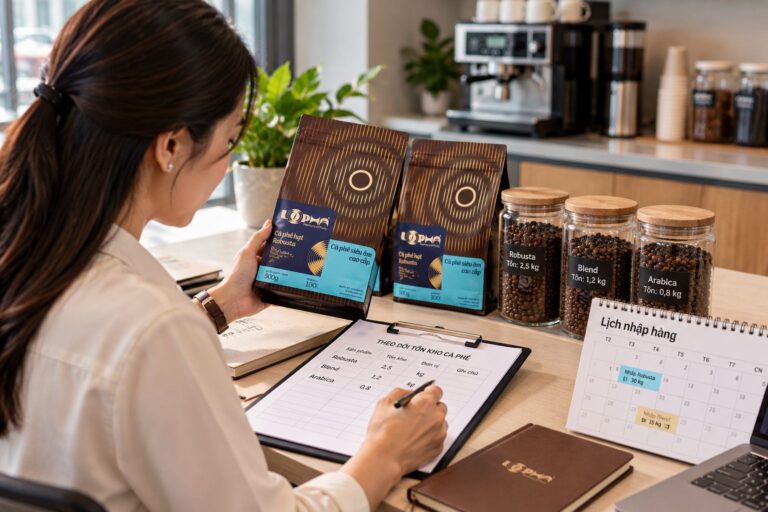
After a month, record beans consumed in kilograms, approximate brews, milk and other consumables, cleaning time, and occasions when the machine stopped or needed support. If several drinks are available, separate straight espresso, americano and milk drinks; otherwise an average cost can hide higher-consumption recipes.
Administration should also track unopened bags, stockouts and emergency purchases. If the machine provides reports, check whether it counts completed drinks or extractions. Such details improve the second month’s estimate and help explain real requirements when requesting changes to supply arrangements.
There is no need for a lengthy report. A simple log of dates, quantities, incidents and notes often allows someone else to take over without rebuilding the information from scratch.
5.2. Assess Employee Experience Alongside Costs
A pantry may look cheaper per cup in a spreadsheet yet see little use because employees dislike the drinks or wait too long. Review the experience in practice. After two to four weeks, ask whether the flavour works for daily drinking, whether the machine is easy to use, if queues form at peak times and which drinks people want to keep.
Some businesses prioritise employee welfare; others want a welcoming reception area or easier meeting refreshments. Define the goal before implementation so it can be assessed afterwards. Do not attribute every workplace improvement to the coffee machine or claim staff productivity increased without a way to measure it.
A coffee corner often succeeds in an unremarkable but valuable way: people use it regularly, supplies arrive at the right time and the monthly budget makes sense.
6. Turn the Comparison into a Useful Quotation Request
When designing a suitable office coffee corner, start with drink counts, preferred beverages, existing equipment and a sustainable budget. Crucially, clarify whether the business pays for everything, subsidises some drinks or employees pay for their own outside coffee. These lead to three different budget analyses.
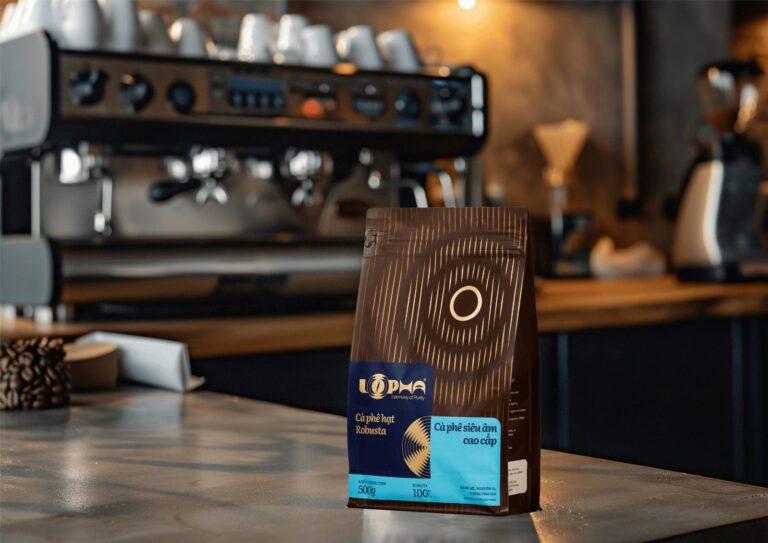
The team can use LOPHA’s whole-bean range to choose samples for recipe testing, then ask for a quotation based on actual volumes and terms rather than treating retail prices as fixed supply rates. Also ask how to obtain advice, what support is available for machine faults and how delivery schedules change when monthly demand rises or falls.
Comparing takeaway coffee with pantry brewing is a decision about budget and service, not merely a few thousand dong saved on each cup. Only when the business understands who pays, how many people drink and who operates the machine can it choose the arrangement that truly fits.