Whole Beans or Ground Coffee: Which Works Best for Your Daily Routine?
Whole beans offer more control over grinding and brewing, while ground coffee suits people who value convenience. Grind size, storage and available equipment all matter when choosing coffee for everyday life.
Some people love hearing their grinder in the morning before making that first cup. Others barely have time to spoon grounds into a phin before heading out. Even if they enjoy the same coffee flavor, these people need different product formats. When choosing between whole beans and ground coffee, the useful question is not ‘which is more premium?’ but ‘which works with my equipment, time and rate of use?’
Whole beans let you choose grind size and may retain aroma better under suitable storage because less surface area is exposed to air than with finely ground coffee. Ground coffee is convenient and does not require a grinder. Both can be 100% pure coffee; they mainly differ in how they are used and how quickly their aromas change after opening.
1. Whole beans and grounds: what differs when the coffee is the same?
1.1. Whole beans let you decide when to grind
Roasted coffee contains many aromatic compounds. Grinding breaks beans into smaller particles and greatly increases their surface area. This helps water reach the coffee during brewing, but also allows volatile compounds to escape more quickly. Grinding just before brewing therefore often creates a different aroma experience from coffee ground days earlier and stored under similar conditions.
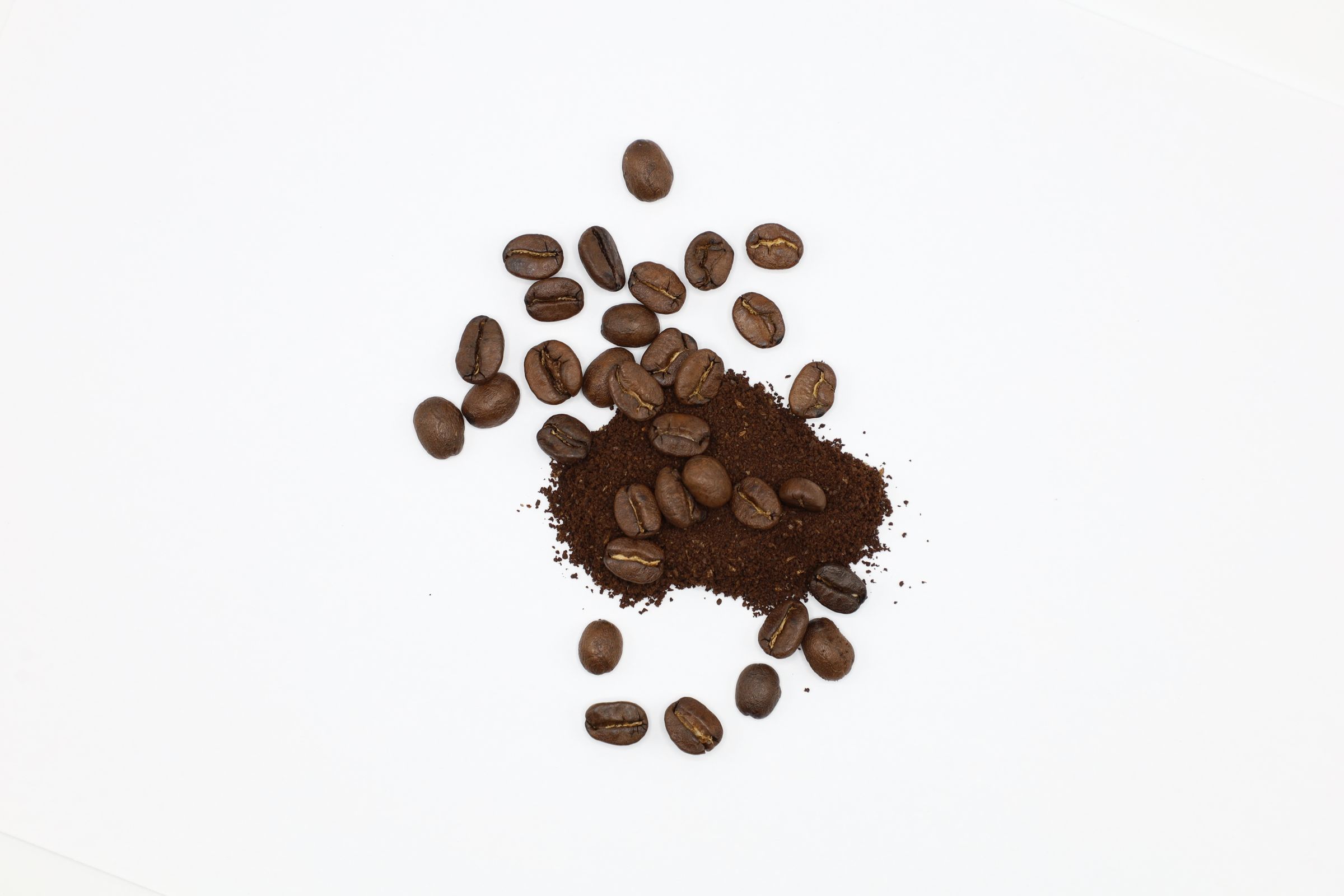
Yet whole beans do not remain unchanged forever. Leaving a bag open, keeping it in sunlight or exposing it to damp conditions can still reduce quality. Someone who stores beans beside a hot stove, opens the bag repeatedly and uses them very slowly may not enjoy better coffee than someone who buys a sensible amount of grounds and finishes them promptly. Freshness depends not only on format but also on how the coffee is used and stored.
1.2. Pre-ground coffee trades flexibility for convenience
With ground coffee, the grinding has been done before the bag reaches you. You need no grinder, do not have to run a noisy machine early in the morning, and can brew directly with a phin or another suitable device. That is a genuine benefit for busy people. The trade-off is choosing the correct grind size at purchase, since you cannot easily adjust it later if the water flows too fast or too slowly.
Ground coffee prepared for a phin may not behave as intended in an espresso machine, and vice versa. That does not make either product inferior; it simply means the coffee was prepared for a particular method. When buying grounds, decide on your equipment first, then check the corresponding grind option. Reading the product variant matters more than choosing the bag with the most eye-catching photograph.
2. What brewing equipment do you have at home or work?
2.1. Just a phin and a cup: ground coffee is the easiest start
If your small kitchen has only a phin, a spoon and a glass, a bag of ground coffee prepared for phin brewing is enough to begin. You can concentrate on dose, water and pouring rather than choosing a grinder. When trying a new brand, familiar equipment also helps you recognize the beans' character without too many recipe changes affecting the comparison.
Some people assume good coffee requires a full collection of tools. It does not. A clean phin, suitable coffee and a consistent technique can produce an enjoyable cup. If you later want to explore grind sizes and different brewing styles, you can move to whole beans. For now, convenience is a perfectly reasonable purchasing criterion, not a compromise to apologize for.
2.2. With a grinder: whole beans offer more brewing possibilities
With a suitable adjustable grinder, whole beans open more possibilities: you can grind for phin, filter coffee, a Moka pot or espresso depending on the machine. But not every grinder can produce sufficiently fine and even grounds for espresso. Some home grinders are designed mainly for phin or filter brewing; with a semi-automatic espresso machine, adjustment range and grind uniformity can become limitations.
Whole beans also suit people who enjoy experimenting in small batches. You can set some beans aside for the weekend and grind them immediately before brewing. The main advantage is control, not a guarantee that every whole-bean cup will taste better than a cup made with grounds. If you dislike grinding and adjusting equipment, the benefit may not outweigh the extra morning effort.
2.3. Automatic and office machines: read the manual first
Many automatic coffee machines have a bean hopper and built-in grinder. Whole beans are normally the primary input, but you must follow the manual for the exact model. Some machines have a separate compartment for pre-ground coffee, while others do not. Pouring grounds into the bean hopper can cause problems. Office machines also need someone to refill beans, clean them and monitor consumption.
With a shared office machine, convenience depends on more than coffee format. Who adds the beans? Who checks the grounds container? What happens when the machine shows an error? Coffee purchases should match the machine and actual consumption. Do not order a large supply of grounds purely because of a good price if the pantry machine accepts only whole beans.
3. How does grind size affect your cup?
Grinding creates particles of different sizes. As water passes through the coffee bed, particle size affects contact area and flow. With a phin, grounds that are too coarse may let water run through quickly without achieving the intended extraction; grounds that are too fine may slow the flow excessively and create harsh flavors. Espresso adds pressure and puck preparation to the equation, so a ‘phin grind’ cannot serve as a universal standard.
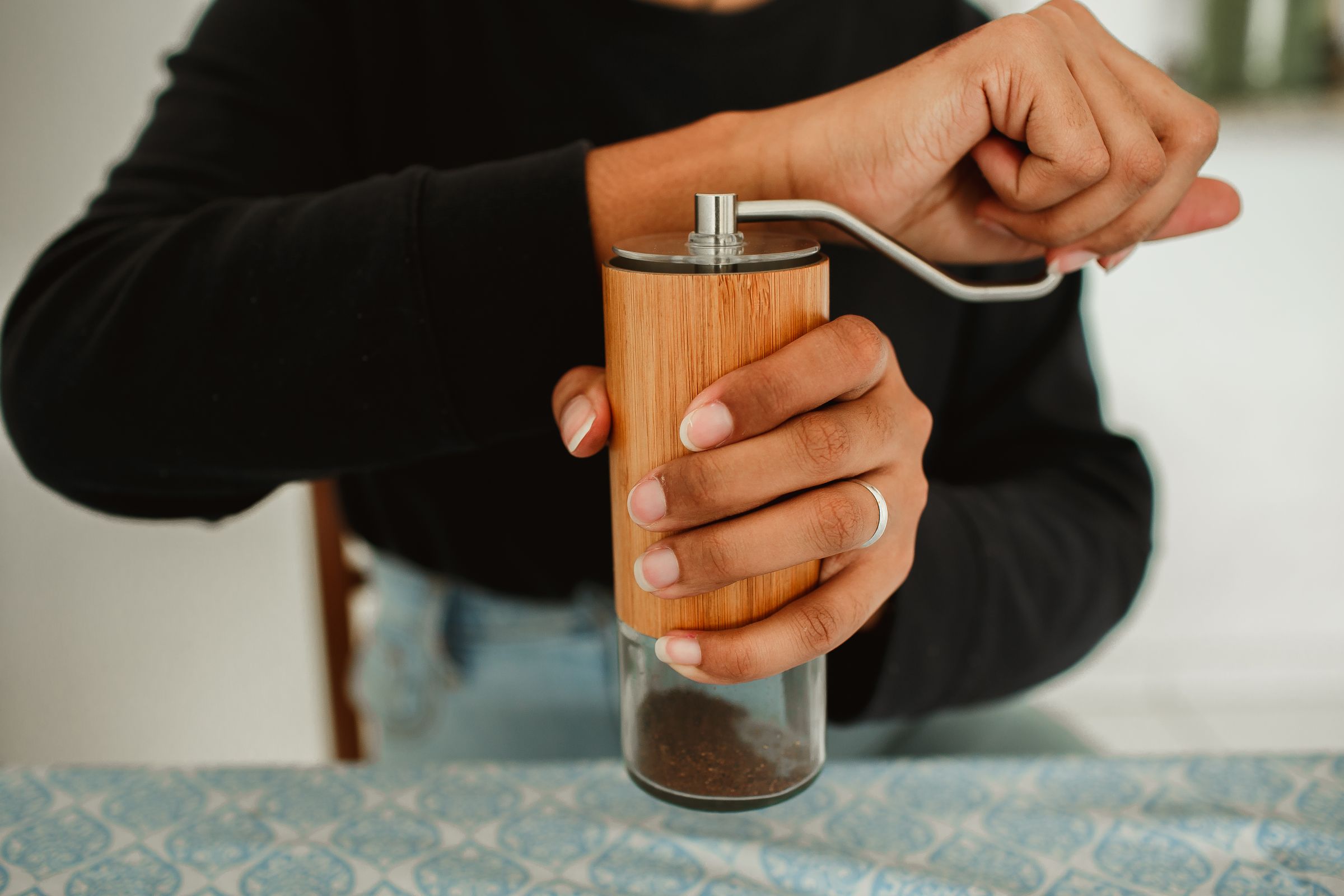
With whole beans, you can adjust the grind for your next brew. With pre-ground coffee, choose the correct version from the outset and resist changing too many variables to ‘fix’ the result. If a cup is not right, observe flow, coffee dose, water volume and brew time. A small change you remember clearly is often more useful than improvising a completely different recipe every morning.
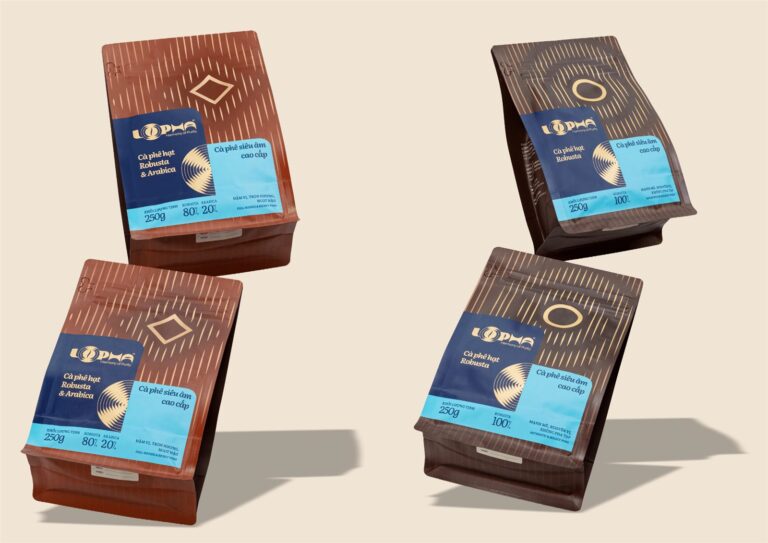
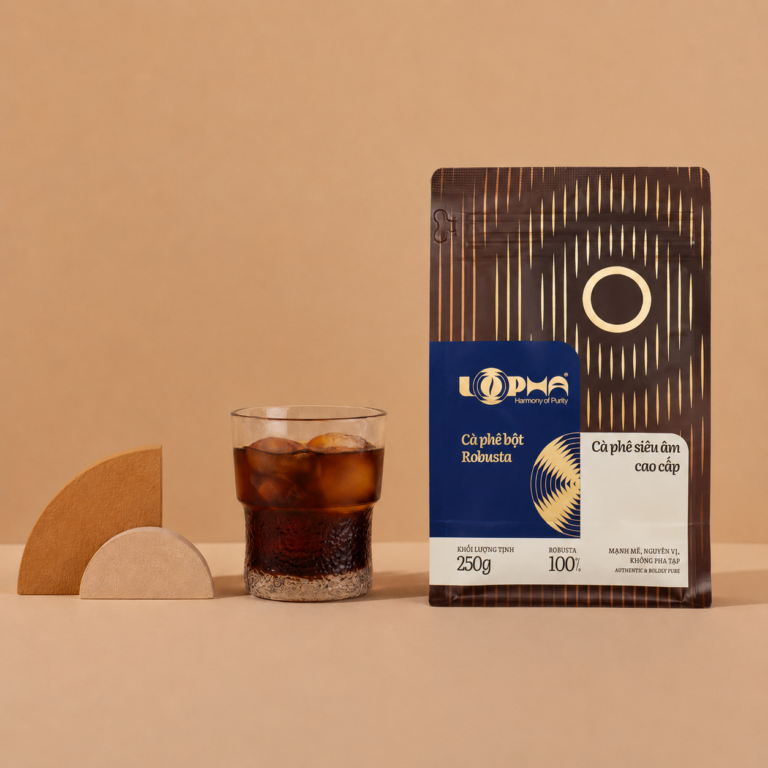
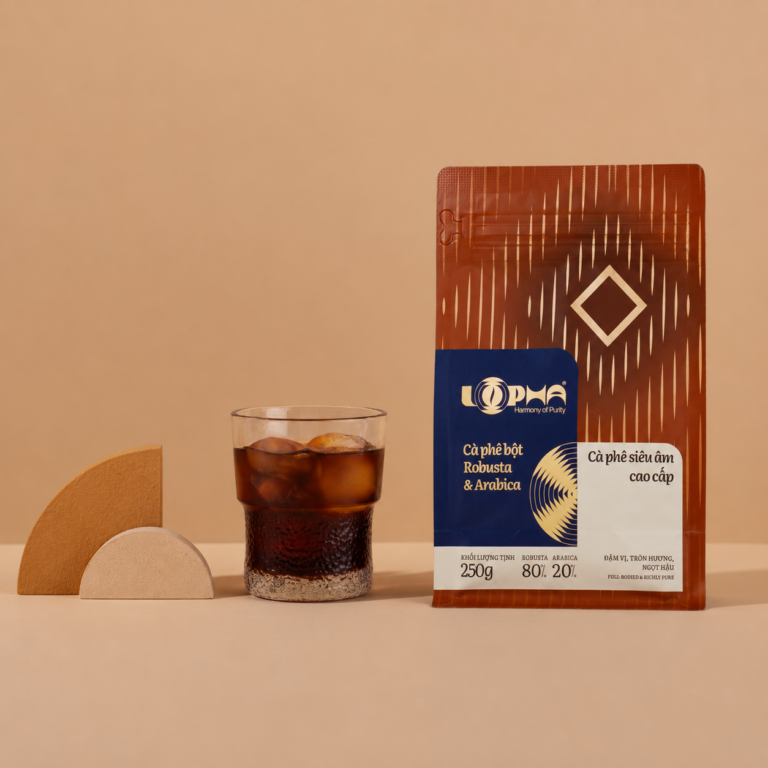
LOPHA ground coffee can be an option if you use a familiar phin and want to save time in the morning. Whichever line you choose, check that its grind is suitable for the phin and its pack size matches your needs. Products sharing a name do not necessarily have identical formats.
4. How much coffee should you buy to avoid keeping it open too long?
4.1. Calculate daily use before choosing the bigger bag
Suppose you brew one cup using about 18 grams of coffee on 20 days each month. Your estimated use is 360 grams, before extra cups, recipe adjustments or guests. This is only an example to help calculate consumption, not a universal serving rule. Phin, automatic-machine and espresso drinkers may use different amounts depending on the recipe and personal taste.
If you drink coffee infrequently, a smaller bag may let you finish it while much of the aroma is still present, even if the price per gram is higher. With whole beans, grinding each portion offers flexibility, but storage remains important. With ground coffee, time after opening deserves even greater consideration. Do not let a saving on the price tag turn into weeks of drinking coffee that has lost much of its aroma.
4.2. Office drinkers have different needs from home drinkers
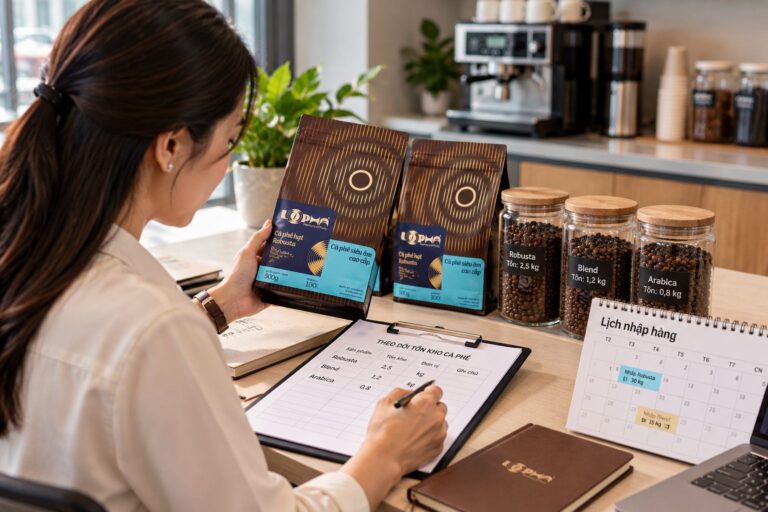
An employee who brews at the office only two or three times a week may consume very little coffee. If they keep a bag of grounds in a desk drawer, that spot should be dry, cool and protected from strong odors. A drawer beside a window that gets afternoon sun is not ideal. Where an office shares a machine, assigning responsibility and forecasting stock should be managed for the whole team, not based on one person's habits.
At home, several people may use the same coffee with different brewing methods. If one person uses a phin and another makes espresso, whole beans and an appropriate grinder can provide flexibility. Without an adjustable grinder, buying separate grounds for each method may be easier. No one solution works for every household: consider your existing equipment and the actual number of cups made each week.
5. How should you store beans and grounds after opening?
5.1. Keep coffee sealed, dry, cool and out of direct sunlight
Close the bag promptly after taking out coffee, following the packaging instructions rather than leaving it open for long. If the original bag can no longer be sealed, a clean, dry, suitably lidded container may help protect the contents from odors. Keep coffee away from heat and damp conditions. These simple habits are useful for both whole beans and grounds, although their aromas do not change at exactly the same rate.
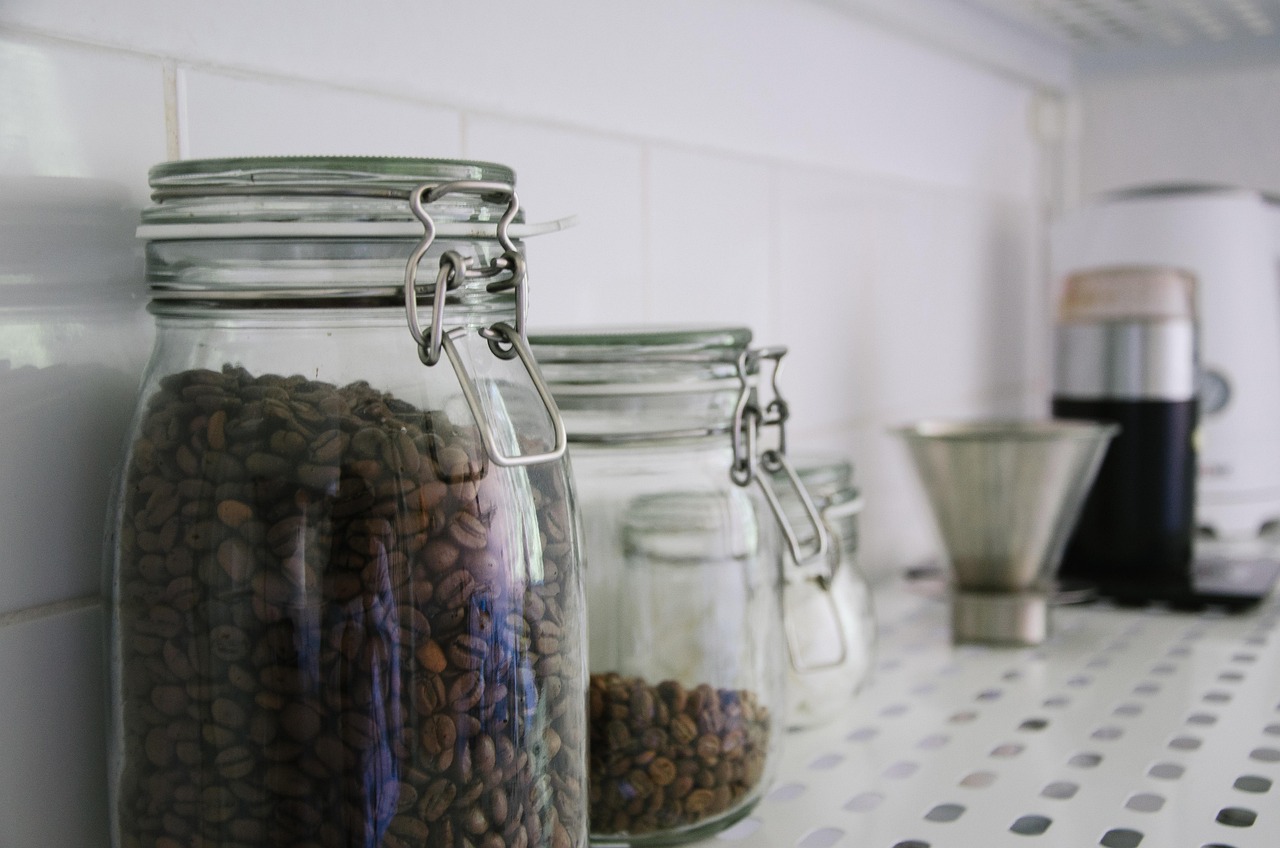
Do not make storage so complicated that it discourages you from enjoying coffee. Regular drinkers can begin by choosing an appropriate bag size, sealing it well and keeping it in a stable location. Watch for damaged packaging or unusual odors; if you suspect mold or spoilage, do not brew the coffee just to find out whether it is still drinkable.
5.2. Why is the refrigerator not always the best option?
Refrigerators contain moisture, food odors and temperature fluctuations as items move in and out. Coffee that is not sealed properly can absorb moisture or smells. Do not assume that putting it in the fridge automatically preserves aroma better. Long-term storage, unopened packaging and other conditions may call for different decisions; for coffee used every day, a cool, dry, well-sealed location is often easier to manage.
Another point: do not judge a coffee line solely from a bag that has been open for a long time. If grounds have lost aroma because of poor storage, you might conclude that you dislike the product when the problem is its condition after opening. Early tastings from a properly stored bag are fairer to both drinker and producer.
6. Whole beans or ground coffee for Robusta, Arabica and Blend?
Format does not determine bean variety. Robusta can be sold whole or ground, and so can Arabica and Blend when the supplier offers the corresponding products. Choose flavor first, format second: if you like bold Robusta with a sweet finish but own only a phin, choose appropriately ground coffee. If you love Arabica's clear acidity, own a grinder and regularly brew filter coffee, whole beans make adjustment easier. Someone who likes a bold Blend with mild acidity but wants a simple routine may prefer ground coffee.
With a good grinder, you can choose LOPHA whole beans by flavor preference and grind for each cup. With only a phin, the right pre-ground option will often save more time. There is no reason to choose whole beans simply because they sound professional; coffee that works with your equipment is what you can enjoy consistently.
Roast level and grind size can still make bags from the same variety taste different. When moving from a familiar ground coffee to a new one, check the specifications on the packaging of the product you are buying. Choosing carefully at the start makes the first brew less dependent on extensive adjustments.
7. Three situations that make the decision easy
Situation one: rushing to work with only a phin available. Ground coffee prepared for a phin, in a pack size you can use within a reasonable time after opening, is usually practical. It saves grinding and requires no extra equipment. Once you know your preferred recipe, simply repeat it each morning.
Situation two: enjoying a slow weekend cup. Whole beans are worth considering if you already have a suitable grinder and want to explore grind sizes and brewing ratios. The reward is not just the aroma of freshly ground coffee but also having control over how the cup is made. If that process makes you happy, the extra effort is part of the enjoyment.
Situation three: buying coffee for a friend, relative or colleague. Start with their equipment. Whole beans may be ideal for someone with an automatic grinder, but inconvenient for a phin drinker who owns no grinder. If unsure, asking a simple question about their routine—or choosing something they can use immediately—is more thoughtful than guessing from your own preferences.
8. Do not let the bean format distract from what matters more
Whole beans and grounds offer different balances of convenience, adjustability and aroma preservation after opening. They are not two predetermined levels of quality. A bag of the right grounds, used promptly, may fit a busy life better than whole beans requiring several extra steps. For someone who loves testing recipes, however, whole beans offer valuable flexibility.
Finally, read the ingredients, net weight and instructions just as you would for any packaged food. A well-chosen coffee should not only smell wonderful the first time you open it; it should also suit your equipment and daily routine well enough that you look forward to brewing it tomorrow. Then the question ‘whole beans or ground coffee?’ finds its answer in the way you actually drink coffee.