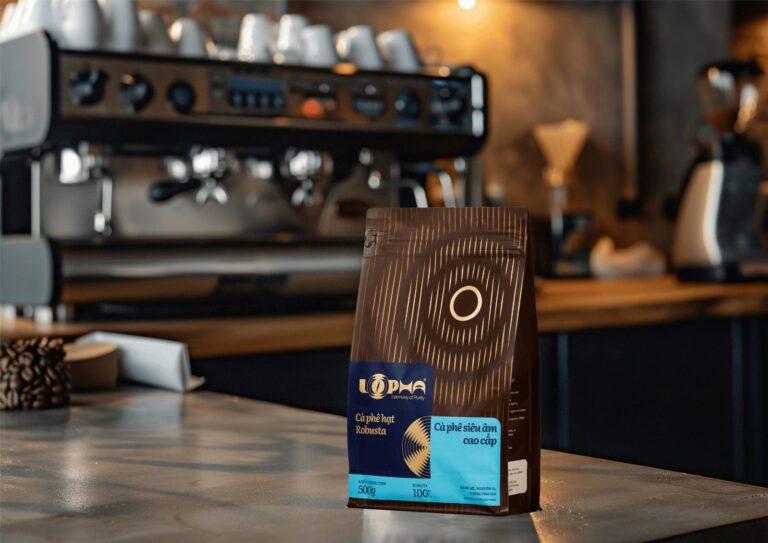
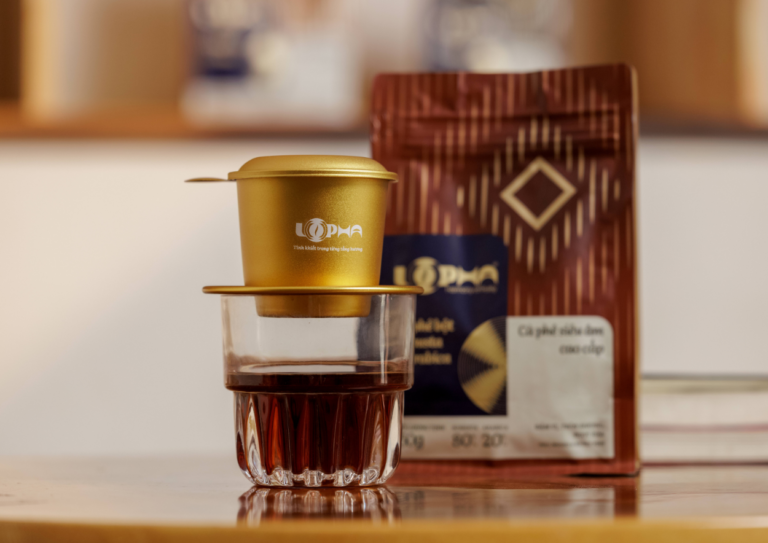
Who Is an 80% Robusta, 20% Arabica Blend For? Choose by Taste Before You Buy
An 80% Robusta and 20% Arabica Blend is worth considering if you enjoy bold coffee but want added aroma and a touch of acidity. Understanding the ratio and trying the coffee in your usual drinks will help you decide whether this Blend really suits you.
Some people enjoy milk coffee only when it has a sufficiently bold coffee base, yet prefer a gentler aroma when drinking black. Others use 100% Robusta every morning and are curious about a modest change without moving to a completely different style. An 80% Robusta–20% Arabica Blend can be worth considering in those situations, though it is not the automatic answer. The numbers on the label describe the beans, not the complete flavor of a cup brewed with your phin or machine.
If you are unsure about buying an 80/20 Blend, recall the most recent cup you truly enjoyed: how bold was it, did you drink it black or with milk, and what would you actually like to change? Instead of placing Blend somewhere between Robusta and Arabica on a better-or-worse scale, ask which personal preference it could satisfy. Expecting it to be automatically “less acidic” or “more aromatic” without considering the beans and roasting can lead to disappointment even when the product is perfectly sound.
1. What does an 80/20 ratio tell you—and what does it leave unanswered?
1.1. It describes ingredients, not a fixed flavor formula
A bag labeled 80% Robusta and 20% Arabica describes the contribution of each type of bean to the blend. When both ingredients are coffee, a Blend does not imply the addition of beans, cereals or artificial flavorings. The ratio also does not fully tell you where the raw beans came from, their roast level, grind or whether the components were roasted separately before blending.
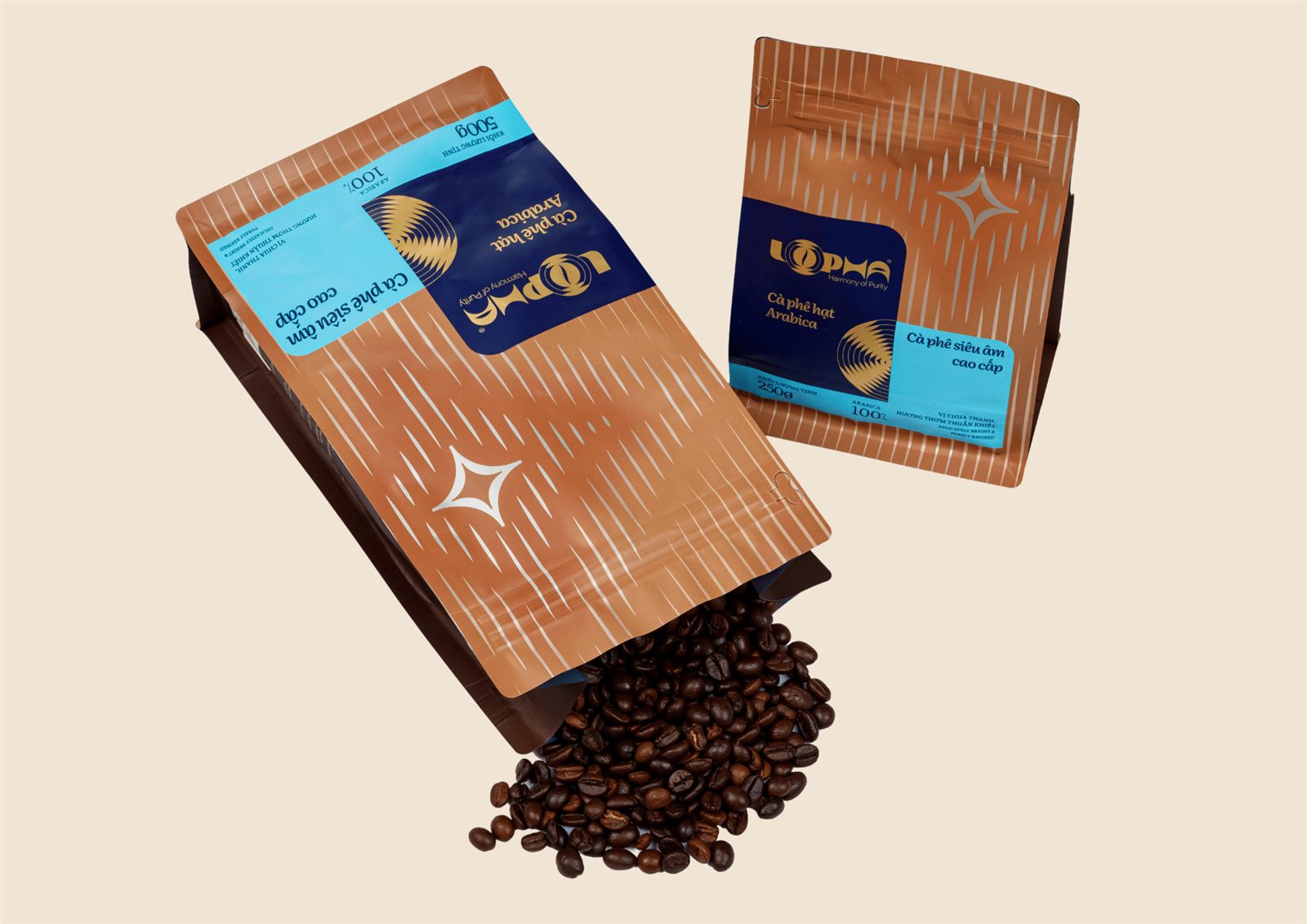
Two roasters can use the same 80/20 ratio yet produce very different flavors. Specific varieties, growing regions, processing, roast levels and flavor development during roasting all influence the result. Even the same blend will taste different as espresso or phin coffee because contact time, pressure and grind size differ. The ratio helps identify a product; it is not a promise of one fixed flavor.
People sometimes call a Blend “balanced,” but that word is useful only when you know what is being balanced: body and aroma, bitterness and acidity, or the coffee's presence once milk is added. Someone who prefers bright Arabica may find a Robusta-heavy Blend too strong, while a traditional phin drinker might see the same blend as a gentle change from familiar coffee.
1.2. Do not buy by ratio while forgetting what you drink now
Someone accustomed to dark-roasted Robusta brewed in a phin might find an 80/20 Blend only slightly different. A bright-Arabica drinker could notice a much larger shift. Before comparing 80/20 with 70/30, write down the coffee you currently use, its roast and your usual drink. Without that starting point, comparing percentages becomes little more than guessing at flavor.
Think about two possible goals: you want to keep a familiar bold cup while adding aromatic variety, or you want to leave strong bitterness behind for a lighter, brighter and more acidic drink. A Robusta-forward Blend could suit the first goal. For the second, expand your search to Arabica rather than expecting an 80/20 ratio to solve everything.
2. Three groups of drinkers who may enjoy an 80/20 Blend
2.1. Bold Robusta drinkers looking for a new nuance
If you drink strong phin coffee every morning, pronounced bitterness and a familiar aftertaste may be part of what makes the cup comforting. Switching straight to an Arabica with prominent acidity could feel like a much bigger change. A Robusta-forward Blend offers another option: most of the composition is still Robusta, while Arabica contributes to the roaster's intended sensory direction.
Even so, a Blend is not necessarily “smoother” or “less bitter” than your current Robusta. If your usual Robusta is medium roasted but the new blend contains more dark-roasted beans, the result could be the opposite of what you expect. A fair trial gives each sample suitable brewing conditions and tastes them in your normal drinking routine. Only then can you decide if the change is worth keeping.
A small sample bag is usually more sensible than buying a large quantity just because a discount might end. After a few mornings with a consistent recipe, you can tell whether you enjoy the new flavor or would rather return to familiar boldness. Either result is perfectly useful for the next purchase.
2.2. People who mainly enjoy milk-based or iced coffee
Milk can soften perceived bitterness and acidity while adding richness and sweetness. That is why choosing beans for milk drinks should not rely solely on which coffee smells best when drunk black. A Blend with a fairly pronounced coffee base may hold its presence in your favorite recipe, depending on the dose and amount of milk.
Compare using the same milk, ice quantity and cup size, while recording how much coffee you use. If the first cup is too light, do not immediately increase the dose dramatically and conclude that the Blend is expensive or cheap. Consider whether the recipe suits your taste, how much extra coffee is needed and whether the adjustment fits your routine. Daily home brewers value convenience; café owners must also consider repeatability and cost per sale.
One easily overlooked detail is that a hot latte, Vietnamese iced milk coffee and bạc xỉu (a milk-forward Vietnamese coffee) can feel quite different even with the same espresso base because milk quantity, sweetness and temperature vary. If you normally drink only one of these, use that drink as your main test. Trying every internet recipe can distract from a very simple need: a satisfying milk coffee before work.
2.3. Home machine users who want versatile beans
In one family, someone may drink black espresso, another prefer an americano, and another take only milk coffee. Finding one bean for everyone requires a reasonable compromise. An 80/20 Blend is worth sampling, particularly in a household that likes a fairly bold base. But the ratio cannot guarantee universal appeal; invite the people who will actually drink the coffee to taste it.
Automatic bean-to-cup machines are convenient because they reduce preparation steps, but their programs and grinder limits affect results. When switching from old beans to a Blend, begin with a small amount, follow the machine's adjustment guidance and note your chosen strength setting. With a semi-automatic machine, changing beans often means adjusting the grind; that is normal, not evidence that the Blend is difficult to use.
For people working from home or taking coffee to work, versatility also depends on the product format. Whole beans suit those with grinders, while pre-ground coffee at the right size is convenient for phin users. The same 80/20 recipe can come in different formats, but you must choose the correct variant rather than assuming they all suit your machine.
3. When might an 80/20 Blend not be your first choice?
If you love floral and fruity aromas and bright acidity in black espresso, an Arabica that matches that profile may be a clearer starting point. Those keen to explore individual origins may also prefer a single-variety coffee. Conversely, if all you want is the familiar strong Robusta flavor and your current beans are perfect for you, there may be no need to change blends.
Another possibility is less often discussed: you like the smell of the Blend's beans but dislike the brewed cup. Do not force yourself to enjoy it because the percentage sounds reasonable. Aroma on opening the bag and flavor after extraction are different experiences. Variety in the market matters because people can find their own preferences, not because everyone should eventually switch to a Blend.
If you are new to espresso and still learning to control grind size, constantly switching from Robusta to Blend to Arabica can make mastering your machine more confusing. Start with one well-described product and learn to brew it consistently. Comparing bean varieties becomes more informative after you understand how your equipment behaves.
4. How to test an 80/20 Blend in three types of drinks
4.1. Black coffee: look for balance before adding anything
Begin with your familiar brewing method, without milk or sugar. For espresso, record the dose, beverage yield and brew time. For phin coffee, note the coffee and water amounts and the drip time. These numbers are not for claiming a “perfect” recipe; they help you repeat the process reasonably well when comparing flavors later.
Taste while the cup is comfortably warm and again as it cools a little. Note two or three sensations, such as clear bitterness, mild acidity, full body, pleasant aroma or a long aftertaste. There is no need to invent complex flavor notes you cannot actually perceive. Saying “it tastes nutty and bold but not harsh” already gives you enough information to judge your own preference.
4.2. Milk coffee: keep the same recipe for comparison
Next, brew the drink you normally make. When comparing the Blend with another coffee, keep milk, ice and sugar ratios similar while using a suitable dose for the equipment. If the new espresso needs a different grind setting, adjust it so each sample is properly extracted rather than forcing both to use the same grind just to appear “fair” on paper.
After drinking, ask: can I still taste the coffee through the milk, does bitterness overwhelm the milk, and does the aftertaste make me want another sip? These simple questions are more precise than merely saying “the Blend tastes good.” If every coffee seems the same after milk is added, another factor—such as brewing or milk quantity—may be influencing the result more than the bean differences.
4.3. Vietnamese phin: pay attention to grind and flow
With a phin, an appropriate grind helps water drip at a suitable pace. Very fine grounds may slow dripping substantially, while overly coarse grounds alter extraction. A strong phin cup does not prove that the beans contain more Robusta than claimed; roast level, dose and pouring technique also affect the result.
Phin drinkers need a different grind from espresso users. For LOPHA roasted and ground coffee, selecting the correct variant and phin-grind option is as important as choosing the Blend you enjoy. If the grounds are too fine or coarse, drip rate and flavor may differ considerably from expectations.
5. Choose the right 80/20 Blend variant before ordering
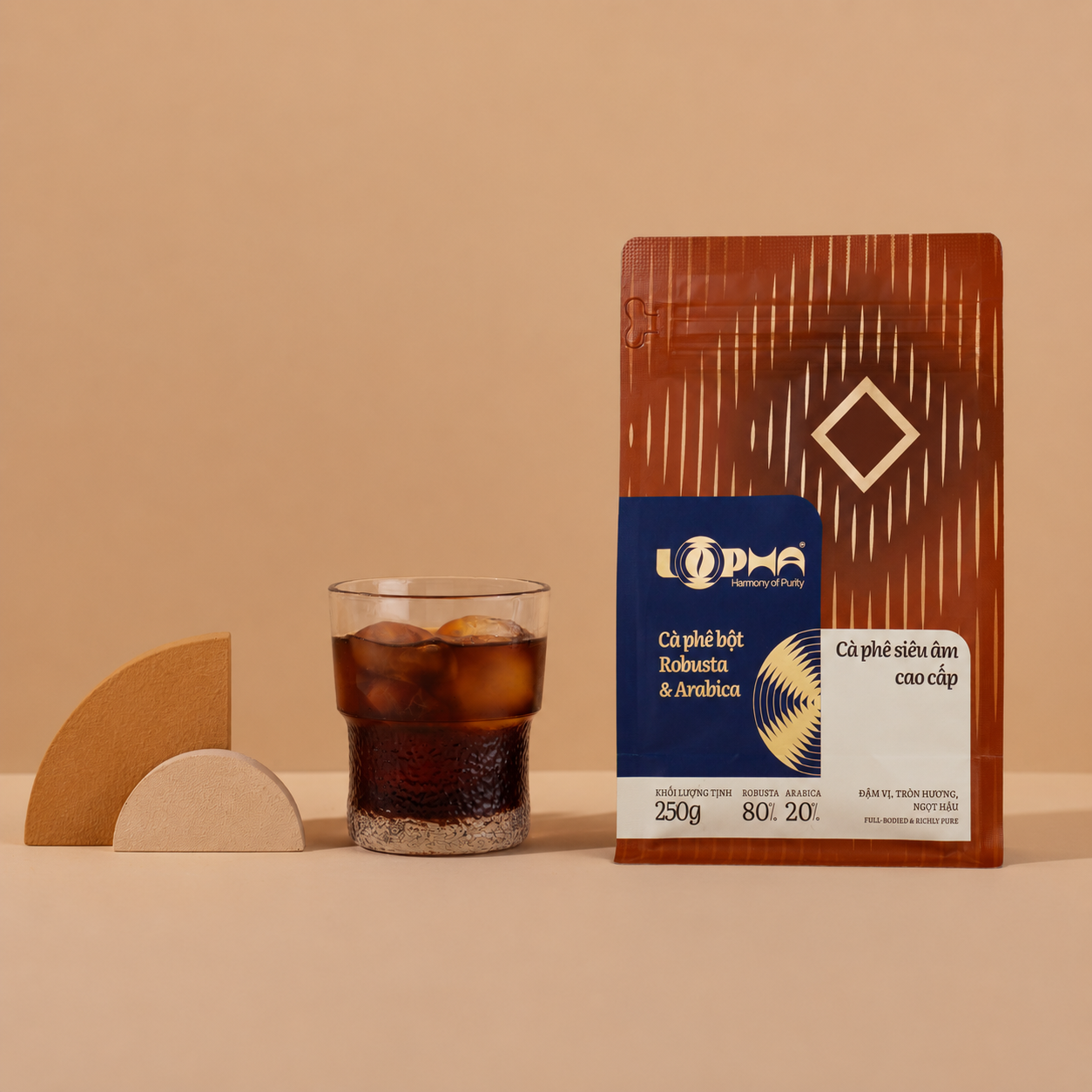
LOPHA offers an 80% Robusta–20% Arabica Blend in whole-bean and ground formats. If you like milk coffee with a distinct coffee base, the product's description of “bold flavor, mild acidity and a balanced finish” may give you a reason to try it. Individual experiences still depend on the recipe, especially extraction and the amount of milk. Treat this as guidance for choosing a sample, not a promise that everyone will notice exactly the same notes.
With a grinder, you can try LOPHA's whole-bean 80/20 Blend and adjust the grind for your machine. If you only have a phin and no grinder, appropriately ground coffee is more convenient. Compatibility between product and equipment makes it easier to keep an enjoyable recipe as part of your routine.
Beyond the blend's composition, this coffee also goes through an ultrasonic treatment stage while the beans are green, before roasting. This is one step in production. At home, you still need the right product format, a suitable brewing method and a flavor you genuinely enjoy.
Before buying, confirm the SKU, whole-bean or ground option, and grind size. LOPHA's roast descriptions need to be read for the specific variant instead of assuming a general category statement applies to every bag. Phin users need different information from automatic-machine users, and choosing the right version avoids disappointment when opening the package.
6. Is comparing 80/20, 70/30 and 50/50 useful?
Ratios such as 70/30 and 50/50 often appear in discussions about blending, but numbers alone cannot predict the exact flavor. Increasing the Arabica share may create a different profile, but it also matters which Arabica and Robusta are used and how they are roasted. Even a dark-roasted 50/50 blend can taste more bitter than you might expect from the percentage.
For a fair comparison, choose samples with clear ingredient information, use the same brewing method and make reasonable adjustments for each coffee. Record the flavor in the drink you care about most. There is no basis for saying that 80/20 is always more balanced than 70/30 or that 50/50 is always more acidic. Ratios describe ingredients; “delicious” only means something in relation to a person and their brewing style.
You also need not buy three bags if you dislike lengthy experiments. If 80/20 already suits your taste and is easy to brew each morning, there is no reason to change simply because you see another ratio online. If it does not suit you, make a specific change based on your goal—such as less bitterness or brighter aromas—rather than choosing whichever ratio sounds more sophisticated.
7. How do you know whether to buy the 80/20 Blend again?
After a week of reasonably consistent brewing, ask whether you like the coffee both black and with milk, whether the dose per cup makes sense, and whether you want to keep it in your daily routine. Phin users should also consider whether the grind is convenient; machine users may focus on repeatability.
If you decide to use it regularly, keep a note of the purchased variant, date opened and favorite recipe. When the next purchase tastes different, you can check dose, water and grind before concluding that your preferences have changed. Simple notes make tasting easier rather than turning every cup into a test.
An 80/20 Blend is not the default answer for everyone. It is worth trying when you want a recognizably Robusta-led cup but are curious about what Arabica adds to the whole. The packaging description may help you choose the first bag, but your everyday drinking habits are what make you open a second.