Wholesale Coffee for Cafés: Choosing a Supplier, Blend, and Partnership Terms
Buying wholesale coffee for a café involves more than comparing prices per kilogram. From matching beans to best-selling drinks and testing samples on the actual machine to estimating usage and agreeing on delivery terms, a well-informed decision helps a café serve consistently and keep costs under control.
Before opening one morning, a café owner checks the storeroom and realizes there are only a few days' worth of beans left. The existing supplier has just issued a new price list, while another coffee sample is being promoted as more economical. Should the café stick with its familiar beans or try a new source? The question may seem to be about price per kilogram, but the answer also affects the menu, the barista's work, and how much money the café actually retains from each drink sold.
For a café, purchasing wholesale coffee is a recurring operational decision. A suitable choice must work in the drinks customers order most often, maintain the flavour profile the café wants to offer, and come with a supply schedule that matches its sales pace. A good price matters, but only when considered alongside the amount of coffee used per cup, waste, and the terms both parties can realistically maintain over time.
1. What should a café clarify before asking for wholesale prices?
1.1. Start with the best-selling items on your menu
A café that primarily sells Vietnamese iced coffee with condensed milk will choose beans differently from one specializing in straight espresso. In milk-based drinks, the coffee needs enough presence not to disappear beneath the milk and ice. In straight espresso, customers can more readily notice differences in aroma, acidity, bitterness, and aftertaste. Both menus may use coffee machines, yet call for different approaches to bean selection.
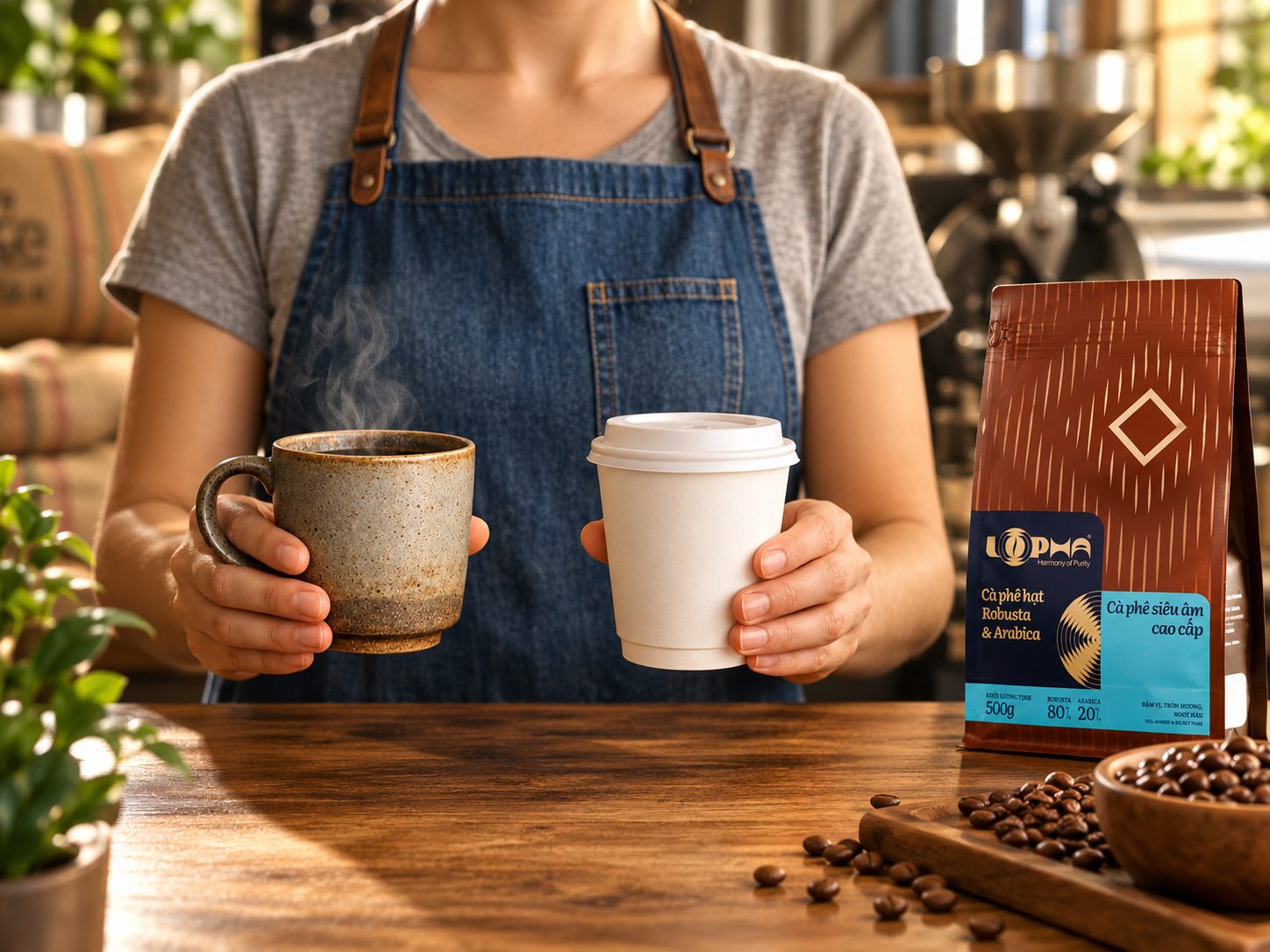
Before requesting a quotation, an owner should review sales of the five most popular coffee drinks: which sell steadily, which spike on weekends, and how many grams of beans each requires. Instead of asking vaguely for “good coffee at a good wholesale price,” a brief such as “mostly iced coffee with condensed milk, made on an espresso machine, around 25–30 kg per month, with clear bitterness but a pleasant finish” gives both café and supplier a far more useful starting point.
1.2. Equipment and staff also determine which beans are suitable
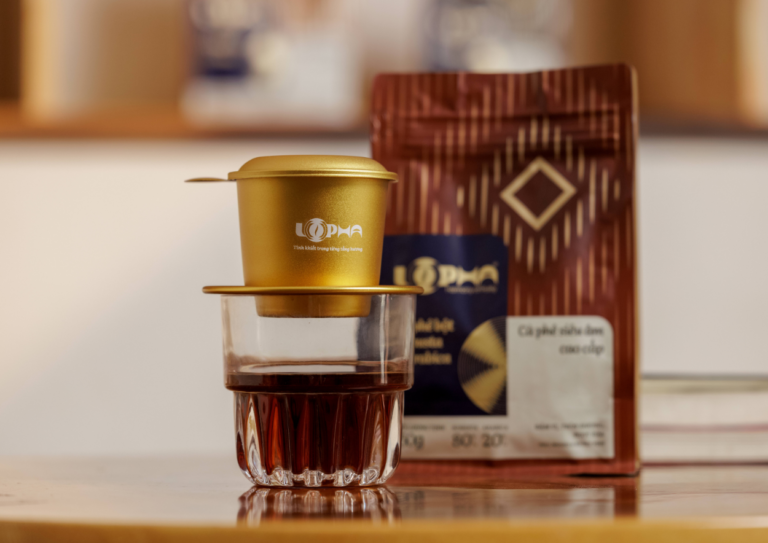
Equipment and baristas shape much of the experience after changing beans. Some coffees produce fascinating espresso when carefully dialled in but are difficult to reproduce across multiple shifts. Automatic machines have their own limits for grind adjustment and cleaning. If the café serves phin coffee, the grind should be tested with the actual phin, dose, and pouring method used at the counter.
A wholesale brief does not have to be long: include the machine type, key drinks, monthly volume, peak hours, number of shifts, and target cost of goods. With those details in place, the supplier can select more relevant samples, and the owner can compare two offers without being distracted by an initially attractive price.
2. Why does consistency between coffee batches matter?
2.1. Customers return for a familiar drink, not a single tasting
When customers order their usual drink, they expect a flavour consistent enough to recognize. Coffee is an agricultural product, so differences between batches cannot be eliminated entirely. What a café needs from its supplier is a reasonably consistent flavour direction, clear product information, and a way to work together if a new batch requires major recipe adjustments.
At the first meeting, the owner can ask how the supplier identifies batches, controls roast levels, packages the coffee, and handles feedback when a delivery differs from the tasting sample. These questions relate directly to production, from selecting raw materials and roasting to checks before packaging. At LOPHA, these stages form part of the coffee production journey; suitability for a specific café must still be confirmed by testing samples on its own equipment.
2.2. Keep a standard recipe to distinguish bean issues from brewing issues
When switching to a new batch, the same grind setting may not produce the same extraction rate. If an espresso suddenly tastes sharply acidic or runs too slowly, the barista needs a baseline recipe to identify what changed: dose, beverage yield, water, machine condition, or beans. Earlier notes make discussions with the supplier more specific than simply saying, “This batch tastes different.”
For espresso, a tracking sheet only needs the batch name, date the bag was opened, dose in, beverage yield out, extraction time, and a short tasting note. For phin, record the dose, water volume, and drip time instead. Comparing a new batch with a reference cup made using a familiar recipe helps separate changes in the beans from differences in preparation. It is a small but valuable tool for cafés with several employees.
3. Choose Robusta, Arabica, or a Blend to suit your menu
3.1. Test beans in actual menu drinks before choosing by variety
Robusta often brings a bold body, pronounced bitterness, and a lingering finish; Arabica may stand out for its aroma and acidity. A Blend combines different coffee beans to create a particular flavour direction. These descriptions help select initial samples, but they do not tell you which product will sell best. Customer preferences, roast level, and the way coffee works with milk or ice turn these broad descriptions into real choices.
For example, an Arabica that smells wonderful as straight espresso may seem subdued in a milk-heavy latte. A fairly intense Robusta tasted on its own may work beautifully in Vietnamese iced coffee with condensed milk. Testing beans in best-selling drinks shows an owner what matters most: what customers will actually experience when ordering from the menu, not only when tasting a sample shot.
3.2. Treat the 80/20 Blend as an option, not a universal formula
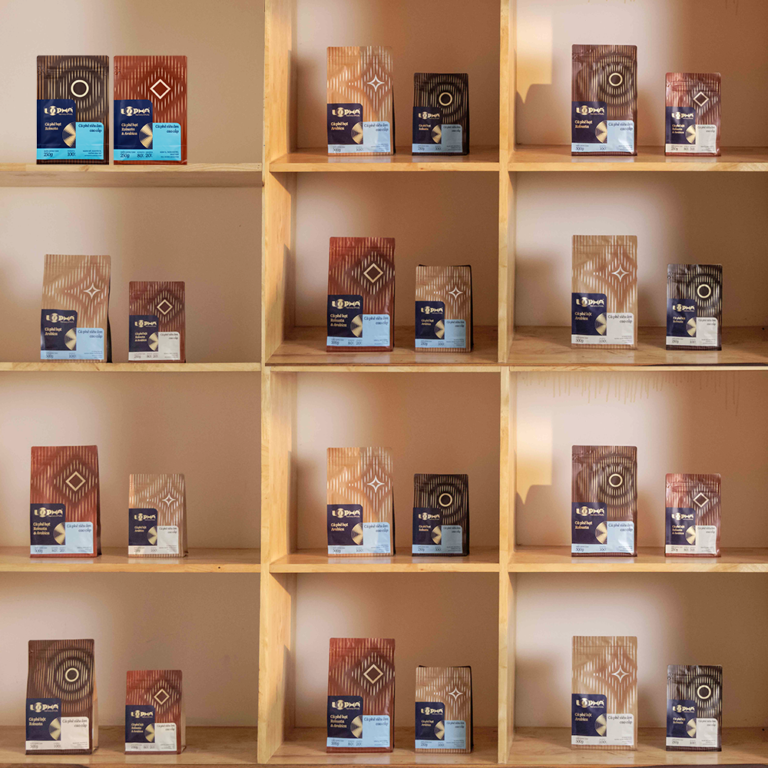
LOPHA's range includes Robusta, Arabica, and a Blend of 80% Robusta and 20% Arabica. For a café seeking a bold base with a touch of mild acidity, the 80/20 Blend may be worth testing. The ratio describes the bean composition, while flavour in the cup also depends on roast level, grind, and recipe. The final choice should therefore come from testing the café's actual drinks.
A Blend sample can be tried as straight espresso, milk coffee, and phin if those drinks are on the menu. Inviting the baristas and staff who know customer feedback provides a broader view than a tasting attended only by the owner. LOPHA's whole-bean products can be included in the shortlist; before ordering, the café should confirm the exact coffee, pack format, and availability of the version it plans to use.
3.3. Match whole beans or pre-ground coffee to the right equipment
Cafés with espresso machines and grinders often choose whole beans so they can adjust fineness themselves. For phin service, where grinding at the counter is best avoided, LOPHA's roasted and ground coffee can be an option provided the grind suits the phin in use. Convenience only helps when the coffee matches the equipment; buying ground coffee does not make it inferior to whole beans.
During sampling, use the product format the café intends to buy. If the supplier makes the tasting with freshly ground beans but the café orders pre-ground coffee, flow time and flavour may differ. Even a small change in grind size can make counter-service results unlike the original tasting.
4. How can you test samples without deciding on one good cup alone?
4.1. Test two or three samples under comparable conditions
A useful tasting begins with two or three samples that broadly match the brief. Brew them with the café's own equipment and water, keeping milk, ice, and cup size consistent. Each sample may need its own grind adjustment to achieve a reasonable extraction; record the settings rather than forcing different coffees through a single grind size.
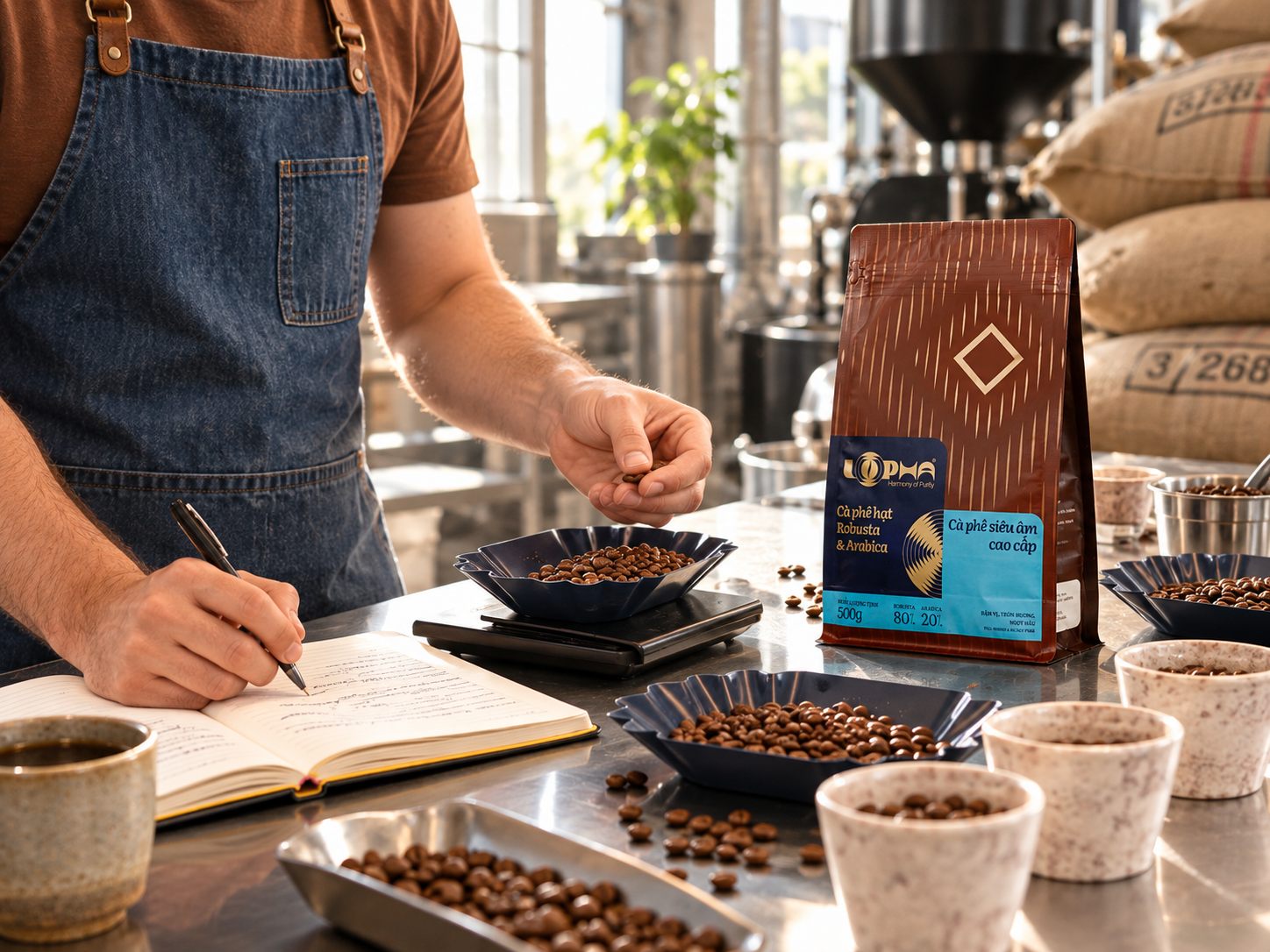
Run the test in two rounds. The first takes place during a quiet period to establish a suitable recipe; the second during a busy shift, when staff must prepare several drinks in succession. A coffee may taste excellent but require constant machine adjustments, waste several test drinks, or keep customers waiting. Those costs need to be considered alongside bean costs. Commercial quality is about more than the single best-looking cup.
4.2. Score samples by menu item, not overall impression
Instead of asking “Which sample tastes best?”, score four things: how well it suits best-selling drinks, how repeatable the flavour is, how convenient it is during rush hours, and the bean cost per cup that meets the desired taste. Weights depend on the business: a milk-coffee café may prioritize its flagship drink, while a specialty espresso bar may focus more on the straight-espresso experience. This is a suggested self-assessment framework, not a fixed LOPHA scoring system.
Consider asking two baristas from different shifts to test independently, then compare their findings. If a sample only tastes good in experienced hands, the café must factor in training time or process adjustments. Once a coffee is selected, keep the sample's batch details, recipe, and agreed tasting notes. The first delivery should be checked against that chosen sample rather than starting the evaluation from scratch.
5. How does the wholesale price per kilogram differ from the coffee cost per cup?
5.1. A basic formula for comparing two coffee options
The per-kilogram price tells a café what it pays to buy coffee, but not how much coffee goes into each drink. With a tested dose that suits customers, theoretical bean cost per cup = bean price (VND/kg) × actual bean dose (g/cup) ÷ 1,000. This excludes coffee wasted while dialling in the grinder, failed drinks, milk, sugar, cups, electricity, and labour. These must be counted separately to calculate the full cost of goods.
Illustrative example, not LOPHA pricing: Sample A costs VND 240,000/kg and needs 20 g to produce the chosen flavour, giving a bean cost of VND 4,800 per cup. Sample B costs VND 260,000/kg but needs only 18 g, or VND 4,680. If additional bean consumption beyond the standard dose is equivalent to 5%, the average cost per cup sold is approximately VND 5,040 for A and VND 4,914 for B. This hypothetical example shows that the lower purchase price does not always mean lower bean cost per cup; actual results must be based on the café's recipes and waste.
5.2. Account for waste and the ability to serve consistently
Waste is not just a few grams of grounds spilled around the portafilter. It also includes drinks remade during shift changes, machine adjustments, or bean-batch changes. To understand actual cost, track total beans consumed and drinks sold over a meaningful period, distinguishing double-shot drinks and complimentary samples. Dividing beans consumed by drinks sold shows how real average usage differs from the recipe on paper.
This comparison also avoids another misconception: the most expensive beans are not necessarily the best choice. A coffee customers love but that takes too much time to dial in carries its own costs. Equally, saving a few hundred dong per cup may not be worthwhile if a best-selling drink loses its familiar flavour. The sensible goal is consistent, saleable quality within a food-cost level the café can manage.
6. How should monthly purchasing volumes and deliveries be planned?
6.1. Estimate from cups actually sold, not just revenue targets
Monthly bean demand can be estimated as cups sold per day × average beans used per cup (g) × days open ÷ 1,000. Suppose a café serves 60 coffees a day, uses an average of 18 g per cup, and opens for 26 days: theoretical demand is 28.08 kg per month. This is a calculation example, not a standard dose for every menu item. If some drinks use two shots, replace 18 g with a sales-weighted average dose and account for waste appropriately.
For a new café, this is only an initial forecast. After one or two months, actual sales and bean usage will give a more reliable figure. Cafés with busy and quiet seasons should forecast each period separately; do not rush into a fixed purchase commitment just because opening week was successful.
6.2. Regular deliveries can be better than one large order
One large order may reduce ordering frequency but overcrowd a small storeroom. Deliveries split into several batches help control stock and the number of opened bags, though shipping costs, lead times, and minimum order sizes also matter. The right schedule is one both café and supplier can sustain, not simply the neatest schedule in a spreadsheet.
To avoid ordering only when beans run out, set a reorder point. Reorder point ≈ average daily bean use × days from order to delivery + safety stock. For instance, if a café uses around 1.08 kg/day, delivery takes three days, and it wants another two days' buffer, the reorder point is about 5.4 kg remaining. These figures are illustrative; actual lead times and buffer levels must be agreed with the supplier.
7. What can a partnership policy offer beyond wholesale pricing?
7.1. Brewing support should solve the café's actual problems
New cafés often need guidance so different shifts can make the chosen flavour consistently. Established cafés may need help when switching batches, adjusting machines, or developing new drinks. The value of a partnership policy lies in whether its support addresses a real operational problem, not in the length of its benefits list.
LOPHA includes bean selection, menu advice, and operational support among its partnership options for cafés. Owners can review the published volume brackets before meeting, then agree on the actual scope of training, in-store materials, or technical assistance. The kilogram thresholds help frame an option; specific benefits still need confirmation when the agreement is signed.
7.2. Clarify the terms before placing the first order
Before the first order, put the practical details in writing: product and pack size; whether prices include VAT; quotation validity; payment timing; delivery schedule; recipient; and how short shipments, incorrect deliveries, or defective products are handled. If there are volume discounts, specify how volumes are aggregated, the review period, and when benefits begin or end. Borrowing or renting a coffee machine is a separate agreement; buying a certain amount of beans does not automatically entitle a café to a machine.
Customers rarely see these details in their cups, but they determine whether the café will run out of stock or spend time resolving a wrong delivery. A single page with clear responsibilities and contact persons is more valuable than vague verbal promises during a busy service.
8. What should a café prepare when sales grow or new locations open?
8.1. Turn one person's recipe into a team-wide standard
With one counter, an owner may easily remember the grind setting and brewing method refined over many days. With additional shifts or a second location, that knowledge needs to become shared guidance: coffee product, dose, beverage yield, milk recipe, and signs of an acceptable cup. Each machine may need its own calibration, but the desired flavour of core drinks should be described so everyone knows what they are preserving.
Suppliers can share bean information and provide technical assistance within the agreed scope. The rest belongs to the café: staff training, machine cleaning, water checks, and monitoring recipes between shifts. With clear responsibilities, flavour consistency is maintained through daily practice, not only product descriptions.
8.2. Plan reorders instead of waiting until stock runs low
Multi-location cafés often find one outlet almost out of beans while another has surplus stock. Consolidating use by location, placing orders on fixed days, and setting reorder thresholds makes planning less reactive. When preparing a new branch, the café should tell its supplier about the expected volume increase early enough to discuss capacity, rather than requesting urgent delivery during opening week.
Alongside an ordering schedule, the café should retain batch information, check that received products are correct, and prepare for possible delivery delays. This does not make the partnership rigid. It simply helps both sides know when to communicate, what needs attention, and how to prevent a small change from disrupting the whole counter.
9. From sampling to quotation: what information should finalize the partnership?
A concise quotation request can start with six details: café concept, three best-selling drinks, machine or phin in use, average monthly bean requirement, flavour profile to maintain, and intended start date. Add the delivery address, sample-testing needs, and contact person for a useful first discussion. If volumes are uncertain, an estimated range supported by actual cup sales is better than a conveniently rounded figure.
From there, the café can receive relevant samples, test them in two rounds on its actual menu, select recipes, and compare bean cost per cup. Only then should it confirm delivery schedules, payment terms, and any support included. For LOPHA, menu, equipment, and usage information helps tailor the consultation before particular products or supply conditions are confirmed.
A good wholesale coffee agreement does not begin with a long price list, but with a clear understanding of what the café sells and what it wants customers to return for. By testing beans in signature drinks, comparing costs per cup sold, and planning reorders, an owner can make decisions without rushing. Small, consistent decisions behind the counter are what keep a coffee product on the menu month after month.