How Many Cups Can You Make from 1 kg of Coffee? Calculations for Phin, Espresso and Waste
The number of cups you can brew from one kilogram of coffee depends on the dose, brewing method and coffee lost during preparation. Calculations for Vietnamese phin and espresso help home users, offices and cafés estimate serving numbers and bean costs more realistically.
One kilogram of beans sounds like a straightforward quantity, yet the number of drinks it makes depends on whether you use a Vietnamese phin, an espresso machine and the recipe for each drink. At 20 g per brew, one kilogram yields about 50 theoretical brewing cycles. At 18 g it rises to roughly 55 cycles; at 25 g it falls to 40. These figures come before accounting for beans lost while adjusting a grinder, testing a recipe or remaking a failed drink.
To calculate how many cups 1 kg of coffee can make, you first need to know the grams used for each finished drink and how many brewing cycles actually become cups consumed or sold. At home, the calculation helps you buy the right quantity. At work, it helps predict the next order. For cafés, it is the first step toward understanding bean cost per cup before adding milk, packaging, labor and other operating expenses.
1. The basic formula: divide total beans by dose per brew
The simplest formula is: theoretical brewing cycles = 1,000 g ÷ grams of coffee per cycle. For example, a brew using 20 g of grounds gives 1,000 ÷ 20 = 50 cycles. These are ingredient-use cycles, not necessarily 50 finished drinks: someone might pull two separate espressos for one large drink, while one phin brew might be divided into several small cups.
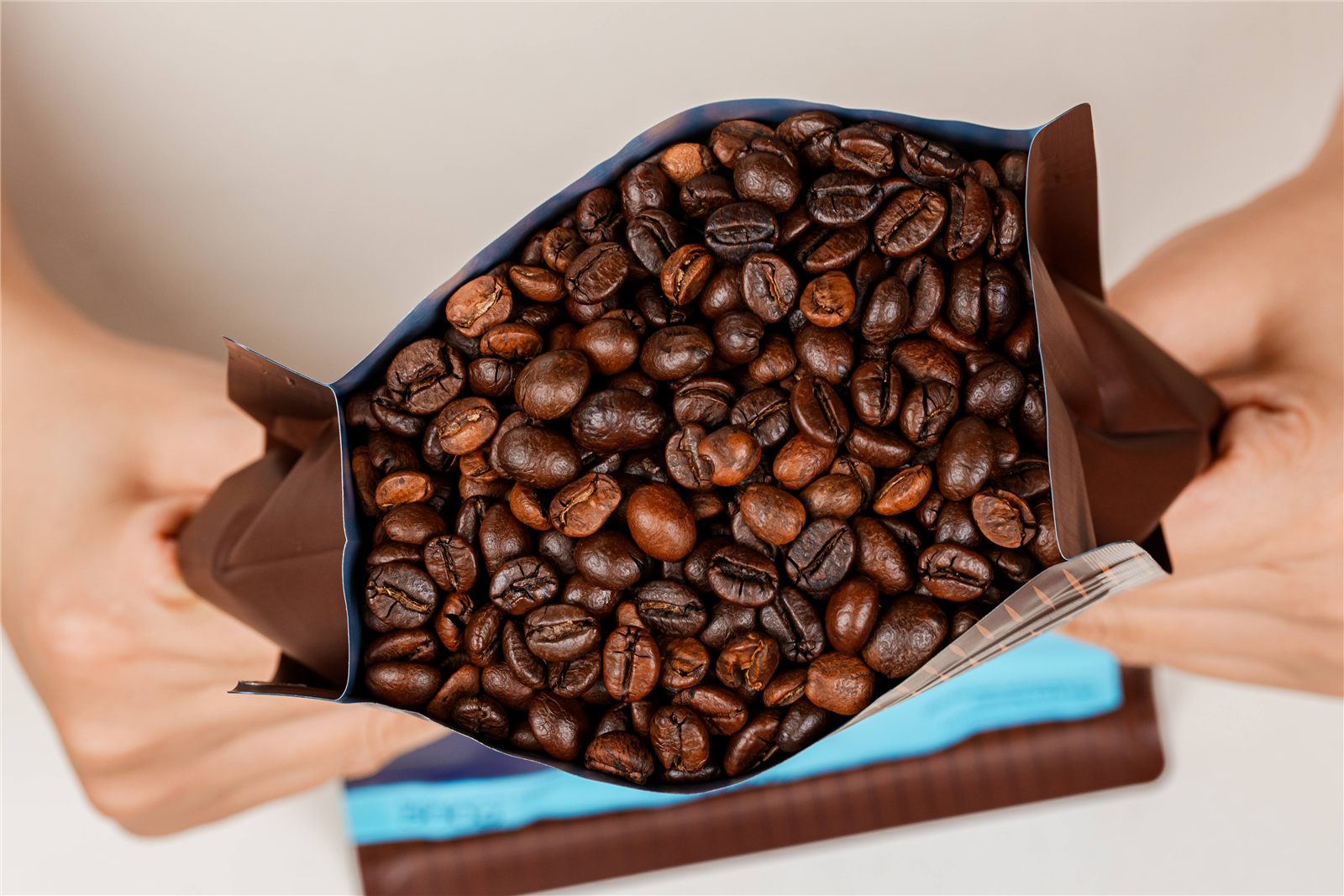
Measure the actual mass of coffee entering the brew, rather than estimating by eye or using a spoon without a calibrated volume. Different roast levels and grinds affect bulk density, so the same heaped spoon will not always weigh the same. A small scale is useful if you change beans often or need accurate cup planning; for occasional home use, you can weigh your usual portion once as a reference for later brews.
If you switch from a 250 g or 500 g bag to a kilogram, simply replace 1,000 in the formula with the package weight. For example, a 500 g bag at 20 g per brew provides 25 theoretical cycles; a 250 g bag provides about 12 complete cycles, leaving 10 g. The remainder is still usable coffee, but it does not make another full 20 g serving if you keep the recipe unchanged.
One common error is treating all espresso extractions as the number of drinks sold. If a café's latte uses two separate shots, count the beans for both. If a machine makes a double espresso and splits it into two small servings, the dose per drink is different. Forecasting reflects actual use only when you establish how many grams each complete menu item requires.
2. How many espresso shots can one kilogram make?
2.1. Compare doses of 16, 18, 20 and 22 grams
Doses of 16, 18, 20 or 22 g are sometimes used as starting points for espresso baskets, not universal requirements for every machine. With a suitably sized basket, an 18 g dose gives 1,000 ÷ 18 = 55.56 theoretical cycles, or at most 55 full cycles using exactly 18 g each before accounting for remaining beans. At 20 g the result is exactly 50 cycles.
Quick reference for one kilogram of beans, excluding waste:
16 g: Theoretical extractions: 62.50 — Maximum full extractions: 62
18 g: Theoretical extractions: 55.56 — Maximum full extractions: 55
20 g: Theoretical extractions: 50.00 — Maximum full extractions: 50
22 g: Theoretical extractions: 45.45 — Maximum full extractions: 45
The maximum number of full cycles is the whole-number portion of the division; leftover beans can still be used later or combined with the same type of coffee from another bag. In actual operation, doses and grinder retention may cause small differences. The table simply illustrates how changing the dose by a few grams can markedly affect total output.
“Shot” is also defined differently across cafés and equipment. One place may call an extraction from a double basket a double shot, while another counts it as two servings. To compare bean usage, define the unit as one brewing cycle using X grams of coffee, then convert that into the number of finished menu drinks.
2.2. How many grams go into an americano, latte or milk coffee?
A drink's name does not tell you exactly how many grams of beans it uses. An americano may use one espresso extraction, while another café's large size might use two or a larger basket dose. The same goes for a latte: more milk does not necessarily mean more beans; it depends on the recipe set by the café or home brewer.
For illustration, suppose a café standardizes a latte at 18 g of coffee and a large americano at 20 g. From one kilogram, the theoretical yields are about 55.56 and 50 drinks respectively. If both drinks are sold, do not simply average their doses to 19 g unless sales volumes are equal. Different drink mixes require a weighted-average dose.
A home brewer might use the same 18 g espresso extraction as the base for black espresso, americano or latte. In that case, all three drinks have the same bean cost; the additional ingredients change the total cost and tasting experience. This distinction helps prevent the assumption that a larger drink always uses more coffee.
3. How many phin brews can you make from one kilogram?
3.1. Doses of 20 and 25 grams for different routines
With 20 g of coffee per phin brew, one kilogram theoretically provides 50 cycles. Increase the dose to 25 g and it provides 40. Neither dose is the standard for every phin: filter size, water amount, grind and preferred strength all influence the right quantity.
Someone who enjoys strong coffee may choose a higher dose, but adding more grounds while using very little water does not necessarily make a better-balanced cup. Before using dose to plan a budget, find a recipe you genuinely enjoy. Then use its gram amount as the basis for purchasing. For people bringing coffee to work, a repeatable morning routine is often more useful than guessing at a heaped or half-filled spoon.
3.2. One phin brew may serve several smaller cups
At home, a person might brew one phin and drink the entire result. At a counter, however, phin coffee can be made in batches and divided into servings, each topped with milk or ice. In that case, one brewing cycle is not the same as one drink sold. Divide the total mass of grounds used for the batch by the number of drinks meeting the recipe to find average grams of beans per cup.
For example, a batch uses 120 g of coffee and makes six correctly portioned drinks, averaging 20 g per cup. If only five drinks meet the requirements because of spills or uneven dividing, the amount per saleable cup rises to 24 g. That difference directly changes how many cups one kilogram can serve even though the bean variety remains the same.
A café brewing phin coffee in batches should therefore count completed drinks used or sold, not how many times water was poured. A café offering both espresso and phin should also track the two categories separately before adding up monthly bean consumption.
4. How does waste change the actual cup count?
4.1. Dialing in, grinder retention and remade drinks
Waste is more than grounds spilled on the counter. Espresso users may need several shots to dial in the grind after opening new beans. Some coffee can remain in the grinder's internal path, so the input weight differs from what reaches the basket. A café might remake a drink after a recipe error or spill; an office might use beans for tests when changing products or servicing the machine. Water used to flush equipment without coffee grounds does not count as bean waste.
Waste varies between situations. A home machine used consistently with infrequent bean changes may have low losses, while a café testing new menu items could experience higher waste during development. Do not borrow a percentage from the internet and assume it describes every business. Track incoming beans, remaining inventory and actual drinks consumed or sold over a meaningful period.
4.2. How to account for waste in the calculation
Suppose an acceptable drink uses an 18 g standard dose, with additional beans used for dialing in, retained grounds and remakes equal to 5% of the beans used for successful servings. Average consumption becomes 18 × 1.05 = 18.9 g per acceptable serving. One kilogram would then yield about 1,000 ÷ 18.9 = 52.91 theoretical acceptable servings, or roughly 52 complete servings using a cautious whole-number count. This is a hypothetical example, not a loss rate published by LOPHA.
If the 5% instead refers to the share lost out of all beans withdrawn, the estimate is 1,000 × 95% ÷ 18 ≈ 52.78 servings. Both approaches can work for planning, but their waste percentages use different denominators, so the answers are not identical. Pick one accounting method and apply it consistently to avoid missing or double-counting waste.
To calculate actual consumption, divide total grams of beans used by the number of acceptable drinks in the same period. If a month uses 9,600 g to serve 480 acceptable drinks, the average is 20 g per cup. Provided all losses were recorded, that number already includes waste from the period; do not add another 5%. This is a common source of double-counted costs when moving from theoretical to operational figures.
5. How do you calculate the bean cost per cup?
Basic formula: bean cost per cup = bean price in VND/kg × average grams of beans per cup ÷ 1,000. At an illustrative purchase price of VND 320,000/kg and a standard 18 g serving, theoretical bean cost is VND 5,760. Add 6% waste relative to standard usage and average bean cost becomes 5,760 × 1.06 = VND 6,105.6, rounded to about VND 6,106. This is only a worked example, not LOPHA's selling price.
A bag that costs more per kilogram can still deliver a similar bean cost per drink if a satisfying recipe needs fewer grams or requires fewer grinder adjustments or remakes. Conversely, cheap beans may lose their apparent price advantage when the dose must increase or drinks are frequently remade. Compare actual purchase cost, beans used per acceptable drink and observed waste rather than looking only at two price lists.
Bean cost is not the full cost of goods sold for a commercial coffee drink. Milk coffee also involves milk, sugar, ice, cups, lids, electricity, labor and other expenses according to the café's accounting approach. This article answers how many cups a kilogram can make and what the coffee ingredients cost. For pricing decisions, cafés need a separate costing sheet for the complete menu item, not just the beans.
Home drinkers have another question: how much do the beans in my homemade cup cost compared with buying coffee outside? The division remains helpful, though a comprehensive comparison might also account for equipment, milk, electricity and time. Do not let that complexity obscure the simplest first calculation: how many grams of coffee you actually use in a cup.
6. How should homes, offices and cafés estimate usage?
6.1. At home: count actual brewing sessions, not calendar days
Suppose someone makes an espresso to take to work on 20 days per month, using 18 g per extraction. Standard consumption is 360 g before dial-in or test waste. If two people drink similar amounts, demand roughly doubles. But if the household rarely uses the machine at weekends, do not assume two coffees are made every one of 30 days. Observing actual habits for two weeks often provides a better starting point than a perfect-looking calendar estimate.
Someone who likes to explore bean varieties might buy smaller packs rather than open a kilogram bag and keep it for a long time. Large packs are not always a saving if the coffee loses aroma through poor storage or preferences change halfway through. When consumption is regular and storage practices are reliable, a bigger pack becomes worth considering according to how quickly it will be used.
6.2. Offices: account for brewing cycles and peak hours
An office with 40 staff members does not necessarily brew 40 cups a day. Some people do not drink coffee, others work remotely, visitors may come to meetings, and some staff drink more than once. Record the actual daily drinks, average dose and days people attend. If the machine counts cycles, compare that count with real bean usage because each cycle does not necessarily consume the same amount.
For example, an office serves 28 cups per day over 22 working days, averaging 17 g of beans per cup including waste. It needs 28 × 17 × 22 ÷ 1,000 = 10.472 kg per month. Yet forecasting beans is only half the task: 28 coffees spread evenly across the day place different demands on equipment than 28 coffees requested at the start of the morning. The machine and brewing area should suit that usage pattern.
6.3. Cafés: use real sales counts and the drink mix
Different café menu items may use different doses. If a café sells 40 drinks at 18 g each and 20 at 22 g each in a day, standard bean usage is 40 × 18 + 20 × 22 = 1,160 g per day before waste. Across 60 drinks, the standard average is about 19.33 g per cup. If all 60 drinks meet the requirements and losses are recorded separately, actual average consumption will be higher depending on additional beans used beyond the recipes.
Each day, a café can log drinks by menu item, recipe doses, beans actually removed from inventory and drinks remade. Comparing several weeks reveals which items create more waste than expected. If the café is considering a new coffee supplier, these figures allow both sides to test and compare actual recipes rather than looking only at the per-kilogram price.
7. Three mistakes that make paper estimates inaccurate
The first mistake is confusing extractions with finished drinks. A single 18 g espresso extraction may produce an americano, a latte or part of a drink needing multiple extractions. A per-kilogram estimate can be compared across menu items only after the counting unit has been defined.
The second mistake is counting waste twice. If the average 20 g per cup was already calculated from actual beans consumed divided by drinks sold, adding another 5% or 10% artificially inflates costs. A contingency percentage belongs in a forecast based on theoretical doses, before actual usage data is available.
The third mistake is jumping from purchase price straight to selling price. The cost of an espresso extraction is one component, not the full cost of goods and certainly not the profit margin. Cafés also need to account for milk, ice, cups, labor, discarded drinks and other expenses. This distinction makes the article's calculations useful without presenting them as a universal pricing formula.
8. A small tracking table for every bag of coffee
No software is needed to monitor four columns: starting bean weight, ending bean weight, drinks consumed or sold, and standard dose per cup. If you know the purchase price, add a column for bean cost per cup; this measures only the coffee component, not the full cost of the drink. One week of consistent records gives you better information than estimating usage from the number of empty bags.
For example, if a 500 g bag makes 24 drinks and 20 g remains after the first week, then 480 g has been taken out of the bag. Average input is 480 ÷ 24 = 20 g per acceptable drink, assuming none was used for anything else. If the standard recipe calls for 18 g, the difference may come from grinder adjustments, retained grounds or remade drinks. The figure does not reveal the cause by itself, but shows exactly where to look.
For a home brewer, tracking simply helps determine how much coffee to buy. In an office, it helps the person in charge know when to reorder. For cafés, the figures feed into a larger cost-of-goods model. A kilogram therefore has no fixed number of cups: once you know how many grams each acceptable drink uses and how many beans were lost, the answer becomes clear from the scale and your records.