Robusta, Arabica, or Blend: Which Coffee Should a Café Choose for Each Menu Item?
Each type of coffee has its own flavour profile, directly affecting espresso, black coffee, milk coffee, and latte. Testing Robusta, Arabica, and Blend in the café's actual menu drinks helps match ingredients to customer tastes, brewing methods, and operating costs.
A newly opened café often spends a great deal of time on drink names, signage, and pricing. Yet bean selection can be reduced too easily to “Is Robusta or Arabica better?” A customer ordering Vietnamese iced milk coffee experiences beans differently from someone drinking straight espresso, and a sample the owner enjoys during a quiet tasting may not be easy to reproduce during a busy shift.
To choose coffee for the menu, start with the drinks ordered most often, the flavours regular customers want, and the capabilities of the counter equipment. Only then test two or three suitable bean options. No variety is automatically more prestigious; what an owner needs is a coffee that works across shifts and makes customers want to return.
1. Review menu sales before choosing coffee varieties
1.1. Your three bestsellers tell you more than a bean description
If sales data show that most orders are iced coffee with condensed milk, bac xiu, and iced black coffee, bean testing should look different from that of a café built around espresso and cappuccino. For the first group, taste the beans after adding condensed milk and ice; for the second, test both straight espresso and fresh-milk drinks. The drinks customers actually buy are where the beans need to perform best.
For an operating café, review sales data from the last two to four weeks. Record the number of coffee drinks sold by item, machine types, and bean dose per item. New cafés can start with estimates but should review them after a few weeks of trading. Imperfect data are still more useful than making a choice based solely on one person's preferences.
Using those figures, select two core drinks and one less-common drink to test. For example, a phin-focused café might test iced coffee with condensed milk, iced black coffee, and bac xiu; an espresso bar might test espresso, latte, and americano. A focused test helps baristas remember the differences and managers see which beans genuinely suit the menu.
1.2. One coffee for the whole menu or two separate base coffees?
Using one coffee product simplifies inventory, ordering, and staff training. Small cafés with limited storage and modest sales per menu item often benefit from this simplicity. However, if the menu serves two very different customer groups, forcing one coffee to suit everyone may leave both groups only moderately satisfied.
Two base coffees are worth considering only if sales in each drink group justify them, grinders allow beans to be separated or switched conveniently, and staff can maintain the recipes. The café must also consider opened bags sitting too long, accidental mix-ups, and time spent adjusting the machine each shift. Sometimes one coffee that performs well in the main bestsellers is more efficient than a menu with too many choices.
2. What should you test first in black coffee and espresso?
2.1. Black coffee reveals bean character but does not decide the entire menu
Without milk to soften the experience, differences in bitterness, aroma, mouthfeel, and acidity are usually easier to detect in black coffee. Robusta may suit customers who enjoy a bold, distinctly bitter cup; Arabica can offer more aromatic and acidic notes; and a Blend may fall between these directions depending on its composition and roast. These are sensory tendencies, not guarantees that all beans of one variety taste the same on every machine.
When testing espresso, use a sound and consistent method for dose, beverage yield, and evaluation, then adjust the grind to find a suitable recipe for each sample. Do not force three different beans to use one grind and declare the slowest-flowing one inferior. Differences in bean structure and roast level can require changes in extraction settings.
If the café has americano customers, also test espresso diluted with the amount of water usually served. A sample that is satisfyingly full in a short espresso may feel thin in a larger drink. Testing the menu item as it will actually be sold gives a more reliable decision than the description on a bag.
2.2. Do not mistake crema for overall quality
When recording tasting impressions, use words regular customers might use: moderately strong, a little acidic, clearly aromatic, lingering finish, or easy to drink with ice. These notes help staff explain drinks more naturally than a long list of technical terms. Agreeing on simple descriptions among tasters already gives the café a basis for comparing samples.
In one trial, sample A might make an aromatic black coffee with clear acidity but seem subdued with milk; sample B might stay bold in iced milk coffee but suit straight espresso less well. Recording each drink separately shows how the beans serve the menu instead of trying to crown one overall “best” sample. This is only an example of tasting notes, not a LOPHA tasting result.
3. Milk coffee, bac xiu, and latte call for different criteria
3.1. With condensed milk and ice, the coffee should still come through
Vietnamese iced coffee with condensed milk often has noticeable sweetness and creaminess. Beans an owner loves in black coffee can lose their identity once condensed milk is added. Conversely, beans with a bold taste and lingering finish may balance a sweet recipe more effectively, depending on milk quantity, ice, and customer preferences.
If the drink sells well, use the same milk dose, coffee dose, and cup size for each sample. Invite a few staff members to blind-taste coded samples A, B, and C, judging which retains its coffee character while remaining pleasant to drink. Only afterward evaluate cost and ease of preparation. Blind tasting reduces the influence of brand names or sales pitches.
In bac xiu, where milk tends to dominate more strongly, the owner needs to decide whether coffee should provide just an aromatic background or still leave a distinct taste. No bean ratio guarantees a good bac xiu if the milk recipe is unbalanced. Choose beans and drink recipe together rather than rating either in isolation.
3.2. Latte and cappuccino need their own test
Steamed fresh milk brings natural sweetness, foam texture, and a serving temperature different from iced condensed milk. Beans that work in Vietnamese iced milk coffee may not work as well in latte, especially if the café wants delicate aroma in a hot drink. Customers who prefer a pronounced espresso taste may favour a stronger coffee base; those who enjoy a softer aroma may prefer another direction.
Do not test latte with arbitrary milk quantities for each bean sample. Keep cup size, espresso dose, and milk volume consistent, and record impressions again after a few minutes as the drink cools. Results should serve the café's actual product, not identify a winner in an abstract tasting competition.
4. A table of coffee options to test for each drink group
There is no need to assign a fixed bean type to every drink name in advance. The table below suggests worthwhile directions for testing; final decisions depend on the specific beans, roast, machine, recipe, and feedback from the café's own customers.
Black phin coffee or iced black coffee: Beans worth testing: Robusta; Blend for more nuance — What to check: Strength, bitterness, aftertaste, and the effect of added ice
Vietnamese iced milk coffee: Beans worth testing: Robusta; Blend — What to check: Does the coffee remain distinct with milk and ice?
Bac xiu (milk-forward coffee) (milk-forward coffee): Beans worth testing: Blend; Robusta according to customer taste — What to check: Is the coffee aroma still noticeable in a milk-heavy recipe?
Straight espresso, americano: Beans worth testing: Arabica; Blend; Robusta according to the clientele — What to check: Aroma, balance, and flavour after dilution
Latte, cappuccino: Beans worth testing: Arabica; Blend; Robusta depending on the style — What to check: Does the coffee complement fresh milk?
Signature drinks with syrup: Beans worth testing: Start with beans already working in the base drink — What to check: Retaste with the actual syrup and ice recipe
A café selling many espresso-based drinks may need only one consistent base coffee. A café serving both traditional phin and distinctive espresso drinks, however, may need to test two different bases. Prefer the least complicated solution that still preserves the flavour of best-selling drinks.
5. When might the 80/20 Blend suit a café?
5.1. A blend ratio describes ingredients, not every result in the cup
A Blend of 80% Robusta and 20% Arabica generally suggests a prominent Robusta base with additional Arabica nuances. But the blend ratio does not fully describe roast level, ingredient processing, or what the café's machine will extract. Two bags both marked 80/20 may still taste different in the same drink.
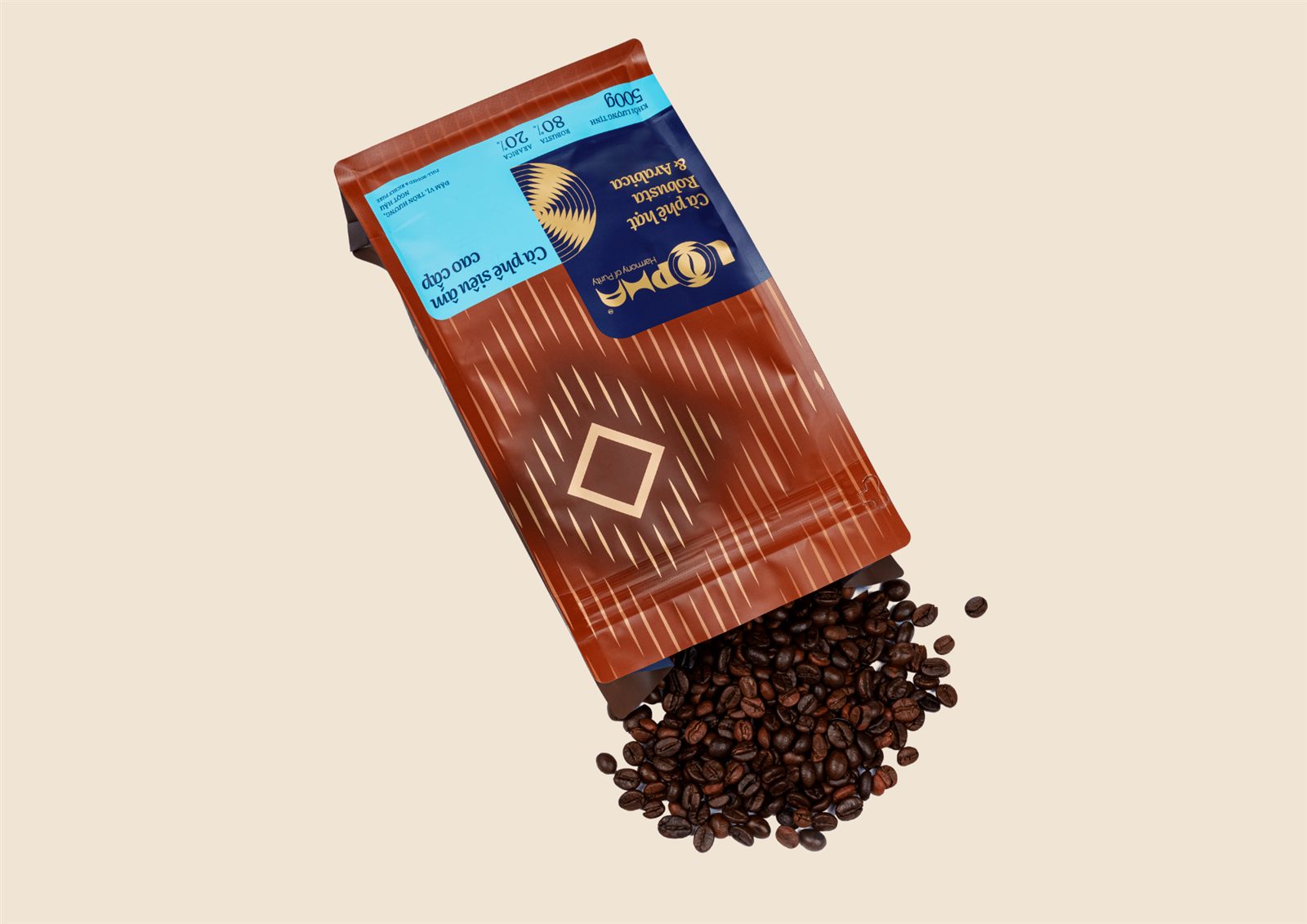
A café offering both iced milk coffee and espresso could test several different flavour directions using consistent drink recipes. LOPHA's 80/20 whole-bean Blend is an option with more Robusta than Arabica, but whether it works should be decided only after brewing two actual menu drinks, not from the package ratio alone.
5.2. When should you avoid forcing one Blend onto every drink?
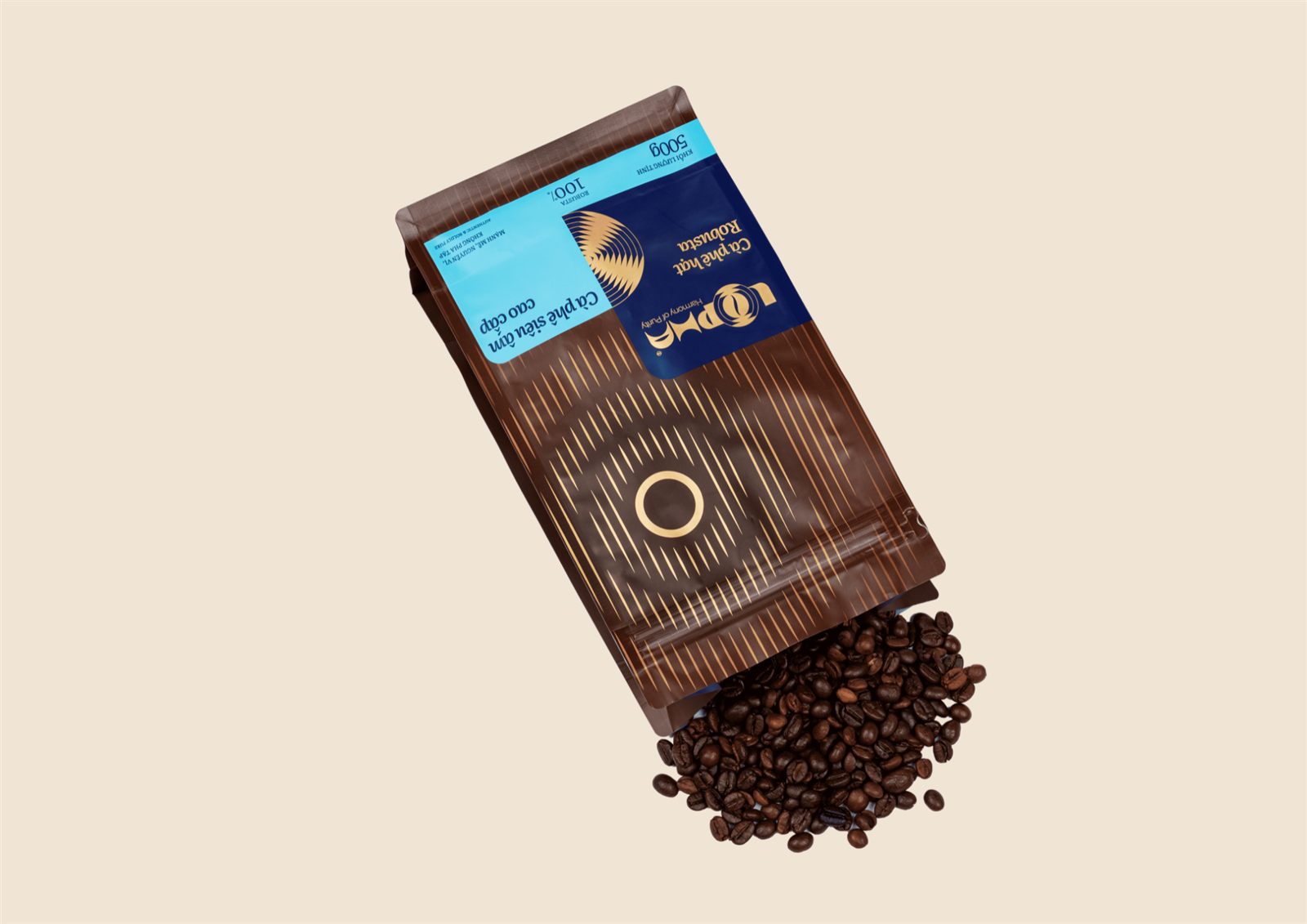
If regular customers enjoy espresso with clear acidity, a Robusta-forward Blend may not match the flavour direction the café wants to maintain. Conversely, outlets centred on bold phin coffee may prefer pure Robusta. Some cafés need only one coffee to satisfy most customers, and that does not make their menu less valuable.
A Blend is not automatically a “balanced” choice for every menu. The ratio only tells you the ingredients; the result also depends on the beans themselves, roast, and brewing. If a particular Robusta or Arabica already serves regular customers well, the café need not switch to a Blend simply because the name sounds more varied.
6. Test samples like a short service shift, not a casual tasting
6.1. Score each sample in three representative drinks
In the first round, select two or three samples labelled A, B, and C. Prepare each in two bestsellers and one additional drink; record customer fit, consistency, remakes, and bean cost based on actual doses. Several tasters using shared criteria can provide a more balanced view than the owner's preference alone.
Run the first round during a quiet period to allow time for adjustments. Repeat the test under conditions closer to actual service to see whether speed and quality are manageable. Beans that are exciting during a relaxed tasting but require repeated machine adjustments may add pressure during busy morning service.
Suitability for core drinks: Practical way to record it: Score 1–5 for each bestseller
Repeatability across two shifts: Practical way to record it: Acceptable brews / total test brews
Ease of service during rush hour: Practical way to record it: Note difficulties adjusting grind or portioning doses
Bean cost per cup: Practical way to record it: Price per kg × grams used ÷ 1,000, with waste added consistently
Customer feedback: Practical way to record it: Record specific notes on boldness/lightness, acidity/bitterness, finish, and drinkability
6.2. Do not test sample A under better conditions than sample B
A sample prepared by an experienced barista on a freshly cleaned machine should not be compared directly with another brewed while the counter is malfunctioning. Keep water, equipment, and serving process comparable. Grind size can be adjusted for each coffee to achieve the best result, but milk, ice, and scoring criteria should remain consistent.
Beyond cup flavour, record whether staff must adjust the grinder excessively, whether there is room for two coffees at the counter, and whether the supplier's delivery schedule matches the ordering cycle. Such issues often emerge only when a trial resembles real service rather than a relaxed tasting session.
7. Bean selection must go hand in hand with costing and inventory
7.1. Must you choose the cheapest beans?
Choosing beans for the menu does not mean finding the cheapest option. A low-priced sample may cost more in practice if the machine needs repeated adjustments or employees remake too many cups. On the other hand, a slightly pricier coffee that is easier to prepare consistently may improve the customer experience. Detailed calculations belong in the costing sheet; at the menu-selection stage, the central question is whether bestsellers retain the flavours customers enjoy.
A saving shown in a spreadsheet matters only if customers continue to enjoy their usual drinks. If changing beans causes a popular cup to lose the flavour regulars remember, the owner should reconsider, even when ingredient cost per cup decreases.
7.2. Will using two coffee products complicate the menu?
Every additional coffee product brings its own work: demand forecasting, ordering, storage, expiry checks, staff guidance, and switching beans at the grinder. If one product sells very little, opened bags may sit too long and constant setting changes can outweigh the benefit of a more varied menu.
A café can begin with one coffee for most drinks, then add a second for a clearly defined group of beverages. If using two bases, label recipes and storage locations clearly so staff do not confuse them during rush hours. Consistent menus often start with such small rules.
8. From choosing samples to placing a wholesale order
After two trial rounds, the café should have observable answers: which sample suits main sellers, which retains flavour with milk, which is easy to reproduce across shifts, and which falls within the target bean-cost range. The choice of wholesale supplier then rests on more than “Which coffee tastes best?”
For phin-focused cafés, roasted and ground coffee removes grinding work at the counter, but baristas still need to confirm that the grind suits their actual phin. Cafés with grinders have more flexibility with whole beans. A recipe that is comfortable for staff to make is often more important than changing packaging or product format for its own sake.
A memorable coffee menu does not necessarily need many bean varieties. When each ingredient has a clear purpose, baristas make fewer mistakes, owners control costs more easily, and customers have a reason to return for their favourite drink. That is the real aim of choosing Robusta, Arabica, or Blend for a café.