How to Froth Milk at Home without an Espresso Machine: Getting Fine, Smooth Foam
You can froth milk at home with a handheld frother or French Press without an espresso machine. For smoother foam, pay attention to the type and temperature of milk, how much air you introduce, and how you break up large bubbles after frothing.
1. Do You Need an Espresso Machine to Froth Milk at Home?
Sometimes you want hot coffee with a soft layer of milk foam, but the price of an espresso machine and steam wand feels excessive for your morning routine. The good news is that simple tools can make foam too. A handheld frother, a French Press or a dedicated milk frothing device can all introduce air into milk and create enough foam for an enjoyable homemade drink.
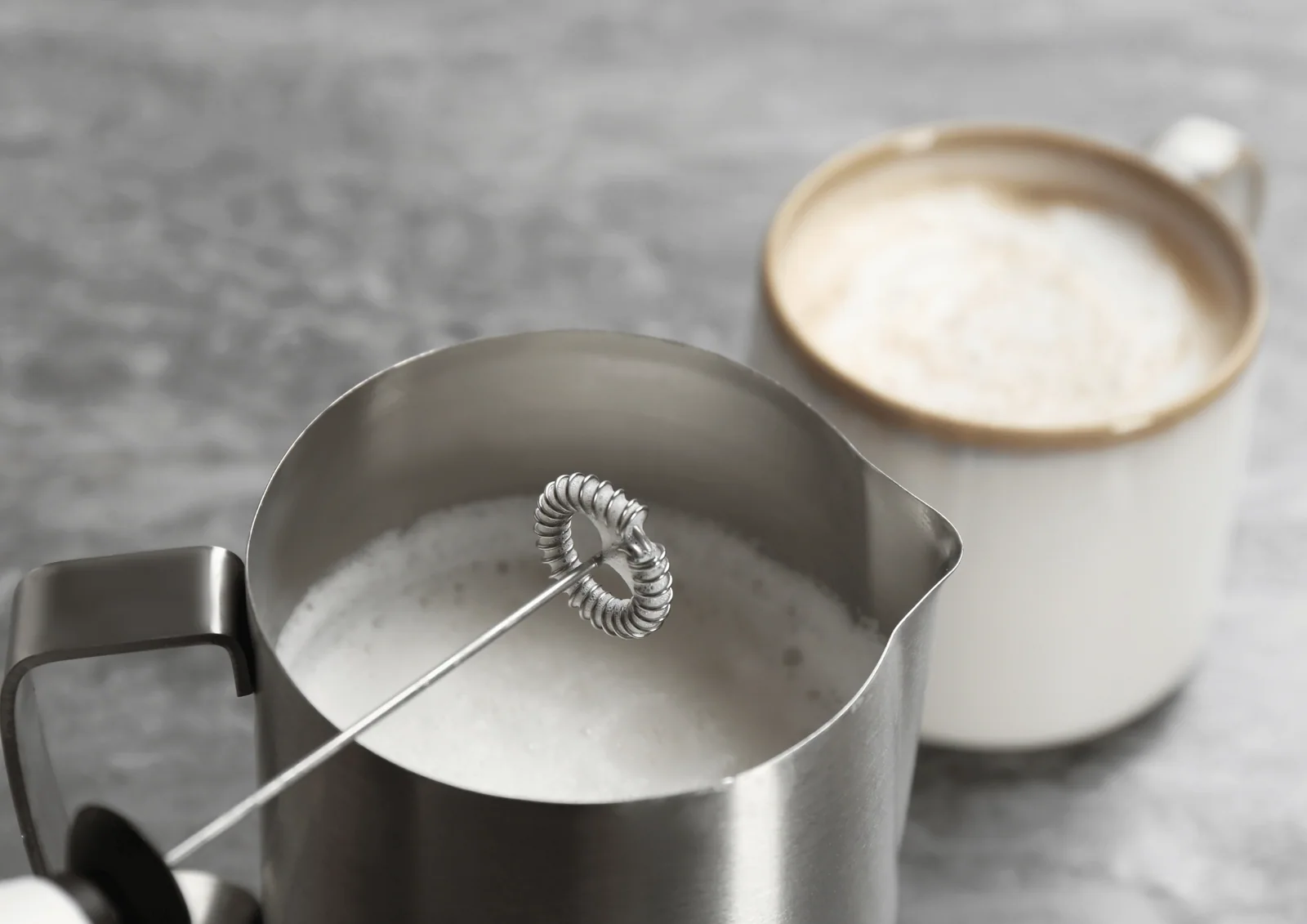
The important thing is that taller foam is not always better. A cap of large bubbles may look impressive just after frothing but collapse quickly, leaving thin milk beneath. Drinks such as lattes usually benefit from a smooth texture with small bubbles reasonably well incorporated into the milk. Cappuccino may have a thicker foam layer, but it should still feel soft and pleasant rather than dry and spongy.
If you have never frothed milk, start with a small portion and one method. Do not change three types of milk, two temperatures and a new tool all in the same session. Learning to recognize the shift from liquid milk to a soft, smooth texture matters more than trying to pour a heart on your first attempt.
2. Which Type of Milk Makes the Smoothest Foam?
Fresh dairy milk contains proteins that help support foam structure, while its fat content affects softness, body and richness. Many people enjoy whole milk for its rounded mouthfeel, although lower-fat milk can froth differently too. There is no need to assume one type beats every other: brand, temperature and frothing equipment all affect the outcome.
Plant-based milks such as oat, soy and almond each behave differently. Some products labeled “barista” are formulated to produce more stable foam for coffee, but you should still read their packaging. If a very thin plant-based milk collapses quickly, your technique may not be the problem. Try a product intended for frothing before buying a more powerful machine.
Store milk according to the manufacturer's instructions. Do not leave an opened container at room temperature for too long while preparing coffee. For hot frothing, warm only the portion you intend to use and keep the remainder refrigerated as required. With milk drinks, clean equipment matters as much as flavor.
3. How to Froth Milk with a Compact Handheld Frother
Prepare about 120–150 ml of milk and a tall enough jug to prevent splashing. For a hot drink, warm the milk appropriately. Around 60–65°C is a common reference in Breville's steam-wand guidance, not a rigid limit for all milk types or devices. There is no need to bring milk to a rolling boil, as excessive heat can make its flavor and texture less pleasant.
Keep the frother tip submerged beneath the milk surface and start at a moderate speed; placing it too close to the surface immediately can splash milk across the counter. Once the milk is moving, lift the tip just enough to draw in a little air. Keeping it at the surface with loud splashing tends to create large bubbles. Find a position where the milk swirls gently and the foam gradually builds.
Once foam has formed, lower the tip a little to incorporate it into the milk below, and switch the frother off before lifting it out. Tap the jug gently on a towel placed on the counter to break large bubbles, swirl it a few times, and pour promptly. A handheld frother cannot guarantee the microfoam of a professional steam wand, but restrained air incorporation can still give you pleasantly soft foam.
4. Can You Froth Milk with a French Press?
Yes. A French Press is not limited to steeping coffee; the mesh plunger in some models can froth milk as it moves up and down. Check that your press is suitable for hot milk, and do not fill it too high. Milk expands during frothing, so use only a small proportion of the vessel's capacity to avoid overflow around the lid.
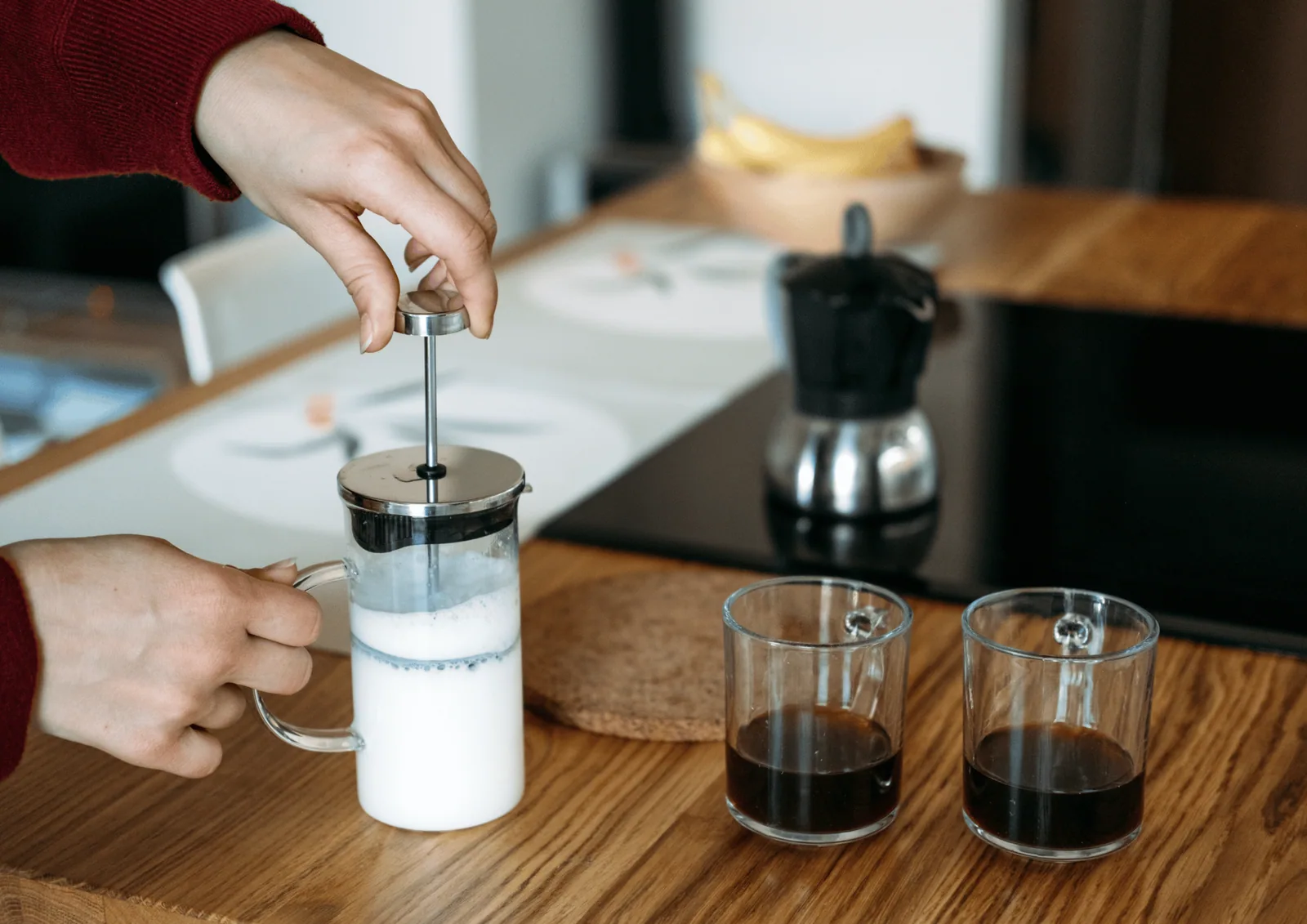
Pour safely warmed milk into a clean press, lower the plunger beneath the milk surface, and pump it up and down rhythmically. Begin with short strokes to introduce air, then use more even movements to refine the foam and mix it with the milk. Avoid pulling forcefully enough to splash hot milk over the rim. When the volume increases and the foam feels soft, stop rather than beating it until dry and airy.
Transfer the milk to a pouring jug, tap lightly and swirl to integrate the foam. If your French Press has previously held coffee, clean the mesh thoroughly of oils and grounds or the milk may pick up old odors. People who only occasionally make lattes at home may find this convenient because it uses equipment they already own, although results differ from one press to another.
5. Why Does Milk Foam Have Large Bubbles and Collapse Quickly?
5.1. Introducing Too Much Air at the Start
If the whisk sits too high, it continually draws air into the milk and creates large bubbles. Foam can rise quickly but have a coarse texture, feeling like a separate layer of air on the drink. After making the initial foam, lower the whisk tip so a swirling movement blends smaller bubbles into the milk. A sufficiently large jug also helps control the flow.
Another common mistake is frothing too long in pursuit of a cup full of foam. The milk changes from smooth to dry and separates; when you pour, liquid runs out first while a lump of foam remains. Stopping sooner, swirling immediately and pouring while the milk is still integrated often helps more than buying a foam-boosting powder with unclear ingredients.
5.2. Using the Wrong Temperature or Type of Milk
Overheated milk may taste unpleasant and develop poorer-quality foam. Without a thermometer, warm it gently using suitable equipment and avoid boiling. Touching the outside of a jug will not give an accurate temperature and may burn your hand. If you froth frequently, a small kitchen thermometer can help you repeat a good result.
Plant-based milk can behave completely differently from dairy milk even at the same frothing speed. If a particular brand cannot hold foam, check the formula or switch to a coffee-oriented version before deciding the frother is broken. Do not repeatedly re-froth milk that has cooled and separated; a fresh, small portion is easier to evaluate.
6. How Does Foam Differ between Latte and Cappuccino?
Latte typically emphasizes a larger quantity of steamed milk with a thinner layer of fine foam, while cappuccino often has a more noticeable proportion of foam in its serving style. But drink names do not prescribe a single rigid construction for every café. At home, the practical aim is a coffee, milk and foam ratio you enjoy, not measuring the foam layer millimeter by millimeter.
When starting out, use one espresso shot or another suitable strong coffee base, add the frothed milk and observe. If the foam sits in large patches, swirl the jug more thoroughly before pouring. If the milk is very thin and lacks softness, perhaps too little air was introduced or the milk is difficult to froth. A few trials will tell you more than any description of milk being “silky.”
Bean choice also influences the overall flavor. Those who want the coffee to remain prominent with milk may enjoy Robusta or a Robusta-heavy Blend; people who prefer acidity and other aromas may try Arabica. Consider the flavor characteristics of Robusta, Arabica and Blend when selecting a coffee base. Milk is not a way to conceal poorly extracted espresso or burnt coffee completely.
7. Can You Make Latte Art with Hand-Frothed Milk?
You can attempt a simple design if the foam is fine and integrated enough, but handheld frothers do not always make the kind of texture needed for latte art that steam wands produce. Very thick foam in particular floats in a mound and is difficult to pour into smooth shapes over coffee. Not being able to draw a heart does not mean your homemade drink has failed.
To practice pouring, first learn to tilt the cup, bring the jug lower when forming white shapes and keep the milk stream even. But until you can make microfoam, give priority to texture: fewer large bubbles, soft milk and richness that is not cloying. People feel foam quality in the mouth more than they judge it from an overhead photograph.
For iced drinks, hot-frothed milk is not always suitable. Some people prefer cold foam made from chilled milk or a purpose-designed product, with a different texture and foam stability from hot latte milk. Do not copy a hot recipe's temperature and frothing time into an iced drink and assume the milk is faulty when it behaves differently.
8. Cleaning Equipment and Preparing Quickly in the Morning
Clean the whisk head of a handheld frother immediately after use, following the device instructions so dried milk does not collect in the coil. Do not immerse a battery-powered or electronic handle in water unless the manufacturer permits it. With a French Press, remove the mesh when needed and clean milk trapped in the gaps; cursory washing can leave unpleasant smells the next morning.
A tidy routine is to measure the milk, keep the jug and tools within easy reach, and brew the coffee base first. Start frothing when the coffee is almost ready so the foam does not sit waiting and separate. For a hot drink, pour while the foam is soft and integrated; for iced coffee, use a recipe suited to cold beverages.
You do not have to turn each morning into a barista exam. Hot milk coffee with reasonably fine foam, a comfortable serving temperature and only a few tools to wash is already a result worth repeating. As the routine becomes familiar, you will naturally learn whether you want more foam, less richness or different beans. Those small refinements make home brewing more enjoyable.
9. Frequently Asked Questions
How do you froth hot milk without a thermometer? Warm it gently using appropriate equipment and avoid boiling, while staying alert to burn risks. A kitchen thermometer helps if you want repeatable results or are practicing fine foam. The 60–65°C range is a common reference for hot-frothed milk, not a compulsory rule for every milk type.
Can sweetened condensed milk be frothed? It has a different thickness and sugar content from fresh milk, so a normal milk-frothing recipe will not necessarily produce the same result. In Vietnamese iced coffee, condensed milk typically adds sweetness and richness to the base; if you want fine foam on top, choose milk suited to that goal.
Does frothing for longer make foam last longer? Not necessarily. Over-frothing can produce dry foam, large bubbles and separation. Watch how the milk moves, stop when the texture is soft enough and pour promptly. Foam quality depends on the match between ingredients and technique, not solely on how many minutes the frother runs.