Why Does Coffee Smell Less Aromatic at Home Than in a Café? Simple Ways to Improve It
Even with roasted ground coffee, your homemade cup may differ from café coffee because of the beans, grind size, water quantity, and storage. Before buying extra equipment, check the simplest factors to rediscover the aroma you enjoy.
You buy a takeaway coffee in the morning and notice its aroma the moment you lift the lid. Yet when you make a cup at home on the weekend—even with roasted ground coffee and your familiar phin—it somehow smells less inviting. Sometimes the flavor is still strong but the aroma seems faint. On other days, adding milk and ice makes everything taste even more diluted.
The café does not necessarily have a secret method you cannot learn, and an expensive machine is not a requirement for making good coffee at home. The café may use different beans, a different grind, and another coffee-to-water ratio. To see what is changing the result, start with the kind of coffee you actually drink every day.
1. Does Your Homemade Coffee Lack Aroma or Strength?
It is easy to confuse these two sensations. Coffee lacks aroma when you bring the cup close but hardly notice a distinct coffee smell. It lacks strength when the flavor seems too weak, especially after milk or ice has been added. A drink can taste strong yet have little aroma; another may smell wonderful but taste relatively light.
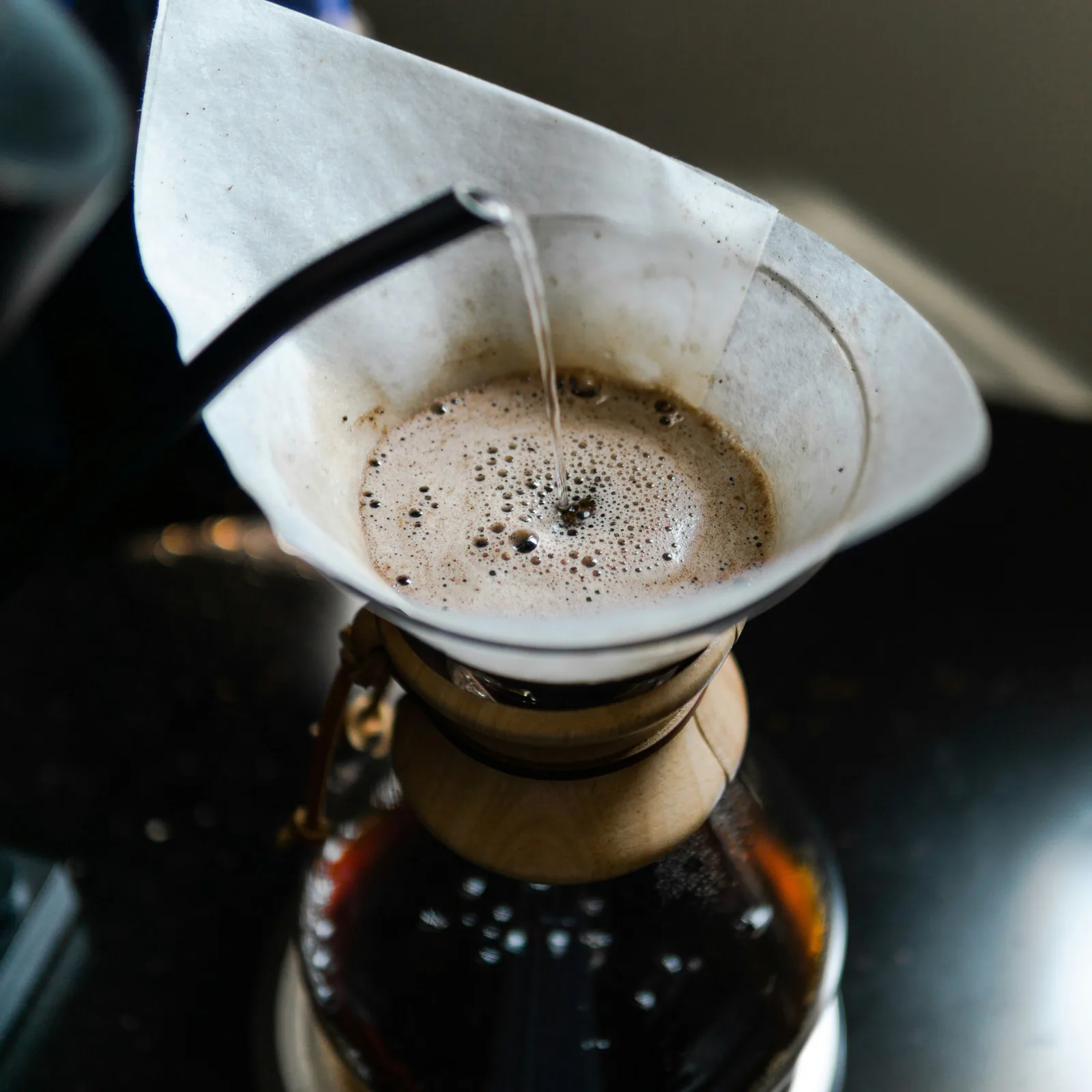
Taste a spoonful of freshly brewed black coffee once it has cooled slightly and before adding anything else. If it smells good but tastes weak, check the amount of ground coffee and water. If the black brew itself has little aroma, look at the coffee you are using, how you store the bag, and the condition of your equipment.
For example, you might still use 20 g of coffee but pour in 150 ml of water instead of around 90 ml. The finished drink may taste lighter because the coffee is more diluted. Conversely, using very little water will not necessarily produce a pleasant aroma if the coffee is old, smells unusual, or is brewed in an unsuitable way.
Tasting the coffee base before adding milk prevents you from adjusting the wrong thing. A milk-heavy bạc xỉu with little coffee aroma does not necessarily mean the coffee is poor quality; sometimes there is simply too little coffee concentrate for the amount of milk.
2. Café Coffee and Homemade Coffee Can Differ From the Beans Onward
2.1. Different Coffees Do Not All Have the Same Aroma
If a café uses a blend while you use 100% Robusta at home, the two drinks can smell and taste different even when brewed identically. Robusta is generally bold and noticeably bitter; Arabica can have more pronounced acidity and different aromatic qualities. Blends combine the beans for a more balanced profile. There is no reason to expect two different bags of coffee to smell exactly alike.
Roast level also changes the flavor. Darker roasts may emphasize roasted aromas and bitterness, while lighter roasts may retain other aromatic notes. What counts as 'fragrant' is highly personal: one person enjoys a deep roasted smell, another something more delicate. Identify the sort of aroma you enjoy rather than looking for one universal definition of 'delicious.'
If you particularly enjoy iced coffee with condensed milk from a certain café, ask what coffee they use or read the menu and packaging if they sell their beans. You do not need to copy the whole recipe. Knowing the coffee type and brewing method already gives you a more useful starting point.
2.2. Whole Beans, Pre-Ground Coffee, and Grind Size Affect the Cup
Whole beans need grinding before brewing. Pre-ground coffee is convenient, especially when you only own a phin, but repeated opening, leaving the bag unsealed, or storing it in a damp place can cause its aroma to fade over time. A bag that is much too large for your rate of consumption may therefore be less convenient than it first appears.
Grind size matters as well. Coffee ground for an espresso machine is usually finer than coffee intended for a Vietnamese phin. With the wrong grind, water may pass through too quickly or remain trapped too long. That can change not only the aroma but also the drink's strength, acidity, and bitterness.
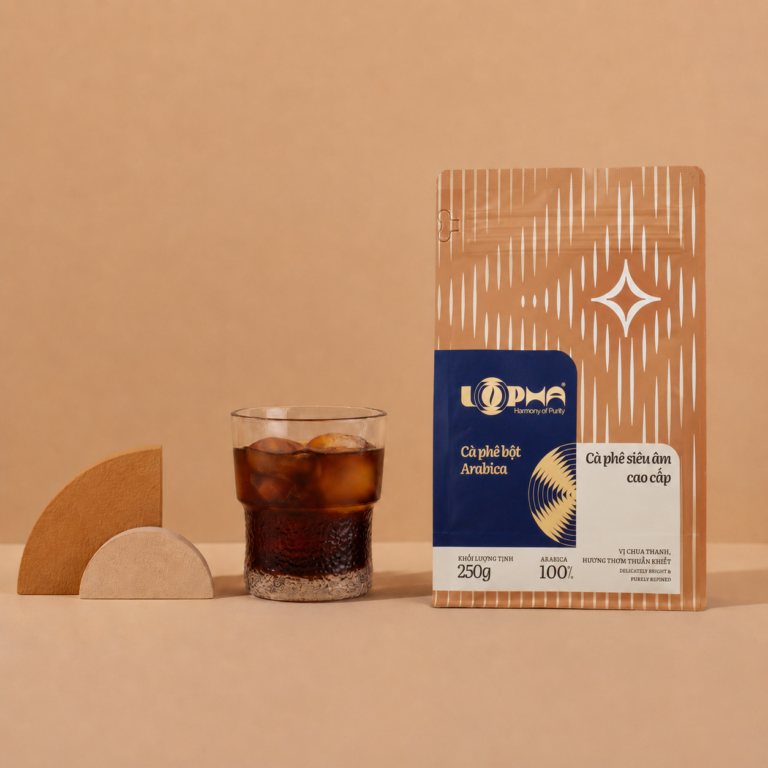
If you only use a phin, the easiest choice is ground coffee prepared for that brewing method. LOPHA's roasted and ground range includes Robusta, Arabica, and Blend options. When buying, check both the coffee variety and the grind format. This helps avoid struggling with grounds intended for a completely different brewing method.
3. Why Does an Opened Bag of Coffee Lose Aroma Over Time?
The aroma of a newly opened bag may be quite different from that of the same bag after it has been in use for a while. Every opening exposes the coffee to more air, while temperature, moisture, and odors in the storage area also affect its quality. Its aroma may decline well before there are any signs of spoilage.
If the bag has a zipper, press out some excess air and seal it after taking the coffee you need. If the packaging cannot be closed properly, transfer the remaining coffee to a clean, dry, airtight, food-safe container. Keep it somewhere cool and dry, away from direct sunlight and hot cooking areas. Avoid leaving it near strong-smelling items and opening it repeatedly throughout the day.
It is quite common to pour ground coffee into a clear glass jar and display it on a shelf by the window. The jar may be convenient, but regular sunlight makes that a poor storage spot. You can keep the coffee in sealed packaging or an opaque container and place it inside a dry cupboard instead.
If you are deciding between a large and small bag, consider how quickly you really use coffee. One small cup a day is very different from brewing for a household of four. Buying an amount you can finish means an opened bag spends less time in storage. Buying more is not always better value when you consider the quality of your daily coffee.
A gradual loss of aroma does not automatically mean the coffee is unsafe. But if you notice mold, unusual moisture, a rancid smell, or water-damaged packaging, stop using it. Brewing a much stronger cup is not an appropriate way to conceal an abnormal odor.
4. Phin Coffee Lacks Aroma: Check What You Already Have
4.1. Are You Using the Same Coffee and Water as Your Best Brew?
Two heaped spoonfuls one day and two level spoonfuls the next can contain substantially different amounts of ground coffee. Even with the same spoon, changing the way you scoop can make one cup strong and another weak. If you have no scale, use the same spoon and technique each time; avoid constantly changing the cup, spoon, and water volume as well.
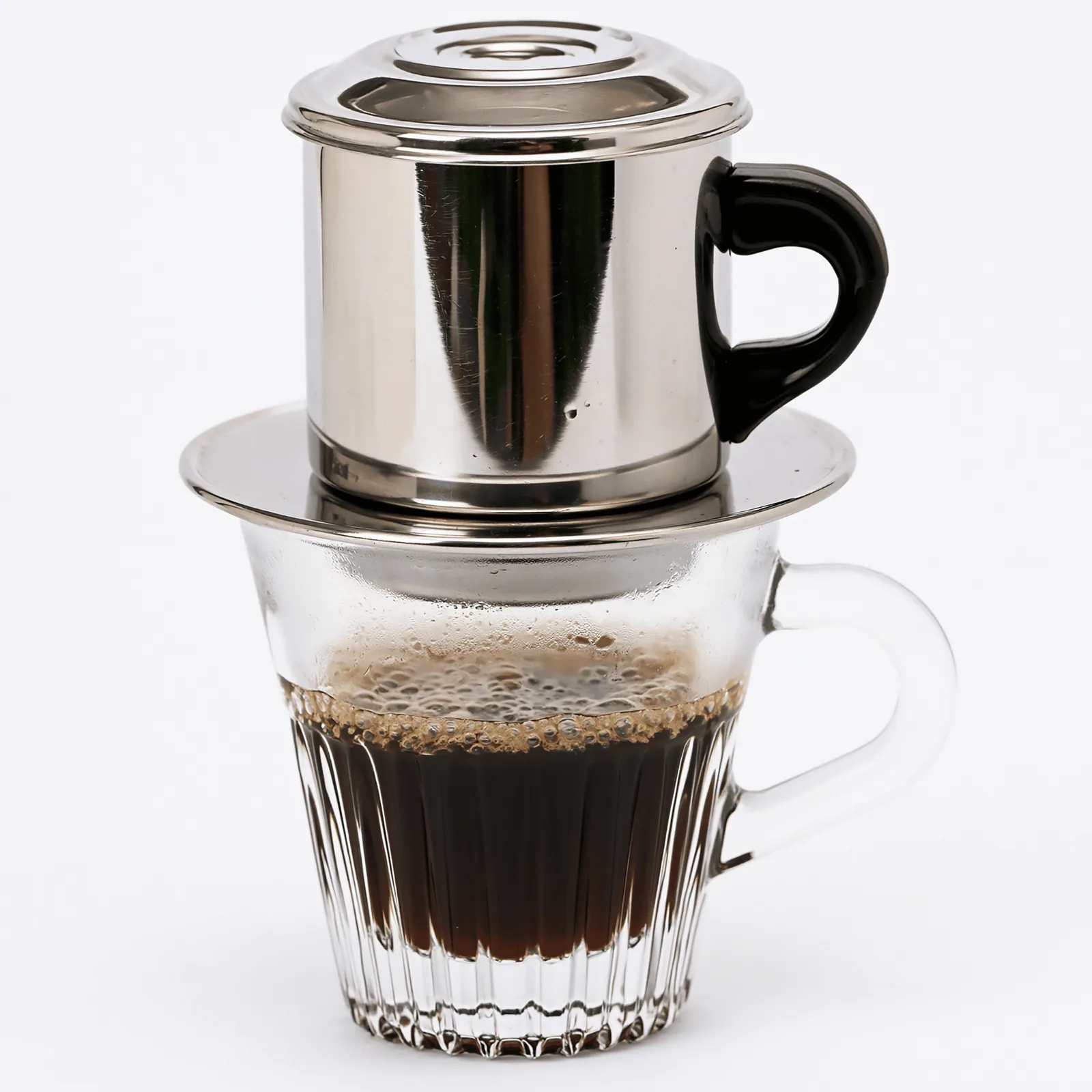
For a small phin, try starting with approximately 20–22 g of ground coffee and 80–100 ml of hot water. This is a starting point for adjustment, not a mandatory recipe for every coffee and every phin. A larger or smaller filter, or finer or coarser grounds, may change the drip rate.
When testing again, use the same coffee and phin and adjust just one thing. If the brew tastes too weak, try a slightly higher dose or a little less water next time. Increasing the coffee, changing the water, and switching the milk all at once makes it difficult to know what caused the difference.
4.2. Water and the Phin Can Change the Flavor Too
Water that is merely lukewarm is usually unsuitable for phin brewing. Depending on the coffee, you can start with hot water around 90–96°C. Without a thermometer, bring the water to a boil and let the vigorous bubbling subside before brewing; do not leave it cooling unnoticed for too long.
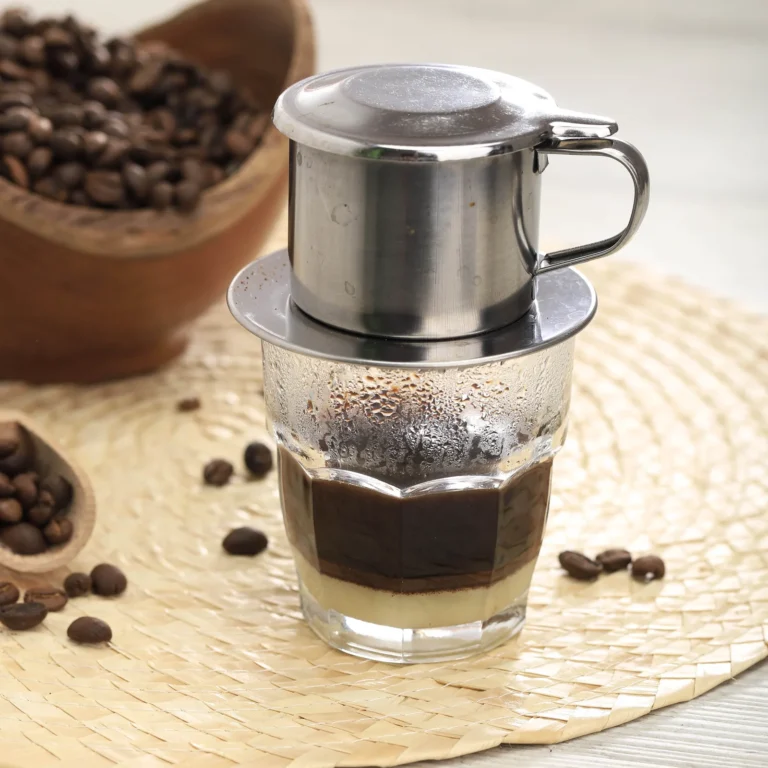
Before adding the grounds, rinse the phin with hot water and discard the rinse water. Pour in enough hot water to wet the coffee, wait around 30–60 seconds, then add the rest. Pour gently so the bed does not shift too much. A phin that drains abnormally quickly often produces a different concentrate from one that drips steadily.
If the phin barely drips, do not force the insert down harder. Check whether the grounds are too fine, the screw-down press is too tight, or the base holes are blocked. Let the phin cool before taking it apart to avoid burns. A clean phin with clear drainage holes and the right grind is often more useful than buying another accessory.
After brewing, clean both the press insert and the base. Old coffee residue left in place can impart an unpleasant odor to the next cup. It is a simple task that is easy to overlook when you merely discard the grounds and give the phin a quick rinse.
5. Why Does Homemade Milk Coffee Have So Little Coffee Aroma?
Iced milk coffee sold in cafés usually starts with a concentrated brew so the coffee flavor remains recognizable after milk and ice are added. If your homemade black coffee is already quite weak and you mix it with lots of milk, its aroma can easily be overwhelmed. That is a matter of proportions, not necessarily bean quality.
Prepare and taste the coffee base separately first. For coffee with condensed milk, begin with a small amount of concentrated phin coffee, add the milk a little at a time, stir, and only then add ice. If it tastes sweet but lacks coffee aroma, use less milk or brew a stronger base next time; adding more sugar will not address the problem.
Fresh milk behaves differently from condensed milk. It contributes more liquid and has a milder sweetness, so a little phin concentrate mixed with a large amount of fresh milk can taste like milk with a coffee tint. If you want the coffee aroma to come through, reduce the milk before thinking about adding sugar. For iced milk coffee, use clean ice and add it near serving time to avoid premature dilution.
Sometimes freshly brewed coffee smells wonderful, but after it sits on the table and the ice melts, its aroma and flavor seem to fade. That is not unusual. Hot and cold coffee are perceived differently, and melting ice changes the coffee-to-water ratio. Brew only what you plan to drink, chill the milk first, and add ice last for more control.
6. Do You Need a Grinder or Coffee Machine for More Aroma?
There is no need to rush out and buy a new machine because a few homemade cups have been less aromatic than expected. A grinder allows you to grind beans closer to brewing time and select the appropriate size. An espresso machine produces coffee differently from a phin, but it still requires suitable grounds and cleaning. If the real issue is an open bag or too much brewing water, buying another machine may solve nothing.
For someone who drinks phin coffee every morning, a clean phin and properly ground coffee are enough to begin. If you enjoy different coffees and want to experiment with several methods, a grinder may be more useful. Consider an espresso machine when you actually want espresso or espresso-based drinks.
Do not make a café's large professional machine the standard for every cup you prepare at home. Cafés serve many customers and need relatively repeatable recipes. At home, you can brew smaller amounts and adjust them to your own palate. The goal is coffee you want to drink, not turning your kitchen into a commercial coffee bar.
7. Which Coffee Is Closest to What You Enjoy at a Café?
Before choosing new coffee, think about what you usually order. If you mainly drink bold Vietnamese iced coffee with condensed milk, Robusta or a Robusta-forward blend is a useful starting point. If you enjoy black coffee with noticeable acidity, Arabica may appeal to you more. If you prefer no single characteristic to dominate, a blend is worth considering.
No bean variety gives everybody the same experience. Someone who enjoys pronounced bitterness may regard Robusta as tasting like 'proper coffee,' while another prefers Arabica for its gentler impression. Rather than asking 'Which coffee smells best?', ask 'Which cup has the aroma and flavor I enjoy most?' That answer is more useful when deciding what to buy.
If you are switching from flavored coffee to pure roasted coffee without added flavorings, the aroma may seem very different. Do not judge fragrance solely by how intensely a bag smells when first opened. Consider the freshly brewed coffee too: its aroma when you bring the cup close and its lingering taste after drinking.
When trying a new product, buy a suitable quantity and choose whole beans or grounds appropriate to your equipment. Read the package, brew using a simple ratio, and taste the coffee black first. Add milk and ice afterward as you normally would. This lets you judge whether the coffee itself suits you rather than judging it only through an unsuccessful recipe.
8. Where Should You Start for a More Aromatic Cup Tomorrow?
Tonight, check whether your coffee bag is closed, stored somewhere dry, and still smells normal. Wash your phin thoroughly, especially the base and the press insert. Set out the cup you normally use; no extra equipment is necessary.
Tomorrow morning, make a small cup using amounts of grounds and water that you can repeat. Taste it before adding milk or ice. If the aroma is clear and the flavor is right, remember those amounts and the way you poured the water. If it is too weak, adjust only the ratio next time. If the black coffee itself is already low in aroma, look again at the bag and the grind.
After several brews, you will have a better idea whether your homemade coffee differs from the café's because of ingredients, tools, or proportions. It does not need to be an exact copy. Making an aromatic cup you enjoy and can repeat on busy mornings is already a worthwhile reason to brew at home.