How to Make Smooth Blended Iced Coffee at Home Without Quick Separation
Blended iced coffee can become watery if you use too much milk, blend coffee while it is still hot, or run the blender too long. The right proportions and a blender designed for ice help keep the drink smoother and its coffee flavor more noticeable.
Homemade blended iced coffee tends to go wrong in two ways: large chunks of ice remain, or liquid starts separating at the bottom almost as soon as it is poured. Adding more ice does not automatically make the drink smoother. The amounts of milk and coffee, how cold the ingredients are, and whether the blender can crush ice all matter. Adjusting those factors helps produce a thicker texture without losing the coffee aroma.
1. Why Does Homemade Blended Iced Coffee Turn Watery?
A simple blended coffee needs only strong coffee, milk, ice, and a little condensed milk if you prefer sweetness. Whipped cream, chocolate, and caramel are optional additions rather than requirements. For your first attempt, a short ingredient list makes it easier to tell whether the drink needs more coffee flavor, a better texture, or simply less sugar.
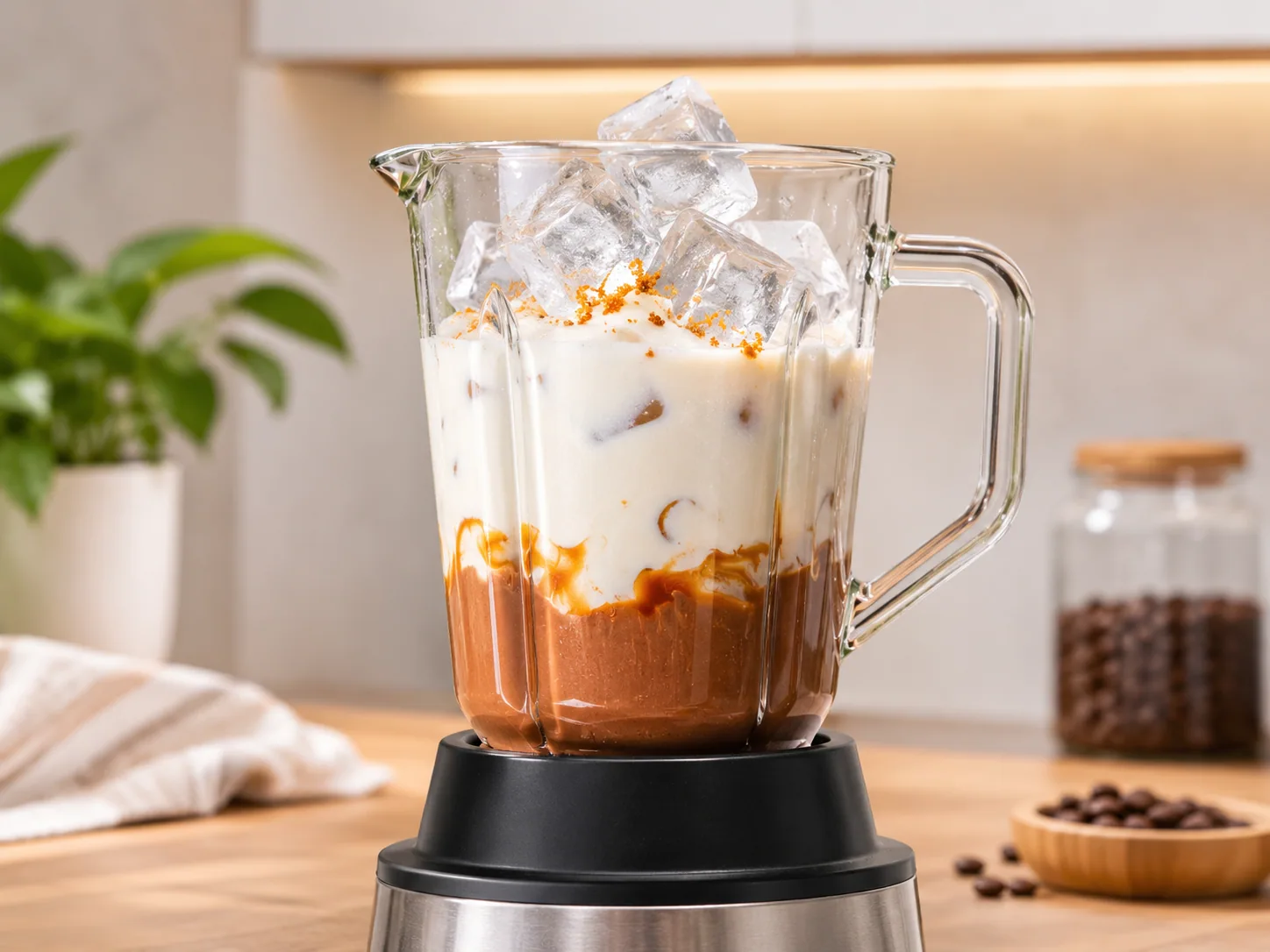
Vietnamese iced milk coffee contains whole ice cubes in the glass. In blended iced coffee, the ice is crushed and mixed with the coffee and milk, creating a colder, smoother sensation. This requires a blender designed to handle ice; a machine intended only for soft fruit may leave large pieces or become overloaded.
2. Ingredients for One Homemade Blended Coffee
For one serving, start with 40–50 ml of strong, chilled coffee, 80–100 ml of unsweetened milk, 15–20 g of condensed milk, and 120–150 g of ice. These are trial proportions, not a fixed recipe for every machine. When blended, the mixture should be thick enough to drink through a straw but not so stiff that the blender cannot circulate it.
To work out what needs adjusting, watch the mixture as you pour it. If it runs like ordinary milk coffee, there may be too much liquid. If it looks like crushed ice with hardly any coffee aroma, your coffee base may be too dilute. Change one ingredient at a time—for example, reducing the milk by 20 ml—rather than altering the entire recipe.
You can make blended coffee without an espresso machine. A strong phin brew that has been allowed to cool is a convenient substitute for espresso. The important thing is not to start with weak coffee: once you add milk and ice, its aroma will become even less noticeable. Taste the coffee base before putting it into the blender.
Chilling the coffee, milk, and glass beforehand helps limit melting during blending. Check that the blender is designed for crushing ice and use ice cubes of the size recommended by the manufacturer. A blender intended only for soft smoothies can suffer damage to its blades or jar when asked to process hard ice.
A sufficiently strong coffee base retains more of its roasted aroma when blended with milk and ice. LOPHA's 100% roasted and ground Robusta has a bold flavor and noticeable bitterness, while its blend is more balanced with gentle acidity. Either can work, depending on whether you want a stronger coffee presence or a softer blended drink.
3. How to Make Blended Iced Coffee Step by Step
3.1. Brew the Coffee Base and Let It Cool
Brew the coffee using a phin or machine, then let it cool and chill it appropriately before blending. Hot coffee will start melting the ice as soon as it enters the jar. That is a common reason a mixture loses its thickness quickly even when the machine crushes ice effectively.
For two servings, you can prepare the black coffee ahead, keep it covered, and refrigerate it; mix in milk and ice only just before blending. This makes it easier to divide ingredients into batches that suit the blender's capacity and keep the servings similarly cold. Do not overfill the jar, as the ice needs room to move and crush evenly.
3.2. Blend Until the Texture Is Smooth
Put the milk, chilled coffee, and condensed milk into the blender, add an amount of ice the machine can safely handle, and close the lid. Blend until no large ice pieces remain, stopping to check rather than leaving the machine running continuously for too long. A smooth mixture is easier to drink than one with chunks that block the straw.
Right after blending, the mixture should pour in a thick, smooth stream without large fragments of ice. If chunks remain, check whether the blender has enough ice-crushing power before increasing the blending time. Prolonged operation warms the jar, melts some of the crushed ice, and makes the drink thinner more quickly.
3.3. Pour and Enjoy at the Right Time
Blended iced coffee is best enjoyed immediately after preparation. Over time, the ice melts and water separates toward the bottom, especially in hot weather. Have the glass and straw ready before starting the blender. If you like chocolate, add a little sauce, but taste first because the condensed milk has already sweetened the drink.
For a more noticeable coffee flavor, increase the chilled coffee slightly next time and reduce the milk by a corresponding amount. Pouring hot espresso into a finished blended drink is not a good fix: the heat melts the ice and destroys the smooth top layer. Adjust the coffee amount before blending instead.
4. Why Does the Drink Separate So Quickly?
4.1. Too Much Liquid Compared With Ice
Too much liquid coffee or milk makes a blended drink runny even after the ice is crushed. Next time, try reducing the liquid by 10–20 ml while keeping the ice the same. Condensed milk contributes liquid and sweetness too; adding more simply to thicken the drink can make it cloying.

As a trial, keep the ice at 150 g and the coffee amount unchanged, but reduce the milk by about 20 ml in the next batch. If the result is less watery while retaining its coffee flavor, that adjustment was useful. If the blender struggles to circulate the mixture, however, there may now be too little liquid, and you should consult the machine's instructions before changing anything further.
To make a larger drink, scale the ingredients up in the same proportions and ensure the blender jar can accommodate them. Adding only milk or water to fill a taller glass will dilute the mixture. With blended drinks, the ingredient ratio matters more to texture than the size of the serving glass.
4.2. Ice Melts During Blending
Warm coffee and excessive blending time both make ice melt quickly. Chill the coffee, use refrigerated milk, and blend only until the ice is evenly crushed. If the jar becomes noticeably warm, stop according to the manufacturer's instructions rather than continuing to chase a smoother texture.
Prepare the serving glasses beforehand so you can pour as soon as the machine stops. Leaving the mixture in a warm blender jar allows more ice to melt and the liquid to separate. If making several drinks, divide the ingredients into smaller batches suitable for your machine and serve each one promptly rather than blending a large pitcher to sit around.
Ice cubes that are too large for the machine may remain as chunks. Very small ice pieces, on the other hand, melt quickly when they touch warm coffee. Choose ice sizes according to the blender's guidance and chill the other ingredients before blending.
4.3. Ingredients Differ in Fat Content and Texture
Whole milk gives a richer taste than low-fat milk, but it does not automatically make crushed ice smoother. The texture depends on the machine and ice quantity, while creaminess comes from the milk or cream used. When the drink is thick enough but feels too heavy, reducing condensed milk or using unsweetened milk is more useful than adding extra ice.
Do not use unidentified thickeners or powders that are not intended for food. If you add dairy cream, check whether it contains sugar. Adding sweetened cream to a blended drink that is already sweet can make it excessively rich.
5. What If the Ice Is Not Smoothly Crushed?
If chunks of ice keep blocking your straw, check the blender and the ice quantity in its jar. Turn the machine off and wait until the blades stop completely before opening the lid. Never use a spoon to push the ice down while the blender is running. Lower-powered blenders often work better with small batches and ice pieces sized for the appliance.
A weak blender may leave ice chunks even after a long blending time. Try reducing the amount of ice per batch and using pieces of a size the manual allows. If the machine does not support ice crushing, making regular iced milk coffee is safer and more convenient than forcing it to run until it overheats.
If your blender is designed only for soft fruit, choose a coffee drink with whole ice cubes instead of blended ice. Do not try to crush hard cubes with equipment that does not support the task. On a machine with an ice-crushing setting, following its maximum quantities and recommended cube sizes is more reliable than repeatedly increasing speed or blending time.
6. How Can You Make It Stronger Without Making It Too Sweet?
For a stronger coffee aroma, adjust the base at the start: add a little more chilled coffee and reduce the milk to keep the total liquid volume unchanged. If the drink is too sweet, cut back the condensed milk or sauce. Adding large amounts of coffee to compensate for sweetness often just creates a bigger drink that still tastes unbalanced.
When using espresso, 40–50 ml is often enough for the coffee base of a small drink using the trial ratio in this article. With phin coffee, taste the base first, as its concentration may differ from espresso. If it is already light, the milk and ice will make the coffee flavor even fainter. Measuring similar quantities each time helps identify what you need to change.