How to Make Coconut Coffee at Home: Creamy, Not Too Sweet, and Without Separation
Coconut coffee pairs strong coffee with creamy coconut milk, condensed milk, and ice. With a balanced ratio, the drink keeps its distinctive coconut aroma while letting the coffee come through, and is less likely to become overly sweet or separate too quickly.
1. How Is Coconut Coffee Different from Vietnamese Iced Milk Coffee?
Coconut coffee combines the rich fragrance of coconut with a bold coffee base. In the blended version, the coconut mixture is often smooth, cold, and almost like soft snow, with coffee poured over it for color and aroma. In the simpler stirred version, the ingredients are mixed directly in a glass with ice. Both can be made at home, but blended coconut coffee has a thicker texture and requires a suitable blender.
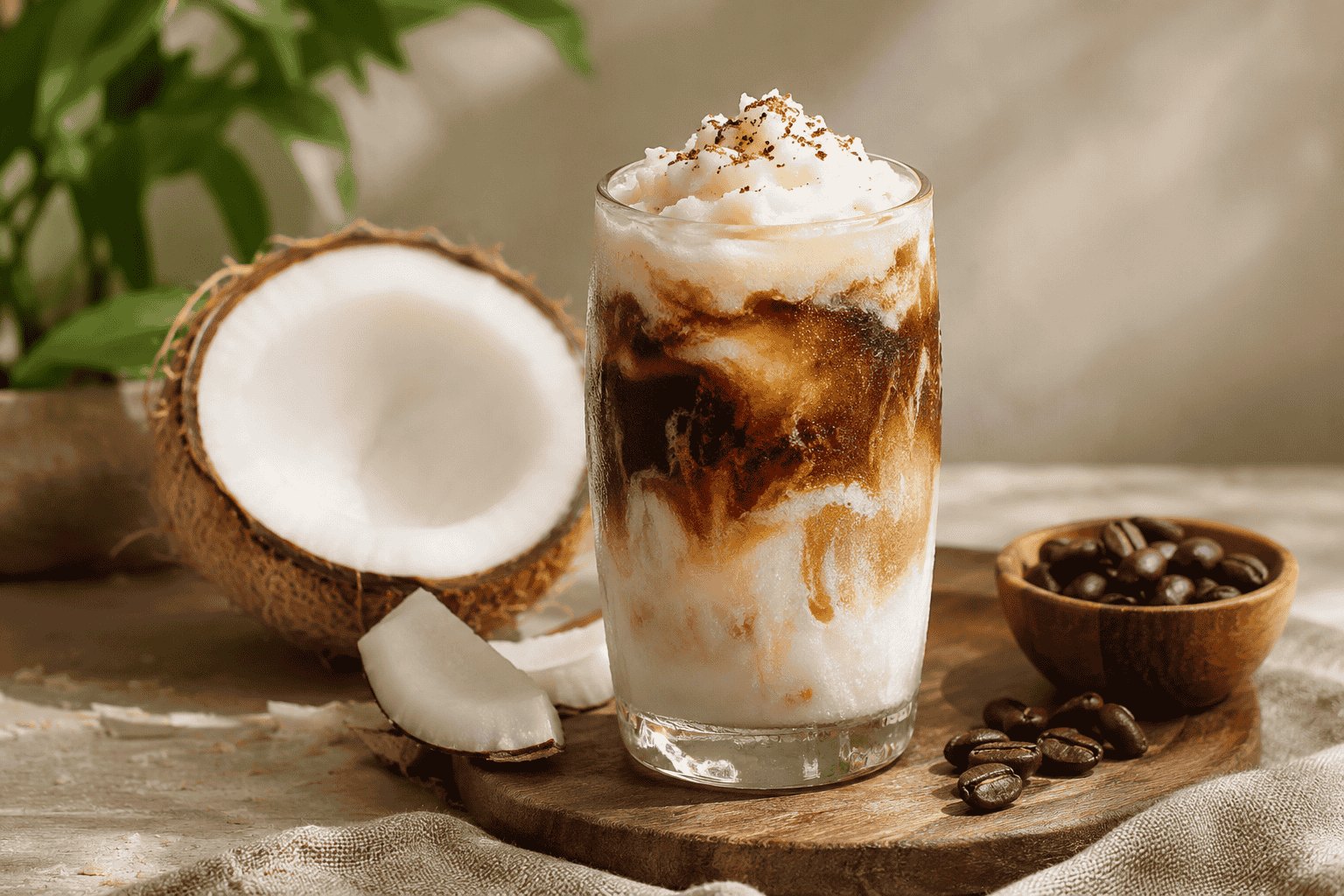
Many people enjoy this drink because coconut is a familiar flavor in Vietnam. But coconut milk is naturally rich and condensed milk is sweet; using generous amounts of both can leave the coffee almost unnoticeable. The glass may look attractive while tasting mainly of sweet creaminess, with only a faint coffee finish. Begin with a moderate amount of condensed milk so you can taste each ingredient before deciding to increase it.
A practical recipe is one that beginners can repeat with easy-to-find ingredients. You do not need a commercial frappé base or an abundance of toppings for one or two glasses at home. Choosing suitable coconut milk, preparing sufficiently strong coffee, and using firm ice are usually more important than prolonged blending or elaborate decoration. Once you know the basic recipe, experiment with a more coconut-forward or coffee-forward variation.
2. Ingredients for One Blended Coconut Coffee
Start with 40–50 ml of strong phin concentrate or 30–40 ml of espresso, 45–55 ml of unsweetened coconut milk, 15–20 ml of condensed milk, and around 120–140 g of small ice cubes. A little dried coconut is optional for decoration. A 300–350 ml glass is generally enough for one serving. These quantities are starting points to taste and adjust, because coconut milk richness and condensed milk sweetness vary by product.
Stir or shake the coconut milk according to its package instructions before measuring. When left standing, the richer fat portion may rise while the watery portion settles, giving two glasses from the same carton very different textures. If you accidentally scoop out most of the thick portion first, the coconut base will be very rich; the next portion may be watery and weak. Mixing it evenly at the outset makes the recipe more consistent without adding thickeners.
Brew the coffee a little in advance so it can cool slightly while you prepare the ice and coconut. With a phin, about 20–25 g of ground coffee and an appropriate amount of hot water may provide a concentrated portion, depending on the filter and grind. Use aromatic coffee and avoid making the concentrate too dilute, so its flavor remains noticeable against coconut. With espresso, choose a balanced shot; harsh bitterness in the coffee base may still come through after the coconut has melted.
3. How to Make Blended Coconut Coffee, Step by Step
First, prepare 40–50 ml of strong coffee and set it aside. Use a blender that is rated to crush ice according to its operating instructions. Add 45–55 ml of chilled coconut milk, 15–20 ml of condensed milk, and 120–140 g of ice. If your home blender struggles with cubes, choose smaller ice appropriate for its power. Do not add excessive water merely to make blending easier, as that often produces a runny coconut mixture as soon as it is poured.
Blend in short bursts, stopping to inspect the texture. Once the mixture is smooth and thick, without obvious large ice pieces, you can stop. There is no need to keep blending for several minutes after it reaches that point, since motor heat and extra blending time can melt more ice. Pour the coconut base into a chilled glass. Ideally it flows as a soft, cohesive mixture rather than separating visibly into clear water and crushed ice.
Slowly pour the coffee concentrate over the top, perhaps along one side of the glass to create brown streaks. To keep the coffee visible on the surface for the first few seconds, allow it to cool somewhat and make sure the coconut base is thick enough. After admiring the glass, stir gently before drinking if you want the flavors distributed evenly. A light sprinkle of dried coconut is fine, but there is no need for excessive extra cream because coconut milk already provides richness.
Without a blender, make a stirred iced variation: combine 45 ml of coconut milk with 15 ml of condensed milk, add ice cubes, then pour about 40 ml of strong coffee over the mixture. It will not be as thick as the blended drink, but it is simpler and involves fewer steps. Both versions combine coconut and coffee flavors, yet differ in texture. Choose according to the equipment you have instead of forcing a weak blender beyond its capacity.
4. How to Keep the Coconut Fragrant Without Drowning Out the Coffee
Coconut milk comes in different concentrations. A very rich product may require only a little, whereas a thinner one creates a lighter sensation. Taste it by itself and you can better judge whether 40 ml or 55 ml works in your glass. If you want a strong coconut fragrance with coffee still clearly present, keep coconut at a moderate level and adjust the coffee concentrate rather than increasing coconut and condensed milk together.

Coffee with a bold flavor base and a distinct finish is often easier to notice alongside coconut. Robusta or Blend may suit people who enjoy this style, while Arabica offers another profile for those curious about more pronounced acidity. LOPHA’s Robusta, Arabica, and Blend varieties have different flavor directions; choosing for the coconut coffee you actually want to drink is more useful than assuming only one bean type is correct.
Sometimes coffee tastes intense when first poured but much milder after stirring. That is because the coffee concentrate has dispersed into a larger quantity of coconut, ice, and milk. If you intend to drink the mixture fully blended, taste it after stirring from your first attempt. Judging strength only from the brown coffee on the surface may lead you to use too much ground coffee in later batches.
5. Why Does Coconut Coffee Separate or Turn Too Thin?
Rapid separation in the coconut base may happen because the ice is already melting, the ingredients are not cold enough, or the coconut milk contains a lot of water. Excessively long blending can warm the mixture slightly and melt more ice, changing a thick drink into a thin one. Prepare chilled coconut milk, use solid ice, blend in short bursts, and serve immediately. In a homemade drink without texture stabilizers, some changes after sitting on the table are normal.
If the mixture is runny straight out of the blender, check how much water you added to the jug. Some people pour in plenty of water or fresh milk to help the blender move, unintentionally thinning the base. Next time, reduce added liquid in increments of 10–15 ml and choose ice of a suitable size. If the appliance is not designed to crush ice, switch to the stirred cold version to protect the machine and make a more enjoyable drink.
If you see small fatty lumps, the coconut milk may have separated before blending or the ingredients may not have been mixed evenly. Stir the coconut milk in its container according to the manufacturer’s directions before measuring, then blend it with the condensed milk. Do not assume every instance of separation means spoilage; however, if the ingredient smells rancid, shows mold, or is past its labeled date, stop using it and replace it.
6. How to Fix Coconut Coffee That Is Too Sweet or Too Rich
Condensed milk adds both sweetness and richness, so too much can make the drink feel heavy. With 50 ml of coconut milk, start with 15 ml of condensed milk and taste. If you want it sweeter, increasing by 5 ml in the next batch is easier to control. Adding more condensed milk after blending can leave it unevenly mixed, making the last sips sweeter than the first. It is better to adjust the amount while measuring the ingredients.
If the coconut flavor is too rich, reduce the coconut milk to about 40 ml or use a product with a different fat content rather than simply adding lots more ice. Ice makes the drink thinner; it does not create a better flavor balance in itself. If you want more coffee character, slightly increase the strong phin concentrate, but still check extraction quality. A dry, bitter espresso shot can leave an unpleasant finish even with a sweet coconut base.
Adding dried coconut, whipped cream, or chocolate sauce makes sense when you want a more dessert-like version. For an everyday drink, coconut and coffee already offer plenty to appreciate. A glass that is moderately creamy and sweet is more likely to remain enjoyable to the last sip instead of becoming cloying after the first few tastes.
7. How Is Blended Coconut Coffee Different from Stirred Iced Coconut Coffee?
The blended version has a soft, chilled coconut base with a texture close to a dessert drink. It requires an ice-capable blender, cold ingredients, and fairly prompt drinking after preparation. The stirred version only needs a glass and spoon and works with a few ice cubes, but has a more liquid texture. If you want a quick drink before work, stirring is simpler; if you have time to relax on the weekend, blending may be more interesting.
Both versions still need sufficiently strong coffee. If you use the same 40 ml of phin concentrate in two glasses, one containing lots of crushed ice and the other only a few cubes, the final flavor will differ. When comparing them, keep the liquid ratios reasonably similar and taste shortly after preparation. Different textures do not necessarily reflect coffee quality; they reflect how the drink is served and how much water the melted ice contributes.
If someone in the family dislikes very rich coconut, make a lighter variation by reducing the coconut milk, adding a little unsweetened fresh milk, and adjusting the coffee. It is a variation, so do not expect exactly the same thick texture as traditional blended coconut coffee. Adapting the drink to your household’s taste is more useful than turning your kitchen into a competition to reproduce an advertising photo.
8. Frequently Asked Questions About Coconut Coffee
Can you use canned coconut milk? Yes, provided it is suitable for food and stored according to the label. Stir it before measuring and taste the richness because products vary in water and fat content. Do not use a container left open too long or one with an unusual smell.
Is condensed milk essential? No. It adds sweetness and body, but you can reduce or omit it if you prefer less sugar and then adjust the base to your taste. Without condensed milk, both texture and flavor may change, particularly in the blended version.
Can you make coconut coffee the night before and refrigerate it? A drink blended with ice changes considerably on standing: the ice melts and the coconut mixture may separate. For the best texture and taste, make it close to serving time. You can brew the coffee ahead under suitable hygiene and storage conditions, but blend the coconut and ice last.
Delicious coconut coffee is not about maximum richness or sweetness. When the coconut milk is measured sensibly, the coffee still has a clear aroma, and the ice is under control, you can appreciate both main flavors instead of one drowning out the other. That is why a simple, adjustable recipe you can repeat with a phin at home is often worth keeping more than a topping-heavy glass that is difficult to finish.