Which Coffee Beans Work Best in a Fully Automatic Machine? Choose by Your Drink
Automatic coffee machines need roasted beans suited to their design, but no single bean variety tastes best to everyone. Whether you prefer espresso, Americano, or latte can help you decide whether to start with Robusta, Arabica, or a blend.
For a fully automatic coffee machine, choose beans that meet the machine's requirements and suit the drinks you make most often. If you enjoy strong espresso, Robusta or a Robusta-forward blend may be a good starting point; those who enjoy noticeable acidity could try Arabica. For latte, consider whether the coffee flavor remains distinct after milk is added. There is no universally best bean for all machines, since grind size, water volume, and brewing programs also affect the result.
1. With a New Machine at Home, Start With What You Like to Drink
An automatic machine at home might be used mostly for espresso, while one in an office may serve many milk-based drinks. Both grind beans and brew coffee, but the desired flavors are different. Before buying beans, determine whether people mainly drink black coffee, Americano, or latte. A label saying 'for automatic machines' alone does not tell you whether the coffee will suit their preferences.

In black coffee, the characteristics of the beans are relatively easy to notice. People who like bold flavor and pronounced bitterness might try Robusta; those accustomed to brighter acidity may prefer Arabica. When the drink contains plenty of milk, the coffee base needs enough character to remain noticeable. A Robusta-rich blend may be a familiar starting point for Vietnamese drinkers who enjoy milk coffee, but it is not a compulsory recipe for every latte.
Automatic machines reduce preparation steps, but the first cup may still taste weaker or more bitter than expected. The beans are not necessarily at fault. A 'mild' program, an oversized cup, or too much water can change the flavor of the same coffee. Before changing beans, brew your usual cup size and check how much water the machine uses for the coffee base.
2. How Do Robusta, Arabica, and Blends Taste in a Machine?
Robusta commonly has a bold body, noticeable bitterness, and a lingering finish. For someone accustomed to phin-brewed Vietnamese iced milk coffee, Robusta espresso mixed with milk may feel familiar. Drunk neat, however, that shot can be quite intense for someone unaccustomed to it. When using Robusta in an automatic machine, program strength and water quantity still have a considerable influence on the result.
Arabica generally has more pronounced acidity and a different aromatic profile from Robusta. These characteristics can be easy to notice in espresso because the drink contains relatively little water. Someone accustomed to strong phin coffee may find it unfamiliar at first, while someone who enjoys acidity may find it just right. You do not need to choose Arabica simply because it is considered premium or costs more. Beans that suit the machine and the drinks you actually make are worth buying.
Blends combine bean varieties to create a particular flavor profile. LOPHA's blend is 80% Robusta and 20% Arabica, described as balanced, mildly acidic, and still bold. It may be worth trying if you enjoy both black coffee and milk-based drinks. But the proportions do not decide everything: even with the same bag, changing the water or strength setting can produce a very different cup.
3. The Same Beans Can Taste Different in Three Drinks
Espresso is a small, pressure-extracted drink, so its flavor is usually concentrated. When consumed black, the beans' bitterness, acidity, and aroma are more apparent. An excessively bitter shot is not necessarily the result of choosing Robusta; grind size, dose, and extraction time may also contribute. When trying new beans, begin with the serving size you normally drink to see whether you genuinely enjoy them.
Americano usually begins with espresso and added water. If the machine makes a very large cup from a single shot, the drink may taste weak even when the beans are fine. Reducing the water or adding a shot, if the machine supports it, may change the strength more effectively than rushing to buy exceptionally bitter beans. Americano drinkers should assess new beans in an actual Americano, not just the espresso base.
Latte and cappuccino combine espresso with milk, but usually differ in their proportions of liquid milk and foam. In milk-rich drinks, the coffee base can become less prominent. Beans with a distinct aroma and taste help the coffee remain noticeable, but they need not be the most bitter available. If a latte tastes almost entirely of milk, review the shot count or amount of milk before replacing the beans.
In one household, someone may drink only espresso while another prefers latte. When they share a single bean hopper, a balanced blend can be a useful compromise. Each person may still adjust the water, shot count, or milk amount if the machine allows it. One fixed recipe should not be expected to produce both black espresso and lattes that satisfy everyone's individual tastes.
4. An 'Espresso' Label Does Not Mean the Beans Suit Every Machine
Automatic machines with built-in grinders need roasted beans that meet the manufacturer's recommendations. Some models advise against sugar-coated, caramelized, or otherwise coated beans that could stick to the grinder. Shiny beans do not necessarily contain additives, but an 'Espresso' label is no guarantee of compatibility with every machine. Read the instructions for your exact model before filling the hopper.
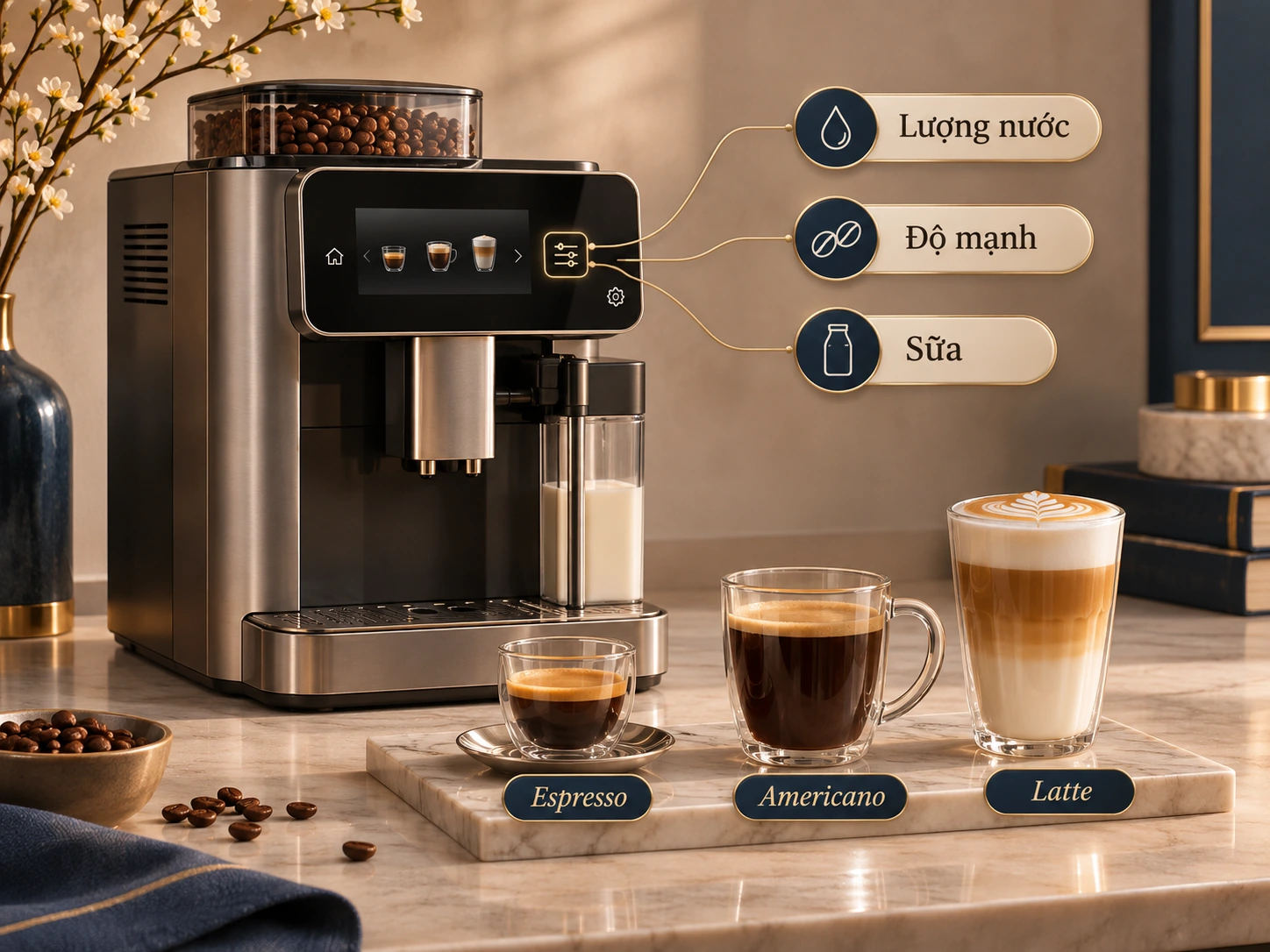
Some models also provide a separate compartment for pre-ground coffee alongside the bean hopper. The two cannot be used interchangeably: never pour phin-ground coffee into a hopper designed only for whole beans. If the machine supports pre-ground coffee, follow the manufacturer's dose and grind limits. These precautions help prevent problems when loading ingredients, before you even begin adjusting flavor.
5. Roast Level Is Not a Simple Switch for Stronger Coffee
Not every automatic machine requires very dark-roasted beans. Several roast levels can work if the coffee suits the grinder and brew program. Medium-roasted beans can still produce concentrated espresso; darker roasts often have more prominent roasted flavors. Strength also depends on the dose and water. Choosing beans solely by their color or the hope of thick crema is therefore not enough.
When buying beans for an automatic machine, check the roast level stated on the package against the machine's recommendations. Medium roast does not necessarily make weak espresso, nor does dark roast guarantee a latte to your taste. The bean dose, grind, and water volume in each program determine much of the concentration. Once you have chosen beans you like, start with moderate settings before increasing strength.
6. Why Can the Same Machine and Beans Taste Different From Day to Day?
Automatic machines make recipes easier to repeat, but two button presses can still produce different drinks if cup size, strength, or water quantity changes. Different household members may use different programs, so the same beans seem stronger or weaker. If today's cup is suddenly lighter than usual, check the selected program before suspecting the beans have changed in quality.
Beans change with storage too. A newly opened bag often has a stronger aroma than one exposed to air for a long time, especially in a hot, humid place. Filling the hopper and leaving beans there for weeks is not necessarily the best way to preserve their aroma. For households that drink less, adding a suitable amount to the machine and tightly sealing the remaining bag often makes supplies easier to manage, provided this follows the manufacturer's guidance.
If the coffee smells unusual or the machine's flow becomes abnormal, check the ingredients and cleaning condition according to the manual. But a flavor change is not always a mechanical fault: someone may simply have selected a different water setting. Recognizing the difference prevents unnecessary bean changes when the real cause is the program.
7. A Small Trial Bag Can Tell You More Than Advertising
If you have just bought a machine or are changing beans, a 250 g bag can be convenient for testing at home. When several people use the machine daily, a 500 g bag is used up more quickly. The number of cups depends on the brewing program; there is no single fixed gram dose for every model. If you are unsure whether the household will enjoy a new bean, buying enough for a few trial days makes more sense than filling the hopper and discovering you dislike it.
If you want to try LOPHA whole-bean coffee in an automatic machine, you can start with a 250 g bag and brew the drink you actually order most often. A latte drinker should check whether the coffee remains noticeable after adding milk; a black espresso drinker will experience the acidity, bitterness, and aftertaste more directly. Once you find a flavor you enjoy, a larger pack may be convenient for a household or office that drinks coffee regularly. Use beans compatible with the machine, and keep the portion not yet loaded into the hopper tightly sealed.
Automatic machines make morning coffee quicker and simpler, but beans still need to be chosen around the drinker. Understanding what beans the machine accepts, selecting a suitable program, and trying a few cups with familiar settings are usually enough to begin. Once you find beans that suit you, everyday brewing becomes much more consistent and straightforward.