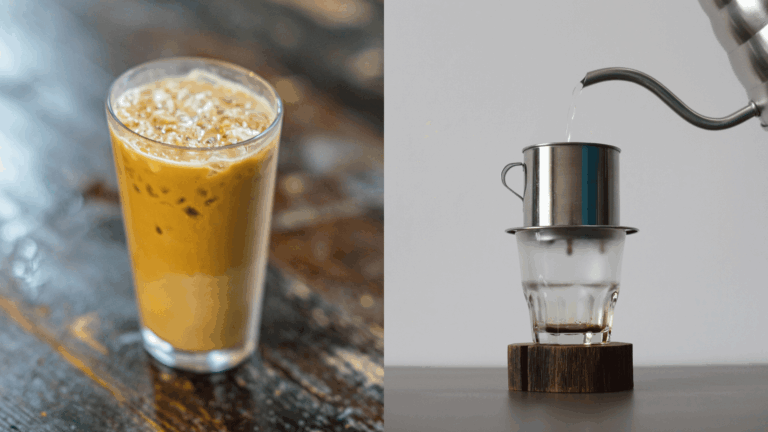
Aluminum vs. Stainless Steel Phin: Which Brews Better Coffee? Practical Differences
Both aluminum and stainless steel phins can brew delicious coffee. The differences worth paying attention to are often size, drainage holes, the insert, and familiarity with the brewer—not merely the type of metal.
Aluminum and stainless steel phins can both produce delicious coffee. Aluminum is usually lightweight, while many stainless steel models feel sturdier; the taste depends more on the phin's size, drainage holes, insert design, and grind size. If a new phin drips faster or slower than your old one, the material may not be the reason. A brewer suited to your usual dose, easy to clean, and stable on the cup is often the most convenient choice for everyday use.
1. A Familiar Phin Has an Advantage of Its Own
Many kitchens have a phin that has been used for years. Its owner knows instinctively how to position the insert and how much water to pour. Switch to a new phin, however, and the same bag of grounds may produce a different brew. It is tempting to conclude that stainless steel makes better coffee than aluminum, or vice versa. In reality, the two brewers may also differ in size, number of drainage holes, and how they hold the coffee bed.
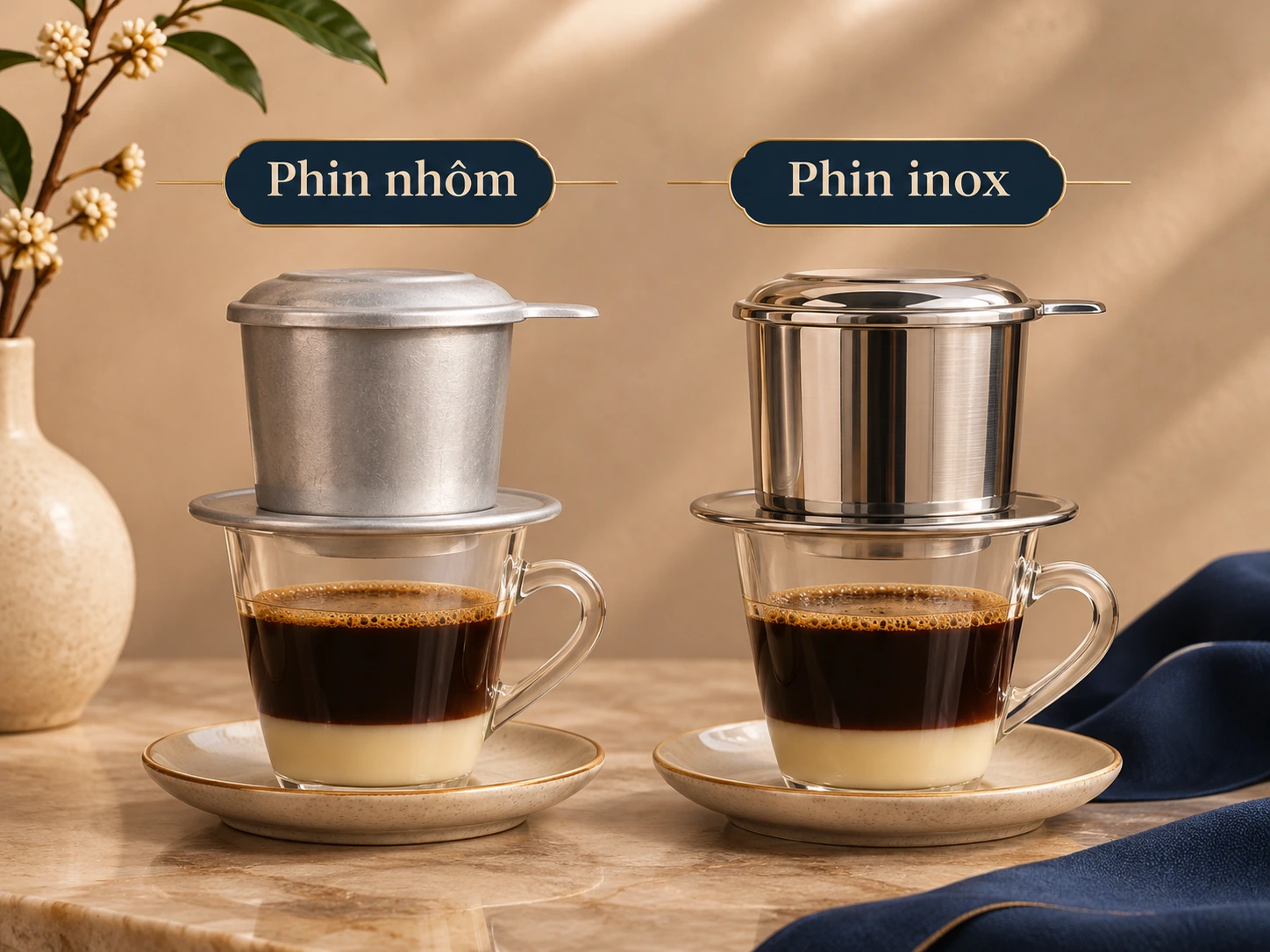
Material is only part of the picture. A new phin might have a wider base, more holes, or an insert that presses the grounds differently. With the same 20 g dose, a smaller phin forms a deeper coffee bed than a larger one. Water moves through the grounds differently, changing the drip rate and the finished cup. Looking only at the color of the metal can make you miss the actual cause.
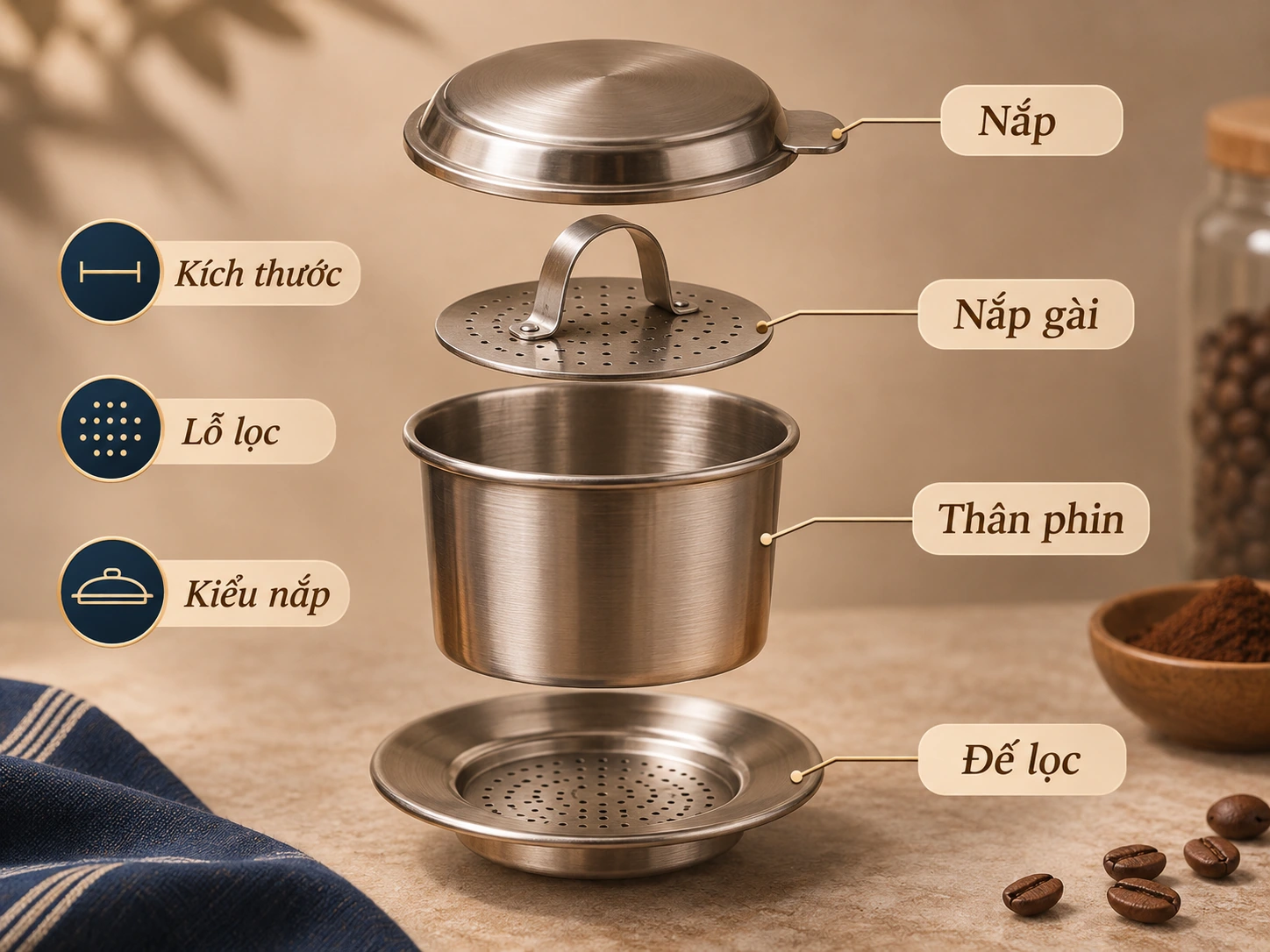
A phin with a resting insert and one with a screw-down insert do not work in exactly the same way. If you change from a loosely placed insert to a screw-down design and tighten it too much, water can pass through very slowly. The flavor changes because of pressure on the grounds and water flow, not simply whether the phin is aluminum or steel. When trying a new model, check how its insert is meant to sit, particularly if the drip rate differs from your old one.
2. Aluminum Phins: Light, Familiar, and Pleasantly Simple
Aluminum phins are often light, with many compact models that are easy to store. For someone brewing one cup every morning, a phin sized for their usual dose can be very convenient. Still, not all aluminum phins are made alike. Wall thickness, base shape, filter holes, and the way the insert sits on the grounds all affect brewing. Light weight and familiarity are practical advantages, not evidence that aluminum always produces better-tasting coffee.
Aluminum conducts heat differently from stainless steel, but that does not establish that every aluminum phin retains heat better or brews better coffee than every steel model. Thickness, size, and the brewer's starting temperature all matter. A thin aluminum phin is not the same as a thicker one. In a real kitchen, people also vary their water doses and sometimes forget to preheat the brewer. Those variables make it unfair to judge materials by one trial cup.
When examining an aluminum phin, check that its rim is smooth, the base is flat, the insert fits properly, and the brewer stands securely on your cup. These details matter when handling hot water. A bent phin or sharp edge makes it less pleasant to use even if it is very light. Safe handling and easy cleaning deserve more consideration than claims that choosing a particular metal alone guarantees an authentic taste.
3. Stainless Steel Phins: Solid to Hold, but Not Automatically Stronger
Stainless steel phins often feel sturdy, and many models have a reassuring weight, but manufacturing quality still matters. Greater weight does not inherently make coffee stronger. An oversized steel phin, or an insert that does not sit well on a small dose of grounds, may produce an undesirable flow. If you only make one small cup, suitable size and convenience may matter more than choosing the heaviest model.
Even among stainless steel phins, some have resting inserts and others screw-down inserts; bases may have more or fewer holes, with wider or narrower supports. Two steel phins can therefore brew differently. To compare them with aluminum, look at models of reasonably similar size and construction. Metal type alone will not explain differences in water flow.
Cleaning is part of the experience too. Daily brewers quickly notice which phins have crevices that are difficult to wash or inserts that trap grounds. Whether made of aluminum or stainless steel, old coffee residue can build up and leave unpleasant flavors in the next cup. A phin that is easy to wash, dry, and reuse tomorrow may be worth more than elaborate promises of the 'perfect' taste.
4. Why Does Coffee Flow Differently After You Change Phins?
An unusually fast drip may result from a thin coffee bed, a coarse grind, an incorrectly positioned insert, or drainage holes that differ from those on your old brewer. A phin that barely drips may have overly fine grounds, a tightly screwed insert, or accumulated residue. Even the same phin can drip at a different speed when today's dose is larger. Consider these causes before blaming aluminum or stainless steel.
4.1. Phin Size Matters More Than You Might Think
If you normally brew 20–25 g of coffee, an oversized phin may spread the grounds into a shallow bed, changing how water passes through it. Conversely, packing too much coffee into a tiny phin can make brewing awkward and wetting uneven. This is why changing to a larger phin for the whole family does not guarantee the same results simply by doubling the water.
For one serving, a small phin is compact and often suits a 20–25 g dose. A household preparing two or three cups at once may need a larger phin or several brewing rounds. Before buying, place the phin on the type of cup you usually use to check its stability. This fit affects everyday safety and convenience, especially when the brewer is full of hot water.
4.2. Even a Small Change in Insert Position Affects Flow
A properly positioned resting insert can help keep the surface of the grounds stable, but pressing it down hard is not a secret to better coffee. A screw-down insert should not be tightened until water can barely pass. If the phin is full of hot water, do not try to take it apart to make an adjustment; let it cool first. When the drip rate is too fast or too slow, grind size and insert placement are usually two of the first things to review.
A slow flow can suggest a concentrated brew, but excessive brewing time may make the coffee taste heavy and astringent. If a new phin drips abnormally, check the grounds, drainage holes, and insert position. Once the flow is consistent, choosing aluminum or stainless steel largely comes down to weight, durability, handling, and cleaning.
5. Can the Material Change Coffee Flavor?
Aluminum and stainless steel differ in how they transfer heat, but brewing results also depend on wall thickness, size, water volume, and the initial temperature of the phin. If two phins differ in both material and design, one test cup cannot tell you which material retains heat or makes better coffee. For everyday home use, choosing a safe, easy-to-use phin that fits your normal dose is more practical than arguing about metals.
Rinsing the phin with hot water before adding grounds can help warm it up. Then use reasonably consistent amounts of coffee and water to see whether the cup changes. You need not buy a thermometer or replace your phin just because someone praises one metal over another. If your existing brewer already produces coffee you enjoy, it is still doing its job well.
When testing a new bag of beans, keeping your usual phin and technique makes it easier to notice the coffee's flavor. If you change both the phin and grounds, you may not know which caused the difference. For anyone comparing Robusta, Arabica, and blends, using a familiar brewer is a sensible starting point, without turning coffee drinking into a complicated experiment.
6. A Phin Worth Keeping Is One You Want to Use Every Morning
After brewing, let the phin cool before taking it apart, then wash its base and insert so old grounds do not linger. A soft cleaning tool and clean water are often enough for routine care; any cleaning product should suit the material and be thoroughly rinsed off according to instructions. Do not poke sharp objects through the holes to enlarge them. A clean phin lets you appreciate coffee more fully, whether its finish is shiny steel or matte aluminum.
LOPHA offers an aluminum phin designed for Vietnamese phin brewing. Whether choosing that model or a stainless steel alternative, consider the size, insert design, stability on the cup, and ease of cleaning. Matching your needs matters more than assuming aluminum must brew better simply because a coffee brand sells an aluminum phin. Both materials can work well with roasted coffee when used correctly.
A convenient phin does not demand much thought: it sits securely on your usual cup, its insert is easy to handle, and cleaning takes little effort. Aluminum has an advantage for those who want something lightweight; others may prefer the sturdy feel of stainless steel. Coffee strength still depends on the grounds, water, and brewing method. The best choice is the phin that makes your daily routine easier.