Fine or Coarse Coffee Grounds? Choosing Grind Size for Phin, Espresso, V60 and French Press
Finer coffee grounds offer more surface area in contact with water and generally extract faster; coarser grounds change how water passes through or extracts the coffee. The right grind depends on your equipment—no single size is best for every method.
1. Does Fine or Coarse Coffee Taste Better?
Someone buys pre-ground coffee, makes a good phin with it, and then puts the same grounds into a newly purchased espresso machine. The machine runs for ages, coffee barely drips out, and the result is harsh and unpleasant. The beans have not changed, but a grind that works for one tool may be wrong for another. That is why there is no universal answer to whether fine or coarse coffee tastes better.
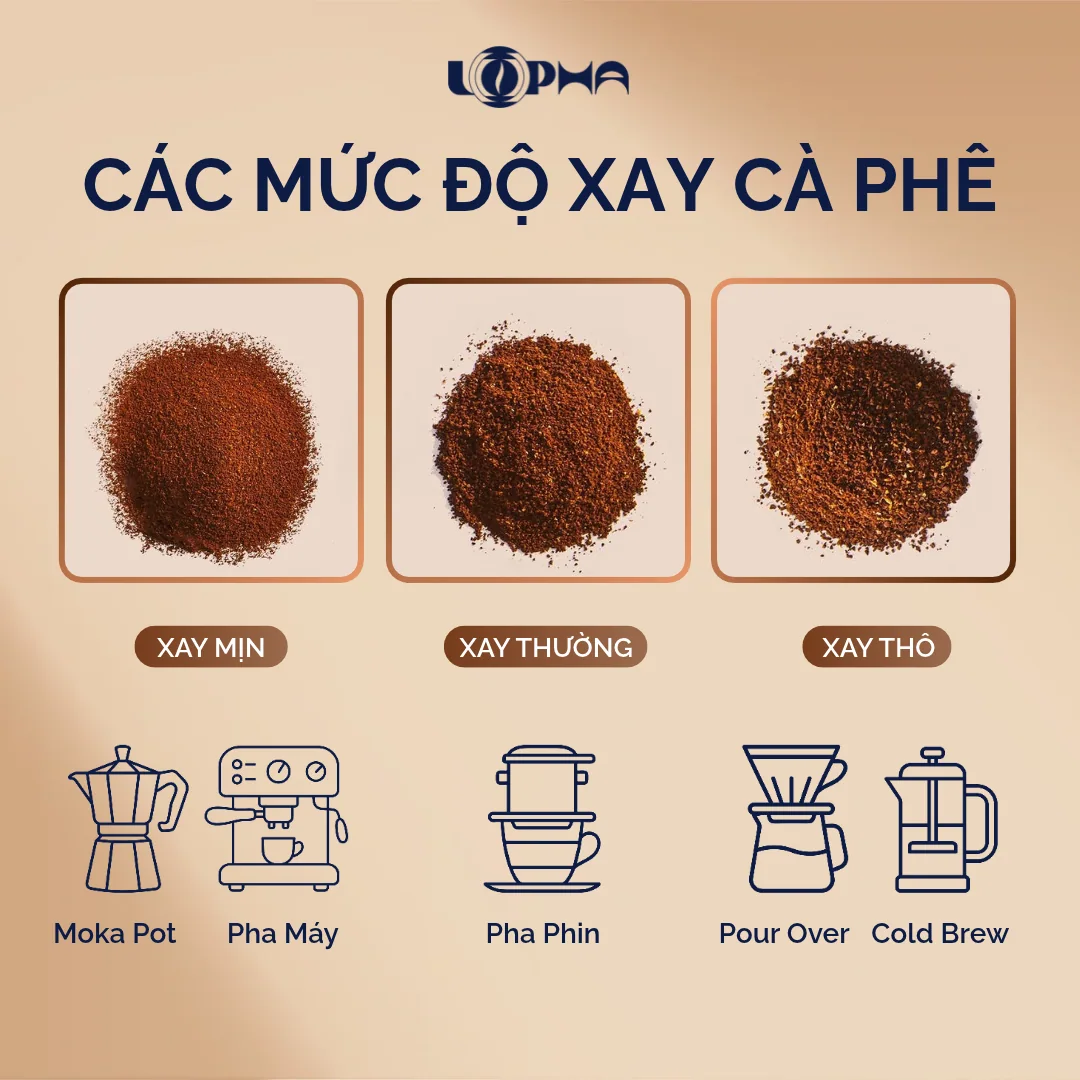
At the same weight, finely ground coffee exposes more surface area to water and generally extracts differently from coarse coffee. In methods where water must pass through a bed of grounds, particle size also creates resistance: too fine can slow drainage, while too coarse can let the water rush through. Immersion methods such as French Press have a different relationship between grind and contact time.
Your goal is not to find the prettiest particles by sight but to choose a grind that lets the equipment work normally and produces the flavor you enjoy. If your usual recipe tastes good, you do not need to change it simply because someone online says “finer always extracts more.” A good cup depends on the combination of grind, water, dose, time and beans.
2. Why Can Grind Size Make Coffee Sour, Bitter or Weak?
As coffee is broken into smaller particles, its surface area in contact with water increases. Under similar brewing conditions, soluble compounds may move into the water faster. Yet grounds that are too fine can cause uneven water paths in filter brewing, with some areas bypassed while others extract heavily; the cup may taste harsh and sour at once. A finer grind does not automatically mean the result will be “strong and balanced.”
Very coarse grounds with a short brew often produce a thin, sharply sour cup with little finish. But do not mistake Arabica's natural acidity for a brewing mistake. A good Arabica can have clear, clean and pleasant acidity; sourness associated with poor extraction is often accompanied by thinness, little sweetness and a short finish. Tasting the whole cup is more useful than trying to eliminate anything described as “sour.”
Grind size also affects texture. The metal mesh in a French Press may allow more small particles into the cup, while a V60 paper filter usually leaves less sediment. Sediment in a phin or French Press does not necessarily mean the coffee has been adulterated. Look at the filter design, particle size and how you pour the last portion of the brew.
3. Choosing a Grind for Each Brewing Method
3.1. Phin and Moka Pot
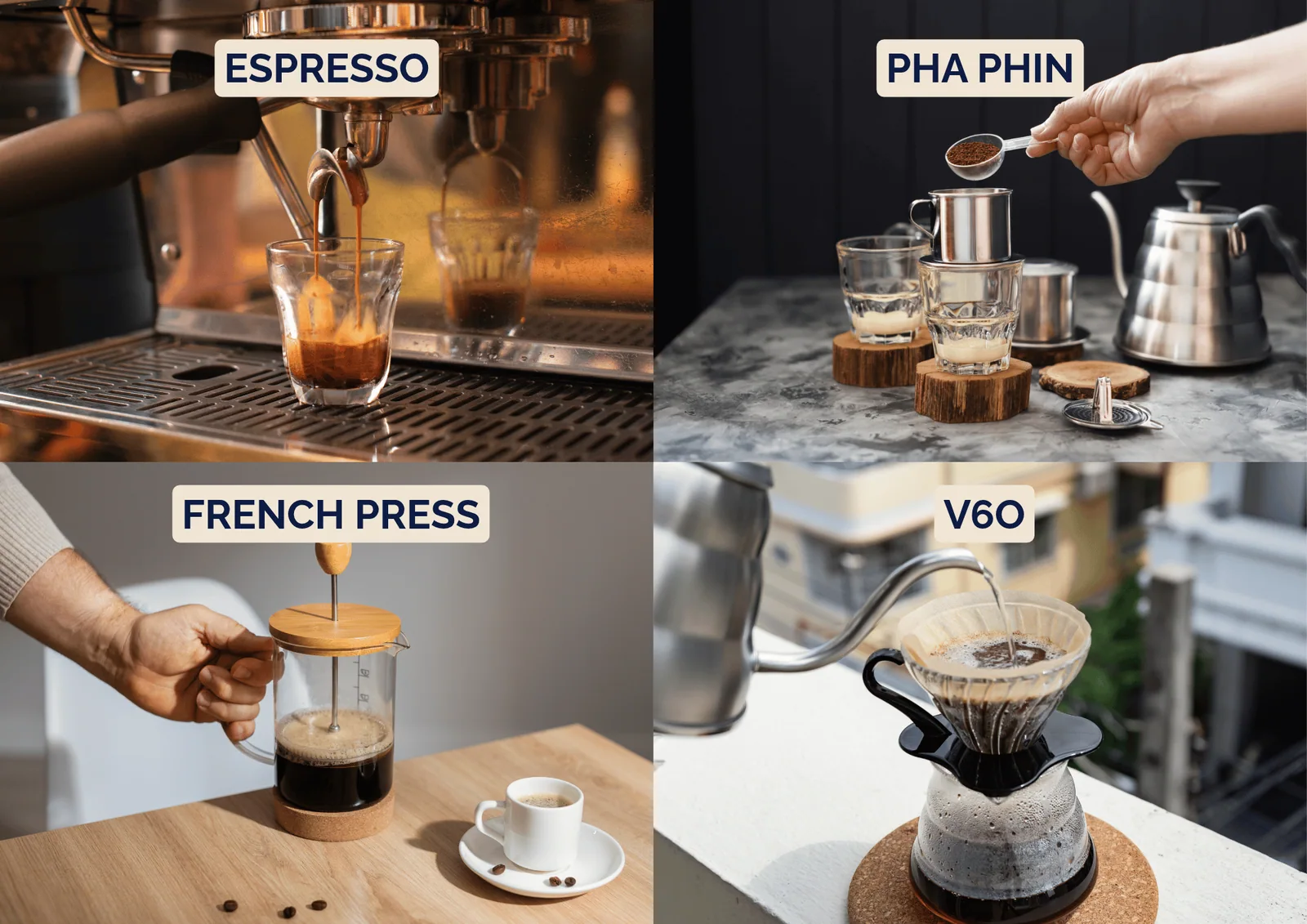
For a Vietnamese phin, many people begin with a medium to medium-fine grind and adjust according to the filter holes and drip rate. Aluminum and stainless steel phins, or models with different filter presses, may need slightly different settings. If many particles fall into the cup or the phin clogs, try grinding a little coarser. If water passes through too fast and the coffee tastes weak, try finer settings one step at a time.
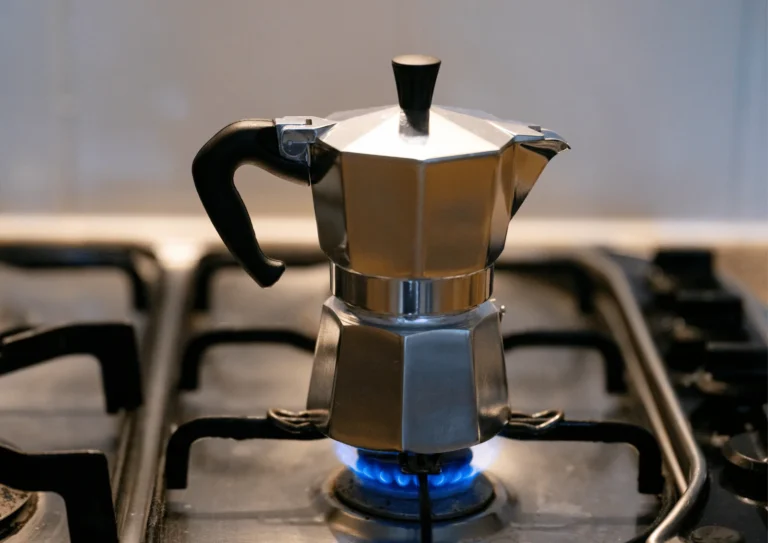
A Moka Pot uses steam pressure in a stovetop design, but it is not an espresso machine. Choose a grind intended for Moka Pots, generally less fine than a typical espresso grind. Bialetti instructs users to fill the funnel without tamping. Grinding extremely fine and then packing it down with a spoon makes it harder for water to pass and may prevent the pot from working as designed.
3.2. Espresso and Fully Automatic Coffee Machines
Espresso machines usually require fine grounds to create appropriate resistance during pressure extraction. But “fine” describes a wide range. Two machines using the same medium-roast coffee may need different grinder settings because their baskets, pressure and doses differ. If your grinder has adjustable steps, make small changes and record the dose, beverage yield and approximate brewing time before judging the result.
Fully automatic machines designed for whole beans have built-in grinders; you should not put ground coffee into the bean hopper. Beginners sometimes see a “strong” setting and assume it simply means grinding finer, but some machines adjust the coffee dose or water volume according to their own programs. Reading the manual is especially important when switching between Robusta and Arabica.
3.3. V60, French Press and AeroPress
Hario recommends a medium-fine grind for V60; if the water drains too slowly, try going coarser. French Press usually uses a coarser grind than V60 to work better with its mesh and limit fine sediment, although individual immersion recipes vary. AeroPress is more flexible: the manufacturer often suggests starting around medium or medium-fine and then adjusting steep time and pressing force for the desired flavor.
A simple rule is not to ask only “Which grinder number is this?” The numbers on a seller's grinder may mean something entirely different from those on yours. Explain whether you use a phin, Moka Pot, V60, French Press or espresso machine, and provide the machine and basket type if you can. Knowing the equipment makes a grind recommendation more reliable than a number with no shared reference.
4. Can You Judge Grind Size by Looking at the Grounds?
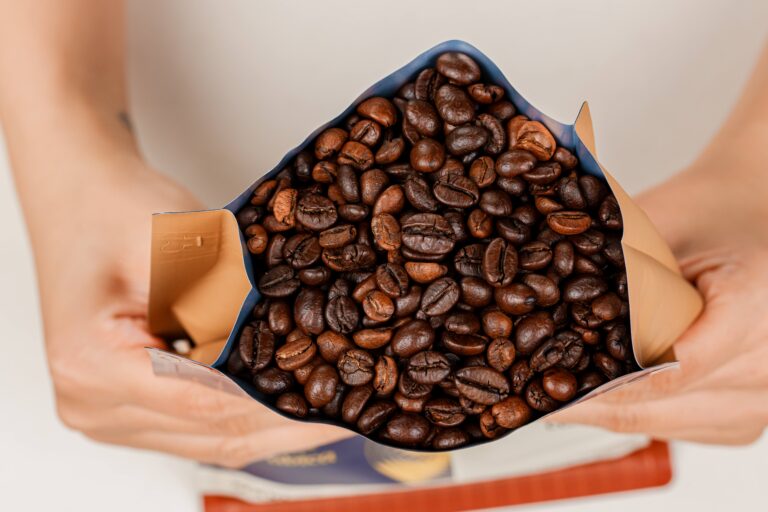
Descriptions such as “fine as salt” or “coarse as sugar” give beginners a rough visual idea, but they are not precise measurements. Salt crystals vary from one kitchen to another, and a grinder produces a range of particle sizes rather than perfectly identical pieces. When a recipe calls for a sugar-like grind, you still need to observe brew time and flavor before settling on a setting.
One useful thing to notice is whether there are excessive powder-like fines. A blade grinder can produce a mixture of large fragments and very fine dust, causing some coffee to extract quickly and other portions more slowly. Burr grinders generally offer better control over consistency, but buying an expensive grinder does not automatically make every cup delicious.
With a grinder, you can choose whole beans and control grind size at home; for quicker preparation, correctly ground coffee is still convenient. Grinding just before brewing reduces how long aromatic compounds are exposed to air, but busy people can also enjoy good coffee using grounds that have been packaged and stored properly.
5. How to Dial In Your Grinder over Three Brews
For your first brew, choose a simple recipe: perhaps Hario's 15 g of coffee with 250 g of water for V60, or your familiar ratio for phin. Record the grind setting, drawdown time and three impressions: aroma, strength and finish. If the cup tastes good, do not adjust it just because someone online uses a finer setting.
On the second brew, if the cup is too weak and drains rapidly, try one small step finer. Leave water temperature and quantity unchanged. With French Press, where steeping time may be fixed, a finer grind also calls for watching sediment and harsh flavors. Methods respond differently, so there is no rule that “one notch finer always makes the coffee sweeter.”
For the third brew, return to the setting that tasted best and see whether you can reproduce it. If the flavor changes substantially without a grinder adjustment, consider other factors: was the scale accurate, was the filter rinsed, has the bag been open a long time, or did you pour differently? An inconsistent result does not necessarily mean you need a new grinder.
6. Common Mistakes When Adjusting Grind Size
The first common mistake is changing both grind size and water volume at the same time. The cup tastes different, but you cannot tell why. The second is treating another device's brew time as your standard: a V60 that drains in a few minutes does not mean a French Press should be plunged after exactly that many minutes. The third is assuming more bitterness always means better extraction; harshness may simply signal an unbalanced recipe.
A less-discussed mistake is changing grinder settings while grounds from the previous setting remain inside. That retained coffee can make the first brew after adjustment unrepresentative of the new setting. If the equipment allows it and the manufacturer provides suitable instructions, clearing retained grounds before comparing flavors makes sense. Never dismantle electrical grinder parts without understanding the safety requirements.
Finally, avoid using extremely fine grounds for every method in the name of “getting all the flavor.” Very fine coffee in a long immersion brew can create extra sediment and difficult filtration, while an overly coarse espresso grind may let water pass too quickly and produce a weak shot. Sensible economy means buying an appropriate amount and selecting the grind for your actual needs—not forcing one grind to serve every device in the house.
7. Choosing a Grind When People at Home Prefer Different Coffees
If one person at home likes black phin coffee and another wants machine-made lattes, whole beans may make sense when they want to share the same coffee. Each serving can then be ground for its own equipment. But if you do not own a grinder and make only phin coffee every day, buying coffee ground for phin is more convenient. Choosing coffee need not require buying tools beyond what you actually use.
If someone in the family prefers bold iced coffee with condensed milk while you enjoy a lighter pour-over, grind is only part of the difference. Coffee-to-water ratio, bean choice, milk and ice all shape the final drink. One grinder setting cannot turn an identical recipe into two completely different styles. Choose the brewing method first and fine-tune afterward.
When trying a new bag of coffee, start with your previous grind setting and familiar recipe. If the beans differ in roast level, size or brittleness, you may need to adjust the grinder to achieve roughly the flow you want. That is normal and does not mean the new bag is inferior.
8. Questions Beginners Often Ask
Can you use espresso-ground coffee in a phin? You can try, but grounds that are too fine for many phins may clog the filter, slow dripping and increase sediment. If you are unsure of grind size, choose coffee prepared for phin rather than assuming the word “espresso” guarantees a stronger cup.
Does grinding coarser always mean less caffeine? No simple conclusion follows from grind size alone. Total caffeine also depends on the dose, coffee variety, water, time and extraction method. If your goal is to reduce caffeine, consider the actual serving instead of treating a grinder adjustment as a guarantee.
Should you grind an entire 500 g bag at once for convenience? If you use it slowly, grounds exposed to air for a long time may lose aroma faster than whole beans. With a grinder, preparing each serving or a few days' worth helps preserve the experience. If you buy pre-ground coffee, choose a package size that matches how quickly you drink it, and reseal it after every use.