How to Brew Coffee with a Moka Pot at Home: From Your First Brew to Cleaning
To brew with a Moka Pot, fill the lower chamber with water just below the safety valve, fill the funnel with coffee without tamping, and heat over low to medium heat. When coffee has risen into the upper chamber, remove the pot from the stove to avoid a harsh, burnt taste.
1. What Is a Moka Pot, and How Is Its Coffee Different?
The familiar eight-sided metal pot can look like a miniature espresso machine to a beginner. Set it on the stove, wait a few minutes and watch coffee rise into the upper chamber—it is a satisfying sight. But a Moka Pot does not operate like a professional espresso machine or create the same extraction conditions. Understanding that difference helps you choose the right grind, avoid packing the coffee too tightly and not be disappointed if your cup lacks café-style crema.
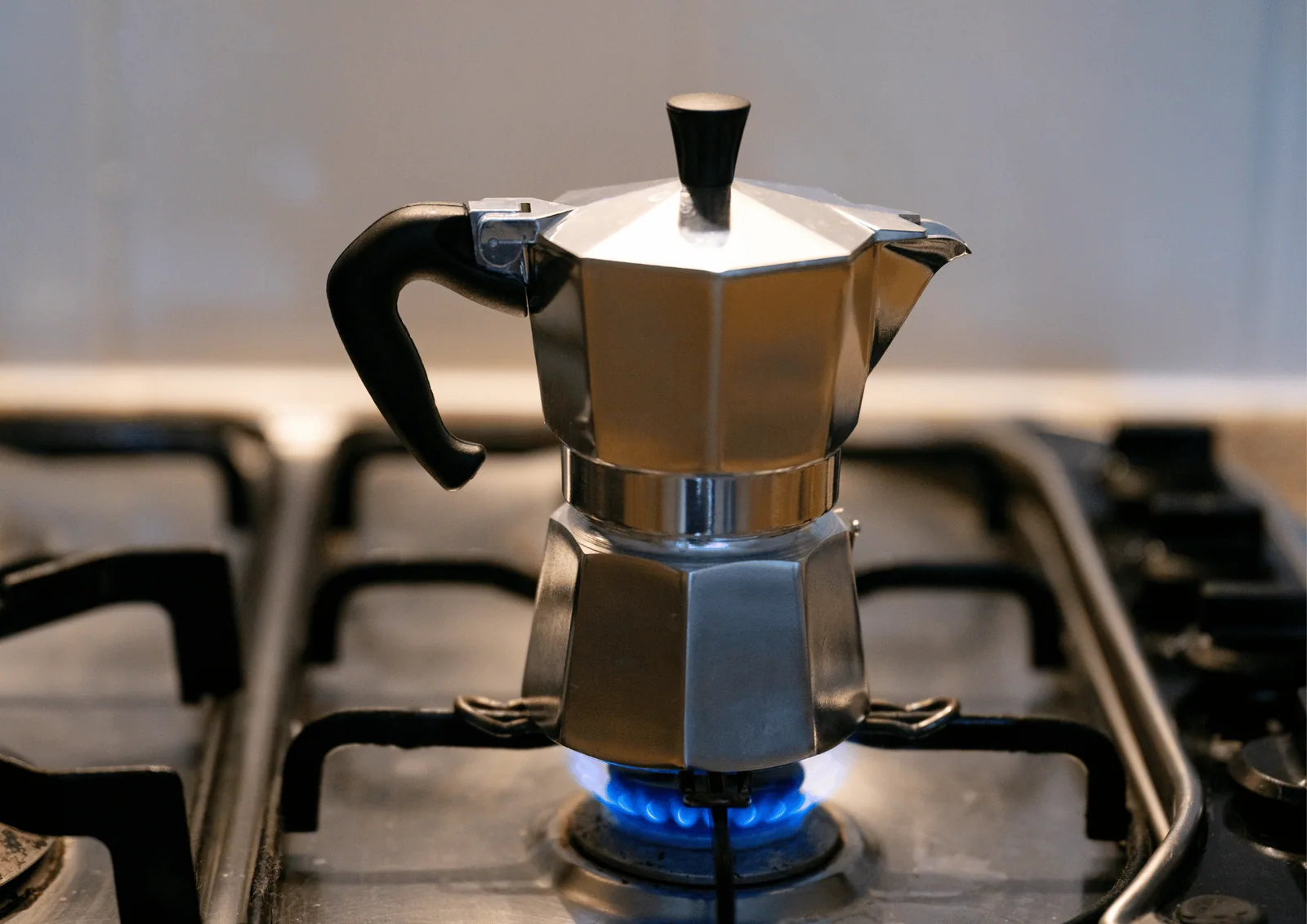
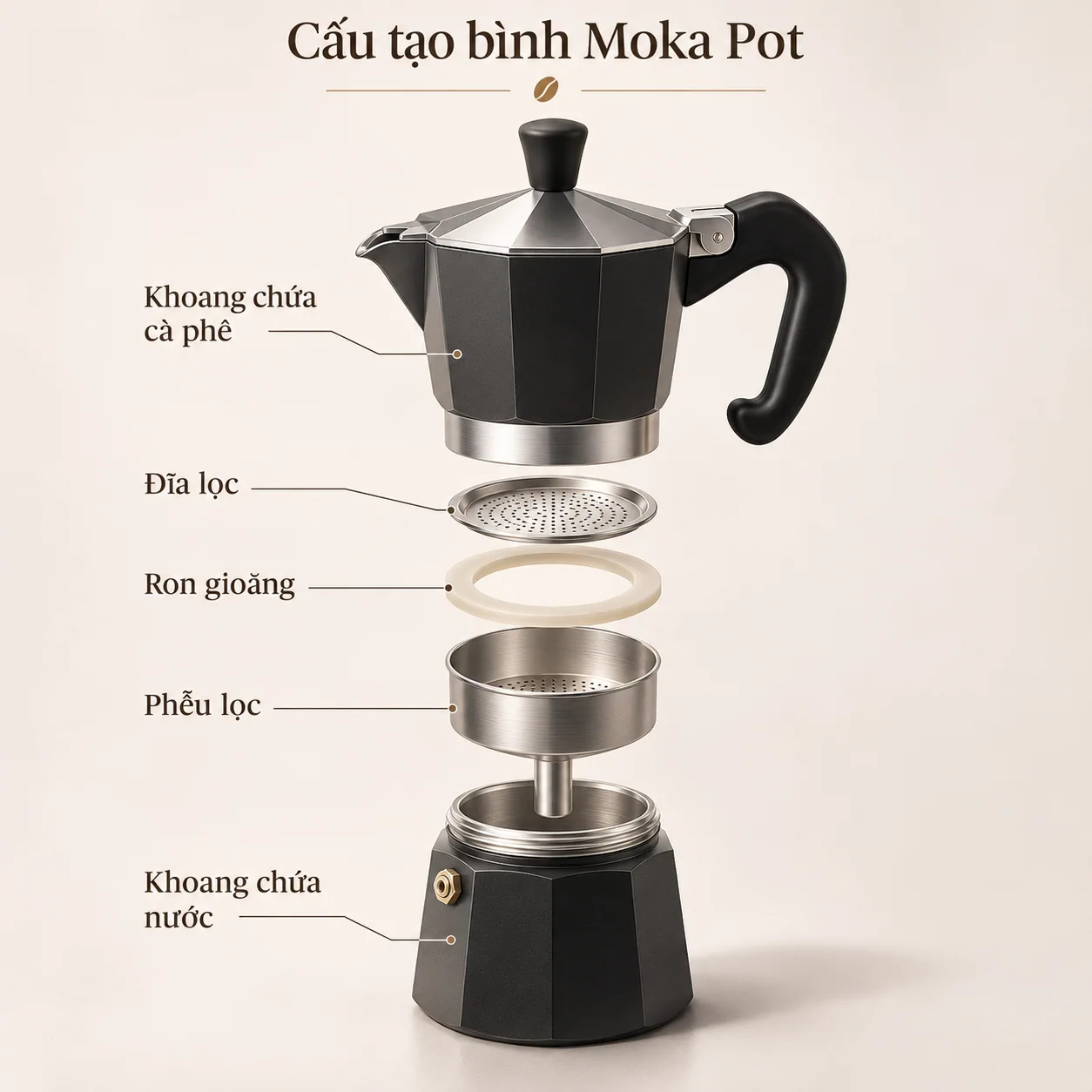
A Moka Pot uses heat to build pressure in its water chamber, pushing water through a funnel of coffee grounds and up into the upper chamber. The resulting drink is usually more concentrated by volume than ordinary filter coffee, making it suitable for small servings or milk drinks. It is still coffee brewed with water and does not automatically contain more caffeine than a large phin serving; bean dose and serving size matter most in that comparison.
A manufacturer's “cup” rating is not the same as the large 200–250 ml cups common in many Vietnamese homes. Beginners should check the pot's actual capacity and read the instructions for their specific model. A three-cup pot generally makes small servings, and you should not overfill the water chamber or pack in extra grounds to force it to make a large mug.
2. Prepare the Water, Coffee and Equipment before Heating
For the traditional Moka Express, Bialetti's instructions specify filling the lower chamber with water just below the safety valve, without covering it. Different pot sizes have different capacities; the valve is a more dependable reference than applying one volume in milliliters to every pot. If your Moka Pot has a special design or is electric, follow the instructions supplied for that model first.
The coffee funnel should be clean, reasonably dry and correctly seated. Fill it with coffee ground for a Moka Pot to the appropriate level, level the surface and do not tamp it like an espresso puck. Bialetti emphasizes that the coffee should not be compressed: water needs a path through the bed. Using an extremely fine grind and pressing it down can prevent the pot from working properly and create a safety risk.
Before screwing the pot together, check whether coffee grounds are stuck to the gasket rim, filter surface or threads. Even a little residue at the edge can prevent a good seal. Tighten the pot securely by holding its body, rather than using the handle as a heavy-duty lever. If the gasket is hardened or cracked, or the valve appears damaged, do not attempt another brew just to avoid wasting a serving.
3. Step-by-Step Moka Pot Brewing for Beginners
First, pour safe drinking water into the lower chamber until it sits just below the valve. Insert the funnel, add the grounds, level them without tamping and wipe coffee off the funnel's rim. Fit the upper chamber correctly and screw the pieces together firmly. Set the pot on a suitable cooking surface using low to medium heat. On a gas stove, the flames should not spread around the sides or reach the handle.
Watch for coffee to start rising through the central spout in the upper chamber. The flow is often dark and fairly steady at first, then becomes lighter. Many pots finish brewing in a few minutes; Bialetti gives an approximate range of 3–6 minutes depending on pot size and stove. Do not watch the clock so closely that you ignore what the pot is doing: burner output and water volume vary.
When the upper chamber is nearly full and the flow turns into pronounced sputtering, remove the pot from the heat according to your model's instructions. Do not leave it over a high flame until the lower chamber boils dry. Use the designed handle, avoid touching hot metal and place the pot on a heat-resistant surface. A gentle stir in the upper chamber before serving helps combine the early and late portions of the brew.
4. Why Does Moka Pot Coffee Taste Bitter or Burnt?
4.1. Excessive Heat or Leaving the Pot on the Stove Too Long
A common mistake is turning the burner up high to make the coffee appear sooner. Excessive heating of the water and pot can make brewing difficult to control; near the end, when little water remains, vigorous sputtering and a harsh overheated smell become more noticeable. Do not wait for every last drop. Removing the pot at the right moment usually preserves a more pleasant flavor than trying to extract every bit of water from the lower chamber.
If your first brew tastes burnt, keep the beans and dose unchanged and try lower heat. Center the pot over the heat source and keep flames away from the handle. For electric or induction stoves, check the pot's compatibility: many aluminum Moka Express models cannot be used directly on induction. Do not improvise an unsafe heat-conversion plate just to brew faster.
4.2. An Overly Fine Grind, Overfilled Funnel or Leaky Gasket
If coffee rises weakly or drips abnormally, turn off the heat and allow the pot to cool safely before investigating. Overly fine or compressed coffee, a dirty filter and an improperly sealed gasket can all affect water flow. Never unscrew the pot while it is hot and still pressurized. Do not poke the safety valve with a sharp object while heating.
Harsh coffee may also result from dark-roasted beans, grounds stored too long or water with an unusual odor. Change one variable at a time when troubleshooting. If you buy a roasted-coffee Blend with a Moka Pot grind option, select the appropriate grind variation on the product page rather than confusing it with fine espresso grounds or coffee ground for phin.
5. Should You Start with Hot or Cold Water in a Moka Pot?
Two approaches are common: fill the pot with cool water and heat it, or preheat water to reduce the time the assembled pot spends on the stove. Bialetti's Moka Express instructions describe filling the lower chamber and heating it; they do not require beginners to follow the preheated-water recipes often seen in barista videos. With an ordinary pot and stove, starting with the manufacturer's instructions is less error-prone.
If you experiment with already-hot water, be especially careful when screwing the pot together: the lower chamber is hot from the beginning. Do not hold bare metal directly to assemble the parts. A possible improvement in flavor is not worth an increased risk of burns. Beginners should first become comfortable assembling the pot, keeping the water below the valve and controlling heat before trying advanced variations.
Nor does hotter starting water guarantee a more espresso-like drink. A Moka Pot has its own operating mechanism and pressure limits. For the texture, concentration and characteristics of machine-made espresso, you need appropriate equipment. Moka Pot coffee has a distinctive style worth enjoying without having to imitate another drink perfectly.
6. Choosing Beans for Black Moka Pot Coffee or Milk Drinks
For a small black coffee, try beans that suit your taste and let the drink cool slightly so you can appreciate its aroma. Arabica may offer brighter acidity, Robusta a stronger base and longer finish, while a Blend can bring balance according to its proportions. No bean is guaranteed to suit every pot; water quality, roast level and grind still influence the result.
When making milk drinks, the coffee from a Moka Pot is usually pronounced enough to form the base of a small serving. You could start with 50–70 ml of brewed coffee and add hot milk to taste, then adjust. This is a serving example, not the quantity of water to put in the lower chamber. Do not change the water level relative to the safety valve simply to produce an exact volume for a latte.
For iced drinks, let the coffee cool a little before pouring over ice to slow melting, or chill it with suitable equipment. Never put ice directly into a Moka Pot's lower water chamber. Keeping the brewing process separate from assembling the drink allows you to repeat a consistent pot recipe and then adjust milk, water or ice as you prefer.
7. Cleaning and Storing Your Moka Pot after Brewing
Once the pot is cool, take it apart following the instructions, discard the grounds and rinse the components with warm water. Bialetti recommends hand washing; do not assume every pot is dishwasher-safe. Clean the filter plate, funnel and gasket groove so old grounds do not accumulate. Avoid scraping the surfaces or holes with sharp tools.
Dry the parts thoroughly before reassembling and storing, particularly if you use the pot infrequently. Keeping a damp pot tightly closed for a long time can produce unpleasant odors. Inspect the gasket periodically; if it becomes hard, deformed or leaky, replace it with the correct part for the model. A clean pot and sound gasket support both flavor and safe operation.
Some people believe a Moka Pot should not be cleaned because old coffee oils “season” it. Oils and residues left for a long time can change and develop unwanted smells. A sustainable routine is to clean the pot after each use, dry it well and store it. Caring for the equipment properly is more worthwhile than switching to expensive beans while the pot still smells of previous brews.
8. Frequently Asked Questions about Moka Pots
Can you tamp the grounds for stronger Moka Pot coffee? Not in a Moka Express, according to Bialetti's guidance. The funnel is designed for loose coffee; compacting it can obstruct water flow. If you want a bolder drink, choose beans you enjoy and adjust within safe recipe limits instead of trying to turn the pot into an espresso basket.
Does a Moka Pot produce crema? A thin or temporary layer of foam may appear in some brews, but crema should not be your only measure of success. A Moka Pot operates at different pressure from an espresso machine; it is the drink's flavor and strength that you are there to enjoy.
Should you leave brewed coffee in the pot until lunchtime? When possible, pour it into a clean container and consume it within an appropriate period instead of leaving it in a still-warm pot for a long time. Holding coffee at high temperature can change its flavor. If you brew for one person, choosing the right pot size helps avoid making too much and leaving the rest behind.