How to Make French Press Coffee at Home: Ratio, Steep Time and Tips for Less Sediment
A French Press brews coffee by steeping grounds in hot water and using a mesh plunger to separate them. Start with about 18 g of coffee and 300 g of water, steep for around 4 minutes, then press gently and adjust for flavor and the amount of sediment you prefer.
1. How Does a French Press Brew Coffee?
A glass vessel with a plunger may look like a tea brewer, but French Press extracts coffee very differently from phin or V60. Instead of allowing water to pass continually through a coffee bed, it steeps grounds directly in water for a period before separating them with a mesh filter. The resulting cup often has a fuller mouthfeel and may contain some coffee oils and fine sediment, depending on grind size and mesh design.
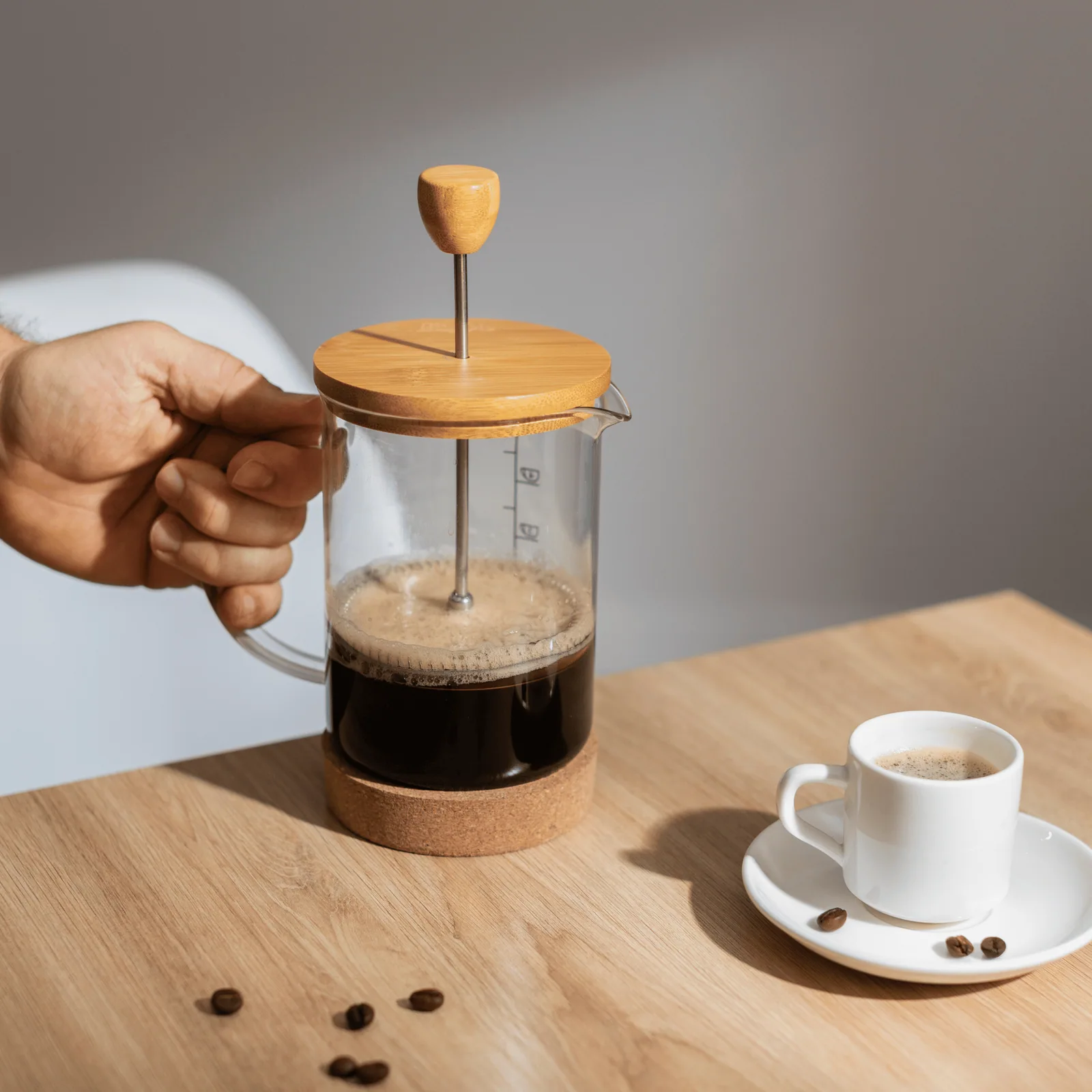
If you enjoy making coffee at home but do not want to stand over several rounds of pouring, French Press can be pleasantly straightforward: measure coffee, add water, wait a few minutes and press. Easy operation, however, does not mean you should simply add as much coffee as possible and steep it for as long as you can. Grind, ratio and how you pour at the end still determine whether the cup tastes pleasant or contains too much sediment.
A trial recipe for about 300 g of water uses 18 g of relatively coarse coffee, a steep of roughly 4 minutes and a gentle downward press. This is a useful starting point for comparing flavors, not a mandatory formula for every press. A 350 ml, 600 ml or one-liter vessel has different amounts of headroom and space taken by grounds, so plan around the number of drinkers instead of filling the vessel almost to the rim for appearances.
2. Choose Your Press, Coffee and Water before Brewing
French Press vessels may be made of glass, stainless steel or other materials. Check the capacity, whether the mesh fits closely against the inner wall, and whether the plunger moves smoothly. Torn mesh, a bent frame or a leaky seal can let more grounds through. With glass, avoid sudden thermal shock and do not put the vessel directly on a stove unless the manufacturer explicitly allows it.
Choose a grind coarser than that used in many V60 and espresso recipes. Larger particles are easier for the mesh to retain and reduce fine sediment in the cup. There is no universal grinder setting, though; beginners should judge both filtration and taste. You can steep very fine pre-ground coffee, but the cup will often contain more residue and the plunger may be harder to press.
Clean water without off-odors and at a suitable temperature helps produce a pleasant cup. Start with water a little below boiling, then adjust according to the beans and the result. If the vessel has not been preheated, the temperature may fall quickly when you pour, especially with a large press in a cool room. Rinsing it with hot water and discarding the rinse before brewing is a simple step worth trying.
3. Step-by-Step French Press Brewing for One or Two People
Weigh 18 g of coffee and 300 g of water, or scale the ratio for a larger press if you need more servings. Put the grounds into the warmed vessel. Pour evenly to wet them completely; a very gentle stir is fine if dry grounds remain floating on top. Fit the lid to retain heat without pressing the plunger down yet. Start timing when you pour the water.
After about 4 minutes, look at the surface. You may gently stir the floating coffee crust with a spoon or leave it undisturbed, depending on your recipe. Lower the plunger slowly and evenly without forcing it through heavy resistance. The vessel contains hot water, and a forceful plunge can splash liquid or damage the equipment. If the plunger is very difficult to move, stop and investigate when it is safe instead of pushing with both hands.
Pour the coffee into cups or another server after brewing to limit continued contact with the grounds. Do not leave a pressed French Press sitting on the table for an hour and expect the flavor to remain unchanged; liquid can still contact the grounds below or taste different as it cools. When serving several people, alternate portions between cups so they differ less in strength and sediment.
4. Why Does French Press Coffee Have Sediment, and How Can You Reduce It?
French Press metal mesh cannot catch every tiny coffee particle the way V60 paper does. Fine sediment at the bottom of a cup is therefore possible, particularly with a grinder that creates many fines. That sediment does not automatically mean the coffee is adulterated or poor quality. Check grind size, how closely the mesh fits, and whether you shook the vessel hard before pouring.
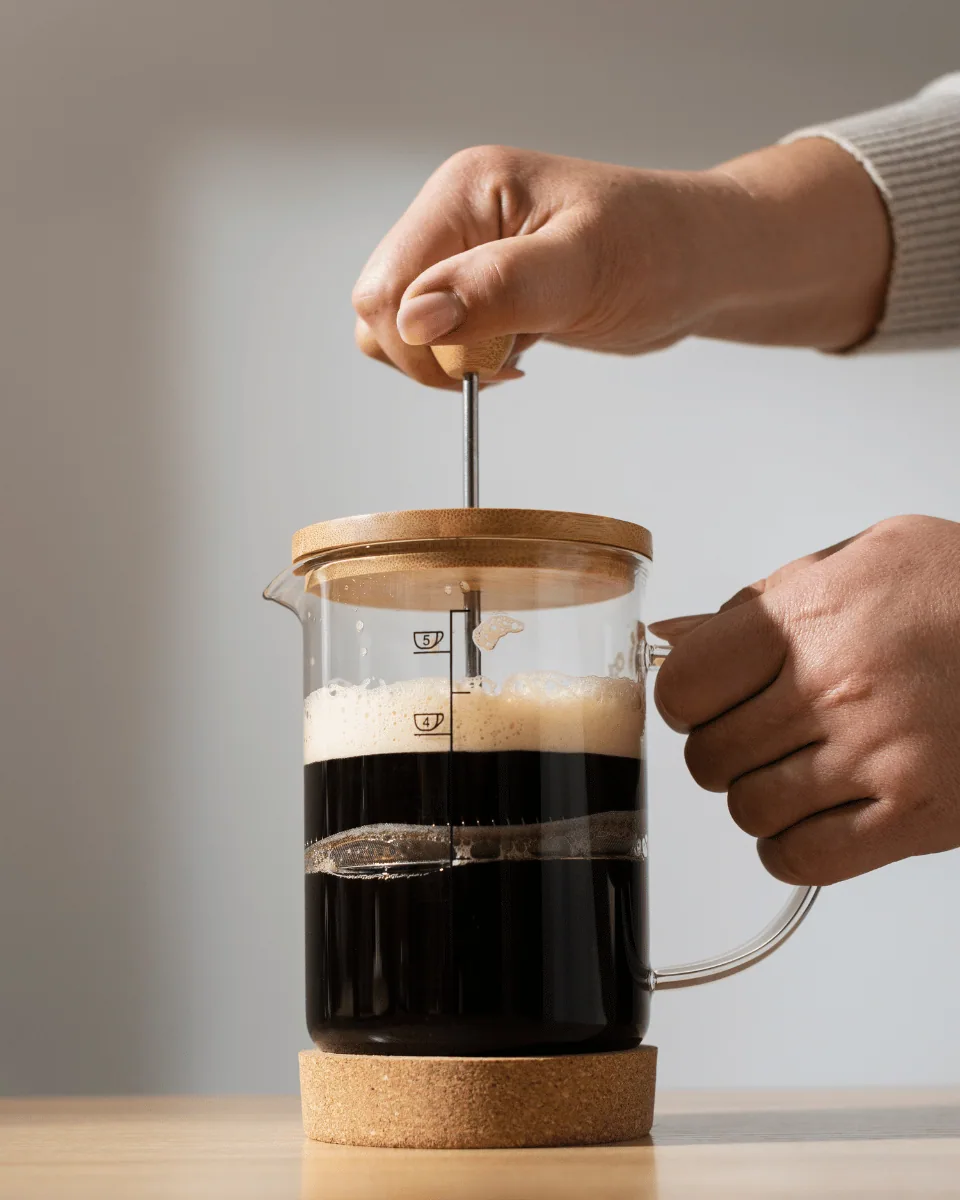
To reduce sediment, try a moderately coarser grind, allow grounds to settle before pressing, and pour the coffee out slowly. Do not tilt the vessel deeply just to collect the last splash of liquid along with the sludge at the bottom. If you dislike any sediment, paper filtration may suit you better. That is a difference in brewing method, not a ranking of French Press against V60.
Cleaning the mesh matters too. Old grounds lodged in its layers can cause unpleasant smells and make pressing harder. After each use, take the parts apart as instructed, wash them thoroughly and reassemble once dry. If a fresh batch of coffee tastes or smells strange despite new beans, inspect the mesh and vessel walls before blaming the coffee.
5. How Should You Adjust Coffee That Is Too Strong, Sour or Bitter?
If your cup is weak and slightly sharply sour, check whether you used too little coffee, whether the water was hot enough and whether the steep time suited the recipe. Starting from 18 g per 300 g, you could add a little coffee or grind slightly finer next time. Do not change everything at once. Because French Press is an immersion method, you cannot judge it by the drip rate used for phin.
If the coffee is bitter and carries lots of fine particles, try a coarser grind or a moderately shorter steep, and avoid constant vigorous stirring. Some beans naturally have a stronger taste; Robusta and Arabica can produce different finishes in the same recipe. Looking at the flavor differences between Robusta, Arabica and Blend can help set sensible expectations before trying to make one bean taste like another.
If the drink feels overly concentrated, adding a little hot water after brewing can make it easier to drink without brewing again. That is dilution after extraction, however, not a cure for the underlying problem if the grounds were steeped too long and taste dry and harsh. Next time, reduce the dose or adjust the steeping recipe so the base coffee is better from the start.
6. Can You Drink French Press Coffee with Milk and Ice?
Yes. French Press coffee can be combined with hot milk or served over ice, according to preference. With condensed milk and ice, you may want a higher coffee-to-water ratio than when drinking it black, because milk and melted ice soften the coffee flavor. But increasing the dose too much on your first attempt makes comparison difficult. Start with a small adjustment and taste.
A French Press is convenient for several people because one suitably sized vessel can serve the group. Calculate water based on the vessel's actual capacity, remembering that the coffee grounds occupy space too. A press labeled 600 ml will not necessarily yield exactly 600 ml of drink. If you need four large cups, brewing two batches may prevent overfilling and spills when fitting the lid or plunging.
You can also make cold brew in a French Press, but that is a different method, using cold water and a much longer steep. Do not apply the four-minute hot recipe to cold brew and then declare the coffee too weak. The two methods use different temperatures, times and extraction conditions even if the vessel is the same.
7. Three Small Mistakes That Can Spoil a Brew
The first mistake is failing to inspect the mesh while cleaning. When the plunger catches the next morning, the brewer may blame the new grounds, when a few old particles or a misaligned mesh are actually responsible. Spend a minute checking the filter before adding water; it can save an entire batch from being wasted.
The second mistake is pouring freshly boiled water into a very cold glass vessel without checking its heat-resistance instructions. Dedicated equipment may be designed for hot water, but knocks, existing cracks and sudden temperature changes still pose risks. Follow the manufacturer's recommendations and never place the vessel on a gas burner or hot cooktop unless permitted.
The third mistake is plunging as quickly as possible to finish sooner. Heavy force can stir up the grounds and push more sediment through the mesh. A French Press does not need a powerful motion like tamping an espresso puck. Slow, even and safe movement is usually better; when the mesh slides down easily, brewing feels easier too.
8. Does French Press or Phin Better Suit Your Routine?
If you are used to strong iced coffee with condensed milk from a small phin, a French Press may give a different taste and texture even with the same beans. A phin produces coffee as water passes through the bed; a French Press steeps grounds and filters them through mesh. Someone who likes preparing one vessel for the family without watching individual drips may find French Press more convenient.
A person who drinks only a small, very strong serving with condensed milk may still prefer phin. Someone who dislikes sediment may choose V60 paper filtration. There is no need to call one tool “professional” and another “ordinary.” The right choice is the one that makes your morning coffee enjoyable without adding steps you cannot sustain.
If your first French Press brew does not turn out well, keep the 18 g and 300 g recipe as a reference and review grind, steep time and plunging before changing beans. Once your technique is steady, differences between coffees become easier to recognize. That is one of the pleasures of home brewing: a few small adjustments can change a familiar cup in very specific ways.
9. Frequently Asked Questions
Does a French Press need filter paper? Most traditional models use metal mesh and need no separate paper. If you have a special accessory or variant, follow that model's instructions. Paper can alter the oils and sediment in the cup, so it should not be treated as compulsory for every French Press.
Does steeping longer than four minutes improve the coffee? Not automatically. Time interacts with grind size, dose and temperature. Some recipes call for longer steeping, but four minutes gives beginners a reference point. If the coffee already tastes good, there is no need to extend the time simply to “extract everything” from the beans.
Can you use phin-ground coffee in a French Press? You can try if the grounds are not too fine for the mesh, although you may get more sediment than you want. When buying a fresh bag, a French Press-specific grind is generally easier to control. If you already have phin grounds, test a small portion before making a full vessel so you do not waste a large batch.