How to Make Yogurt Coffee at Home: Gently Tangy, Aromatic, and Not Too Sweet
Yogurt coffee combines yogurt’s gentle tang with strong coffee, ice, and sweetness to taste. Choosing smooth yogurt and aromatic coffee, then mixing them gradually, makes the drink easier to enjoy and helps reduce rapid separation.
1. What Is Yogurt Coffee, and Does It Taste Like Coffee with Milk?
Yogurt coffee brings together an interesting combination: yogurt’s gentle tang and smooth richness meet coffee’s strong taste and roasted aroma. The drink is usually served cold. You can stir yogurt with ice before pouring coffee over it or blend it briefly for a more even texture. Compared with Vietnamese iced coffee made with condensed milk, yogurt coffee tastes more noticeably tangy and has a different mouthfeel, especially when you use unsweetened yogurt.

If you have never tried it, the two ingredients may seem to belong to entirely different dishes. But pleasantly tart yogurt and well-balanced coffee can complement each other. Coffee that is too bitter leaves an unpleasant finish, while overly sour yogurt can make the drink difficult to enjoy when combined with highly acidic coffee. Taste both separately before mixing. This small step tells you which ingredient needs adjusting instead of repeatedly adding sugar to the finished glass.
Yogurt coffee can be a welcome change from drinks containing lots of condensed milk. It still contains dairy ingredients and caffeine, however, so there is no reason to assume it offers special health benefits. The immediate appeal is its flavor, coolness, and yogurt’s soft texture. At home, you can control the sweetness and coffee portion to match your family’s preferences.
2. A Yogurt Coffee Recipe for One Chilled Glass
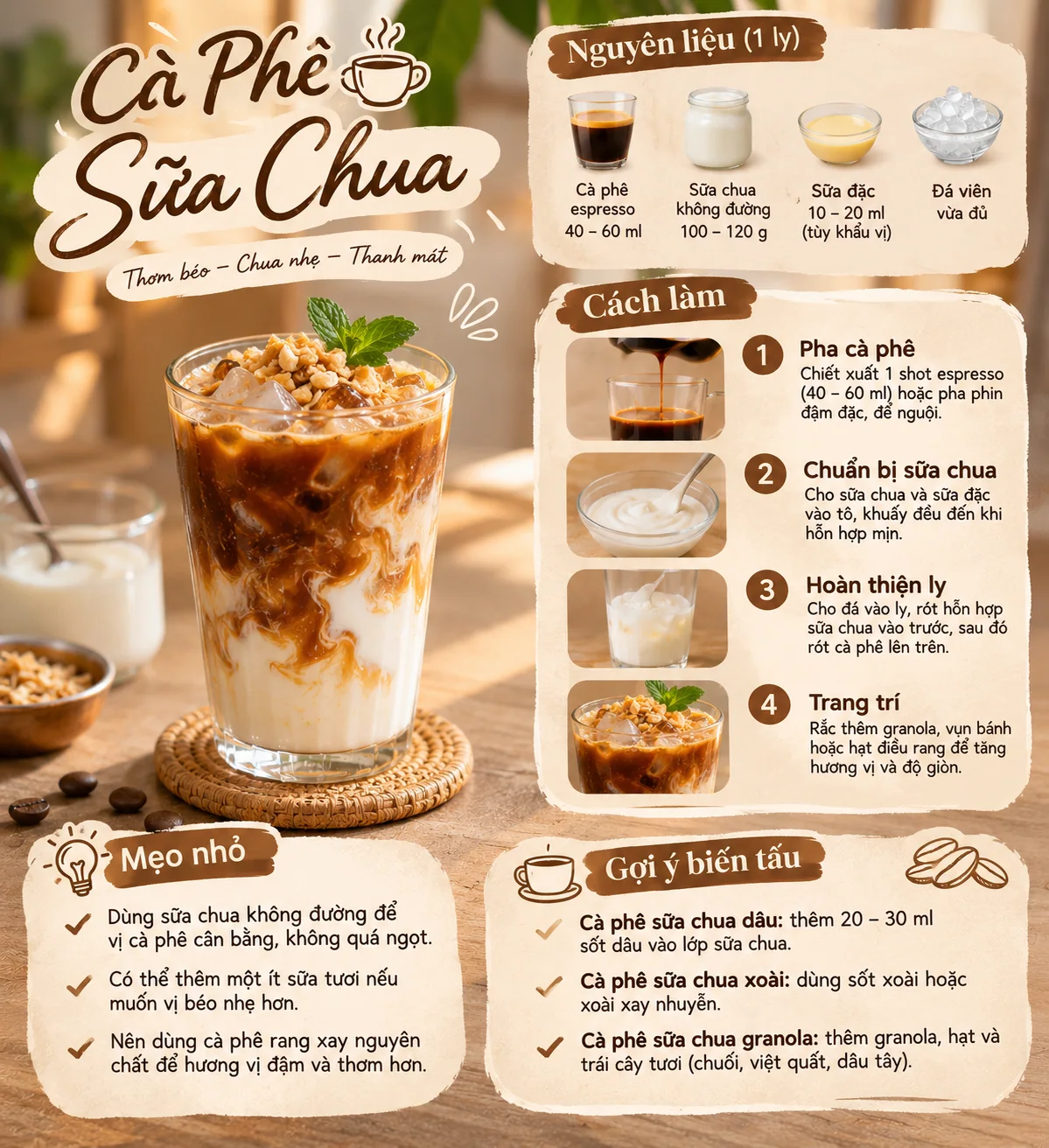
Prepare one tub of yogurt, about 100 g, with 30–40 ml of espresso or 40–50 ml of strong phin concentrate, 80–120 g of ice cubes, and either 5–10 ml of sugar syrup or about 10–15 ml of condensed milk if you prefer a sweeter drink. A glass, spoon, and measuring cup are all you need; a blender is optional for a smoother version. Sweetened yogurt is often easy for beginners to enjoy but may mean you should reduce or omit extra condensed milk.
Thick, smooth yogurt creates a more uniform base than yogurt that has separated into a large amount of whey. If a little clear liquid appears on top of a product that is within date and properly stored, follow the manufacturer’s directions and gently stir it before use. Replace yogurt that smells unusual, shows spoilage, or has been stored improperly. Keep yogurt chilled until you prepare the drink, especially in hot weather.
For the coffee, use the strong phin concentrate you normally brew. If 40 ml tastes quite weak when drunk black, mixing it with 100 g of yogurt will make the coffee even harder to detect. In your next batch, adjust the coffee dose or grind so the concentrate tastes more distinctive, rather than pouring a full cup of watery coffee into the yogurt. A small but concentrated coffee portion generally creates a more balanced glass.
3. How to Make Yogurt Coffee Without a Blender
First, spoon the chilled yogurt into a glass. If you want more sweetness, add a little syrup or condensed milk and stir gently until the base is smooth, with no sugar collecting at the bottom. Next, add clean ice cubes, using a moderate quantity rather than necessarily filling the whole glass. Thick yogurt may cling to the ice; that is a normal texture for the unblended version.
Prepare espresso or strong phin coffee in a separate cup, let it cool a little, and slowly pour it over the yogurt. The coffee may leave brown streaks against the white base before mixing in when stirred. Do not worry if your glass does not hold neat layers like a photograph: different yogurt thicknesses and pouring methods affect the appearance. The main aim is a drink you can stir and enjoy, with clear flavors and a pleasantly cold temperature.
Stir a few times from the bottom upward and taste. Once the yogurt and coffee are reasonably mixed, you can judge their balance of sourness, sweetness, and bitterness. If it is too sour, use less yogurt or select a milder product next time; if too bitter, revisit the coffee concentrate. A little extra sweetness can soften an already mixed glass, but do not let sugar hide all the yogurt and coffee aromas.
4. How to Make a Blended Iced Yogurt Coffee Version
For those who prefer a drink through a straw rather than eating with a spoon, blend the yogurt and ice into a smooth base before adding coffee. Put around 100 g of yogurt, 80–100 g of small ice pieces, and your preferred sweetener into a suitable blender. Blend in short bursts until the ice is just fine, pour into the serving glass, and top with coffee that has cooled slightly. This gives a blended cold-drink texture while yogurt remains the dominant flavor.
If your home blender is low-powered, check its instructions before attempting to crush ice. Oversized cubes may strain the motor; adding lots of water to help the blades move will dilute the base. A simple alternative is to use smaller ice pieces within the machine’s limits and blend in several short batches. Once smooth, stop promptly to reduce melting from heat and extended blending time.
The blended version changes quickly when left on the table, as the ice melts and the yogurt thins. You can pre-chill the ingredients and glass, then blend only when ready to drink. Brew the coffee earlier and let it cool under suitable conditions; coffee poured too hot over the icy base can immediately destroy the texture you just created. This helps preserve a refreshing, smooth, creamy sensation in the first few minutes.
5. Should You Choose Robusta, Arabica, or Blend for Yogurt Coffee?
Yogurt brings its own acidity, so consider the total sour impression when choosing coffee. LOPHA Arabica has a distinctly acidic profile; combined with very tart yogurt, it may taste sharply sour to someone unused to that combination. Robusta brings bold flavor and a lingering finish, providing a stronger contrast, although an overly bitter concentrate will still upset the balance. A Robusta-forward Blend is another direction to try if you want clear coffee flavor with a touch of acidity.
For phin drinkers, roasted coffee ground for the correct brewing method helps keep the concentrate consistent. Grind that is too coarse can cause the phin to drain quickly and brew weakly; overly fine coffee may produce a harsh or difficult-to-control extraction. Coffee that tastes pleasantly aromatic before mixing is easier to pair with yogurt than beans selected only because someone said they “go well with milk.”
Try making two small glasses with the same yogurt and ice: one with Robusta concentrate and one with Blend. This isolates the effect of the coffee instead of changing yogurt and sweetness at the same time. If one family member likes tart flavors and another prefers stronger coffee, each can choose their own base. There is no single coffee variety that suits every person in this drink.
6. Why Does Yogurt Coffee Separate, Turn Grainy, or Taste Too Sour?
Yogurt is a fermented dairy product with an altered protein structure, so when mixed with coffee, water, and ice, it may not be as uniform as fresh milk. Streaks of color before stirring usually come from pouring technique. But if the yogurt already looks abnormal when opened, smells unusual, or shows signs of improper storage, do not use it. Distinguish normal layering in a mixed drink from signs that an ingredient may have spoiled.
A drink that is too sour may contain very tangy yogurt, strongly acidic coffee, or both. Try milder yogurt or reduce the amount of highly acidic coffee. Adding a large quantity of condensed milk makes the drink sweeter and richer, but it may not fix a sharp aftertaste. Adjusting the main ingredients is usually a more pleasant solution.
If the mixture is too thin, consider how much ice has melted and how much coffee concentrate you used. Watery phin coffee combined with a large amount of ice can reduce its thickness. For a stirred version, use less ice and thicker yogurt. For a blended version, reduce added water and blend only as long as needed. When serving family members, choose modestly sized glasses so the drink can be enjoyed before much of the ice melts.
7. How Does Yogurt Coffee Differ from Coffee with Fresh Milk?
Coffee with fresh milk uses milk to soften bitterness and add richness, generally without the pronounced fermented tang of yogurt. With yogurt, acidity is noticeable as soon as you stir and drink, sometimes more than sweetness. The texture may also be thicker if you use set or thick yogurt. Both drinks can look creamy brown after mixing, but the experience differs from the first sip.
Yogurt coffee is not necessarily less sweet than Vietnamese iced milk coffee. Sweetened yogurt plus condensed milk or syrup can add up to a significant amount of sugar. For balance, look at the actual ingredients and taste the yogurt before adding sweetener. There is no need to promise health benefits simply because yogurt is included; first assess a drink by how it is prepared and consumed.
When choosing something for guests, ask whether they enjoy gentle tartness or prefer the familiar rich sweetness of milk coffee. People who enjoy yogurt may be intrigued by this combination, while those who dislike fermented notes may find it unfamiliar. Offering a small glass to taste makes more sense than preparing a large pitcher everyone then feels obliged to finish.
8. Frequently Asked Questions About Yogurt Coffee
Should you use unsweetened yogurt? You can, particularly if you want to control sweetness yourself. However, unsweetened yogurt often tastes more noticeably sour, so choose a product you like and adjust the coffee accordingly. For a beginner, test a small serving before deciding whether to add syrup or condensed milk.
Can yogurt coffee be prepared and left on the table for several hours? Because the drink contains yogurt, appropriate refrigeration and food safety matter. Melting ice also changes its taste and texture. Follow the ingredient label’s storage instructions and make the drink close to serving time, especially in hot weather.
Can espresso replace phin concentrate? Yes, but adjust the amount because espresso is generally more concentrated per milliliter. Begin with around 30 ml of espresso and 100 g of yogurt, then taste after mixing. If it is too strong, reduce the coffee next time instead of adding excessive milk or sugar.
Yogurt coffee is easy to try when you want a chilled, gently tangy alternative to the familiar iced milk coffee. A tub of smooth yogurt, aromatic strong coffee, and a sensible amount of ice provide a solid base. Once you know how sour you like it and how noticeable the coffee should be, you can repeat a recipe that suits you without endlessly adding toppings to make the glass look more elaborate.