Where Does Coffee Aroma Come From? From Green Beans to a Freshly Brewed Cup
Coffee aroma develops through changes in the bean during roasting, then reveals itself through grinding and brewing. Discover why every cup has a distinctive scent.
Before we take our first sip, the aroma has often already given us an impression of the coffee. Opening some bags releases deep, grounded aromas; other cups suggest fruit, while familiar roasted scents make us recognize “coffee” immediately. Interestingly, many of these familiar aromas are not fully present in green beans. They develop, change and are released across several stages. Understanding this process makes it easier to appreciate coffee’s scent without memorizing hundreds of chemical names.
1. How Is Aroma Different from Coffee Taste?
Sourness, bitterness and sweetness are basic sensations detected by our sense of taste. Aroma, by contrast, comes from volatile molecules that reach the nose. As we bring a cup close, airborne aromatic molecules enter the olfactory system. While drinking, aromas can also be perceived retronasally, through the passage from the mouth to the nose. Because these perceptions occur together, we often say that coffee “tastes floral” or has a “cocoa flavor,” even though much of that impression actually comes from smell.
The distinction is useful when describing products. An Arabica may have clear acidity on the palate alongside floral and fruity aromas. Robusta may be distinctly bitter, while its woody character describes its scent. In Blend, a bold taste and mild acidity appear alongside the coffee’s own aromatic profile. If we group everything under “taste,” readers can struggle to imagine the aroma that appears before drinking and returns in memory after the final sip.
2. Do Green Coffee Beans Already Smell Like Coffee?
Green coffee beans contain many natural substances, including sugars, amino acids, lipids and other compounds. These act as starting materials for aroma-producing reactions during roasting. Yet green beans generally smell very different from a bag of roasted coffee. That is why selecting good raw material matters, but appropriate roasting is still necessary to develop the intended aromatic style. The finished aroma is not simply locked inside the green bean, waiting to be released by heat.
Species, growing region and processing method can influence the amounts and types of aroma precursors. Fermentation during processing may also alter the bean’s composition before roasting. Nevertheless, no processing method guarantees that every batch will produce the same aromatic note. Origin and processing are best seen as part of the foundation; the finished cup reflects several interacting factors. The roasting article explores what actually happens inside the bean when heat is applied.
3. Why Does Roasting Make Coffee More Aromatic?
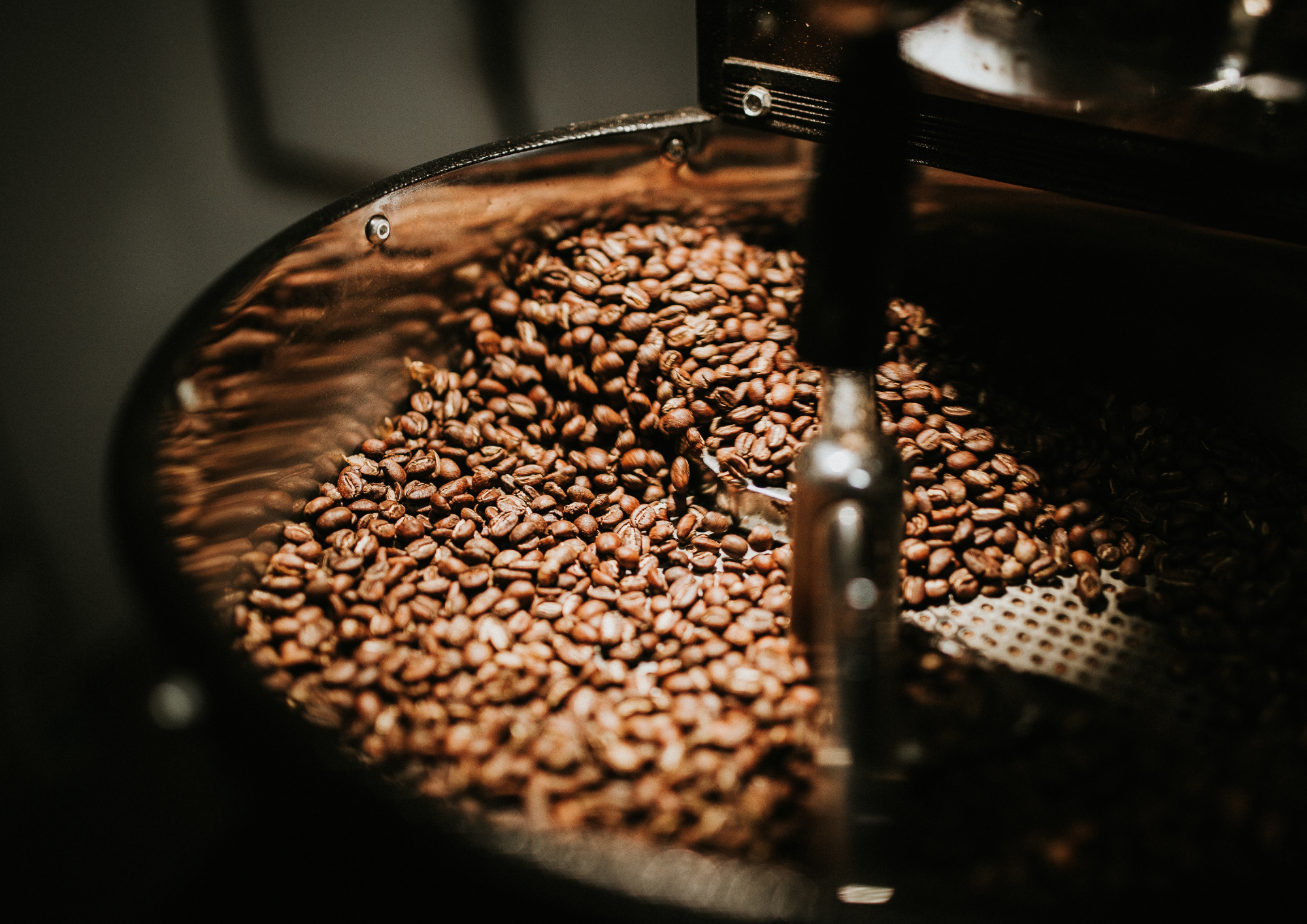
As temperature rises, reactions between sugars and nitrogen-containing components, including the Maillard reactions, contribute to the creation of many aromatic compounds. Other processes, such as thermal decomposition and reactions involving intermediate products, also play a role. Roasting can be imagined as a kitchen in which initial ingredients meet heat and give rise to many new smells. The bean’s change of color is merely the visible part; much more complex chemistry is unfolding inside.
Roast level affects how that process develops. Lighter roasts can make aromas associated with the raw material easier to notice, while deeper roasting often emphasizes darker roasted notes. But a dark roast does not necessarily smell only burnt, nor does a light roast guarantee floral and fruity aromas in every cup. Bean quality, time, heat transfer and storage after roasting all matter. A roast-level label should not be treated as an absolute promise about the final scent.
4. Which Groups of Compounds Contribute to Aroma?
Research on roasted coffee has identified numerous families of volatile compounds, including pyrazines, furans, aldehydes, ketones, esters and sulfur-containing substances. Some pyrazines can suggest roasted, nutty or cocoa-like notes; many furans are associated with sweet or roasted impressions; and certain esters and aldehydes contribute fruity associations. These are general descriptive tendencies, not a formula in which the presence of one compound guarantees one particular aroma.
One especially important odorant is 2-furfurylthiol, a thiol associated with the characteristic aroma of roasted coffee, even at very low concentrations. What makes aroma fascinating is that its impact is not simply proportional to how much of a substance is present. A compound found in tiny amounts may contribute significantly if its odor threshold is very low. Therefore, non-specialists should not try to predict aromatic strength simply by counting the compounds on a chemical analysis sheet. The individual mechanisms warrant their own more advanced Level 3 articles later.
5. Why Do Freshly Ground Beans Smell Stronger Than Whole Beans?
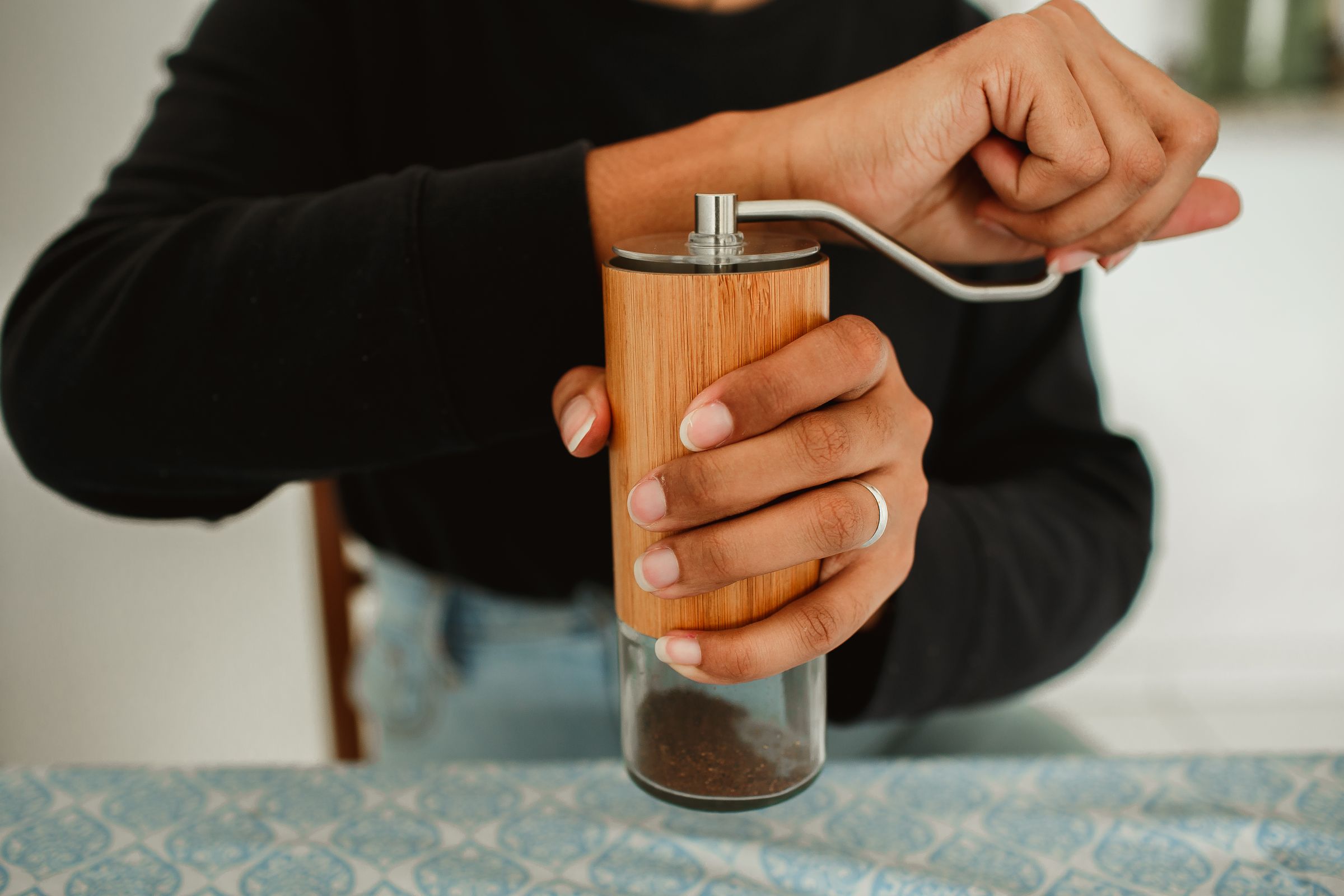
Whole beans retain much of their inner physical structure. Grinding breaks that structure into smaller pieces and sharply increases the area exposed to air. Aromatic molecules can escape more readily, which is why freshly ground coffee usually has a more noticeable scent than intact beans. For many whole-bean coffee lovers, that is a favorite moment: the aroma arrives before the hot water, like a brief introduction to the cup ahead.
However, the same increase in exposed surface area also makes ground coffee more susceptible to losing aroma during storage. Some aromatic compounds are sensitive to oxygen and time; moisture, heat and strong nearby food odors can also affect them. That does not mean pre-ground coffee must taste worse. Ground coffee offers convenience, while whole beans let you decide when to grind. Choose according to your equipment and habits, then seal the pack and take only what you need to limit unnecessary aroma changes.
6. Why Does Dry Ground Coffee Smell Different from Brewed Coffee?
When hot water meets coffee grounds, heat encourages many aromatic molecules to evaporate, while water carries soluble substances into the cup. As a result, dry grounds, coffee during brewing and the completed drink can smell different. With a Vietnamese phin, you may notice the shift between pouring the water and seeing the first drops. With drip brewing, the wet coffee bed and the freshly collected liquid offer two distinct aromatic moments.
The temperature of the finished cup continues to influence what we smell. Very hot coffee can release abundant aroma, yet the heat may make detailed tasting harder. As the cup cools, evaporation changes and different nuances can become noticeable. Do not assume the coffee has deteriorated simply because it smells different when cooler. Try smelling it three times: before adding water, immediately after brewing, and when it has cooled enough to sip slowly. There is no need to name every note; simply observe how the aroma changes.
7. Do Floral, Fruity or Woody Notes Mean Flavorings Were Added?
When a coffee is said to “suggest flowers” or “have woody notes,” familiar comparisons are being used to describe sensations created by compounds in coffee. They do not mean that the producer has added flowers, fruit or wood to the bag. In sensory language, one drinker may think of a particular fruit, while another notices only a generally bright aroma. Memory and tasting experience influence how we name scents, so failing to identify a specific note does not mean the coffee lacks aroma.
LOPHA describes three aromatic and taste directions: Robusta leans toward woody notes and pronounced bitterness; Arabica offers floral and fruity aromas and clear acidity; and Blend combines a bold foundation with mild acidity. These descriptions help buyers find a starting point, rather than replacing the experience of each brewed cup. Your preference also depends on how you enjoy smelling coffee, whether you drink it hot or iced, and whether you add milk. Aroma matters as part of that complete experience.
8. Preserving Aroma to Keep Every Brew Worth Anticipating
You do not need elaborate equipment to notice coffee aroma. Start with a well-sealed pack, store it somewhere dry away from sunlight and heat, and use a clean grinder if you choose whole beans. When brewing, smell the coffee before immediately adding sugar or milk; it will help you recognize its original aromatic character. Afterward, enjoy it as you wish. Coffee tasting is not a competition to name as many aromas as possible.
The main thing to remember is that aroma takes shape across an entire journey: raw ingredients supply precursors, roasting develops new compounds, grinding and brewing release them, while time and storage conditions continue to change them. Once you understand that, opening a bag or pouring water no longer feels like an incidental step. It is the moment when an essential part of the coffee’s flavor begins to emerge.