What Is Dalgona Coffee? How to Whip Fluffy Coffee by Hand at Home
Dalgona Coffee features a thick, airy layer of brown whipped coffee over chilled milk, usually made with instant coffee, sugar, and hot water. Start by whipping the three ingredients at a 1:1:1 ratio, then adjust the amount of milk and sweetness to your taste.
1. What Is Dalgona Coffee, and What Makes Its Brown Foam?
Dalgona Coffee, often called whipped coffee, is recognizable by its thick, fluffy, light-brown coffee foam sitting on chilled milk. Touch it with a spoon and the foam can hold its shape for a while before slowly dissolving into the milk. The foam tastes quite strong, sweet, and coffee-bitter, while the milk underneath makes the whole glass easier to enjoy. What separates it from traditional Vietnamese iced milk coffee is precisely the way the coffee itself is whipped into a topping.
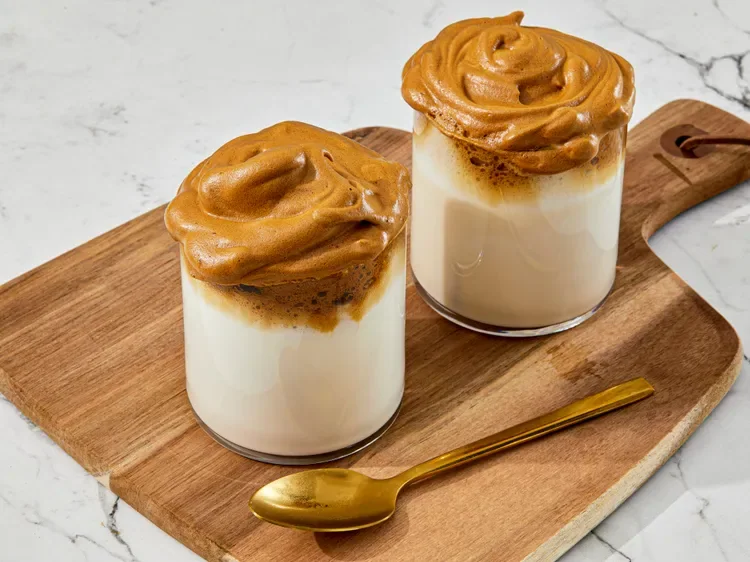
The best-known Dalgona recipe whips instant coffee, sugar, and hot water until the mixture lightens in color and increases in volume. The familiar ratio is one part instant coffee, one part sugar, and one part hot water. The ingredients and whipping action together produce the characteristic foam. You can make a glass with a handheld electric mixer, or even a manual whisk if you have the time and patience.
The name became associated with a drink trend widely shared online in recent years, but the first thing home cooks should understand is the type of coffee used. Ordinary instant coffee behaves differently from espresso or concentrated phin coffee when whipped. If you add sugar to an existing cup of phin coffee and whisk endlessly without obtaining stiff foam, the reason may be the liquid’s properties, not simply insufficient effort.
2. Ingredients and Tools for One Glass of Dalgona Coffee
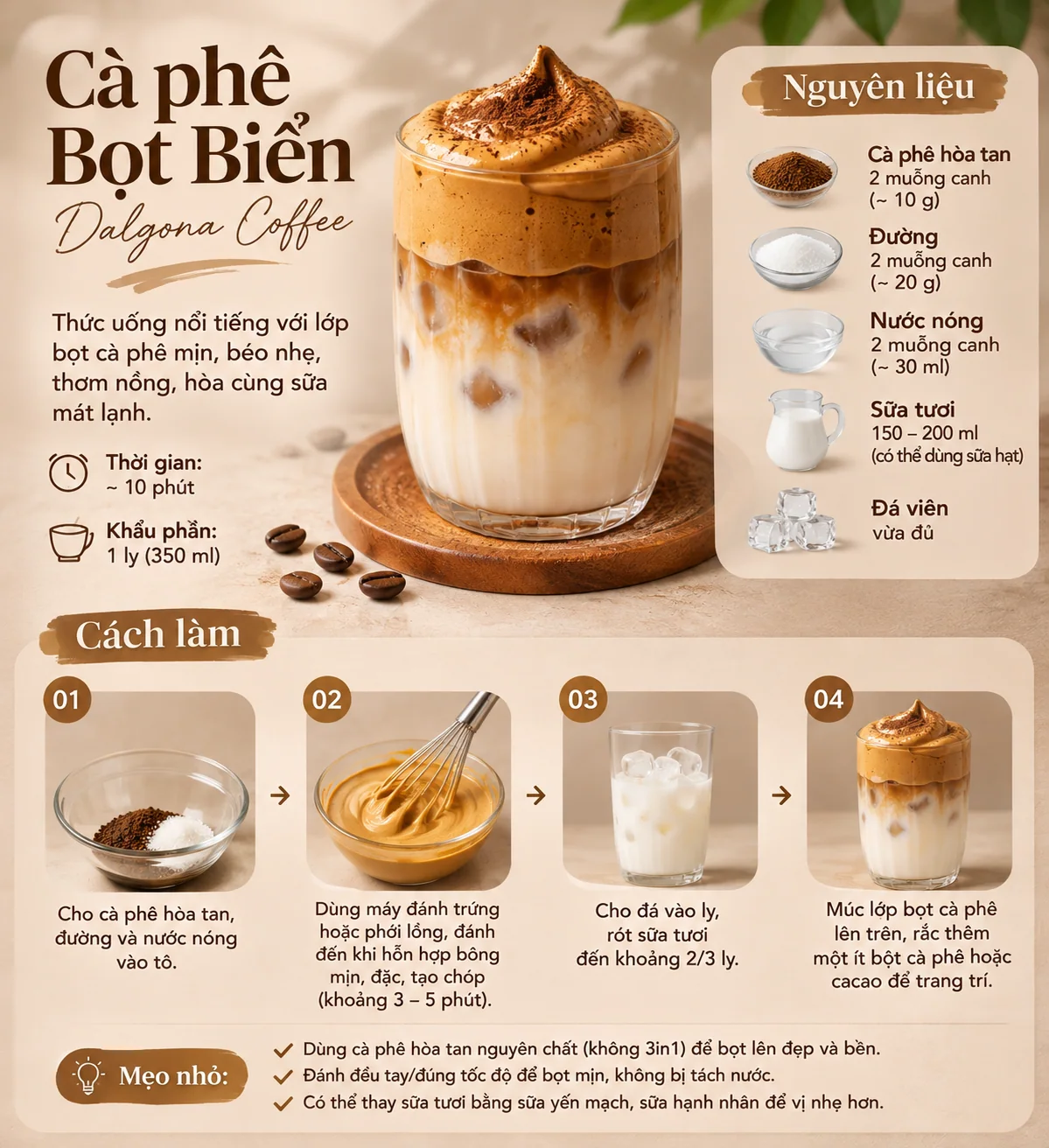
Start with 10 g of pure instant coffee, 10 g of granulated sugar, and 10 g of hot water for the foam. For the base, prepare about 150–180 ml of chilled milk, a few ice cubes, and a moderately tall glass. These quantities are for one trial serving. If measuring with spoons, use the same spoon size and level each measure to keep the ratio consistent. Different instant coffee brands vary in intensity, so serve a smaller portion of foam if the result tastes too strong.
For equipment, you need a small bowl with relatively high sides, a balloon whisk or handheld electric mixer, and a spoon. An oversized bowl spreads out the small quantity of ingredients and makes even whisking difficult; a bowl sized to the mixture is more convenient. With an electric whisk, begin at medium speed to avoid splashing and increase it once the mixture starts to foam. Whisking by hand takes longer, especially with a fairly thick mixture.
Sugar helps create texture and hold the foam’s shape. Cutting it drastically from the outset may result in a less stable topping even though it tastes less sweet. To control sugar intake, use less foam on each glass of milk or reduce the sugar gradually in later batches. Alternative sweeteners do not always give the same texture, so test a small batch instead of assuming the recipe will work identically.
3. How to Whip Dalgona Coffee by Hand or with a Mixer
Put the instant coffee, sugar, and hot water in the bowl, then stir once to dissolve the grains into a dark-brown mixture. Whisk continuously in circles or back-and-forth strokes to incorporate air. At first the mixture is usually dark with large bubbles; gradually it becomes paler and thicker, with finer bubbles. When you lift the whisk, the foam should leave trails on the surface and fall slowly. That is a useful sign that it is ready.
An electric hand mixer usually takes much less time than a manual whisk. Try a few minutes and watch the texture rather than insisting on an exact number of seconds, since motor power, bowl size, and ingredient volume vary. If whisking by hand, switch hands or take brief rests when tired; rushing can fling the mixture out without necessarily whipping it faster. Once the foam is ready, avoid beating indefinitely just to make it thicker at any cost.
Pour 150–180 ml of chilled milk into a glass, add ice if desired, and spoon the foam over the top. You can vary the amount: someone who loves intense coffee might use nearly all the topping, while another person may prefer a thin layer to stir through the milk. Taste a small amount of the foam by itself, then mix the rest into the milk according to preference. If you only drink the milk from the bottom without stirring, it may seem weak even though the topping is intensely sweet and bitter.
4. Why Does Dalgona Usually Use Instant Coffee Instead of Phin Coffee?
Instant coffee is made by extracting coffee and drying the extract so soluble compounds can dissolve again in water. When whipped with water and sugar in appropriate proportions, this mixture can hold foam quite well. Phin coffee contains much more water relative to its dissolved coffee components, so whisking it with sugar does not automatically produce the same stiff topping as the Dalgona recipe. That is an ingredient difference, not evidence that phin coffee is lower quality.
If you have roasted coffee at home, you can brew a separate strong concentrate for a milk coffee or another cold variation, but give the result an accurate name. For example, using roasted ground coffee prepared for a phin or espresso as a base and topping it with Dalgona foam made from instant coffee produces a drink with two coffee components. Depending on the total dose, it could contain quite a lot of caffeine, so consider the portion size and your tolerance.
Some online recipes use espresso, syrup, and high-speed frothing equipment to make coffee foam, but their method and texture differ from the three-ingredient Dalgona version. If you want to try one, treat it as a variation, make a small quantity, then assess the foam and flavor. Recognizing these two approaches can save more time than searching for a trick that makes every type of coffee whip in exactly the same way.
5. How to Fix Runny Dalgona, Large Bubbles, or Foam That Collapses Quickly
If prolonged whipping still leaves the mixture runny, check the ratio first. Many people add too much hot water because they worry the ingredients will be difficult to mix, leaving a liquid too dilute to create thick foam. Start again with equal amounts of coffee, sugar, and water in a small bowl and whisk evenly. Check the instant coffee itself: some 3-in-1 products already contain sugar and creamer and cannot replace pure instant coffee measure for measure in this recipe.
Foam with very large bubbles usually needs more whisking before the bubbles become fine and stable. Keep whisking, but do not simply increase the speed until the mixture splashes around the bowl. A steady rhythm and enough time often create a smoother topping. If the foam has thickened but looks slightly uneven, gently fold it with a spoon before placing it on the milk for a softer-looking surface.
Foam that collapses quickly after serving may be caused by warm milk, a low sugar proportion, or leaving the finished drink standing too long. Dalgona looks its best close to preparation. When serving a group, prepare the glasses and milk in advance, but whip the topping shortly before drinking. If you need to change sweetness, do it in the next test batch rather than continually adding milk, water, or sugar to foam that has already been whipped.
6. How to Choose Milk and Adjust Sweetness for Better Dalgona
Because the topping already contains sugar, unsweetened milk generally provides a more balanced base. Whole milk gives a richer mouthfeel, while lower-fat milk tastes lighter. Oat milk or other milk alternatives can be used if you enjoy them, but check whether they are sweetened already. A milk base that is very sweet on its own can make Dalgona cloying, particularly in a large glass.
If you want less sweetness, the easiest option is to use a smaller amount of foam per glass. Divide one batch between two smaller glasses of milk, taste, and then decide whether to add more. Once familiar with the basic recipe, experiment with reducing sugar in the whipped mixture. Because sugar also affects texture, gradual changes show what works with your ingredients and equipment.
Ice keeps the milk cold but gradually melts if the glass sits for long. People commonly stir the foam into the milk before drinking, making the entire mixture cool. If you prefer a rich, thick glass, use less ice and chill the milk ahead of time. When sipping slowly in hot weather, more ice helps keep it cold but dilutes the last part. That is an understandable trade-off, not necessarily a flaw in the recipe.
7. How Is Dalgona Coffee Different from Cappuccino or Coffee with Cream?
Cappuccino typically uses espresso and frothed milk; most of its foam comes from milk rather than instant coffee whipped with sugar. Dalgona reverses that arrangement: the coffee is whipped, while the milk underneath may remain liquid. Their foam ingredients and the way they feel when stirred are therefore different. A milk frother suitable for cappuccino may not make Dalgona as quickly as an electric whisk working in a small bowl.
Coffee topped with whipped cream uses a separate rich topping, usually whipped from dairy cream or a similar ingredient. That topping is white or another color depending on added flavors, while Dalgona foam is coffee-colored and strongly coffee-flavored. Two layered drinks may look alike in a photograph, but their ingredients reveal whether the topping is whipped instant coffee or dairy cream.
Choose according to the people you are serving. Someone who enjoys warm espresso and milk may prefer cappuccino, while someone who likes a sweet chilled drink with coffee foam to stir in may prefer Dalgona. For people who drink little caffeine, adjust the Dalgona topping according to how much instant coffee the whole recipe contains; the milk’s soft mouthfeel does not indicate the caffeine dose.
8. Frequently Asked Questions About Whipped Coffee
Can you use brown sugar? You can try it. Brown sugar still sweetens the mixture, but the flavor and color will differ from white sugar. Its crystals need to dissolve in the hot water for even whipping. If the crystals are coarse and there is very little water, the foam may remain grainy, so dissolve them thoroughly before whisking.
How long does whisking take without an electric mixer? It depends on your whisking effort, ingredient volume, and whisk type. Rather than watching the clock, look for a lighter color, a thicker consistency, and visible trails when you lift the whisk. Manual whisking is more work but can still succeed with a small batch.
Does Dalgona have to contain ice? No. Properly chilled milk can be served without ice, while cubes suit people who enjoy a colder drink. Add the foam close to serving so it retains its shape, then stir it into the milk when you are ready to drink.
A successful Dalgona does not need foam piled as high as an advertisement. If the mixture is whipped evenly, the coffee taste is distinct, the milk is not too sweet, and the drinker can stir it to preference, it is already an appealing afternoon treat at home. Understanding why instant coffee, sugar, and water can foam also saves you the frustration of making arbitrary ingredient substitutions and wondering why the results differ.