What Water Temperature Is Best for Brewing Coffee? Should You Use Freshly Boiled Water?
For many hot-water brewing methods, 92–96°C is a useful starting range, not a mandatory temperature for every coffee. Adjust water temperature alongside grind size, coffee dose and brew time to find a cup that suits your taste.
1. What Water Temperature Works Best for Coffee?
Every morning, you boil a kettle of water. Some days you pour as soon as it switches off; on others, a phone call distracts you before you get around to brewing your phin. Coffee from the same bag can taste different on those two mornings. Hot water influences how quickly soluble compounds move from the grounds into your cup, so temperature is worth checking before assuming you bought the wrong beans.
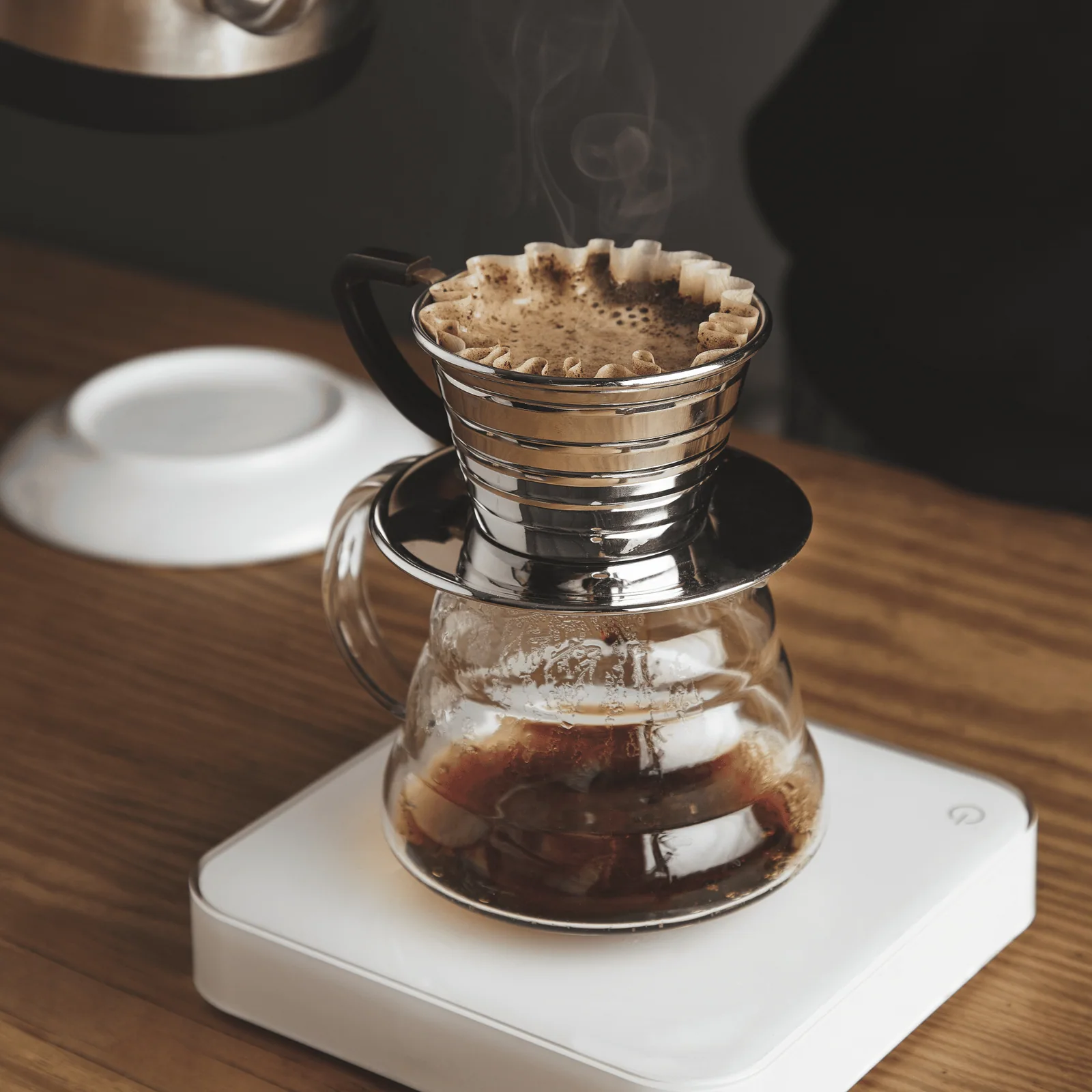
For V60 and many other filter brewing methods, a water temperature of around 92–96°C (198–205°F) is a good starting point. Water temperature affects the extraction process, which in turn influences the coffee’s aroma and flavor. However, not every coffee tastes its best at the same temperature. Lightly roasted coffee may benefit from hotter water, while darker roasts can sometimes taste smoother at slightly lower temperatures, helping to reduce harsh bitterness.
Besides water temperature, grind size, coffee dose, and pouring technique also influence the final cup. You can start within this temperature range, then taste the coffee and make small adjustments with each brew. Over time, these changes can help you better understand the characteristics of your coffee and find a brewing approach that suits your taste.
It helps to distinguish three temperatures: the water in the kettle, the water as it reaches the coffee grounds, and the finished coffee in the cup. They are not identical. A metal kettle, a cold phin, a thick cup and pouring in several stages all affect heat loss. Looking at one kettle reading without considering the rest of the process may still leave you wondering why each brew turns out differently.
2. How Does Hot Water Change the Flavor of Coffee?
Roasted coffee grounds contain many soluble compounds. Hotter water generally speeds up extraction, but not every compound dissolves at the same rate. Within a given recipe, changing the temperature may affect strength, aroma and the balance of perceived acidity and bitterness. Temperature is not acting alone, however: grind size, water flow and contact time also play major roles.
A slightly sour, thin cup can tempt you to turn the temperature up as far as it goes. That may increase extraction in some cases, but it might not address the real issue. If the grounds are too coarse or the water passes through too quickly, changing the grind or your pouring technique could help more. With Arabica's natural acidity in particular, the aim is not to eliminate all acidity and turn the cup bitter.
Conversely, very hot water combined with an extremely fine grind and a long brewing time can produce harsh, drying flavors. That does not mean every bitter cup was caused by boiling water. Robusta naturally tends to have a stronger flavor than Arabica, and roast level matters too. If you change the beans and raise the water temperature at the same time, it becomes difficult to tell what actually changed the cup.
3. Should You Pour Freshly Boiled Water at 100°C over Coffee Grounds?
People sometimes hear that water at 100°C will “burn” coffee grounds, so they are afraid to pour immediately after boiling. That description is misleading: the coffee has already been exposed to much higher temperatures during roasting. Boiling water does not roast the grounds again as if they were in a frying pan. The real question is how temperature affects extraction and flavor in the recipe you are using.
Freshly boiled water is used in some brewing methods and recipes, but it is not necessarily the easiest starting point for beginners to control. When brewing phin or V60 at home, trying water slightly below boiling often makes adjustments more manageable. If you already have a recipe you enjoy with very hot water, there is no need to abandon it simply because of an absolute rule you saw online.
One detail is easy to overlook: at higher altitudes, water boils at a lower temperature than it does near sea level. The moment an electric kettle switches off is therefore not a reliable temperature measurement everywhere. A thermometer gives the best control when testing recipes; without one, try to keep the way you boil and pour water as consistent as possible so you can compare the results.
4. Do Phin, Pour-Over and Espresso Use the Same Water Temperature?
4.1. Vietnamese Phin Coffee
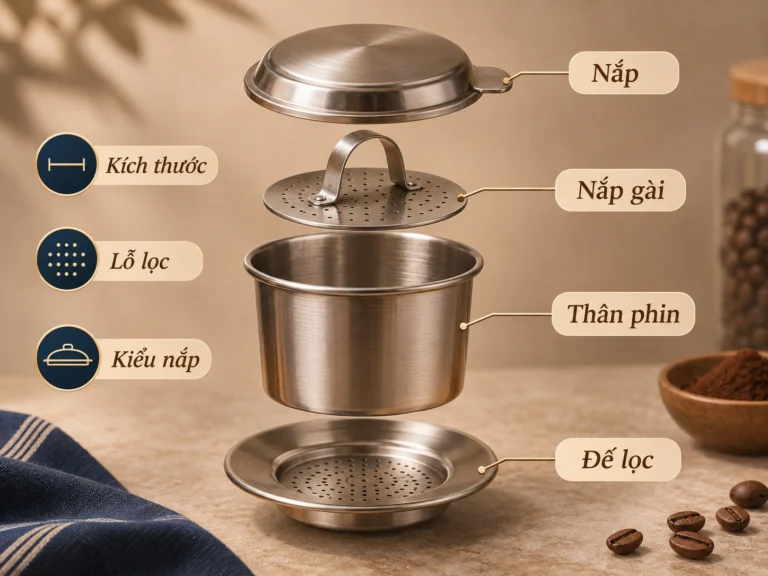
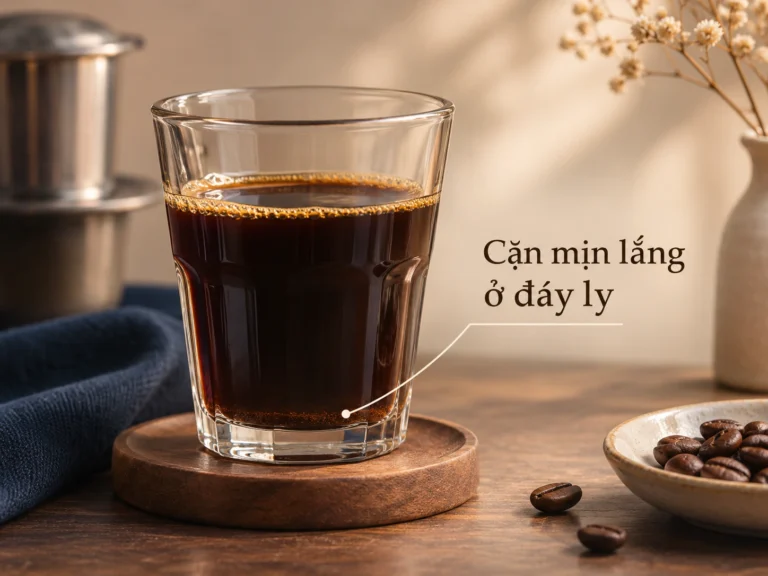
A phin is familiar equipment, but many variables matter: aluminum or stainless steel construction, hole size, wall thickness, coffee dose and pressure from the filter press. Water can lose heat quickly when poured into a cold phin. For home brewing, try 92–96°C as a starting point, then watch the drip rate and taste the result. Raising the water temperature will not fix a phin clogged by grounds that are too fine.
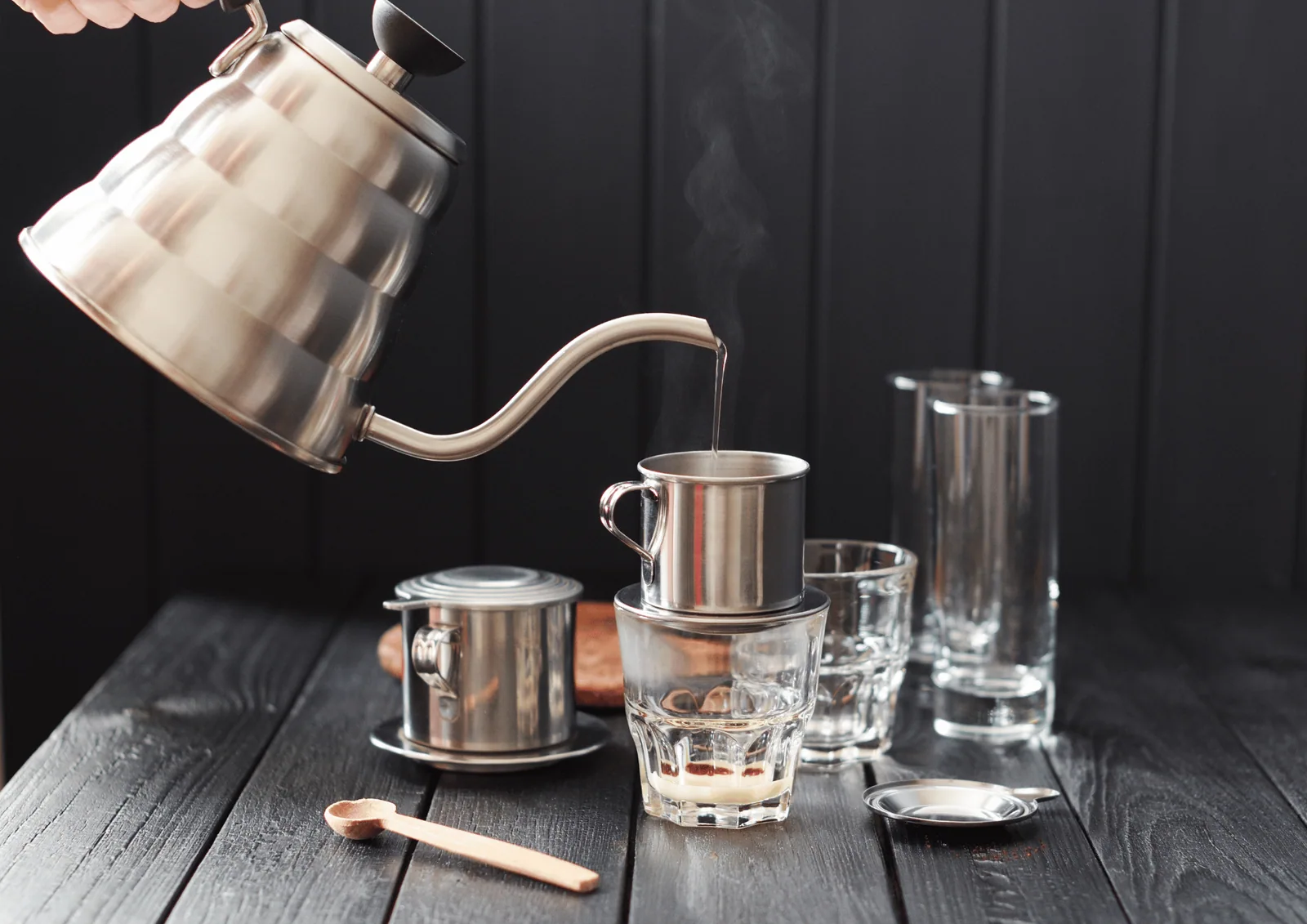
Before brewing, you can rinse the phin and cup with hot water, then discard the rinse water. Warming the equipment reduces the temperature difference between the kettle and cold metal surfaces, especially on mornings in an air-conditioned room. This is not just something professional cafés do: a small step you can repeat every day may make your cup more consistent.
4.2. V60 and Other Pour-Over Methods
Hario suggests water at around 92–96°C for the V60, along with a medium-fine grind and several stages of pouring. Because the water passes through the coffee bed and paper filter, the actual temperature gradually falls during brewing. Pouring evenly and avoiding a stream that runs mainly along the edge of the paper can matter just as much as choosing 93°C instead of 94°C.
Using the same 15 g of coffee and 250 g of water, you can keep every other step unchanged and try two temperatures within the suggested range. If you also change the coffee dose and pouring speed, comparison becomes difficult. This is a way to understand the cup through your own sense of taste, without turning every morning into an elaborate exercise.
4.3. Espresso Machines and Equipment with Specific Instructions
Espresso machines manage temperature through their water paths and group heads according to the machine's design. A number on the display is not necessarily the exact temperature at the surface of the coffee puck. If your machine offers temperature controls, consult its manual, keep the dose and extraction ratio steady, and adjust temperature in small increments. Do not simply apply the kettle setting for phin coffee to every espresso machine.
AeroPress offers a useful example: for some of its recipes, the manufacturer suggests starting with water around 85°C. That does not make 92–96°C wrong; the two recommendations concern different devices and recipes. When learning a brew, record the equipment as well as the temperature, rather than saving a number on its own.
5. How Can You Brew Consistently without a Thermometer?
You can still make enjoyable coffee with nothing more than an electric kettle. Boil the water, switch the kettle off, rinse your equipment first, and try to keep preparation time similar from one brew to the next. Do not treat “wait exactly 30 seconds and the water will be 95°C” as a law. Cooling depends on water volume, kettle material, whether the lid is open, room temperature and altitude.
A more practical approach is to use the same kettle and routine for several consecutive brews. Note something simple: did you pour immediately, after rinsing the phin, or once breakfast was ready? If the cup consistently tastes harsh, let the water cool a little longer while leaving other factors unchanged. If the flavor improves, you have found a repeatable routine.
If you brew V60 several times a week, an inexpensive kitchen thermometer or temperature-display kettle may be useful, but you do not have to buy one straight away. Improvements often begin with a consistent coffee dose, choosing ground coffee with a grind size suited to your equipment, and not changing everything at once.
6. If Coffee Is Too Sour or Too Bitter, Should You Adjust Temperature First?
If your coffee is sharply sour, thin and almost like hot water with a faint coffee aroma, first check whether you used too little coffee or ground it too coarsely. Very rapid drawdown in a V60 is often a reason to review grind size and pouring technique. Only after the dose and grind look reasonable, yet the cup remains unbalanced, is a temperature increase within your trial range worth considering.
If the cup tastes dry and bitter with an unpleasant finish, consider whether the grind is too fine, steeping has gone on too long or pouring is too slow. Lowering the temperature may help, but it will not solve the main issue if your phin is so clogged that it takes tens of minutes to finish dripping. Change one variable at a time to see what makes a difference.
It is also worth tasting coffee after it has cooled a little. When a cup is scalding hot, heat itself can dominate your first impression and hide flavors you are trying to assess. The same freshly brewed coffee can taste quite different when it is too hot to drink and when it has reached a comfortable temperature, even though the recipe has not changed. Avoid judging it from the first sip alone.
7. A Simple Three-Morning Experiment
On the first morning, use your usual amounts of coffee and water, choose a temperature within the suggested range, preheat the phin and keep your pouring method consistent. After drinking, jot down three brief impressions: was the aroma clear, did acidity and bitterness feel balanced, and was the finish pleasant? You do not need a professional scoring sheet—just words that describe what you actually tasted.
On the second morning, keep everything else the same but shift the temperature slightly, perhaps by a few degrees if you have a thermometer. On the third, return to the first temperature and see whether the difference repeats. If your kettle does not measure temperature, try a different preparation interval and note that the comparison is only approximate.
Once you have found a temperature that works, consider adjusting coffee dose or grind size if you want more strength. A recipe is worth keeping not because it matches an online figure perfectly, but because you can make it again tomorrow and enjoy the same flavor. Temperature helps you reach that result; it is not a competition to hit one exact number.
8. Frequently Asked Questions
Can you add cold water to boiling water to cool it quickly? In principle, yes, but the added water must be safe to drink, and mixing without measuring will not give you an exact temperature. For beginners, allowing the water to cool or using a temperature-controlled kettle is easier to manage than repeated guesswork.
Will pouring water at 100°C remove all of coffee's aroma? There is no basis for claiming it removes everything. Aroma depends on the beans, roasting, when the coffee was ground and the entire brewing process. High heat can change extraction and aroma release, but if an opened bag has been sitting for a long time and has lost fragrance, adjusting temperature alone may not restore it.
Why does coffee taste different each day even when the water is always 94°C? The phin may have been colder that morning, the dose may have changed, the coffee may have been ground longer ago, or contact time may have differed. Check the factors you can reproduce most easily. In home brewing, consistency across the whole recipe matters more than thermometer precision alone.