Vietnamese Phin Coffee Drips Too Fast or Not at All: Causes and Fixes
A phin that drains too quickly often has overly coarse grounds, too little coffee, or an improperly positioned press insert. If it barely drips, check the grind fineness, insert, and drainage holes.
Some days your phin drips steadily; other days the water rushes through, and sometimes it barely moves at all. The cause is usually the grind size, the amount of coffee, how the press insert is positioned, or the drainage holes in the base. Identifying the symptom first is quicker than changing both your coffee and your equipment at once.
1. Why Does the Same Phin Drip at Different Speeds?
If your phin drains too quickly, look at the dose and grind size. Coarsely ground coffee, or just a thin layer of grounds at the bottom, lets water pass through easily. When the water stays in the phin, suspect grounds that are too fine, an overly tight screw-down press, or blocked drainage holes. These opposite problems call for different solutions.
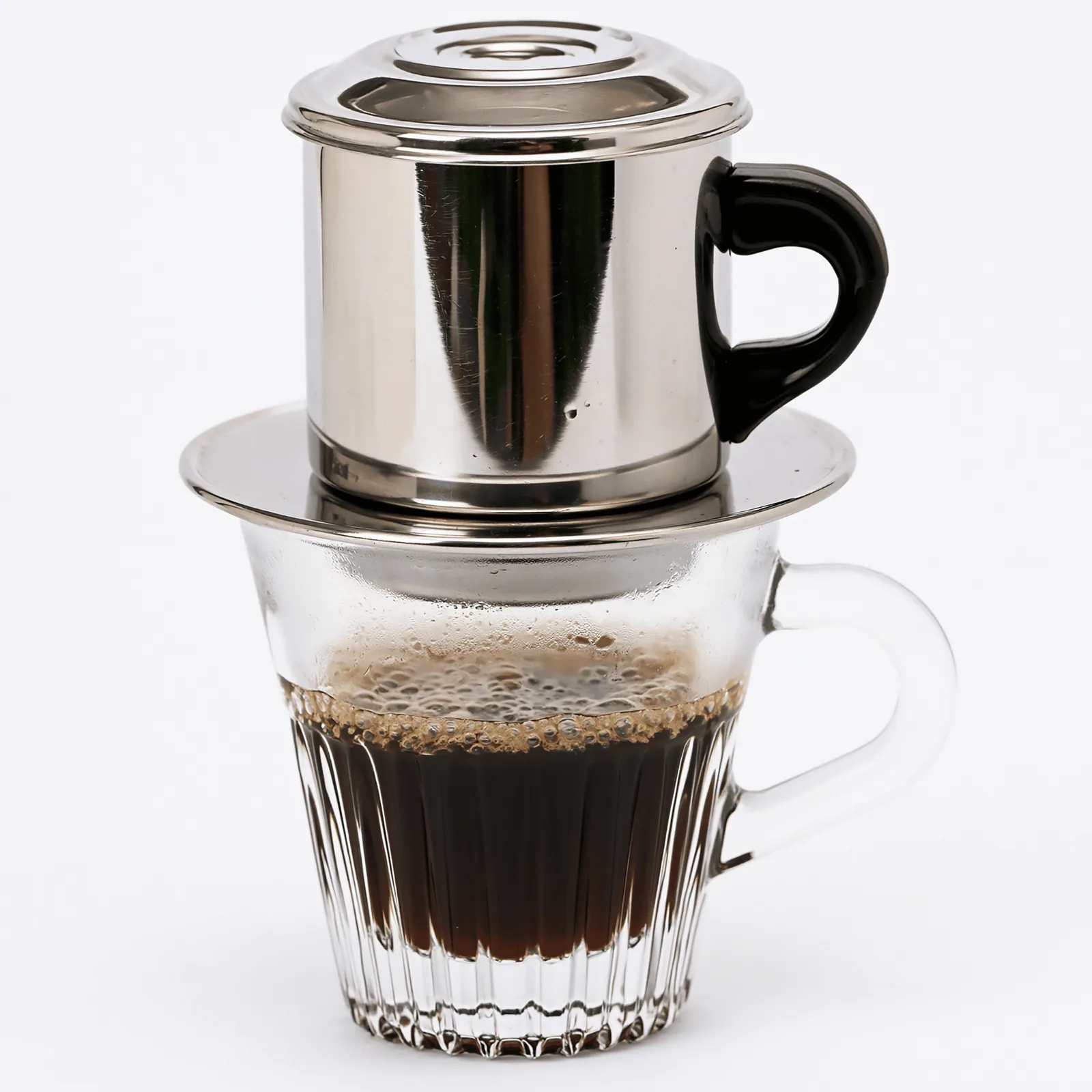
Watching the coffee as it flows into the cup is useful too. Water running in a steady stream almost immediately after pouring often produces a weak brew. If barely a drop appears after a long wait, something is restricting the flow. In the second situation, do not remove the press while the phin is still full of hot water; let it cool before checking.
2. Coffee Drips Too Fast: Where Should You Start?
2.1. Coarse Grounds Let Water Pass Through Too Quickly
An overly coarse grind leaves large gaps between the particles, allowing water to travel through the coffee bed quickly. An obvious sign is that the phin empties unusually fast, yet the brewed coffee tastes weaker than usual. If the problem appeared after you opened a new bag, ask the seller whether the coffee was ground for a phin or for another brewing method.
You cannot always judge grind size accurately by sight alone. Coffee intended for paper-filter brewing may be coarser than the type you normally use in a phin. Keep the dose and water the same and try a properly ground phin coffee before replacing both the filter and the recipe.
Coarse grounds can still work well for other methods, such as steeping and then filtering. When ordering pre-ground coffee, explain whether you use a small aluminum phin, a stainless-steel one, or a model with a screw-down press. That will help the seller suggest a more appropriate grind.
2.2. Too Little Coffee or a Misaligned Press Insert
Using only a little coffee in a large phin creates a thin bed that water can pass through quickly. An unevenly positioned press insert can also direct the water toward one side. Level the grounds reasonably well and position the insert as the phin is designed to be used; there is no need to press excessively hard just to hold the water back.
With a simple gravity phin, the insert usually needs to rest flat on the coffee bed. For a screw-down phin, tighten it according to that model's instructions. Overtightening can slow or completely block the flow. When changing to a different kind of phin, make several brews with the same coffee dose before making large adjustments.
When a phin runs quickly, many people instinctively push its insert farther down. This can compact the grounds and stop the flow altogether. Check whether the coffee is too coarse or the dose is too small first; the insert simply needs to sit in its proper position.
Pouring water forcefully into one spot can disturb the bed and create a channel for water to pass through. A straightforward approach is to pour gently until all the grounds are wet, wait for them to absorb the water, and then add the rest.
3. What If the Phin Does Not Drip or Releases Only a Few Drops?
3.1. Grounds Are Too Fine and Tightly Compacted
An excessively fine grind can prevent water from passing through the coffee bed. Grounds intended for espresso machines are generally finer than those used in a phin and may clog it. If the phin is full of hot water, leave it securely on the cup and wait until it has cooled before opening it to inspect the grounds.
Another useful clue is a coffee bed that becomes unusually hard and compact after brewing, with parts of the surface hardly wetted. This often points to grounds that are too fine or a press that was forced down too hard. Next time, level the grounds gently, fit the insert correctly, and check that the coffee is evenly saturated before adding more water.
With a screw-down phin, the tightness of the press can substantially affect flow. When trying new grounds, start with moderate pressure in line with the phin's instructions. If you need to tighten it as much as possible to get a strong brew, reconsider the grind size or coffee dose instead of relying entirely on the screw mechanism.
If the phin only started clogging after you opened a new bag, that is a useful lead. Ask the seller about the grind, especially if the package says it is intended for espresso. Phin brewing generally requires a different grind; choosing the right one may solve the problem without buying a new phin.
3.2. Drainage Holes Are Blocked by Built-Up Residue
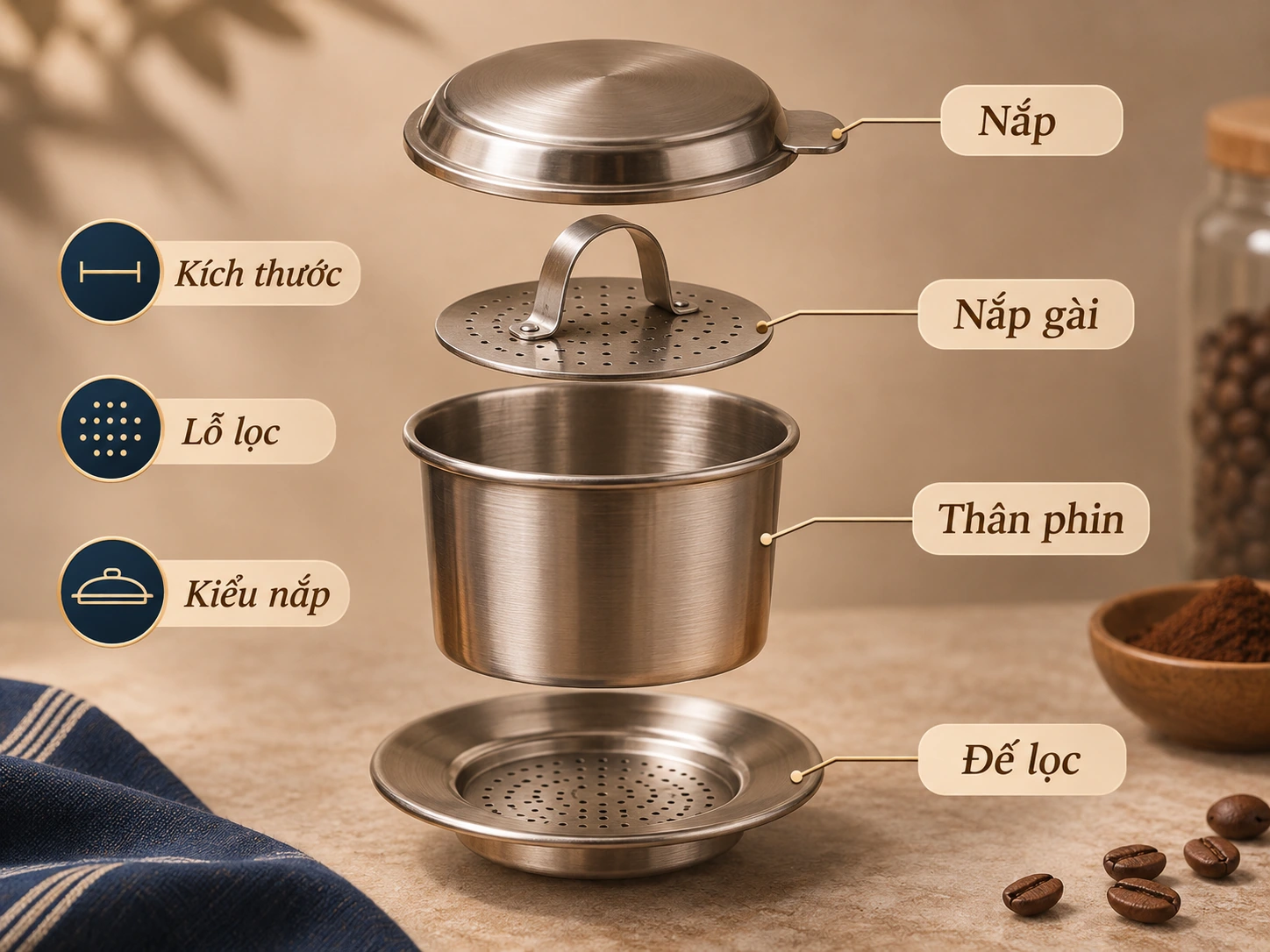
Coffee oils and fine particles can accumulate in the holes at the bottom of a phin after repeated use. Once it has cooled, take its parts apart and wash them carefully, especially the base and the gaps around the insert. If tiny holes are blocked, use an appropriate cleaning tool; avoid sharp objects that could deform the metal.
When the base has many small openings, fine grounds can become trapped in places that are hard to see. After the phin cools, soak and wash it in warm water, brush gently with a suitable implement, and rinse thoroughly. Do not widen the holes with a sharp needle: doing so can change the phin's flow even after it has been cleaned.
Screw threads and small openings tend to hold residue in hidden areas. Washing the phin promptly after brewing and allowing it to dry makes the next cleanup easier. If you use a specialized cleaning product, follow its instructions and rinse everything thoroughly before brewing again.
4. A Simple Test to Tell Whether the Phin or the Grounds Are the Problem
Here is a quick test: pour water through a clean, empty phin. If the empty filter still holds water, inspect and clean its drainage holes. If water flows normally when it is empty but stalls when you add coffee, the grounds may be too fine or too plentiful, or the insert may be positioned incorrectly.
If you own two different phins, try similar amounts of coffee and water in each one. A phin that holds water even without grounds usually needs a more thorough cleaning. If an empty, clean phin drains normally, focus your attention on the grounds instead.
Many households keep a small phin for one person and a larger one for guests. With the same 20 g of coffee, the bed will be thinner in the larger filter. Do not use the flow rate of a small phin as the standard for every other model; its dimensions affect brewing time too.
If coarse grounds are making the water run too fast, ask the seller to grind your next purchase specifically for a phin. Do not line the base with unsuitable cloth or paper to restrict the flow. Such materials can block the openings and cause hygiene problems. An appropriate grind is still the clearest, most repeatable solution.
5. How Does Drip Speed Affect Coffee Flavor?
When a phin drains too quickly, the coffee is often weak because the water has had too little contact time with the grounds. However, reducing the dose can also make a brew weaker even when the filter works perfectly. Keep the water amount constant in your next test and adjust just one factor, such as grind size or coffee dose.
When water moves too slowly, the coffee may become stronger and more astringent than you like. Tightening the insert further will only make the blockage worse. A clean phin and grounds of an appropriate size are usually the first two things to check.
Sometimes a phin drips evenly but the coffee still tastes more bitter than you prefer. In that case, the cause may be the coffee variety or roast level rather than the filter. Taste the black brew before adding milk and compare it with previous cups made from the same grounds. This prevents endless adjustments to the phin when the ingredient is what has changed.
Vietnamese iced coffee with condensed milk needs a sufficiently concentrated base for its coffee aroma to remain noticeable once the milk is added. LOPHA's 100% roasted and ground Robusta has a bold flavor and pronounced bitterness, suiting those who enjoy that profile. For phin brewing, however, the grounds still need an appropriate grind for steady water flow.
6. How Can You Make Your Next Brew More Consistent?
For a reasonably consistent daily drip, keep three things simple: use approximately the same dose, pour a similar amount of water, and clean the phin after brewing. When you switch to a new bag of ground coffee, check its grind size first; there may be no need to change your entire method.
For milk coffee, a concentrated base helps the coffee flavor come through after you add condensed milk. For black coffee, you may prefer a lighter brew. Keep the same phin and coffee dose, then adjust the water slightly on your next attempt to find the strength you enjoy. Not everyone needs a phin that finishes dripping in precisely the same number of seconds.
During your first few brews with a new phin, note the dose and water volume. For instance, if you still use 20 g of coffee but today's phin drains much faster, inspect the grind and the position of the insert. A quick note on your phone is enough to compare brewing attempts.
Observe the flow first and then work backward to the cause. Coffee that drains too quickly often points to coarse grounds, a thin bed, or a misaligned insert; a very slow drip usually suggests fine grounds, an overtightened press, or blocked openings. Correcting the actual cause makes a consistent brew more likely without wasting coffee by unnecessarily increasing the dose.