Why Can Acidity and Bitterness Work Together in Coffee?
Coffee can be both acidic and bitter yet still taste harmonious. Discover how these sensations interact and how LOPHA’s 80/20 Blend and brewing choices shape the experience.
A sip of coffee can be both acidic and bitter without the two sensations seeming to compete. In some cups, acidity comes first and bitterness follows; in others, a bold foundation arrives immediately while acidity stays in the background. The question is not how one sensation cancels the other, but why different sensations can still come together in an enjoyable cup. That is also the key to understanding blends of Robusta and Arabica.
1. Acidity and Bitterness Are Different Sensations
Sourness is mainly related to acids and how we perceive the hydrogen ions they produce, while bitterness can be triggered by several kinds of substances, including caffeine and compounds formed during roasting. The two are not opposite ends of a scale: adding more acidity does not automatically remove bitterness. Depending on the beans and brewing method, a cup may have both sensations at high intensity or both at a gentle level. Meanwhile, the nose detects aroma, and the mouth detects fullness and dryness. All of these contribute to the overall impression.
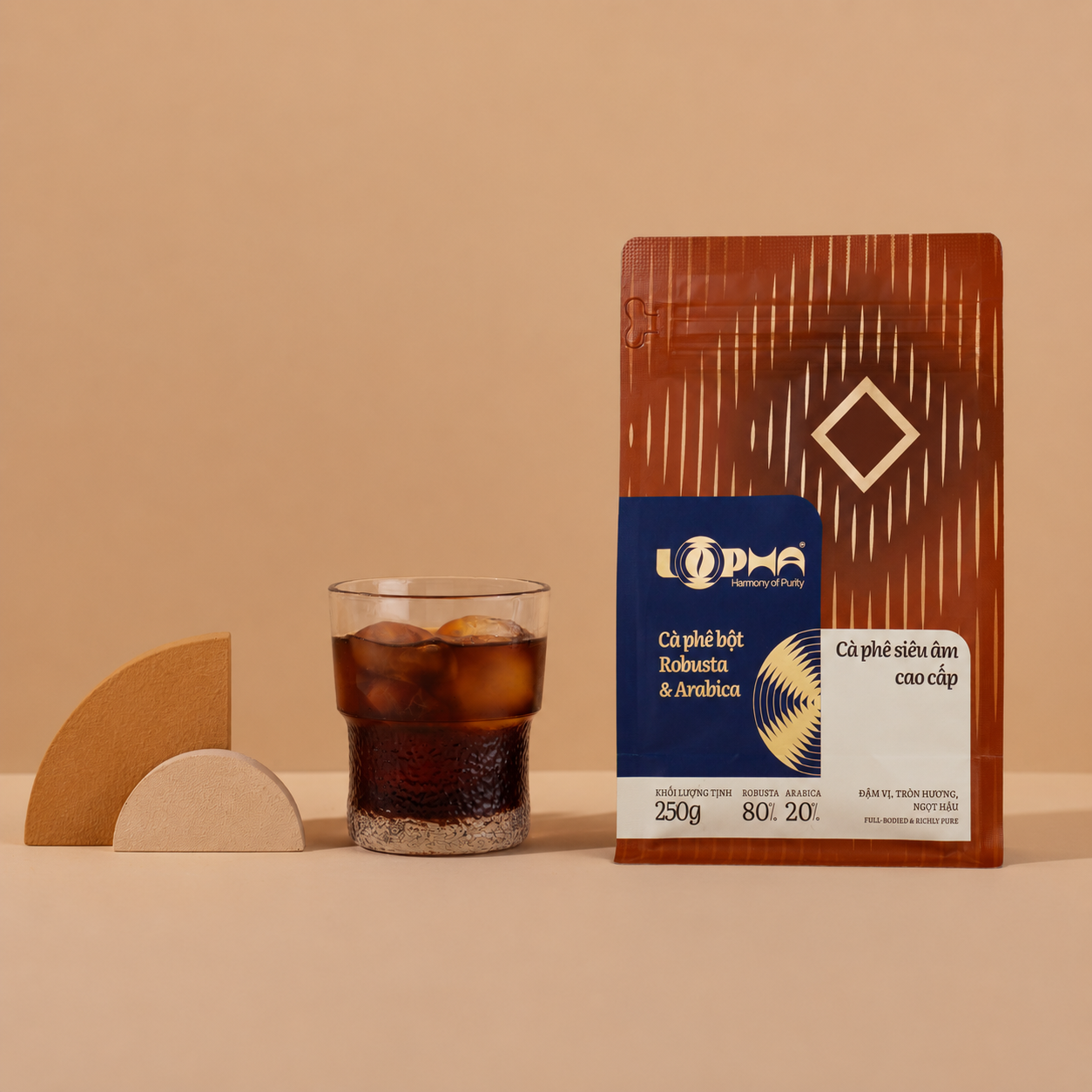
When we drink, the brain does not simply add up scores for acidity, bitterness and aroma to calculate balance. One sensation can stand out against another; fruity aromas may draw attention to acidity, while deep roasted aromas may make bitterness easier to notice. “Harmony” and “balance” should therefore mean a coherent, recognizable whole, not equal strength across every taste.
2. Why Can One Sip Have Several Layers of Flavor?
Coffee beans contain a great many compounds, some of which pass into the water during brewing. Some contribute taste, others mainly aroma, and still others influence mouthfeel. Although these compounds are present together in the cup, a drinker may not notice them all at the same moment. Temperature, the release of aromas and the time that passes after swallowing can change the impression. This is why people sometimes speak of the first taste, mid-palate and aftertaste as different moments in the same experience.
Do not picture brewed coffee as physically divided into layers, with only acids at the beginning of a sip and bitter substances appearing at the end. The compounds coexist; what changes is their sensory prominence. As people become more attentive to coffee, they may learn to distinguish smell, taste and the sensations left after swallowing. An easy experiment is to taste a warm cup of black coffee, put it down for a few seconds and notice what remains. You do not have to name the compounds to observe the change.
3. Balance Does Not Mean Every Taste Is Equally Strong
One common misunderstanding is that balanced coffee must have precisely as much acidity as bitterness. That overlooks the importance of style. In an Arabica with clear acidity, the acidic note can be the main feature while bitterness remains gentler. In Robusta, pronounced bitterness and a fuller body may provide much of the appeal. The two cups have different priorities but can both feel well balanced to people who enjoy their respective styles.
In a Blend, harmony also involves preserving the identity of the recipe. If its intended profile is predominantly bold with mild acidity, that boldness should remain recognizable instead of fading until nothing stands out. Equally, the touch of acidity need not be as prominent as in 100% Arabica to add nuance. Drinkers are looking for a coherent connection between sensations, not proof of an exact percentage of bitterness and acidity.
4. Does the Bean Blend Ratio Determine the Flavor Ratio?
A recipe containing 80% Robusta and 20% Arabica cannot be interpreted as “80% bitterness and 20% acidity.” The percentages describe the ingredients. Each coffee species already contains many flavor- and aroma-forming compounds; the two portions may be roasted differently, then ground and extracted together. Compounds vary in concentration and in the thresholds at which we notice them. Even a small amount of an aromatic compound can have a marked effect, while a more concentrated compound may not dominate the entire cup.
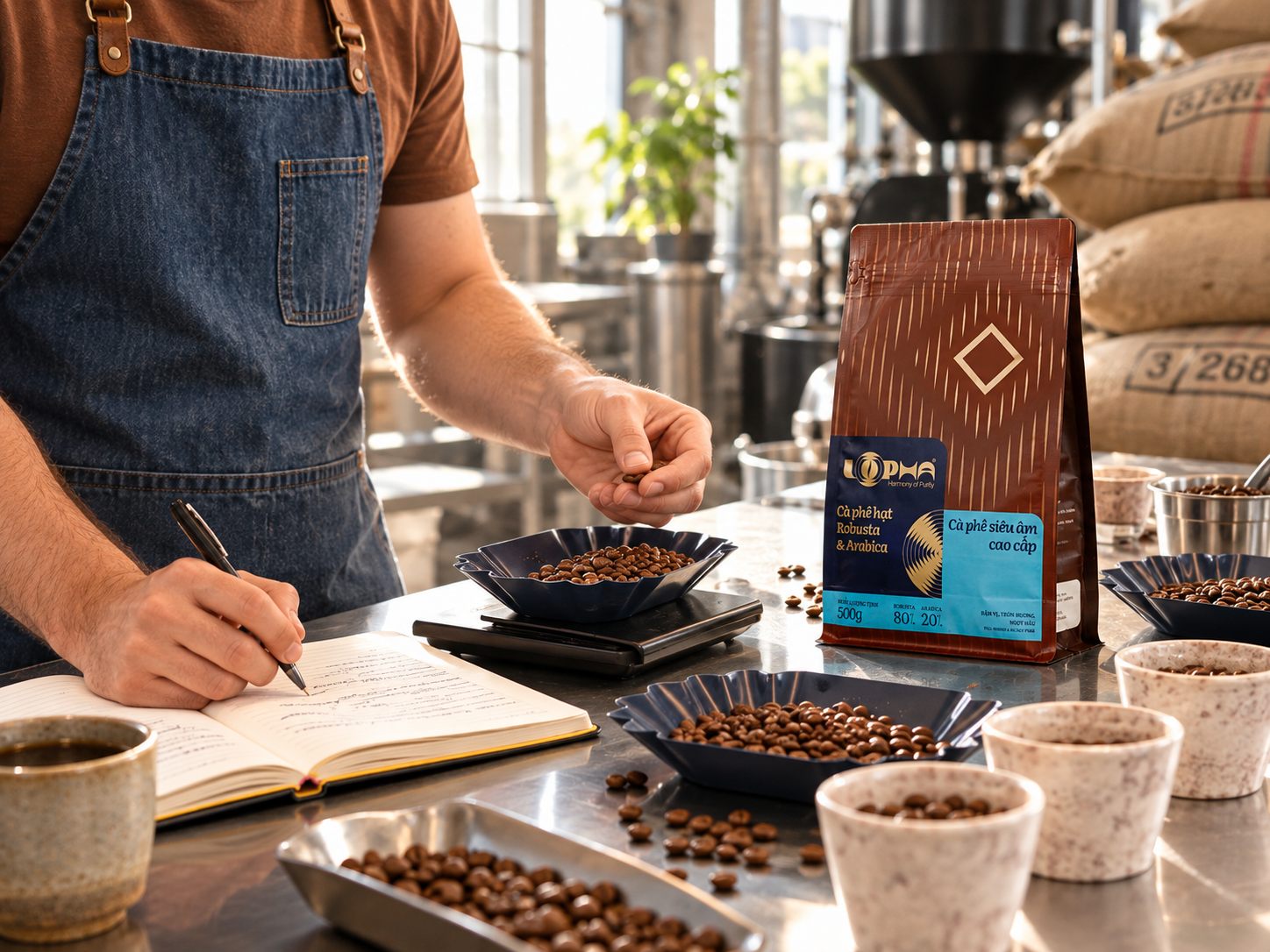
In LOPHA’s 80/20 Blend, Robusta provides a bold foundation while Arabica adds mild acidity and a different aromatic direction. This describes the intended sensory style, not a measurement showing that a particular compound has risen or fallen by a precise amount. Blending matters because it allows the overall experience to be designed for a particular group of drinkers. Someone accustomed to Robusta who wants a little acidity may find this Blend more familiar than moving straight to clearly acidic Arabica.
5. How Does Roast Level Bring These Tastes Together?
Roasting changes acidity, bitterness and aroma alike. Under some conditions, a lighter roast makes the original material’s acidic notes easier to notice, while deeper roasting alters more acidic components and increases the influence of roasted, bitter notes. But this is a tendency, not a law that applies identically to every batch. Roast level also cannot replace the roles of bean variety, processing or brewing.
When a Blend combines more deeply roasted beans with lighter-roasted beans, it may provide the starting point for a cup with both strength and a complementary acidic note. Yet it would be inaccurate to say that the darker-roasted portion “neutralizes” the acids in the lighter one. Coffee compounds do not simply cancel out like numbers in a subtraction. It is more meaningful to taste the finished drink and ask which sensation takes the lead and how the others support the transition. The chemistry of roasting is explored separately in the roast-level article, so that the discussion of balance does not turn into a lecture on thermal chemistry.
6. Why Can Brewing Make One Taste Dominate the Other?
Imagine brewing the same Blend twice: once with little water for a concentrated cup, and again with more water for a lighter drink. The ingredients are unchanged, yet strength, extraction and perceived flavor can differ. Grind size, contact time and water temperature also influence the extraction of soluble compounds. In an overly heavy cup, the drinker may notice mainly bitterness and dryness. In a very dilute one, the bold base may fade and acidity can feel unsupported. Neither outcome means the blend ratio has changed.
That is why comparisons between Robusta, Arabica and Blend should begin with black coffee brewed at reasonably consistent ratios. Do not change the beans, grind size, water volume and milk all at once and then attribute every difference to the blend. Everyday drinkers do not need elaborate measurement charts: start with a recipe you like and adjust one small variable. Understanding extraction makes it easier to find balance without adding sugar to cover everything.
7. How Do Sugar, Milk and Ice Change the Sense of Balance?
Adding sugar can make acidity or bitterness less prominent against the new sweetness. Milk also contributes richness and texture, changing the cup considerably. A Blend perceived as bold with mild acidity when black may become predominantly sweet and creamy with milk. The Arabica portion has not disappeared; its mild acidity is simply harder to notice alongside the new sensations. Anyone wanting to discover which beans they prefer should try a sip without additions first.
Ice has its own effects. At lower temperatures, aromas rise less readily; melting ice also reduces concentration. The same coffee base can therefore seem very different when served cold instead of hot. The key is not to attribute every change to the nature of the beans themselves. Serving style is part of the experience. Balance for someone who loves hot black coffee may be quite different from balance for someone who always drinks iced coffee with milk.
8. When Should You Choose Robusta, Arabica or Blend?
If you are looking for pronounced bitterness, woody notes and a familiar bold feel, 100% Robusta is a natural starting point. If you enjoy clear acidity, floral and fruity aromas and softer bitterness, 100% Arabica has its own personality. For those who want to keep a bold style while adding mild acidity, the 80/20 Blend offers another direction. No product has to be the “perfect version” of the other two.
One of coffee’s pleasures is that a single cup can contain several tastes while still having a consistent character. Harmony is not a fixed calculation; it is how aroma, taste and mouthfeel create an experience you want to return to. Understanding this helps you choose coffee to suit your actual preferences and habits, rather than trying to predict every sensation from a blend ratio alone.