How to Make Smooth Blended Iced Coffee at Home Without Making It Too Sweet
Blended iced coffee combines concentrated coffee, milk or a sweetener, and crushed ice into a lightly thickened cold drink. You can make it at home with a blender rated for ice; if you drink it straight away, a commercial frappé base powder is not essential.
1. What Is Blended Iced Coffee, and How Is It Different from Vietnamese Iced Milk Coffee?
Blended iced coffee is a chilled drink in which ice is crushed together with coffee and other ingredients into a smooth mixture. When you sip it, you taste coffee dispersed through finely crushed ice, sometimes with richness from milk and whipped cream if you choose to add it. Unlike ordinary Vietnamese iced milk coffee, whole ice cubes do not remain at the bottom. The blended texture feels more like a chilled dessert, making it a pleasant change on a hot day.
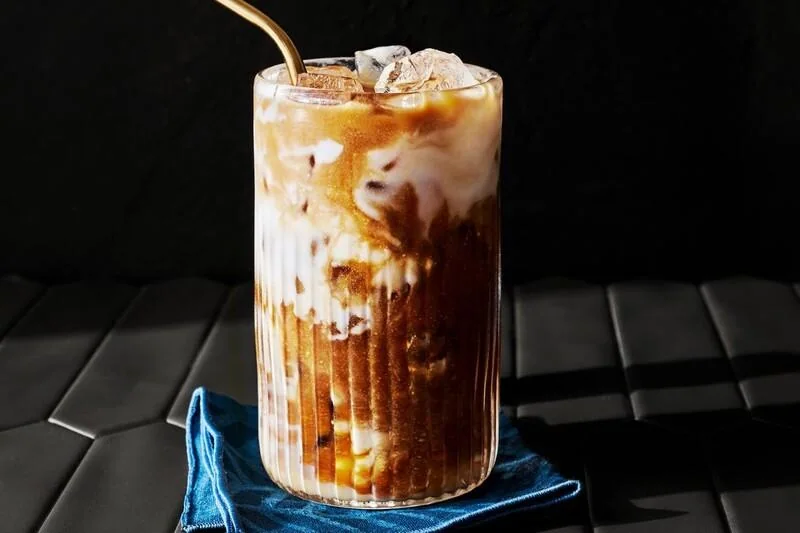
In cafés, you may encounter names such as Coffee Frappé, Blended Coffee, or other commercial names. Recipes vary in their amounts of coffee, milk, syrup, and ingredients used to stabilize the texture. There is therefore no single ratio that represents every blended iced coffee. At home, the easiest starting point is strong coffee concentrate, clean ice, and a moderate quantity of milk, blended until smooth.
Many people assume they must buy a commercial frappé base powder to make a thick blended drink. For a glass you will drink immediately, you can try it without such a powder. The texture may loosen faster than in a commercial formulation, but cold, firm ice and a sensible amount of liquid can still produce a smooth, enjoyable drink. Before adding many ingredients, learn to balance the coffee, ice, and milk already in your kitchen.
2. A Blended Iced Coffee Recipe for One 300 ml Glass
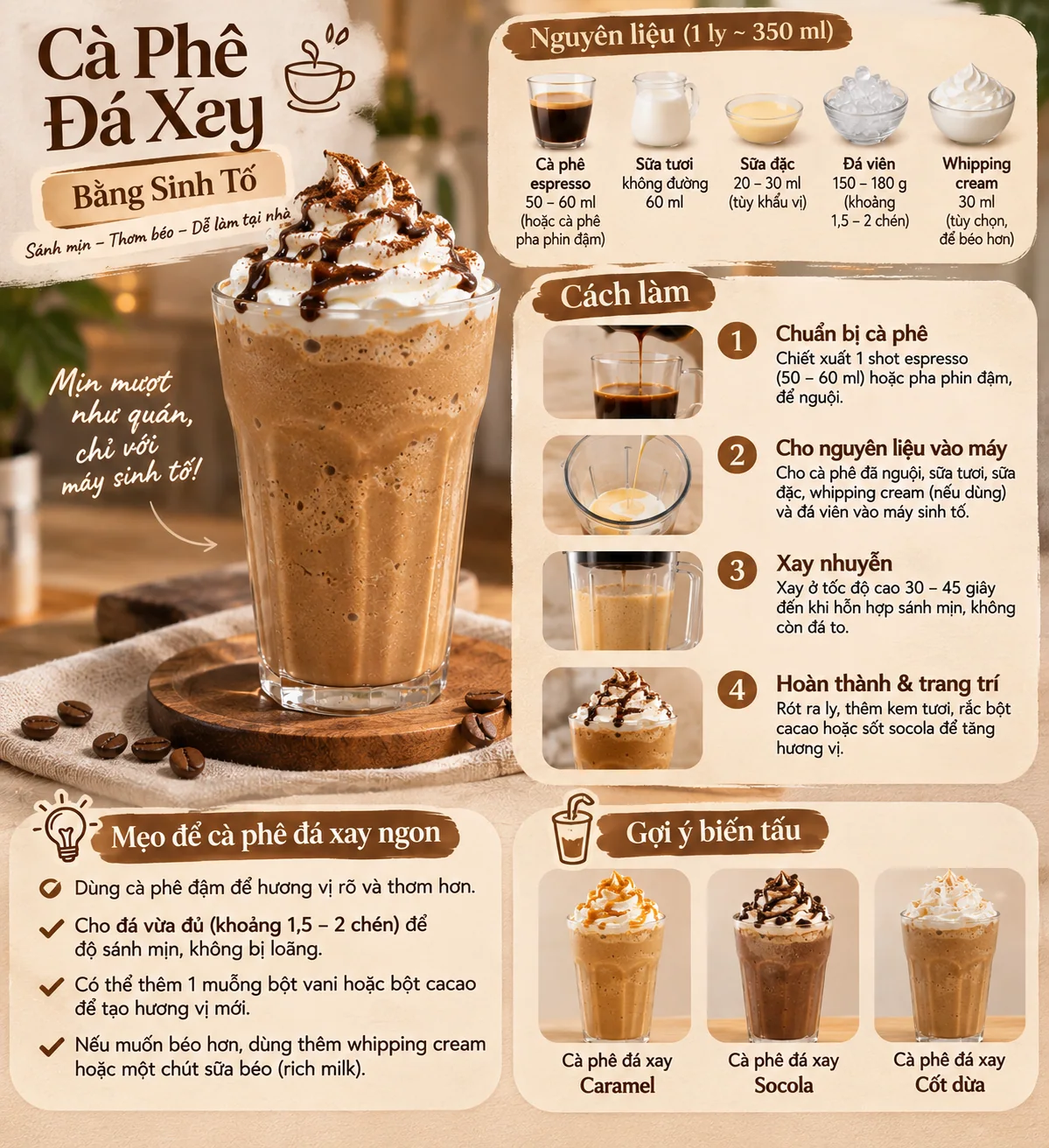
An easy starting serving uses 40–50 ml of strong phin concentrate or about 35–40 ml of espresso, 80–100 ml of chilled fresh milk, 10–15 ml of condensed milk or sugar syrup to taste, and around 140–170 g of ice. You need a blender rated for crushing ice, a measuring cup, and a serving glass. If the milk is already sweetened, reduce the extra condensed milk; blended coffee may seem pleasantly sweet at first but become cloying toward the end.
Brew a strong coffee base and let it cool before blending. A small serving of espresso may provide clear flavor, while phin concentrate needs balanced extraction and should not be too watery. For phin users, around 20–25 g of ground coffee brewed at a suitable ratio for the equipment is a place to begin, although the beverage yield will vary. Tasted on its own, the concentrate should have clear aroma and aftertaste because you will be adding milk and ice.
Ice provides structure, not just cooling. Small cubes suited to the blender are easier for the blades to move around, while ice that has already melted substantially makes the drink thin. If your home blender’s instructions do not allow ice crushing, choose a stirred iced-coffee recipe instead of forcing the appliance. A good drink is not worth damaging equipment or risking injury when the blender lid comes loose during operation.
3. How to Make Blended Iced Coffee in a Blender, Step by Step
Brew the coffee first and let the concentrate cool somewhat while preparing the cold ingredients. Pour milk into the blender jar, add measured condensed milk or syrup, then add the coffee. Finally, add the planned amount of ice and close the lid correctly. The order may vary with your blender’s instructions, but avoid packing a small jar with too many large cubes when there is almost no liquid at the bottom.
Use an appropriate blending setting, working in short pulses if necessary to move the ice evenly. Once the mixture is smooth, with no loud impacts from large ice chunks, and pours in a moderately thick stream, you can stop. If coarse ice remains, check your blender’s capabilities before increasing speed. Adding water to make the blades turn more easily may thin the drink; sometimes splitting the ingredients into two batches works better.
Pour immediately into a chilled glass if available. A dusting of cocoa or a little whipped cream can make it more dessert-like, but taste the basic version first. Plenty of condensed milk and a cream topping make blended coffee noticeably sweeter, so those who prefer a clear coffee taste may want to skip the garnish. The texture is at its best immediately after blending, before more ice melts and liquid begins to separate.
4. Do You Need a Frappé Base Powder for a Smooth Blended Coffee?
Cafés may use a frappé base powder or other texture-building ingredients so their drinks remain thick for longer, especially when making many servings or preparing takeaway orders. At home, begin without a base powder, using chilled milk and firm ice and drinking shortly after blending. It may not retain its thickness as long as some professional recipes, but that does not make it less enjoyable when served at the right time.
If you decide to try a base powder, read its ingredients and instructions. Some contain sugar or powdered milk, so adding them to a recipe that already has condensed milk can make the glass very sweet. Beginners should adjust sweetness and milk when using such a product rather than adding the full measure of base powder and leaving every other ingredient unchanged. Different brands have different formulas; one fixed quantity will not suit them all.
A more straightforward home tip is to pay attention to the balance of ice and liquid. With 150 g of ice, adding 200 ml of milk and 100 ml of coffee concentrate is likely to produce a thin drink containing tiny ice pieces. Reducing the liquid helps keep the mixture thicker. Too little liquid, however, makes blending difficult, so work within the machine’s safe limits and adjust gradually for the texture you want.
5. Which Coffee Still Tastes Aromatic After Blending with Milk?
Since blended iced coffee usually contains milk and ice, the coffee base needs enough aroma to remain apparent. People who enjoy bold, noticeably bitter coffee can choose Robusta, while those wanting a more balanced taste might try Blend 80/20; Arabica offers different aromas and acidity. There is no rule that blended coffee must use a single bean variety. Start with one you know, so you can tell whether any change comes from the blending method or from the beans.
For phin brewing, roasted ground coffee selected for the brewing equipment helps produce a consistent concentrate. If the grind is too coarse, the phin may drip too quickly and brew weakly; when combined with iced milk, its coffee aroma becomes even harder to notice. If you have an espresso machine, you can use a double shot suited to your taste and slightly reduce the milk for a stronger glass without adding sugar.
Also consider how the coffee has been stored since the bag was opened. Grounds left for a long time in hot, humid conditions can lose aroma, leaving blended coffee less fragrant even when the dose stays the same. If the drink suddenly seems flat, taste the brewed concentrate alone before changing the whole recipe. That can prevent you from adding excessive syrup or cream simply to disguise diminished coffee aroma.
6. Why Is Blended Iced Coffee Watery, Separating, or Full of Ice Chunks?
A glass that is runny straight after blending usually contains too much liquid relative to the ice, ingredients that were not sufficiently chilled, or ice that had already partly melted. Prepare cold milk, cooled coffee concentrate, and ice taken from the freezer just before blending. If it is still too thin, reduce milk by around 10–20 ml on the next attempt; that is easier to assess than adding a large amount of ice and overloading the machine.
Separation after a drink has been left standing is common in recipes without stabilizers. Melting ice adds liquid water while milk fat and foam redistribute. Blended coffee is therefore best enjoyed shortly after preparation. If serving a group, measure ingredients and set out glasses first, then blend only as many servings per batch as the machine can handle instead of preparing a large jug that sits waiting.
If large ice fragments remain, check the size of the cubes and the blending method. Oversized cubes may be difficult for the blades to process. Use smaller ice pieces within the appliance’s limits, split the batch, or pulse for a little longer. Never put a spoon or your hand into a running blender jar to push the ice down. If you need to intervene, turn the machine off and unplug it according to the safety instructions.
7. How to Reduce Sweetness While Keeping the Drink Aromatic and Enjoyable
Many café-style blended coffee recipes are quite sweet because they contain condensed milk, syrups, and whipped cream. At home, try starting with 10 ml of condensed milk, tasting after blending, and adjusting the next batch. Reducing sweetness can make the coffee more noticeable while allowing the milk aroma to recede. If the fresh milk is already sweetened, do not automatically add syrup just because an online recipe calls for it.
Some people add sugar because their coffee tastes harshly bitter. Before doing so, taste the concentrate on its own. Espresso extracted for too long or phin coffee with restricted flow can leave a dry aftertaste, making the blended drink unpleasant despite substantial sweetness. Once the coffee base is corrected, less sugar may be needed. That treats the cause rather than continually adding sweeteners.
For families with different preferences, blend a relatively low-sugar base, divide it into small glasses, and add syrup individually if desired. Those who prefer less sweetness do not have to drink a cloying shared recipe, while sweeter-toothed family members still have a choice. The coffee aroma can remain central, especially when everyone drinks promptly after blending.
8. Frequently Asked Questions About Blended Iced Coffee
Can you use instant coffee instead of phin concentrate? Yes, if you prepare it strong according to the product’s directions and let it cool before blending. It will taste different from roasted and ground coffee, so sample it before adjusting milk or sugar. Do not compare the two by color alone, since concentration and aroma may differ considerably.
Do you need whipped cream on top? No. Whipped cream adds richness and a dessert-like quality, but a basic blended iced coffee can taste good with just coffee, milk, and ice. If you add cream, consider reducing condensed milk so the last few sips are not overly sweet.
Can you make a dairy-free blended black coffee? You can try blending strong black coffee with ice and a little sweetness if you want. Its texture will differ from a milky version and may separate more easily. If what you mainly want is cold coffee without milk, Shakerato is another option: espresso is shaken with ice and strained instead of blending the ice into the finished drink.
Blended iced coffee is most enjoyable when the concentrate has a clear aroma, the milk does not overpower it, and the ice is crushed smoothly in a suitable machine. You can begin with the ingredients you already have without buying syrups or base powders immediately. Once you find a ratio you enjoy, a few minutes of preparation are enough for a refreshing, coffee-forward drink at home.