How Many Cups Can You Make From 250 g of Coffee? Calculate by Dose
A 250 g bag yields about 10–16 brews if you use 15–25 g of coffee each time. The actual number of cups depends on whether you use a Vietnamese phin or a machine, drink it yourself, or divide the brewed coffee among several people.
A 250 g bag of coffee makes approximately 10–16 brews when each uses 15–25 g of grounds. At 20 g per phin, that means 12 full brews with around 10 g left over. These are counts of brewing sessions, not necessarily finished cups: a large phin can serve two people, and a large drink with plenty of milk or ice does not automatically need more grounds than a small one. The calculation is most useful when matched to how your household actually drinks coffee.
1. The Same 250 g Bag Can Mean Different Numbers of Cups to Different Households
A 250 ml drink does not necessarily require twice as much coffee as a 125 ml one. A latte contains plenty of milk, an Americano has added water, while a short espresso is more concentrated. Cup size alone tells you little about how many grams of coffee went into it. For a 250 g bag, the important figure is the dose used per brew. From there, you can estimate how many sessions it will cover and how long the bag will last at home.
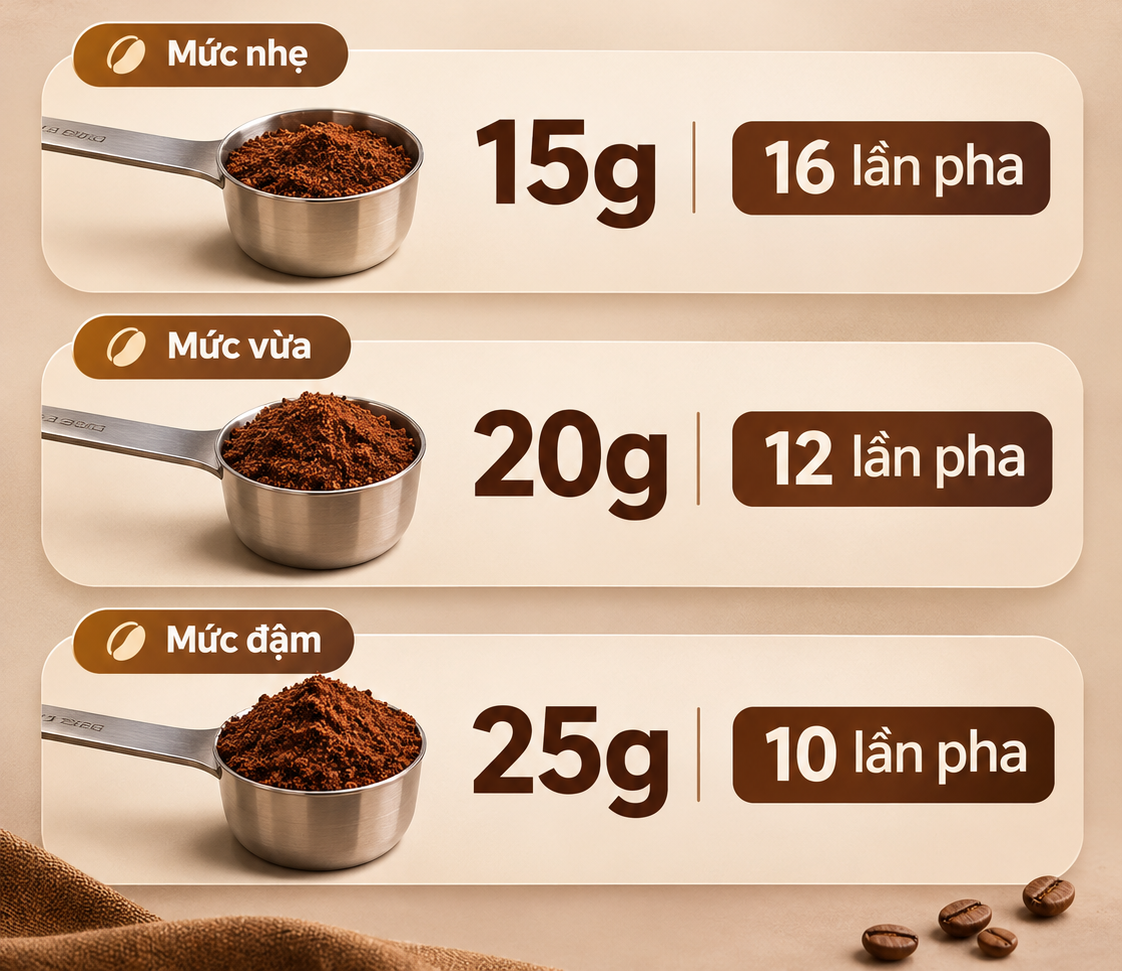
The calculation is simple: divide 250 by the grams of coffee used each time. At 15 g you get 16 full brews; at 20 g, 12; and at 25 g, 10. A little coffee may be lost in the grinder or spilled while scooping, so actual use will not always match the arithmetic down to the last gram. For household shopping, counting complete brewing sessions is usually accurate enough.
A large phin filled with 40 g of grounds might produce two small servings, or one stronger drink for someone who likes it that way. So 'ten brews' and 'twenty cups' can both be correct if each brew serves two. Ice, water, and milk increase the finished drink's volume without changing the original coffee dose. Before counting cups from a bag, decide whether you mean brewing sessions or individual servings.
2. How Much Coffee Goes Into a Morning Phin?
A personal phin often uses around 18–25 g of grounds, depending on its size and how strong you want the drink. Some people brew a concentrated base for sweetened condensed milk; others prefer a lighter black coffee made with more water. For example, using 20 g of coffee with 80 ml of water produces a different concentration from using the same 20 g with 150 ml. No single amount suits every phin and preference. Regular brewers tend to find a dose that works for their own equipment.
2.1. 'Two Spoonfuls' Do Not Always Mean the Same Amount
It happens easily: yesterday you measured two level spoonfuls, but today, in a rush, you took two heaped spoonfuls. You may think you followed the same recipe, even though the amount of grounds has changed. Spoon size and grind fineness both affect how much coffee fits into the same volume. If you have a scale, weigh your usual spoonfuls once to see roughly how many grams they represent. You need not bring out the scale every morning afterward.
Iced milk coffee does not automatically require more grounds than black coffee. Some people prefer a very strong brew so the milk does not overwhelm it; others find 20 g quite enough. If two people at home prefer very different strengths, brewing separate portions with different doses may be easier than making one shared phin and trying to adjust each cup afterward.
2.2. When Two People Share a Large Phin
Suppose two people share a large phin containing 40 g of grounds every morning. A 250 g bag provides roughly six such brews, but around twelve cups if each brew is divided into two servings. This explains why one person might say, 'We finished the bag in six days,' while another says, 'That bag made twelve cups.' They are simply counting different things.
With the same 40 g each morning, a household might split one large phin or brew two small 20 g phins. Total coffee consumption is unchanged, but brewing time and the flavor of each portion can differ with the equipment. When estimating how many days a 250 g bag will last the family, the key is the amount used each morning. The number of cups only describes how the drink is shared.
3. Does One Button Press on a Coffee Machine Count as One Cup?
For espresso, people generally look at the dose in the filter basket and the number of shots. A common example is 18 g of grounds for a double espresso, but baskets and recipes vary. Automatic machines have their own programs: two machines can use different amounts of beans even when both have an Americano button. It would therefore be misleading to assume every machine uses exactly 18 g simply because that figure is familiar.
On automatic machines, settings such as 'mild', 'medium', and 'strong' do not correspond to the same gram dose across brands. Some programs change the amount of beans; others adjust the water or brewing method as well. Check the machine's manual and record how many cups you actually make from a bag at your usual settings. That will be more reliable than guessing from the size of the cup.
A large latte usually contains more milk than an espresso, but its coffee base may be only one or two shots. An Americano has water added to espresso, producing a larger drink without necessarily using more grounds. To estimate a machine's bean consumption accurately, check the number of shots and the coffee base used, rather than converting directly from drink volume.
4. How Many Days Will a 250 g Bag Last in Your Kitchen?
If you make one 20 g phin every morning, a 250 g bag lasts about twelve days. If two people each make a similar phin, it lasts roughly six days. Someone who only drinks coffee at weekends may take several weeks to finish it. This matters when choosing between 250 g and 500 g, because ground coffee usually loses some aroma gradually after the bag is opened.
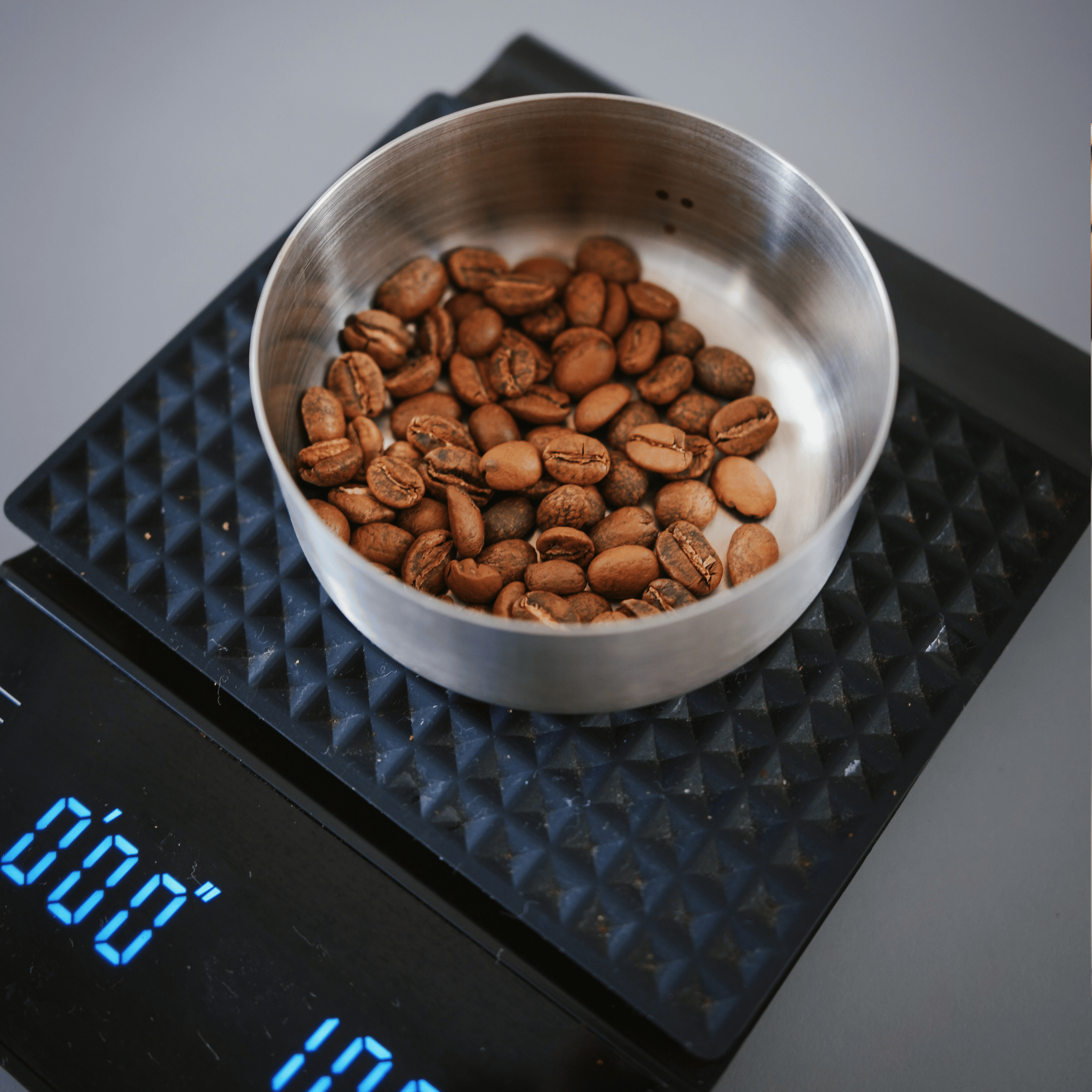
A 500 g bag may cost less per gram, but occasional drinkers can leave an open bag sitting around too long. Even if you use the grounds over several weeks, reseal the bag after every use and store it somewhere dry, away from heat. Frequent drinkers can benefit from a larger bag; those brewing only once or twice a week should also consider freshness rather than price alone.
In a household where three or four people drink coffee, 250 g might disappear in only a few days. A 500 g bag is then often more convenient, provided the coffee is used regularly and stored properly. There is no universally ideal size: the right bag meets your consumption needs without forcing you to shop constantly or leave the last portion in the cupboard for too long.
5. When a 500 g Bag Seems Like Better Value
A 500 g bag contains twice as much coffee as a 250 g bag. At 20 g per brew, it yields around 25 brews; at 25 g, 20. Someone drinking two cups a week might take several months to finish 500 g. A family making four cups a day will use it much faster. Even at the same price per gram, convenience and how well the coffee retains its aroma after opening will be very different.
If you want to switch from your familiar Robusta to a blend, a 250 g bag gives you enough chances to see whether you like the new flavor. Discovering that a 500 g bag is not to your taste is less convenient. Conversely, buying a larger pack makes sense for a coffee the whole household already enjoys every day. The question is how quickly you will finish it, not simply whether the bigger bag is on sale.
LOPHA offers roasted coffee in 250 g and 500 g packs to suit different needs. A household brewing only one or two cups a week may prefer to finish a smaller bag sooner; a busy household with several daily drinkers may need more coffee and shop more often. Whichever size you choose, reseal the opened bag and store it in a cool, dry place. A sensible pack size is one you can finish while you still enjoy its aroma.
6. Do Whole Beans and Ground Coffee Produce Different Numbers of Cups?
If both packs weigh 250 g and you use 20 g per brew, the theoretical number of brews is nearly the same. Whole beans must be ground, so a little coffee may remain in the grinder; pre-ground coffee can also stick to the spoon or bag. That small difference does not mean whole beans magically produce twice as many cups. The value of choosing beans or grounds lies more in convenience, control over grind size, and aroma retention than in the cup count.
Whole-bean and ground coffee of the same weight do not inherently make different numbers of cups. What changes is preparation: beans need grinding and a small amount may remain in the grinder, while pre-ground coffee is ready to scoop but can stick to the spoon or bag. Freshly ground beans often smell especially aromatic, while ready-ground coffee is convenient for someone with only a phin. Either way, the grams actually used per brew determine how many servings the bag produces.
For a household using both a phin and a machine, the dose may differ between methods. Switching from phin to espresso does not mean you must preserve your old dose. If your phin previously used 25 g but your new machine uses more or less according to its design, the number of cups per bag will change. The simplest approach is to recalculate using your new routine rather than forcing every brewing method into one recipe.
7. A Simple Calculation That Makes Coffee Shopping Easier
Many people buy coffee when the bag at home is nearly empty, without counting grams. But knowing how many brews a bag will yield is useful when trying a new coffee, changing machines, or planning supplies for an office. Dividing 250 by your usual dose gives you a practical initial estimate. Then factor in how many people drink coffee and how often they brew it.
In short, 250 g of coffee provides about 10–16 brews at 15–25 g each. At 20 g per brew, you get around 12. The number of finished cups depends on whether the brewed coffee is divided between people. With an automatic machine, bean doses can vary by program, so calculate from your actual settings. These few figures are enough to choose a suitable bag without a complicated spreadsheet.