How to Brew V60 Pour-Over Coffee at Home: A Recipe with 15 g Coffee and 250 g Water
An easy V60 starting recipe uses 15 g of medium-fine coffee with 250 g of water at around 92–96°C. Rinse the filter paper, wet the grounds, wait about 30 seconds, then pour in small circles to encourage more even extraction.
1. Is Brewing V60 at Home as Difficult as It Looks in Videos?
Watching someone make pour-over coffee with smooth wrist movements and a thread-thin stream of water can make you think it takes ages of practice to produce a decent cup. In reality, all you need to start with V60 is a dripper, correctly sized filter paper, suitably ground coffee and reasonably steady pouring. A gooseneck kettle, scale and timer make control easier, but beginners do not have to buy a full barista setup.
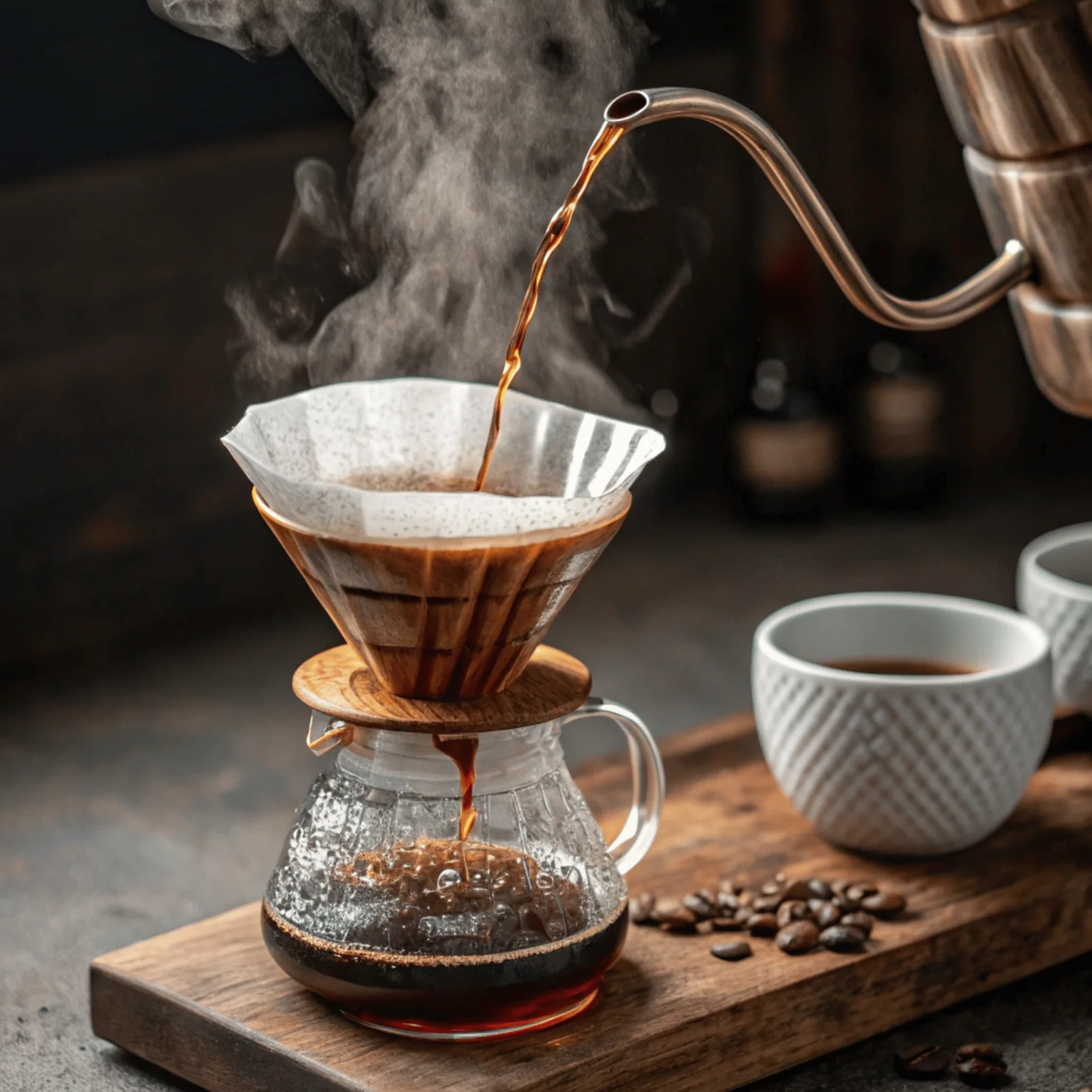
The V60 is Hario's cone-shaped filter brewer. Water passes through the coffee and paper before dripping into a cup below. Because the position and speed of pouring affect the flow, V60 responds noticeably to technique. In return, with suitable beans and consistent brewing, it often produces a clean cup with little sediment and lets different flavor notes stand out. If you enjoy black coffee but do not want a very concentrated drink, it may be worth trying.
Hario's V60 guide provides a reference recipe of 15 g coffee with 250 ml water, a medium-fine grind and water around 92–96°C. This recipe is used as the starting point here because the manufacturer's instructions are clear. The figures will not guarantee the best result for every bean, but they are specific enough for you to brew, taste and decide what to adjust next time.
2. Ingredients, Equipment and Ratio for One Cup
Prepare an appropriately sized V60, matching filter paper, a cup or server, 15 g of roasted ground coffee and about 250 g of safe drinking water. If you have a digital scale, placing both the cup and dripper on it is simpler than measuring each pour separately. Water's mass and volume are close under ordinary conditions, but when following a scale-based recipe, keep measurements in grams for easier repetition.
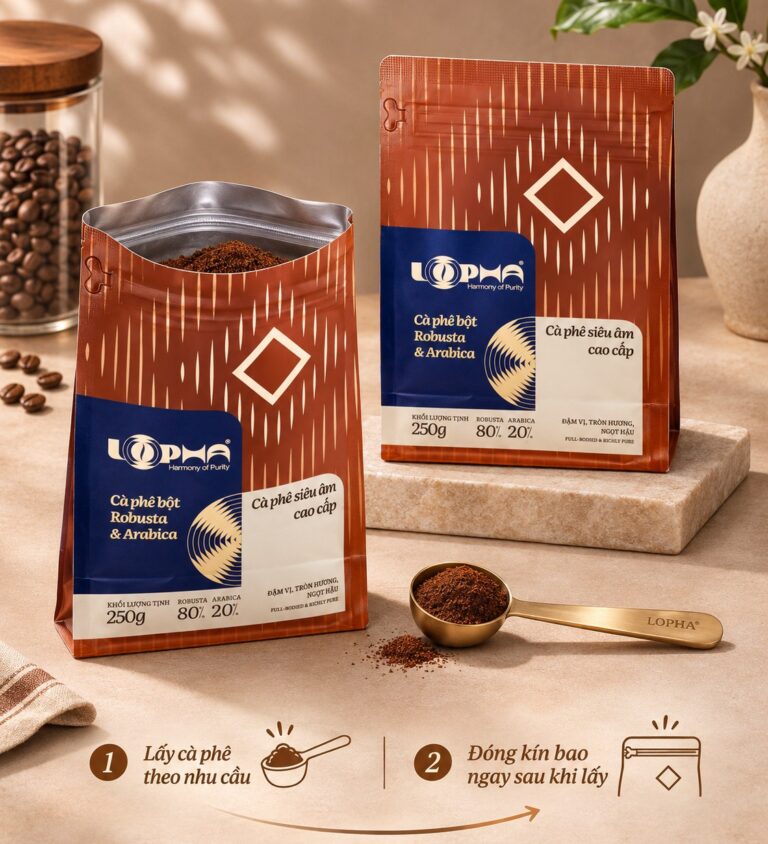
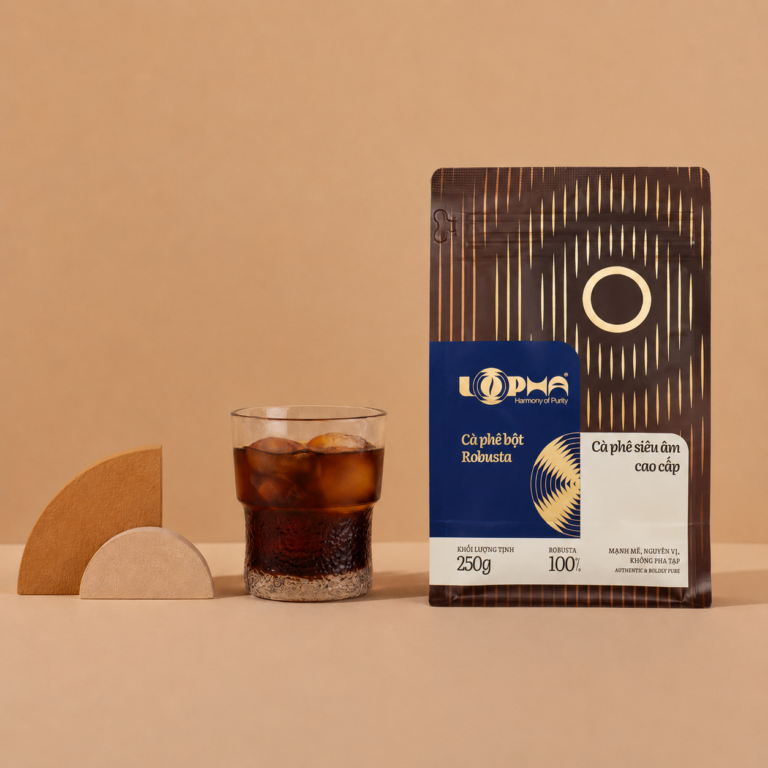
Begin with a medium-fine grind suited to pour-over. Coffee that is too coarse lets water drain quickly and may taste thin; too fine can clog the paper, extend the brew and produce a harsh finish. When buying pre-ground coffee, tell the seller that you use a V60 or drip brewer. LOPHA Coffee offers roasted and ground coffee with a drip-grind option, but check the specific product variation before ordering.
Hario's suggested total brewing time for a single cup is generally a matter of a few minutes. Yet it varies with dripper size, filter paper, grind and pouring. Use your timer to observe the process, not as pressure to finish on an exact second. A better-tasting cup that takes a little longer is worth keeping over one that finishes “on time” but tastes sharply sour.
3. Step-by-Step V60 Brewing with 15 g Coffee and 250 g Water
3.1. Rinse the Paper, Warm the Cup and Prepare the Coffee Bed
Fold the filter paper along its seam, place it in the V60 and pour hot water over it until thoroughly wet. Discard the rinse water that collects in the cup before starting the brew. This helps the paper sit against the dripper, reduces any papery taste and warms the equipment. Forgetting to empty the rinse water changes your final coffee-to-water ratio without you necessarily noticing.
Set the dripper over the cup, add 15 g of medium-fine coffee and shake gently to level the bed. Place it on the scale and tare to zero. Avoid repeatedly knocking the dripper hard, which can push too many fine particles to the bottom. With a reasonably even bed, it is easier to wet all the grounds in the first pour.
3.2. Bloom the Grounds and Pour in Stages
Start the timer, pour around 30–45 g of water in small circles to wet all the coffee, then wait roughly 30 seconds. This first wetting stage is called the bloom. The bed may swell slightly or release bubbles as gas remaining in the roasted coffee escapes; the amount of bubbling is not a stand-alone measure of quality or freshness.
After blooming, pour slowly in small circles around the coffee bed, avoiding a hard stream against the paper edge. You can divide the remaining water into two or three pours, keeping the water level below the dripper rim. Stop when the total water added reaches 250 g, let it drain through the filter, then remove the V60. Stir or swirl the coffee gently in the server before serving to combine the early and later extracted portions.
4. Why Pour Water in Circles?
Pouring patterns are not just for attractive videos. Where the stream hits the grounds influences which areas get more or less water. If you constantly pour along the paper wall, some water may run down the edge instead of through the coffee bed, changing how much soluble material is extracted. Small circular pours with a reasonably steady stream help beginners avoid a dry patch on one side and excessive agitation on the other.
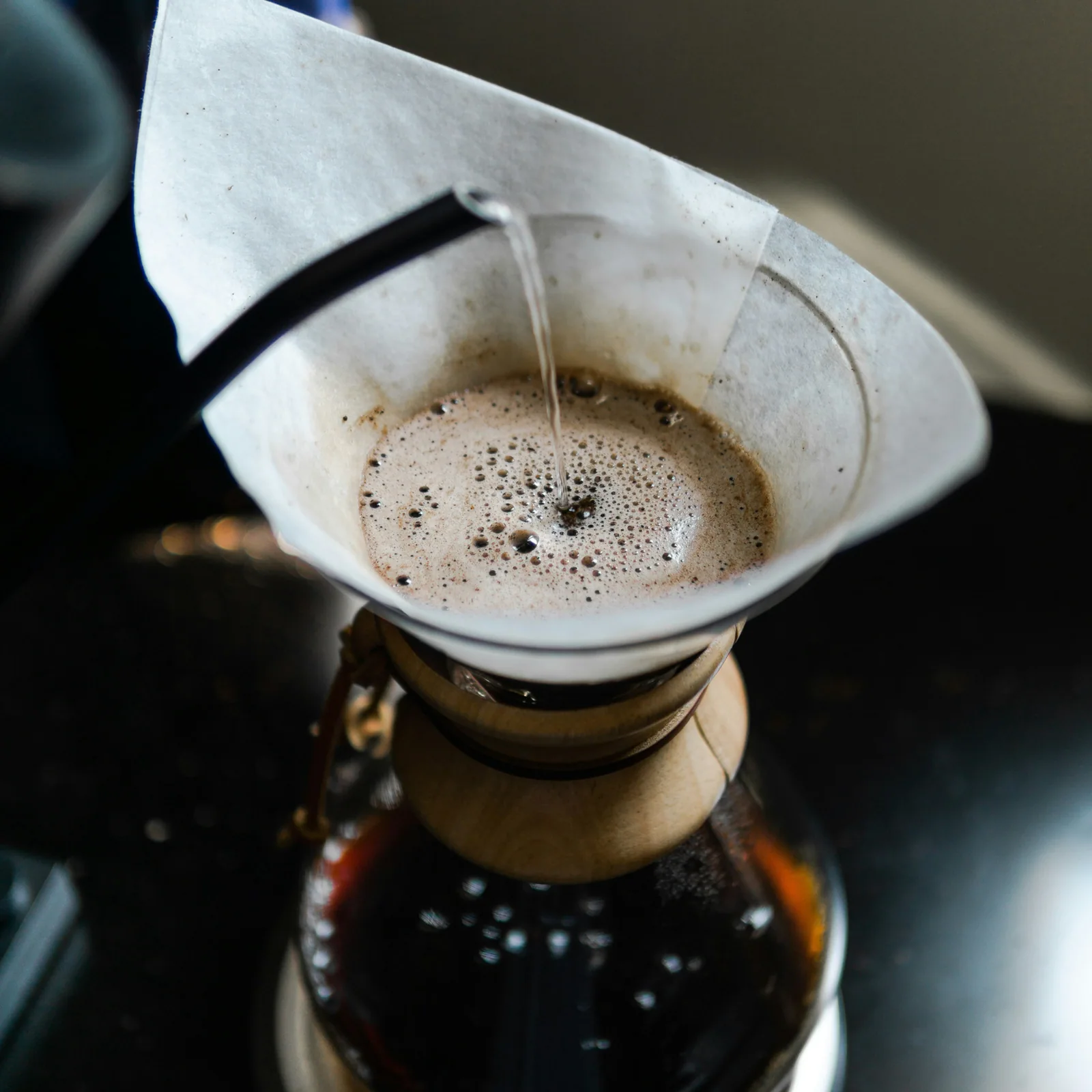
That does not mean you have to draw perfect circles. If your hand is unsteady, pour slowly and keep the spout at a moderate height above the grounds. Pouring from too high can agitate the bed, move fine particles and change drainage. Dripping tiny amounts over a very long period can also allow the bed to cool and make the process harder to repeat.
Well-known V60 recipes can divide the water into very different stages. Beginners do not need to learn five techniques at once. Start with Hario's recipe, make it three times, then adjust one variable. Once you recognize how acidity, strength and finish respond, exploring an advanced recipe becomes much more interesting because you understand what you are testing.
5. If Your V60 Is Sour, Bitter or Weak, Where Should You Start?
5.1. Coffee Is Too Sour, Thin and Drains Very Quickly
If a sharp sourness comes with thin body and water rushing through the paper, try grinding slightly finer. Keep the 15 g dose, 250 g water and temperature unchanged. If the cup improves, you have identified a controllable factor. If the Arabica itself has bright acidity and a clean, pleasant finish, do not try to erase it simply because you expect every pour-over to be as bitter as phin coffee.
Another possibility is pouring mainly onto the edge of the paper or failing to wet all the grounds during the bloom. Even with a suitable grind, water can extract the coffee unevenly. Look at the bed after the first pour: are there dry patches, or is the flow concentrated on one side? Correct your pouring before substantially increasing the dose.
5.2. Coffee Is Dry and Bitter, with Very Slow Drawdown
If drawdown is unusually slow and the cup tastes harsh, try one setting coarser, inspect the paper and avoid over-agitating the grounds. Very fine particles can gather and obstruct water flow. Different roasts may create different amounts of fines on the same grinder, so an identical setting does not guarantee the same drawdown time. When switching beans, observe flow as well as the grinder number.
If drainage is normal but the coffee still tastes bitter, that may reflect the beans or roast level. You could try slightly cooler water within a sensible range, or select another coffee for your taste—but change one factor at a time. Not all bitterness is a technical fault; a pleasant bitter note can contribute to a cup's structure.
6. Can You Brew without a Gooseneck Kettle, Scale or Thermometer?
Yes, you can brew without all three tools. If your kettle has a wide spout, pour very slowly and keep the stream direction steady. A small pouring jug can be easier to control than a very large kettle. Avoid pouring from high above the dripper simply to imitate an elaborate technique. Without a scale, a water measure and consistent scoop can work, but accept that the result will vary more than when measuring in grams.
The same applies to temperature: boil the water, prepare the paper and grounds, and pour according to a familiar rhythm. That may be enough for an everyday cup. But do not tell someone “wait exactly one minute and the water will be 94°C”; cooling varies with the kettle material and water volume. If you eventually upgrade, a small scale and an easy-pouring kettle often make the biggest difference to repeatability.
If your mornings are always rushed, V60 may not be your most convenient method. Someone who enjoys a short pause to pour by hand may find it a pleasant few minutes; another person may prefer pressing a button on an automatic machine while getting ready for work. Good coffee does not require everyone to adopt a lengthy ritual. Suitability for your routine is a valid reason to choose equipment.
7. Choosing Arabica, Robusta or Blend for Pour-Over
With black coffee, V60's paper filter often makes different flavor nuances easier to notice because the cup contains less sediment. Try Arabica if you enjoy pronounced acidity and layered aromas; Robusta can also work in V60 with an adjusted recipe if you prefer a bolder base and lingering finish. A Blend may offer a middle ground in style, though the precise balance depends on blend proportions and roast.
Do not treat one bean's recipe as a rigid standard for all three coffee types. Different roasts may need different grinds and temperatures for a pleasant result. On your first day with new beans, keep the 15:250 ratio and taste before adjusting. For a bolder cup, try slightly less water; for a gentler finish, experiment cautiously with grind or water.
Once you know a particular coffee, use V60 to compare two types under similar conditions. Brew 15 g of each with 250 g of water, start at the same temperature and grind, then taste side by side while warm. Direct comparison reveals real differences without declaring one coffee “more premium” simply because it has more acidity or a different aroma.
8. Frequently Asked Questions about V60
How does V60 differ from phin? Both pass hot water through coffee grounds, but the filter construction, grind, pouring method and water quantity usually differ. V60 uses paper and a controlled pouring pattern; phin has a lid and metal base with its own flow characteristics. Using the same grounds and ratio will not necessarily produce identical drinks.
Do you need to bloom for exactly 30 seconds? It is a common practical starting point in V60 guidance, not a secret moment that determines the whole cup. You can adjust slightly if the coffee contains a lot of gas or the first pour was uneven. What matters is fully wetting the grounds and repeating the method in later brews.
Why does the cup still taste weak with 15 g and 250 g? The ratio is only a starting point. Check the grind, pouring method, temperature and beans. If you are used to bold iced coffee with condensed milk from a phin, V60 may feel lighter even when extraction is sound. Taste it black while warm and evaluate it in the context of its brewing style, rather than forcing the two methods to produce the same experience.