Unusual Signs to Watch for in Coffee Beans After Roasting
Summary: After roasting, not every coffee bean has exactly the same colour or shape. Some variation is natural, but obvious scorching, breakage or unusual discolouration may warrant further inspection. Knowing the difference helps explain the role of post-roast sorting before coffee is packed.
Pour some freshly roasted beans onto a tray and you may notice that their colours do not match perfectly. Some are slightly darker, some smaller and some have marks or cracks on their surfaces. Does this mean the roast batch has failed?
The answer deserves care. Coffee is an agricultural product, so modest differences in colour and appearance are not necessarily defects. Some unusual signs, however, call for inspection or separate sorting. At LOPHA, post-roast sorting is not about making every bean look identical, but controlling unsuitable material before packaging.
1. Must roasted coffee beans always be exactly the same colour?
During roasting, heat and internal reactions change bean colour. If beans originally differ in size, moisture or structure, they may not look perfectly alike when the roast finishes.
Colour is easy to observe, but not the only way to assess quality. A bean slightly darker than the one beside it is not necessarily defective. Conversely, normally coloured beans may still require flavour or raw-material assessment for a fuller understanding.
What matters is how much the beans differ and in what way. A few beans with small colour variations are not the same as a group that is clearly charred, or one with concentrated unusual marks. Assess the wider sample rather than judging the whole batch from one bean.
2. Which signs should prompt further inspection?
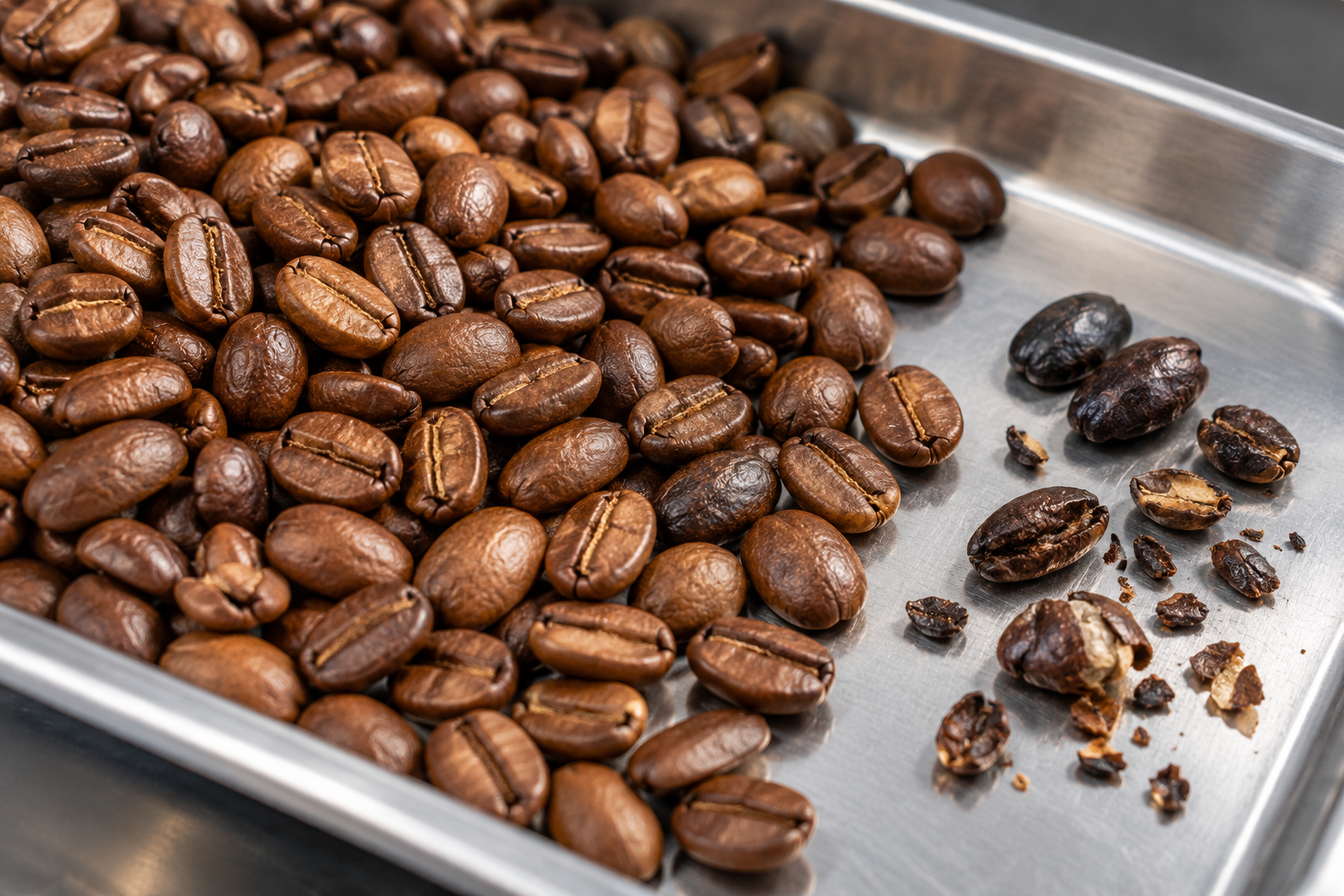
Three visible groups provide a useful starting point: unusual colour, damaged shape and other unexpected surface features. None is automatically a final verdict, but each can indicate a need for closer examination.
2.1. Unusually dark or scorched beans
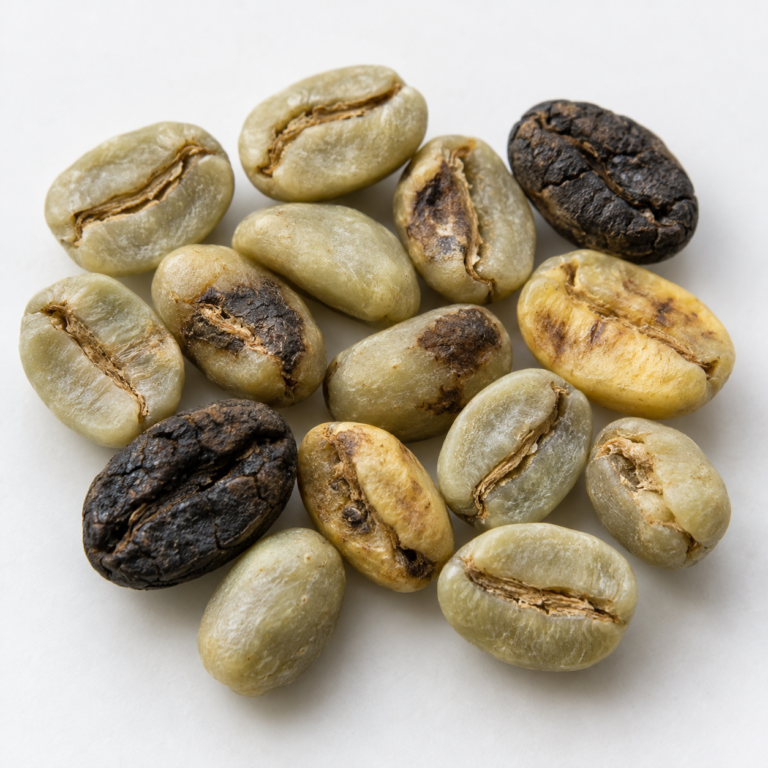
If certain beans in a batch are much darker than the majority, particularly with obvious scorch marks, they may need separate inspection. However, the naturally darker colour of an intentional dark roast should not be confused with localised scorching from unsuitable roasting conditions.
Colour must therefore be evaluated against the roast objective and the batch as a whole. A single colour scale cannot determine whether every Robusta, Arabica or blend bean is acceptable.
2.2. Broken beans, chipped edges and excessive fragments
Beans may have been damaged in green form, during transport or through handling after roasting. Where a batch contains many small fragments, sorting can help keep unsuitable pieces out of the finished product, depending on the product requirements.
Not every crack in a roasted bean is a defect. Roasting causes beans to expand and change structure, so some surface cracks may occur naturally. The challenge is identifying unusual damage, fragments or conditions suggesting the beans do not meet quality objectives.
2.3. Signs that need other assessment methods
Some aroma or flavour issues cannot be identified reliably by sight. Beans that look quite uniform may still produce an undesirable sensory result if the raw material or roasting profile is unsuitable. Visual sorting should therefore be combined with other assessment methods when needed.
3. Can visible signs after roasting originate before roasting?
Yes. Immature, insect-damaged or otherwise defective beans, as well as beans with different moisture levels, may respond differently to heat. Some differences only become more visible after roasting changes their colour.
This does not mean the roaster is responsible for every differently coloured bean. Part of the problem may originate during harvesting, primary processing or storage. If many beans share an unusual feature, tracing its cause should include raw-material history and previous processing conditions.
That is why LOPHA's 15-step journey includes both green-bean selection and post-roast sorting. They do not serve identical functions. Early selection reduces defects detectable before roasting; later sorting evaluates the beans in their new state, when other signs may appear or change.
4. Why should flavour not be judged from bean colour alone?
Imagine two batches both called medium roast. If they come from different varieties, growing areas or heating profiles, they can produce cups with different aromas despite similar roasted colour. Colour describes only part of what we can see.
Equally, a darker bean does not prove the coffee will taste unpleasantly bitter. Under comparable roasting conditions, Robusta can naturally be more bitter than Arabica. Variety characteristics must be distinguished from evidence of a roasting defect.
A sensible assessment considers colour, shape, fragments, intended roast profile and brewed flavour together. Where something seems unusual, investigate rather than rely on a photograph. Declaring a whole batch unacceptable because one bean is black would be premature.
5. What can post-roast sorting address?
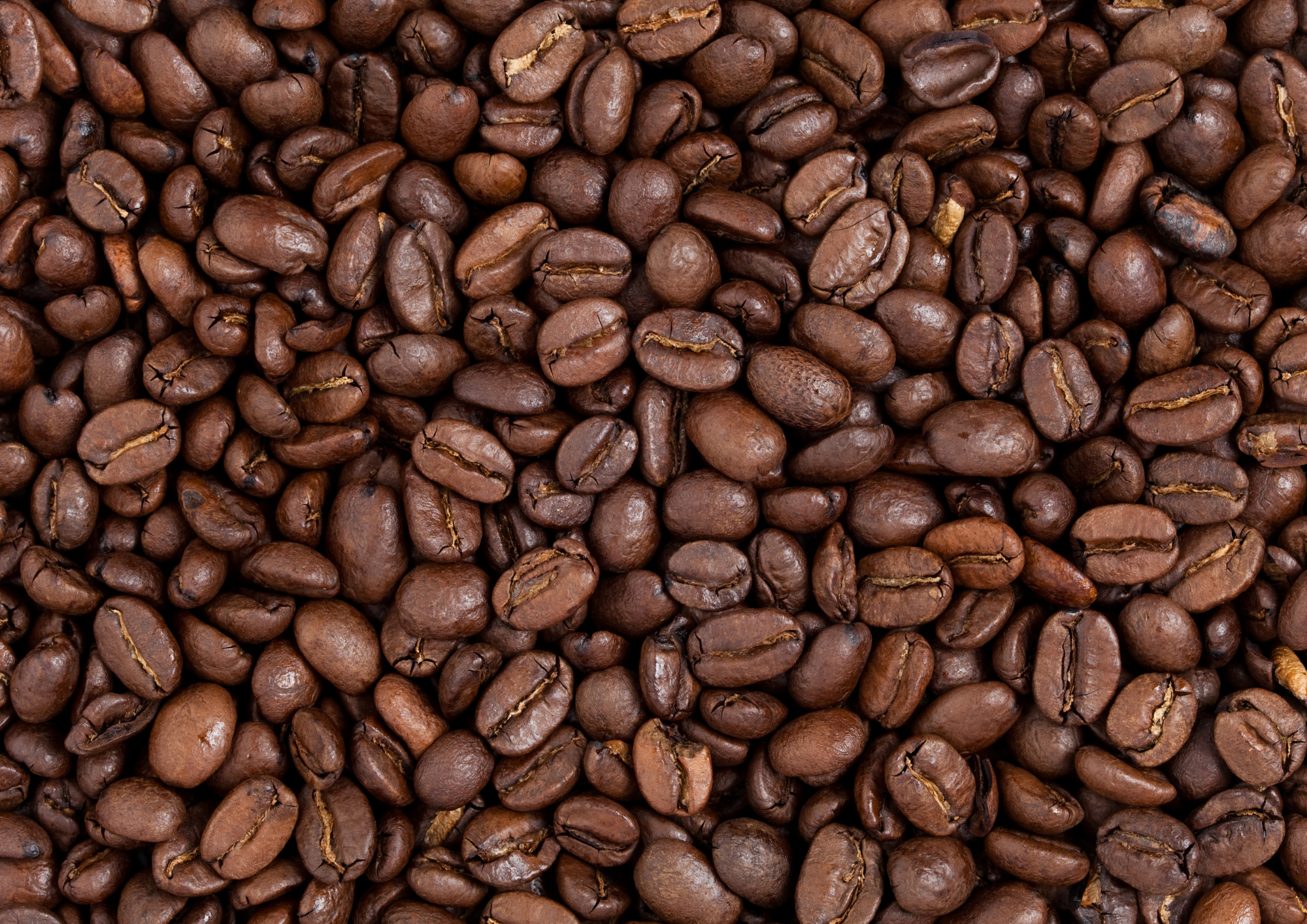
Sorting helps separate beans or components that do not match finished-product requirements, depending on the equipment and inspection method. Size-based screening may help remove small fragments or broken pieces. Visual checks or appropriate detection systems can help assess unusual colour or surface appearance.
But no single method guarantees detection of every defect. Beans that look normal may not deliver the desired flavour; beans of different sizes are not necessarily unsuitable. Sorting should follow product requirements rather than simply remove everything that looks different.
5.1. Separating fragments is different from sorting by colour
Fragments have physical dimensions different from whole beans and can often be identified on that basis. Colour deviations need another kind of assessment. Separating these tasks helps choose suitable methods instead of expecting one mechanical screen to identify every abnormality.
5.2. Checking results after sorting still matters
Inspecting the beans after sorting helps establish whether the chosen method achieved its purpose. If the same defects keep appearing, it may be necessary to revisit incoming material or operating conditions, not merely remove more beans at the end.
5.3. What buyers can notice in roasted whole beans
When opening a bag of whole beans, you can observe general uniformity, unusually high levels of breakage and any obvious off-odours. These are only initial clues, not substitutes for the quality controls used during production.
With ground coffee, the appearance of individual roasted beans is no longer visible. Assessment therefore needs to include clear origin and composition information, storage conditions and brewing experience. The same visual checks cannot apply to every coffee format.
LOPHA offers Arabica, Robusta and blends with different intended flavour profiles. Variations in bean colour or aroma should be understood in relation to each product, rather than expecting every coffee bag to look and smell exactly alike.
6. Post-roast sorting completes the process; it cannot repair every defect
A suitable roast begins with good raw materials and well-managed processing conditions throughout. Post-roast sorting helps remove unsuitable components near the end, but cannot replace harvesting ripe cherries, processing, storage or proper roast control.
That is why LOPHA's process includes many control stages before beans reach packaging. Each complements the others rather than leaving the final stage to solve every earlier problem.
A tray of roasted beans can reveal much about the production journey if we know what to look for. But proper observation also means recognising the limits of sight, distinguishing natural variation from warning signs and understanding when more inspection is needed. Post-roast sorting then becomes a meaningful finishing step, not just the task of selecting the prettiest beans.