Pre-cleaning Green Coffee Beans at the Factory
Summary: Green coffee beans that have already been processed near the growing area may still carry dust, dried parchment fragments or other unwanted material when they reach the factory. Before more specialised treatment, they therefore undergo preliminary cleaning.
Why green coffee beans still need cleaning
Green coffee is produced through harvesting, pulping, drying and hulling. Even after cleaning near the growing area, the beans may still carry dust, parchment fragments or other mechanical impurities. During bagging, collection, loading and transport, the material may also come into contact with unwanted substances from its surroundings. Completing primary processing therefore does not mean factory cleaning can be skipped.
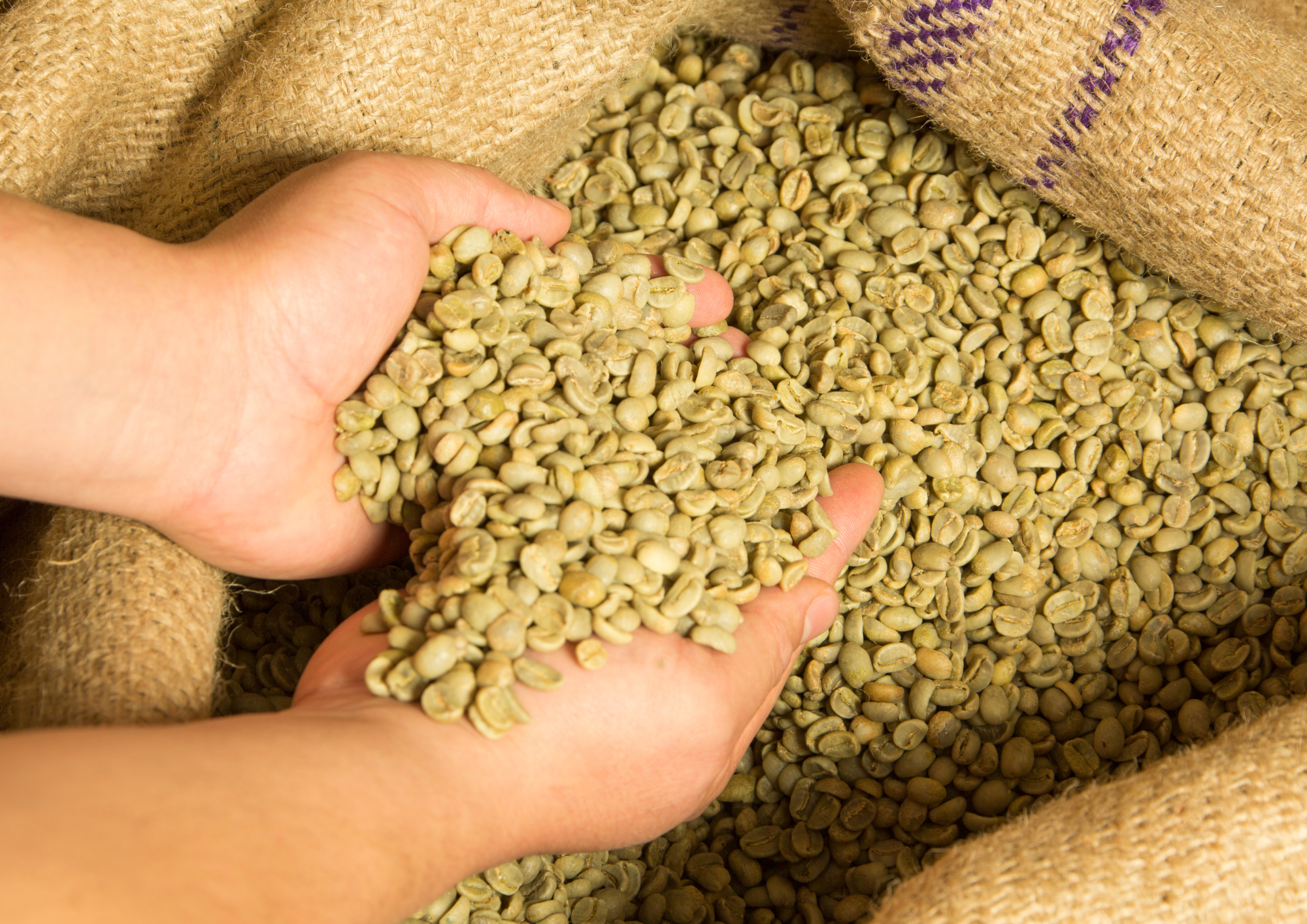
Preliminary cleaning is not intended to repeat every operation performed near the farm. At the factory, the aim is usually to remove materials that could interfere with equipment or product quality: loose dust, lightweight fragments, small stones, pieces of parchment and foreign matter with properties unlike those of coffee beans. This is a preparation stage, not a declaration that every food-safety risk has already been eliminated.
Bean quality should be distinguished from the cleanliness of the overall material flow. Beans with excellent sensory potential may arrive in bags containing impurities. Conversely, beans that have been screened clean of foreign objects may still fail to meet moisture or internal-defect criteria. Quality selection and preliminary cleaning overlap, but they cannot be reduced to one operation.
Where dust and foreign matter come from
Contaminants occur in different forms and come from different sources. Fine dust may originate on green-bean surfaces, from leftover parchment or from handling dry coffee. Small pieces of leaves, stalks and other light plant material may remain when earlier sorting was incomplete. Pebbles and hard fragments may enter from drying yards, collection areas or loading operations.
Some foreign objects are similar in size to coffee beans, making them difficult to remove using size screens alone. A small stone may pass through the same screen opening as a bean; a light fragment of parchment may be a different size but still travel with the coffee. This is why factories may combine several separation principles rather than rely on one mesh screen.
Bags and transport equipment also deserve attention. Bag fibres, ties or fragments from damaged pallets may enter the coffee if receiving procedures lack inspection. Cleaning intake areas, managing opened sacks and keeping the movement of beans separate from waste-storage areas help prevent contamination at the source, often more effectively than waiting to remove foreign matter at the end of the line.
What mechanical screening can remove
Mechanical screening works through differences in the size and shape of materials. When a mixture of green beans passes across a suitably perforated surface, some particles fall through while others remain or enter separate streams. Screens may use vibration or other motion to spread the material across the separating surface.
For stable screening, the amount of coffee fed into the equipment must suit its design. If the layer is too thick, some beans may not make proper contact with the screen; if feeding is uneven, separation performance may fluctuate. An excess of parchment fragments or other impurities can therefore be caused by blocked openings, unsuitable vibration or inconsistent feeding, not only the wrong screen size.
A screen does not necessarily distinguish a discoloured defective bean from a good bean of the same size. Black beans, insect-damaged beans and seeds with internal defects may require other inspection methods. Understanding the limits of the equipment avoids the mistaken expectation that a single pass can comprehensively assess every aspect of coffee quality.
Using airflow and weight to sort beans
Some materials are difficult to distinguish by size but differ in density or how readily moving air carries them away. Agricultural processing therefore also uses gravity separation, airflow or combinations of physical methods alongside screens. The aim is to separate groups that a single technique cannot handle effectively.
Airflow may help remove light particles such as dust, parchment pieces and material with aerodynamic behaviour different from green coffee. Yet excessive airflow can carry away small or lightweight beans, increasing losses; too little air leaves contaminants behind. Performance should be assessed from the resulting coffee and rejected material, not merely from how strongly the suction equipment seems to operate.
Equipment designed to remove heavy foreign objects must also suit the lot being handled. Where bean size and weight vary, settings may require checks to prevent good beans from being rejected as contaminants. Physical separation relies on differences between material groups; when those differences are very small, perfect results cannot be promised.
Metal contaminants need separate controls
In addition to dust and stones, coffee may be exposed to metal fragments from tools, machinery or transport operations. These contaminants can affect processing equipment and product quality. Metals do not all behave alike, however, so the available separation methods depend on the material involved.
Magnets can capture ferromagnetic fragments within the limits of their design. They do not replace all other foreign-object detection and control methods. Stainless steels and non-ferrous metals have different magnetic properties, so each solution must be assessed according to what it can actually detect or remove.
A common mistake is to install a device and neglect its operating condition. A component overloaded with debris, poorly cleaned or placed incorrectly in the material stream may not work as expected. Likewise, downstream screening cannot replace preventive maintenance when machinery parts are deteriorating.
Coffee quality is not protected by one final check alone. Preventing foreign matter at the source, maintaining equipment and checking the output of each stage all matter together. This reduces risk without depending on a single tool.
Equipment hygiene helps prevent recontamination
Cleaning machines are valuable only when the equipment and areas that contact the coffee are properly maintained. Accumulated dust, beans trapped from a previous batch or bins of rejected material left uncleared can become sources of cross-contamination. Removing dust early in the line has little benefit if the same dust is allowed to return to the beans a moment later.
Before operation, staff should check feeding areas, bean conveyors, screens, extraction ducts and reject collection points. When changing lots, checking for leftover material is important for traceability. If beans from a previous lot enter the next without being recognised, batch quantities and quality records can become inconsistent.
The area used to collect rejected material also needs a clear layout. Debris already separated from coffee should not be placed where wind, handling or unsuitable cleaning could carry it back into the material stream. These controls do not necessarily require complex machinery, but they do require consistent inspection habits and operational discipline.
Mechanical pre-cleaning versus ultrasonic technology
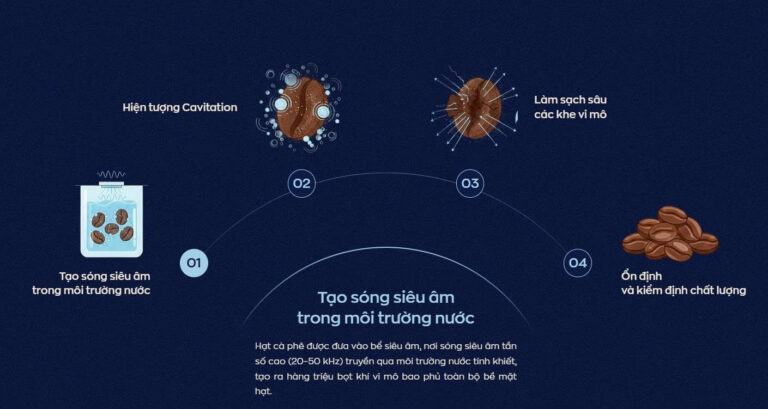
Preliminary cleaning mainly separates material through physical characteristics such as size, weight, lightness and mechanical behaviour. Ultrasonic technology, by contrast, uses sound waves transmitted through water, including cavitation, to help loosen substances adhering to bean surfaces under suitable treatment conditions.
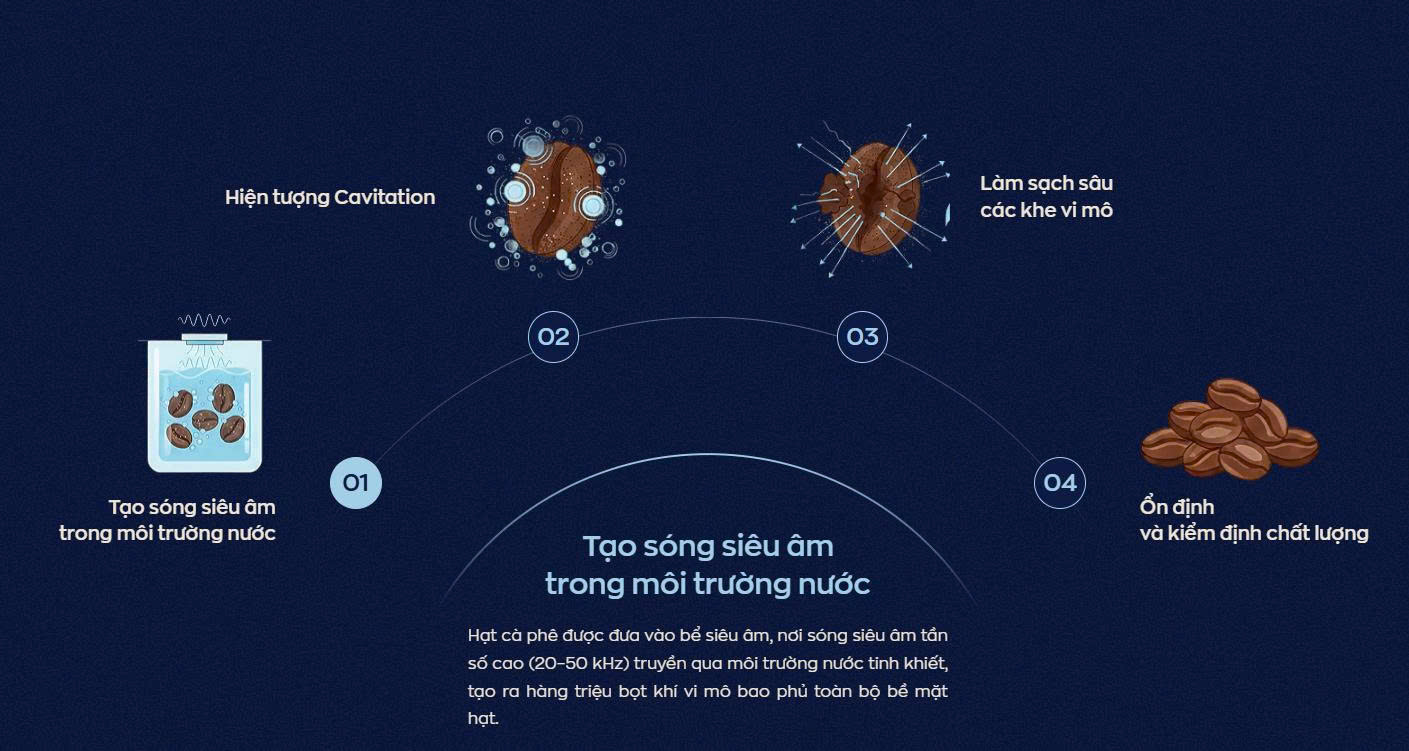
The two approaches need not compete. Removing large parchment pieces or small stones mechanically allows the later treatment to focus on its own task. Ultrasonics, in turn, are not an efficient replacement for every sizing operation or for removing hard foreign objects that can be separated at the start of the line. Each stage belongs where its function is most appropriate.
For the same reason, “screened clean” should not be confused with “verified safe.” Chemical and microbial hazards, or any parameter requiring laboratory tests, must be assessed under a separate control plan. Preliminary cleaning helps prepare for production, but it does not automatically demonstrate that the finished product meets all testing criteria.
Preparing beans for specialised treatment
Mechanical cleaning is an important preparation for more specialised treatment. Screens, airflow and good hygiene each have a part to play, but no single method guarantees every aspect of quality. In LOPHA’s coffee production process, each cleaning stage is positioned to serve a specific purpose.