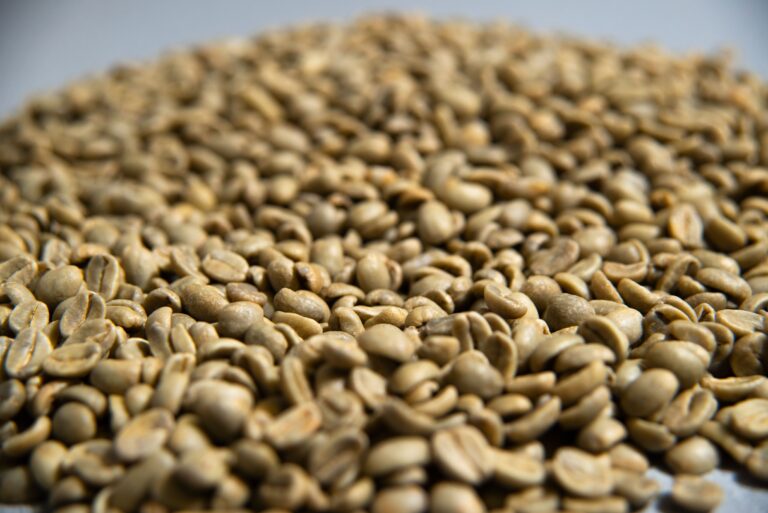
Why Can Green Coffee Beans Reabsorb Moisture After Drying?
Summary: Coffee that has been properly dried will not necessarily keep the same moisture level if storage conditions are unsuitable. Green coffee beans can exchange water vapour with the air, particularly in hot, humid weather or poorly ventilated warehouses. Understanding moisture reabsorption shows why drying coffee and keeping it dry are two different tasks.
A carefully dried batch of coffee may reach a suitable moisture level before storage. Yet days or weeks later, changes in storage conditions can leave the beans in a different state. This prompts an understandable question: if the coffee has already dried, how can it take up moisture again?
The answer lies in a natural characteristic of many dried agricultural products: they exchange water vapour with their surroundings. Moisture content does not become 'frozen' the moment coffee leaves the drying patio. For LOPHA, understanding this process connects drying at the source with later green-bean receiving, storage and roasting.
1. Dry does not mean free of water
When we say green coffee has been dried, we do not mean every drop of water has disappeared from inside the beans. They still contain a certain amount of moisture. The important thing is for that moisture to remain within a suitable range for storage and processing, and to be reasonably uniform across the beans.
Too much water, combined with unsuitable storage, can increase the risk of quality deterioration. But drying too far or too quickly is not automatically better either, because it can harm raw-material condition. The aim is not simply 'the drier, the better'.
LOPHA manages green-bean specifications according to each coffee type. For raw materials with established specifications, the moisture requirement is no more than 12%. This is a limit for the relevant materials, not evidence that every bean in every lot will always have exactly the same fixed moisture level.
2. Why do green coffee beans absorb moisture from the air?
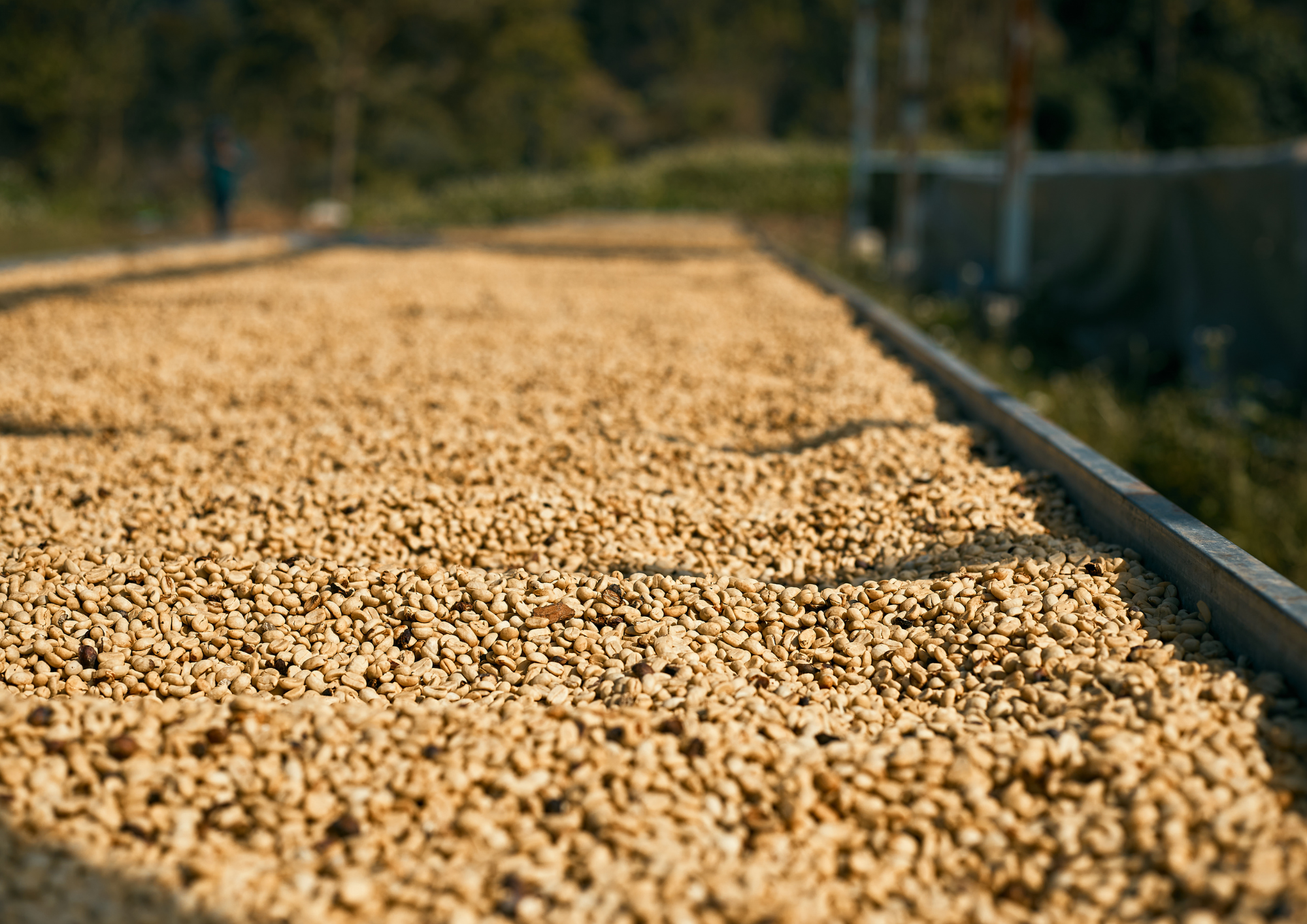
Air always contains water vapour, though the amount changes with weather and indoor conditions. Green coffee beans contain substances that interact with water, so they can absorb or release moisture when their surroundings change.
When the air becomes more humid, beans may take up additional water vapour under suitable conditions. In a drier environment, moisture exchange may move in the opposite direction. That is why their moisture content can continue to change long after they leave the drying patio.
2.1. How does air humidity affect them?
Think of a day of persistent rain. Warehouse floors and air may feel damp, and objects take longer to dry. If green coffee bags or storage conditions do not offer adequate protection, airborne moisture can come into contact with the raw material. Over time, the beans may change condition.
This does not mean that a rainy day instantly makes stored coffee wet. The extent of change also depends on the bag material, exposure time, airflow and warehouse conditions. Still, changing weather is a reason to keep monitoring the coffee rather than checking it only when it first enters storage.
2.2. Temperature and time also make a difference
Warm and cool air differ in their capacity to hold water vapour. As temperature changes, relative humidity can also shift even within the same area. A thermometer alone therefore cannot give a full picture of storage conditions without information about humidity.
Exposure time matters too. A bag left briefly in a damp area may not be affected like one stored there for several days. The objective is to maintain suitable conditions throughout storage, not just when the bags are first stacked.
3. Does a dry surface reflect moisture inside the bean?
Not always. Coffee beans have three-dimensional structure. The surface comes into contact with the air first, while water inside takes time to move and redistribute. In some circumstances, the outside may appear dry even though moisture is not yet evenly distributed throughout the bean.
This is especially relevant after rapid drying or when beans have been spread unevenly. If different areas receive different amounts of heat and airflow, drying results can vary. Allowing the beans to stabilise in suitable conditions can help moisture become more balanced before further processing.
Coffee producers should not declare a lot ready simply because the beans feel hard when squeezed or dry to the touch. Touch can reveal unusual conditions, but it cannot replace moisture measurement with appropriate equipment and representative sampling.
We must also distinguish average moisture content from moisture uniformity. An average may fall within the desired range while concealing significant differences between bean groups. If wetter groups remain mixed in storage, quality monitoring needs extra attention.
4. What problems can moisture reabsorption cause?
Storage stability is the first concern. Rising moisture under unfavourable environmental conditions can increase the risk of off-odours, quality changes or microbial activity. However, it would be incorrect to claim that any moisture uptake inevitably causes mould. Such outcomes depend on several conditions working together.
For roasting, green-bean moisture affects how beans respond to heat. A lot with inconsistent moisture can make it harder to achieve repeatable roast results. Differences in heat response and structural changes may occur alongside variations in size and density.
Moisture uptake also makes the duration of storage important. If beans must be kept for a long time before production, packaging and storage locations should be checked carefully. Even modest changes in pallet placement, bag closure or proximity to a damp wall can affect protection.
5. How can moisture uptake be limited in storage?
No bag or single handling measure can replace proper environmental management. A warehouse should remain clean and dry, protected from rainwater and moisture rising from floors or walls. Raw material should be arranged for easy inspection while limiting direct contact with damp-prone surfaces.
5.1. Bags and the way raw materials are stacked
Suitable bags help limit harmful exposure to the environment, but their effectiveness depends on material, closure and conditions of use. Torn bags, unprotected openings or stacks placed where water can seep in all increase risks to the coffee.
Organising stock by lot also makes it easier to distinguish receiving dates, storage conditions and quality status. If unusual signs appear in one area, well-labelled stock helps identify the affected lots quickly.
5.2. Monitor conditions rather than rely only on touch
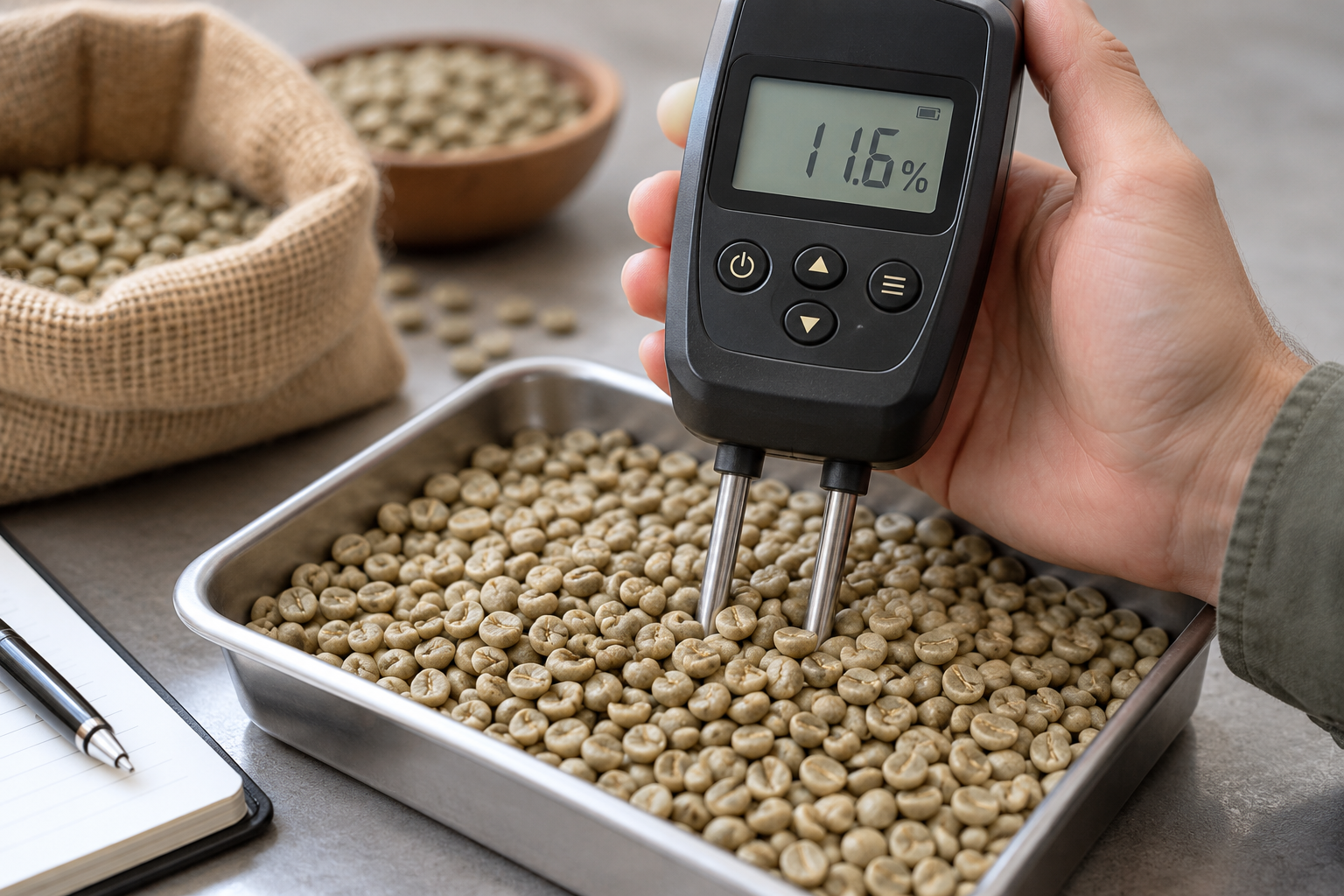
The absence of an unusual smell does not prove that moisture remains within the target range. Routine checks of warehouse conditions and representative samples are more proactive. Sampling location, measurement time and differences among portions of the lot all deserve attention.
Moisture readings must also be interpreted in the context of the instrument and measurement method used. Some methods are sensitive to bean condition or environmental factors, so inconsistent procedures can produce different readings for the same lot. A suitable, consistently applied checking procedure matters more than any single reading in isolation.
5.3. Why good drying still needs good storage
Drying brings the beans to a condition suitable for storage and processing. The storage environment then determines whether that condition is maintained. These are consecutive responsibilities; neither replaces the other.
In LOPHA's 15-step journey to pure coffee, drying occurs at the source, while many factory stages still lie ahead. As green beans travel, are received and enter storage, their stability continues to matter for subsequent treatment and roasting.
Coffee buyers generally see only the production date or final packaging. Yet the quality of a cup has been influenced by raw-material storage long before the coffee was packed. Drying and keeping coffee dry should always be considered together.
6. Keep the beans stable for the stages ahead
Dried green coffee remains capable of responding to its environment. Changing humidity, unsuitable bags or prolonged storage can alter its condition. Knowing this prevents us from assuming that one moisture measurement is enough for the bean's entire journey.
Suitable storage does not add flavours from outside, but helps preserve the quality built through harvesting and primary processing. At LOPHA, this care continues from the growing area to the factory, providing more stable conditions for subsequent stages.
An enjoyable cup does not begin at the roaster. Sometimes its quality is protected through simple acts much earlier: drying properly, closing bags carefully and keeping dried beans from taking up moisture again.