From 11 Factory Operations to LOPHA’s 15 Steps of Purity
Summary: By connecting four steps at origin with eleven factory operations, LOPHA developed the story of its 15 Steps of Purity. Behind that number lies a journey linking the responsibilities of growers, initial processors, manufacturers, and coffee drinkers.
A finished cup can be enjoyed in minutes, but the things that made it possible began developing long before. LOPHA's ten years of research and development led to a broader view of quality: not only what happens inside the factory but also decisions made while coffee cherries are still in the growing region.
Starting with eleven factory operations, LOPHA extended its quality story by adding four steps at origin, creating the 15 Steps of Purity. This was more than a larger number. It recognized that quality may begin before the raw material becomes green coffee and before any factory machine is switched on.
Eleven Factory Operations: A Foundation for Controlled Production
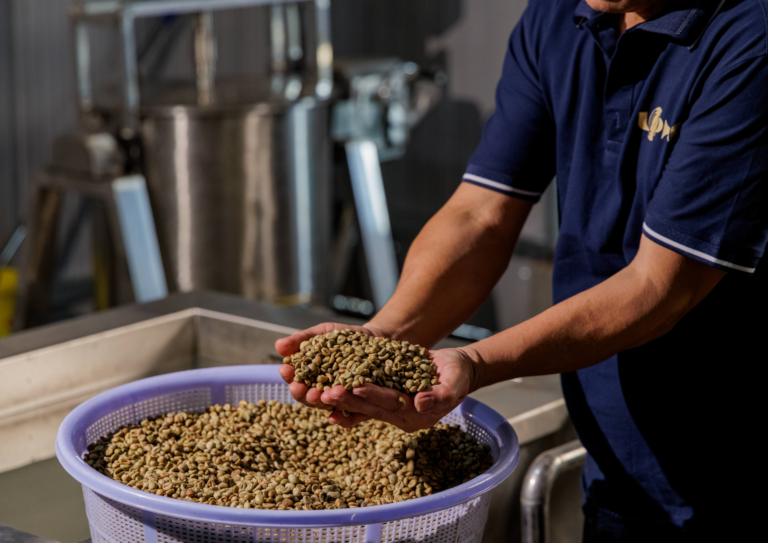
After six years of technology research from 2016 to 2022, LOPHA spent three years refining production from 2022 to 2025. At the factory, connected activities were organized from receiving and preparing raw materials through processing, roasting, finishing, and delivering coffee to customers.
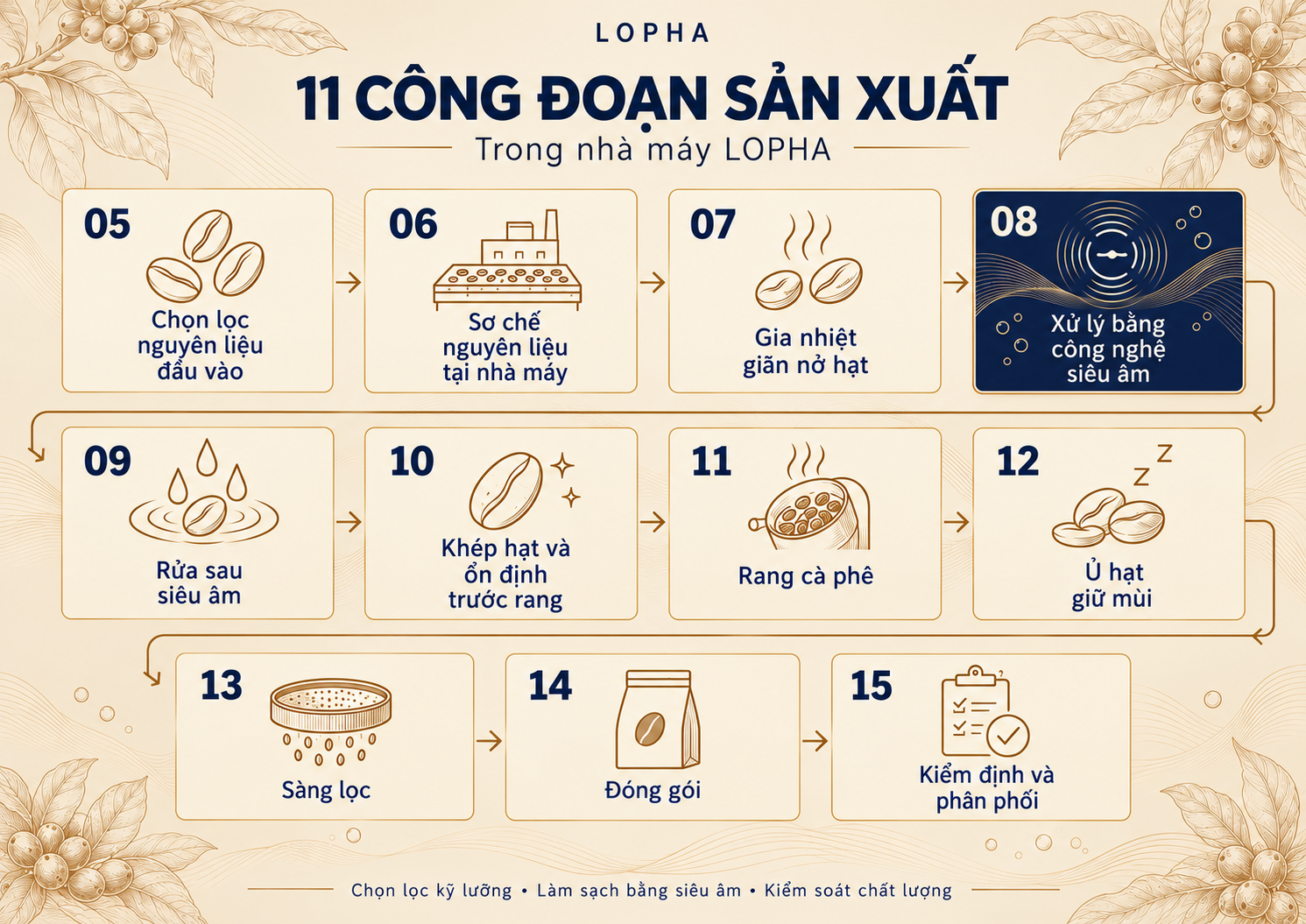
What matters is not simply the number of operations. Each activity creates conditions for the next. A change early in the line may affect later stages; effective quality control must recognize those connections. Seeing the process as a system makes responsibility for quality clearer.
Ultrasonic technology is an important part of LOPHA's chosen research direction, but no product is made by one technology alone. Beans must also be received, prepared, and taken through other operations. Coordinating all those stages is what gives research results an opportunity to become practical production.
LOPHA's factory in Lâm Đồng currently occupies approximately 0.5 hectares and produces 300 tonnes of coffee per year. These figures describe the current scale, which may continue to develop. Behind this output are many departments working toward products with clear ingredients and quality protected throughout processing.
Four Steps at Origin: The Story Before the Factory Door
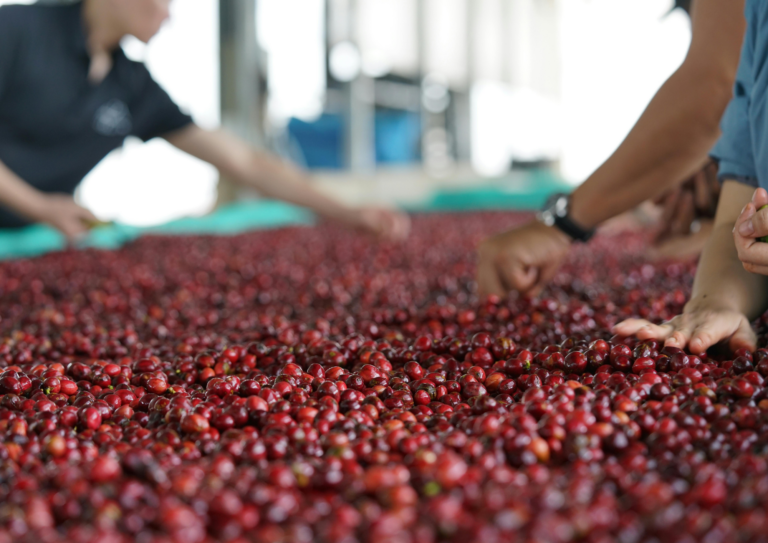
Before a bag of raw materials arrives at the factory, coffee has spent a long time in the growing region. Cherries ripen over the season, are harvested, and pass through initial preparation to become suitable materials for further processing. This work cannot be separated from finished-product quality.
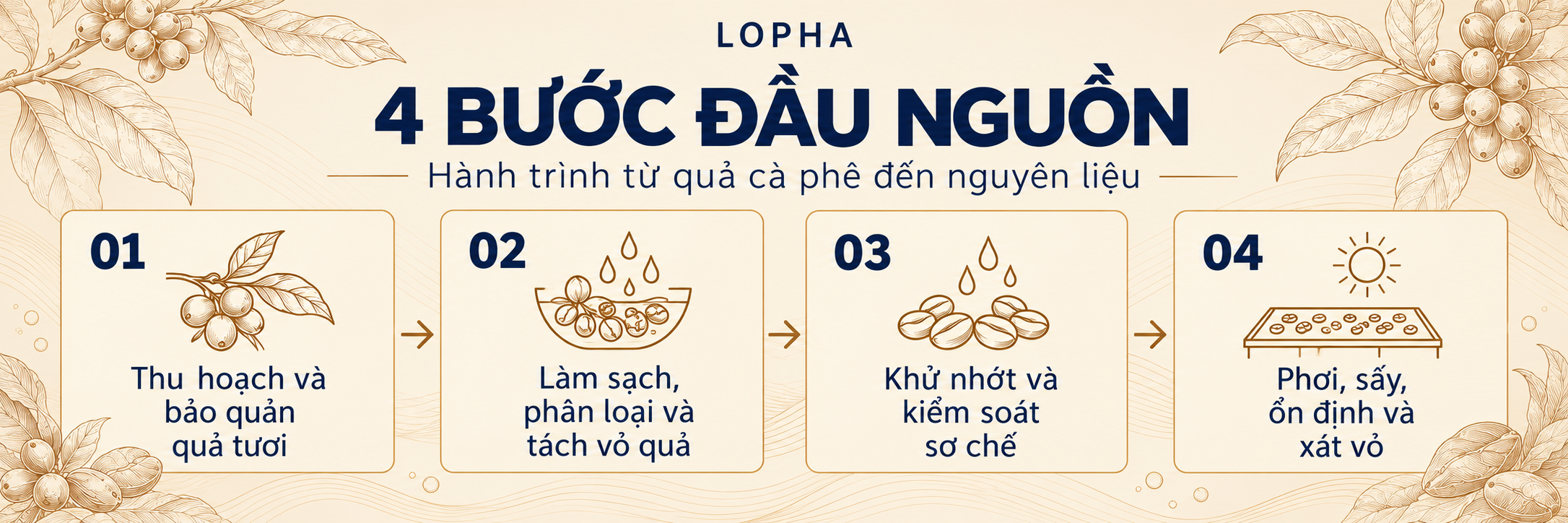
In 2025, when LOPHA focused on researching processing at origin, four upstream steps were brought into the same story as the eleven operations already developed at the factory. The addition shifted the journey's starting point: instead of seeing beans only when they reached the facility, the brand considered earlier decisions.
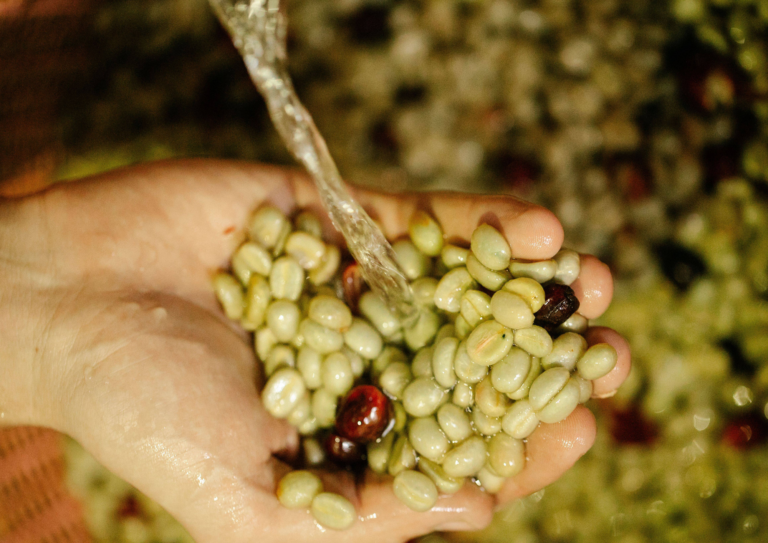
The four steps at origin relate to selecting cherries and preparing raw materials in ways that help protect their condition before factory processing. Their value lies not in making the brand message longer, but in linking responsibility in the growing region to the requirements of production.
Seeing beans across their entire journey allows coffee makers to ask better questions at the right time. Why does one raw-material lot have different characteristics? At which stage did those differences emerge? How can preparation at origin support later operations? These questions help the production system learn from the raw material instead of trying to adjust everything at the end.
Fifteen Steps Are Not Fifteen Separate Promises
A process with many stages becomes cumbersome if each is described only by a slogan. For LOPHA, the meaning of the 15 steps lies in how they connect. Different activities serve distinct functions, but none stands alone: earlier work changes the conditions for the next stage, and finished-product quality reflects the accumulated result of the full chain.
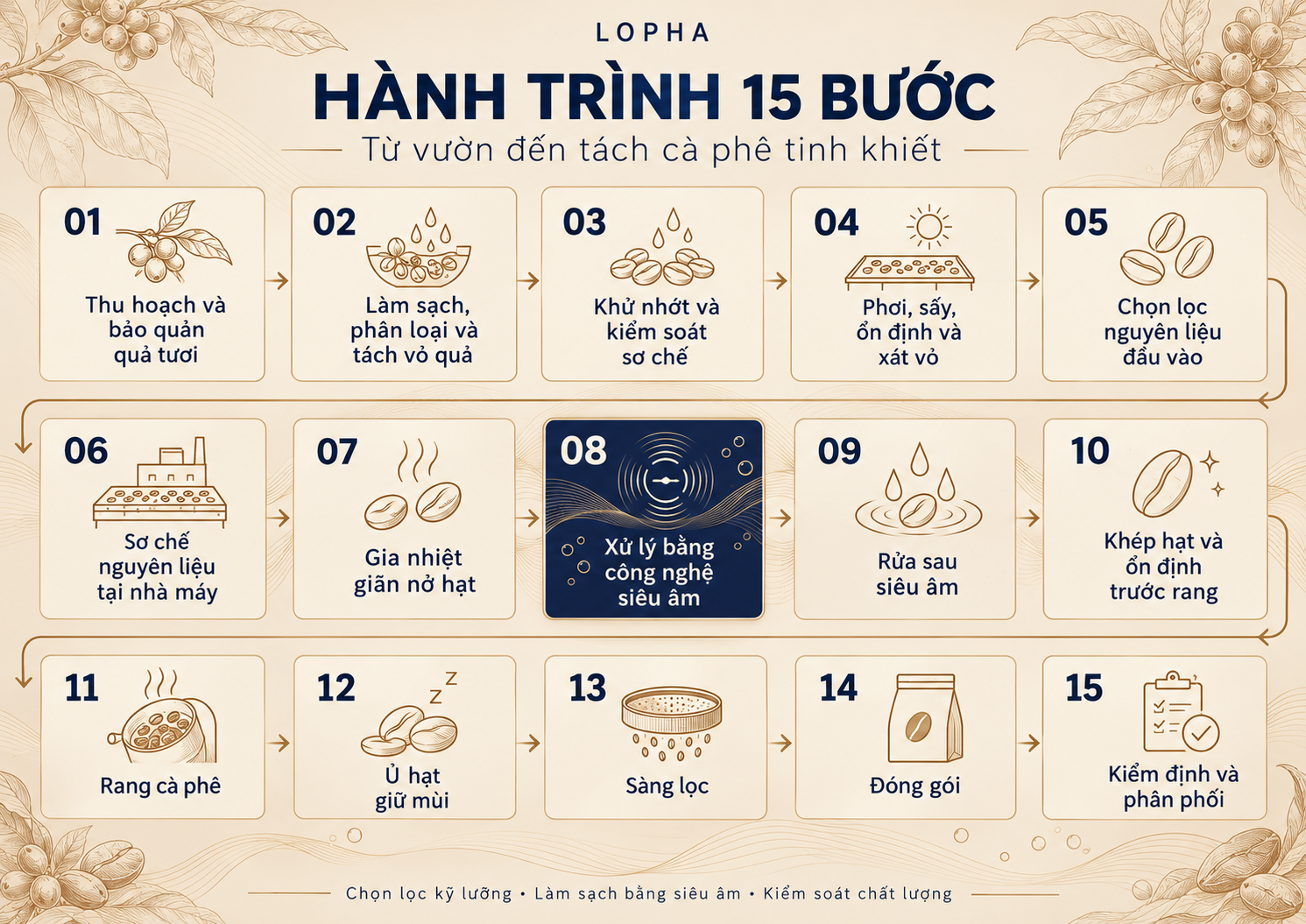
This perspective also explains why LOPHA does not see ultrasonic technology as the one answer to every problem. Ultrasonics serves a particular function at the factory; the growing region contributes the original characteristics; and finishing operations help protect the product. Connected properly, each activity can show its value without being exaggerated into a universal solution.
LOPHA's 15-step system brings together work from growing regions through factory production. Every stage contributes to a common goal: protecting the natural value of coffee beans and making products with clearly stated ingredients. It represents the result of ten years of research, production refinement, and a return to origin.
For the brand, the 15-step structure also marks a more mature way of thinking. Over ten years, the journey progressed from questions about flavor to technology, to production, and back to initial processing. Linking its beginning and end gives the story of purity a consistency that one product description could not fully communicate.
Growing Region and Factory: Two Sides of One Journey
From growing region to factory, each stage has its own function. Growers focus on seasons and cherry condition; the factory continues with processing and finishing. LOPHA connects these tasks into one coherent journey in which beans are cared for through the decisions and work of many people.
LOPHA currently cooperates with ten cooperatives in its raw-material network, a number that may increase as the business develops. Growers understand coffee plants and seasons, while the factory has experience with receiving and processing requirements. When both sides can exchange knowledge, quality is understood from more perspectives.
LOPHA's initial Robusta growing area covers approximately 10 hectares and yields around 55 tonnes of fresh coffee cherries annually. This is the growing region's fresh-cherry output, not factory output. Meanwhile, LOPHA's factory in Lâm Đồng currently produces 300 tonnes of coffee per year, reflecting its processing and finished-product operations. The two numbers describe different activities along one value chain.
These figures may change as the network develops. What LOPHA aims to maintain is the connection between origin and finished product. A system can grow in scale while keeping a fundamental principle: quality begins with understanding the raw materials and continues through responsibility at every production stage.
From a Ten-Year Story to the Coffee Lover's Experience
A full-bodied Robusta or an elegant Arabica cannot name everyone who helped create it. Coffee drinkers usually remember the opening aroma, the sensation of the first sip, and the lingering finish. These everyday experiences are exactly where the research journey finds its meaning.
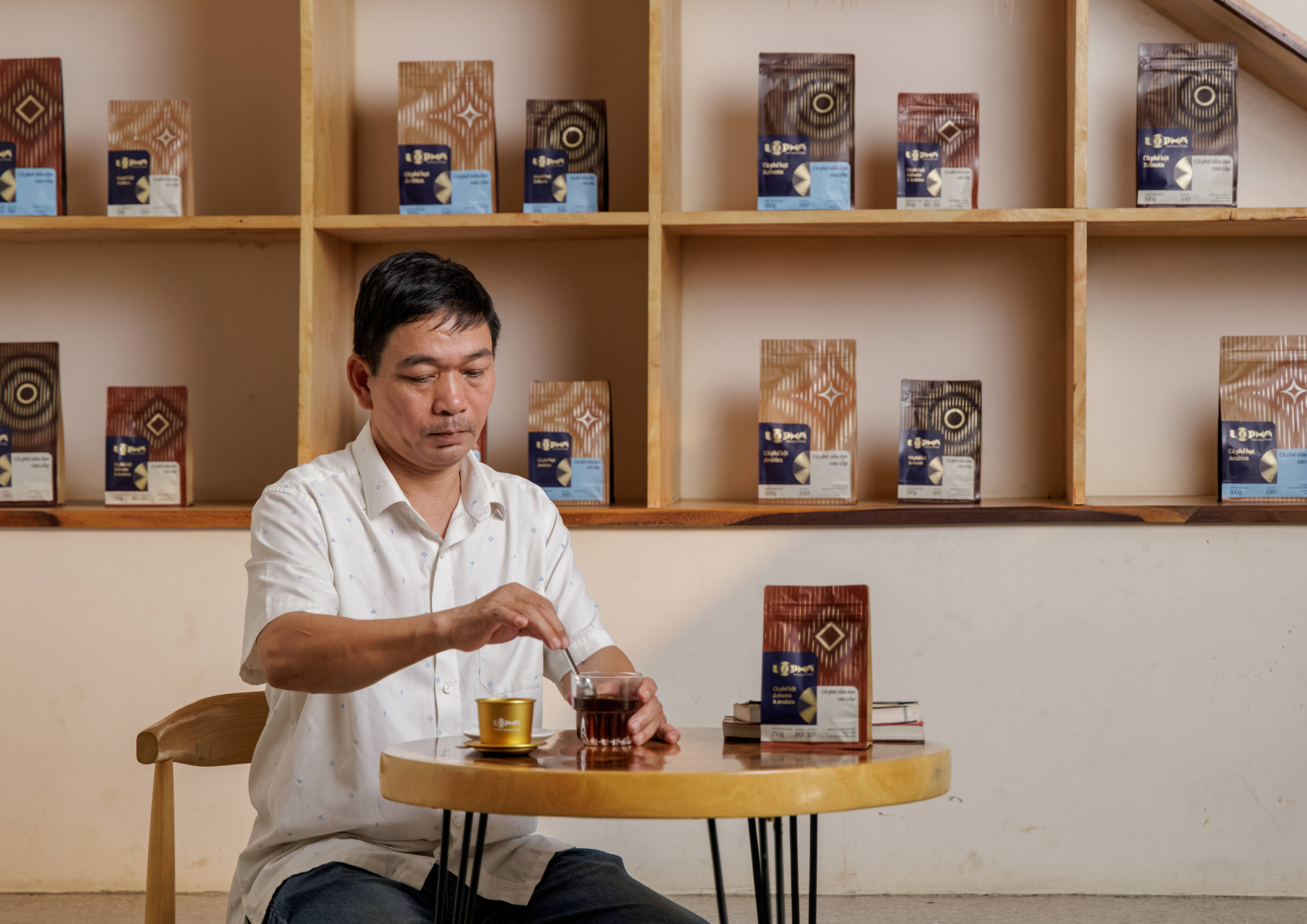
LOPHA pursues pure coffee, with clearly stated ingredients and respect for the characteristics of each variety. The 15 Steps of Purity are not meant to replace anyone's taste preferences. Instead, they offer a more complete view of the work needed to let natural flavor express itself.
Looking back, Long Phan's foundation in 2007 brought trading experience and an interest in quality. A tasting experience in 2016 inspired six years of technology research. Three years from 2022 to 2025 helped move research results into the production system. In 2025, LOPHA returned to initial processing at origin, linking four earlier steps with eleven factory operations.
After ten years, the journey has taken a more concrete form for coffee lovers to explore: not only a story of aspiration, but a connection from raw materials to finished products. And when a bag of LOPHA coffee is opened, perhaps the most rewarding outcome is still the moment someone slows down, enjoys a favorite flavor, and knows it carries years of patient respect for Vietnamese coffee beans.