Why Did LOPHA Choose to Research Ultrasonic Technology?
Summary: Ultrasonics became an important area of LOPHA's research because of its ability to assist in cleaning raw materials. The technology forms part of a wider processing system, respects the individuality of coffee beans, and supports products with clear ingredients.
A modern machine easily attracts attention. But LOPHA's reason for researching ultrasonics had little to do with an impressive piece of equipment or a high-tech name. It began with the need for a processing approach that could contribute to cleaning coffee beans while retaining respect for the raw material.
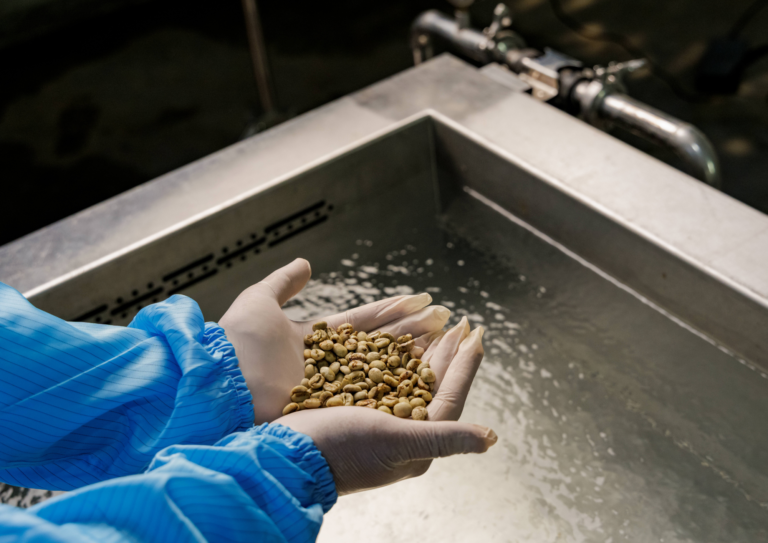
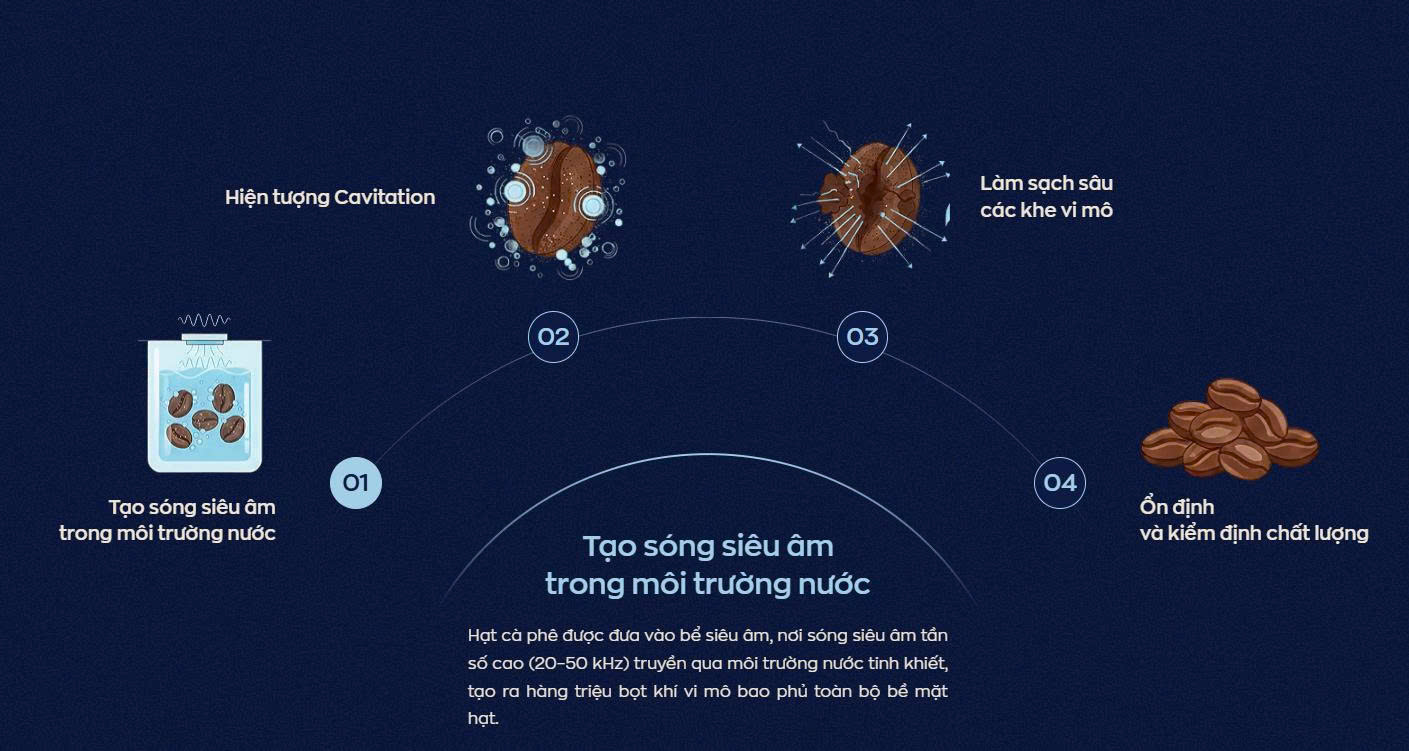
Ultrasonic waves in water produce physical effects that can help clean bean surfaces. LOPHA saw this as a direction worth pursuing during its first six years of research. When integrated into production, the technology became part of the quality journey alongside raw-material selection, roasting, and finished-product controls.
Choosing Technology for the Job It Can Do
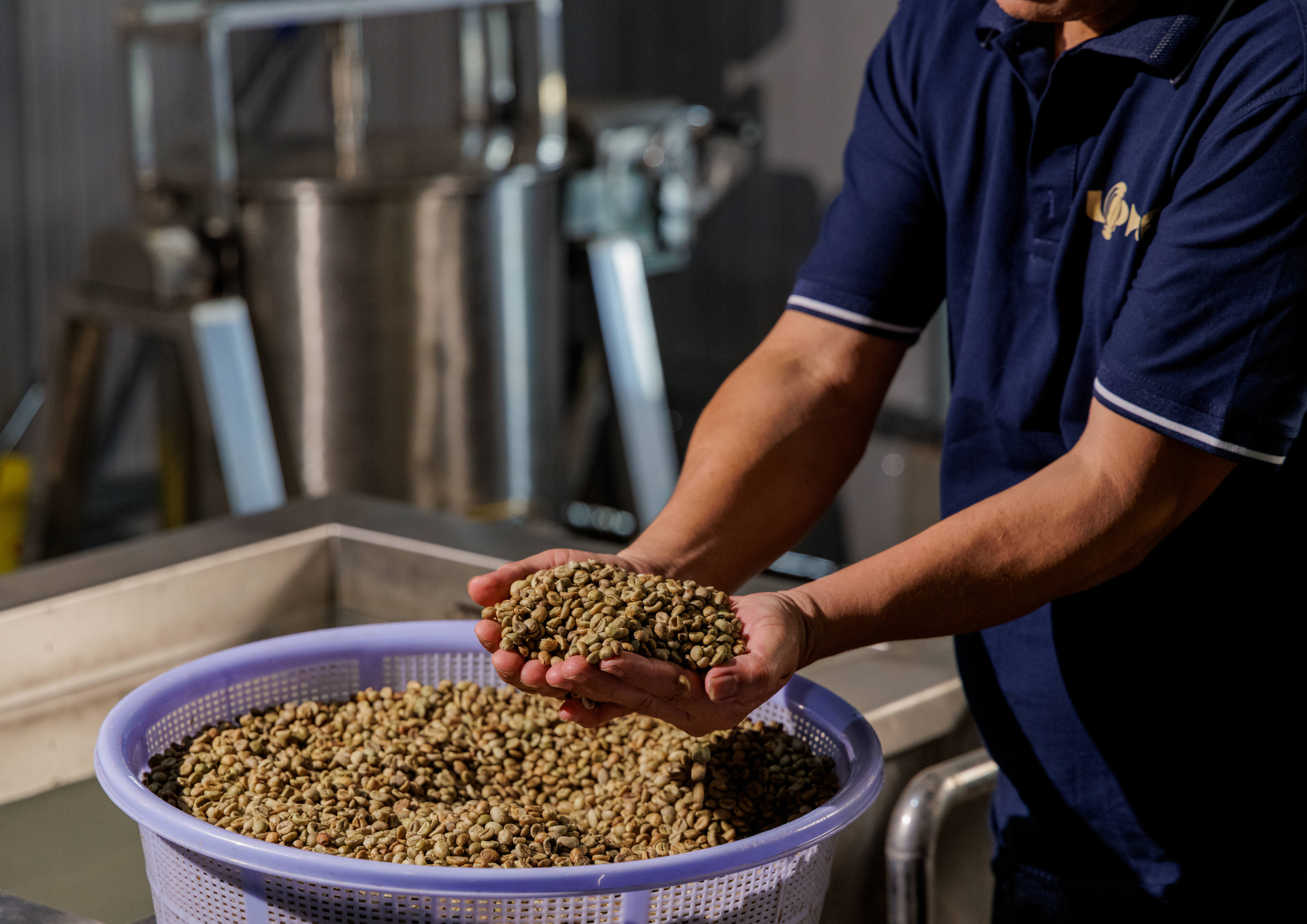
LOPHA began researching ultrasonics in response to practical needs of coffee beans. Some substances adhering to hard-to-reach areas of the bean surface present a different challenge from large foreign objects. Ultrasonic technology offers a physical treatment in water, consistent with LOPHA's research direction.
A treatment is useful only when its intended purpose is clear. Some physical impurities can be removed by familiar methods, while substances attached to less accessible surfaces may require another approach. This made ultrasonics worth studying. Yet a principle that can assist cleaning does not automatically replace sorting or address every food-safety hazard.
Choosing ultrasonic technology was not about finding a machine that could solve every problem. For LOPHA, it was a deliberate decision to bring the physical effects of sound waves into cleaning alongside raw-material selection and product finishing. Used in the right place, the technology helps protect the beans' qualities through subsequent stages.
LOPHA's ultrasonic technology uses the physical effects of sound waves in water to help clean coffee beans. More important than its name was the brand's decision to invest time in research, incorporate the method into production, and connect it with the rest of the factory's work.
From an Application Idea to the Whole Production Line
Technology may produce promising results in an experiment, but that does not mean it can be transferred unchanged to large-scale production. When raw materials vary, volumes grow, and more steps are connected, even small choices can affect the outcome. The technological turning point therefore raised a bigger question: how can a technology's potential become part of an organized operation?

Ultrasonic equipment is only one link in the processing chain. Before treatment, the beans must be suitably selected; afterward, they pass through other stages to become finished coffee. LOPHA developed the technology within this connected approach so the equipment's contribution could be understood as part of the full quality journey.
At the factory, ultrasonics operates within a connected sequence. Raw materials are prepared before treatment and then proceed through finishing stages. From choosing a technology during the research years, LOPHA moved into building a production system where each task contributes to the overall quality.
A technological approach must ultimately be judged by its suitability for real production. As raw materials, processing volumes, and operating rhythms change, the system must coordinate its various stages. That is why LOPHA continued researching and refining its processes after choosing ultrasonics, aiming to make the technology a stable part of coffee production.
Choosing Something New Does Not Reject Traditional Methods
Innovation is sometimes told as a battle between old and new: traditional methods are dismissed as outdated, while modern technology is presented as a replacement for everything. That may make an attractive slogan, but it does not describe coffee accurately. Familiar techniques still perform their particular jobs well; new technology belongs where it genuinely adds value.
Someone who loves traditional Vietnamese phin coffee may also enjoy the clean aroma of beans processed with a newer method. Coffee-drinking culture and improvements to one production stage do not conflict. Phin, espresso, and drip brewing are choices at the end of the journey; raw-material processing technologies operate much earlier. Both can coexist to meet different needs.
Similarly, advances in machinery do not make growers' work less important. Coffee plants still need care, raw materials still need selection, and decisions at origin still influence what can be achieved later. LOPHA can only progress by treating technology as part of the value chain rather than its only noteworthy element.
A mature turning point is often quieter than people imagine. It may come when a business recognizes a promising direction while clearly understanding the limits that must be respected. From that moment, trying something new becomes more than curiosity: it becomes a commitment to knowledge and long-term practical application.
The Value of Ultrasonics in LOPHA's Development Direction
Customers should not expect coffee to be 'completely risk-free' simply because the beans have undergone ultrasonic treatment. Such a claim is too broad and can obscure matters that still depend on origin, production conditions, storage, and specific laboratory indicators. Buyers deserve clear information about the technology's function, where it is used, and how ingredients are declared.
A brand's honesty shows in how it positions its technology. Ultrasonic research was a deliberate choice in LOPHA's journey; assisting cleaning in water is its intended role. Understanding a solution's real contribution helps coffee drinkers see the story of raw materials and production responsibility behind the technical name.
Coffee lovers do not necessarily need to know a machine's frequency to decide if a cup suits their tastes. They may, however, care whether a brand states its ingredients, explains its roast approach, and manages quality appropriately. Technology is one part of the story that deserves accurate explanation; the experience in the cup still belongs to the person drinking it.
This is also how LOPHA connects innovation with its three values: Purity, Honesty, and Authenticity. Purity concerns the clarity of the product; honesty requires claims to remain within what can be demonstrated; and authenticity reminds us to respect the personality of each bean variety. None of these values can replace the other two.
A Turning Point, Not the End of the Road
Choosing to apply ultrasonics may have been the clearest turning point of the first six research years. But a turning point matters only when the next stage is carried through. From choosing technology, LOPHA moved on to refining processes, operating the factory, and studying initial processing in growing regions. Each stage answered questions the preceding one could not fully resolve.
If we look only at photographs of machines, we remember the technology. Looking across the full ten years reveals something more meaningful: the refusal to substitute novelty for quality. Choosing a method means learning how to use it, understanding its limits, and connecting it to genuine production responsibility.
For LOPHA, the ultrasonic turning point did not lead the coffee story away from the bean. Instead, it sharpened the original question: how can we process raw materials while respecting what nature has given them? That question is why the journey continues beyond a machine to the product and the coffee in each person's cup.