How Does Post-Roast CO₂ Affect Espresso and Vietnamese Phin Coffee?
Summary: A thick crema on espresso and the swelling of ground coffee when water is poured into a phin can both be related to CO₂ remaining after roasting. But foam quantity alone is not a measure of quality. Explore how CO₂ influences crema, water penetration and flow, and how to compare brews to understand the differences better.
A freshly pulled espresso has a thick crema, while coffee in a newly wetted phin shows tiny rising bubbles. These different-looking effects have something in common: carbon dioxide (CO₂) remaining in roasted coffee can contribute to both.
But does more foam mean better coffee? And why can the same beans behave differently when brewed on different days? Understanding CO₂ helps us observe coffee more carefully without rushing to judge quality by surface bubbles alone.
1. What happens when freshly roasted coffee meets hot water?
Roasting brings many changes to coffee beans, generating gases—particularly carbon dioxide (CO₂)—some of which remain within their porous structure. After the beans cool, that gas continues escaping over time. Grinding exposes new surfaces and can accelerate gas release. When the grounds meet hot water, remaining gas may form visible bubbles.
With a Vietnamese phin, this is often noticeable as soon as the grounds are wetted: the surface may rise slightly, develop tiny openings or produce bubbles. In espresso, gas contributes to the foam system formed as coffee flows from the pressurised machine into the cup. The visible effects differ, but both relate to post-roast bean condition and extraction conditions.
Remaining gas does not, by itself, describe raw-material quality. Dark and medium roasts, whole beans and pre-ground coffee may lose gas at different rates. Water pressure, temperature and brewing technique also alter the effects. Foam from the same bag can look different today and tomorrow without the coffee necessarily being spoiled.
In LOPHA's 15-step journey, resting after roasting allows the beans to continue stabilising before packaging or brewing. For drinkers, observing the flow, smelling the aroma and tasting the coffee are still more meaningful than judging it solely by foam.
2. How does CO₂ contribute to espresso crema?
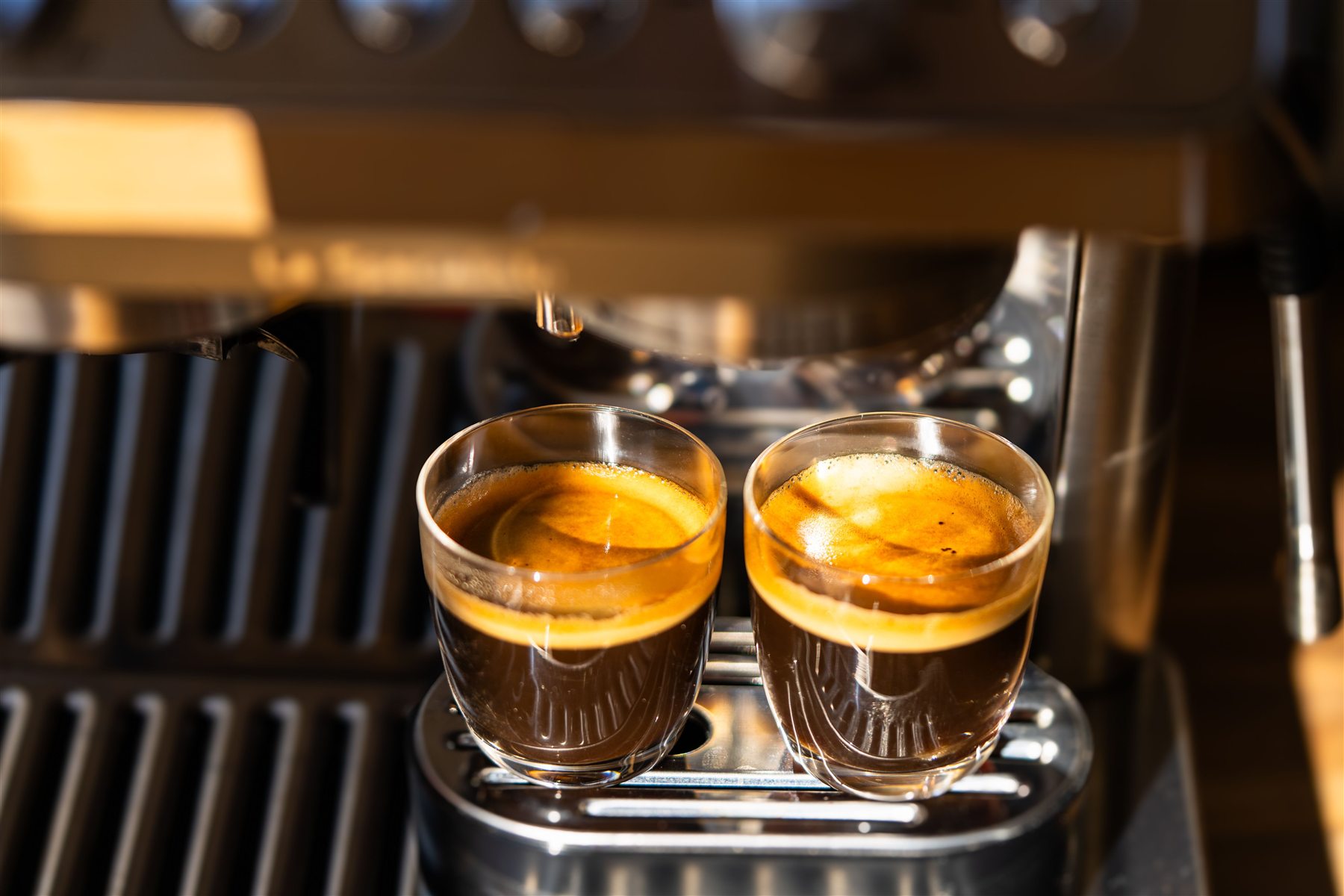
Crema is the characteristic foam on espresso, often ranging from golden-brown to deep brown depending on the beans and brewing conditions. When hot water is forced through fine grounds under pressure, coffee-related gases and substances dissolved or dispersed in the liquid help form a foam system. As espresso leaves the portafilter and pressure falls, some gas emerges as small bubbles.
CO₂ is an important contributor to crema quantity, but crema is not just gas. The properties of the coffee liquid, surface-active compounds, oils and other extraction factors influence foam stability. A thick layer may disappear quickly after pouring, while a thinner layer can last longer under different conditions.
Crema amount can vary with bean type, time since roasting and brewing technique. A thick foam layer alone is not enough to establish espresso quality. Aroma, flavour and consistency should be considered together.
When making LOPHA coffee, crema can offer clues about extraction, but should be assessed alongside aroma, taste, body and aftertaste. Arabica naturally has clearer acidity; Robusta tends towards more pronounced bitterness and fuller body. The final cup reflects raw material, roasting and brewing—not merely the foam on top.
Robusta can often produce substantial crema, whereas Arabica brings other flavour characteristics. But even within Robusta or Arabica, crema changes with roast level, grind and extraction conditions. Foam thickness should not be used to rank the two coffees.
Crema is best seen as a brewing signal, not a substitute for flavour. An espresso with thick crema but harsh acidity or burnt bitterness may still be unpleasant. A better judgement considers both extraction flow and the finished drink.
3. Why can espresso flow change with time after roasting?
Espresso forces water through a bed of finely ground coffee in a short time. For even extraction, water should reach different parts of the bed reasonably consistently. CO₂ released as water penetrates may affect wetting in some areas and thereby alter how water travels through the grounds.
This is one possible reason for unstable extraction when coffee contains a lot of gas, but it is not the only cause. Slight changes in grind, dose, puck distribution or machine temperature can also alter extraction time. An unusually fast flow may reflect water finding a less resistant path, not simply that the coffee was recently roasted.
A better comparison keeps other conditions consistent. If you use 18 g of grounds to produce around 36 g of espresso, maintain similar input and output masses between tests. Record grind size, extraction time, flow appearance and flavour. This is a common illustrative ratio for comparison, not a mandatory recipe for every LOPHA coffee.
When changing one factor, such as grind size, record the adjustment rather than treating the brews as perfectly equivalent. Several controlled comparisons are more useful than looking at the crema on one cup and drawing a sweeping conclusion.
Two coffee batches that look similar can still degas at different rates because of roast level, storage time and grinding. Recording when beans are used after roasting can therefore be helpful alongside familiar parameters such as dose and grind size.
CO₂ should not be blamed for every espresso that runs too quickly or too slowly. Before attributing the result to freshness, check grind, dose, puck distribution and machine temperature. Changing only one variable at a time makes differences easier to identify.
4. Why does ground coffee swell when water enters a phin?
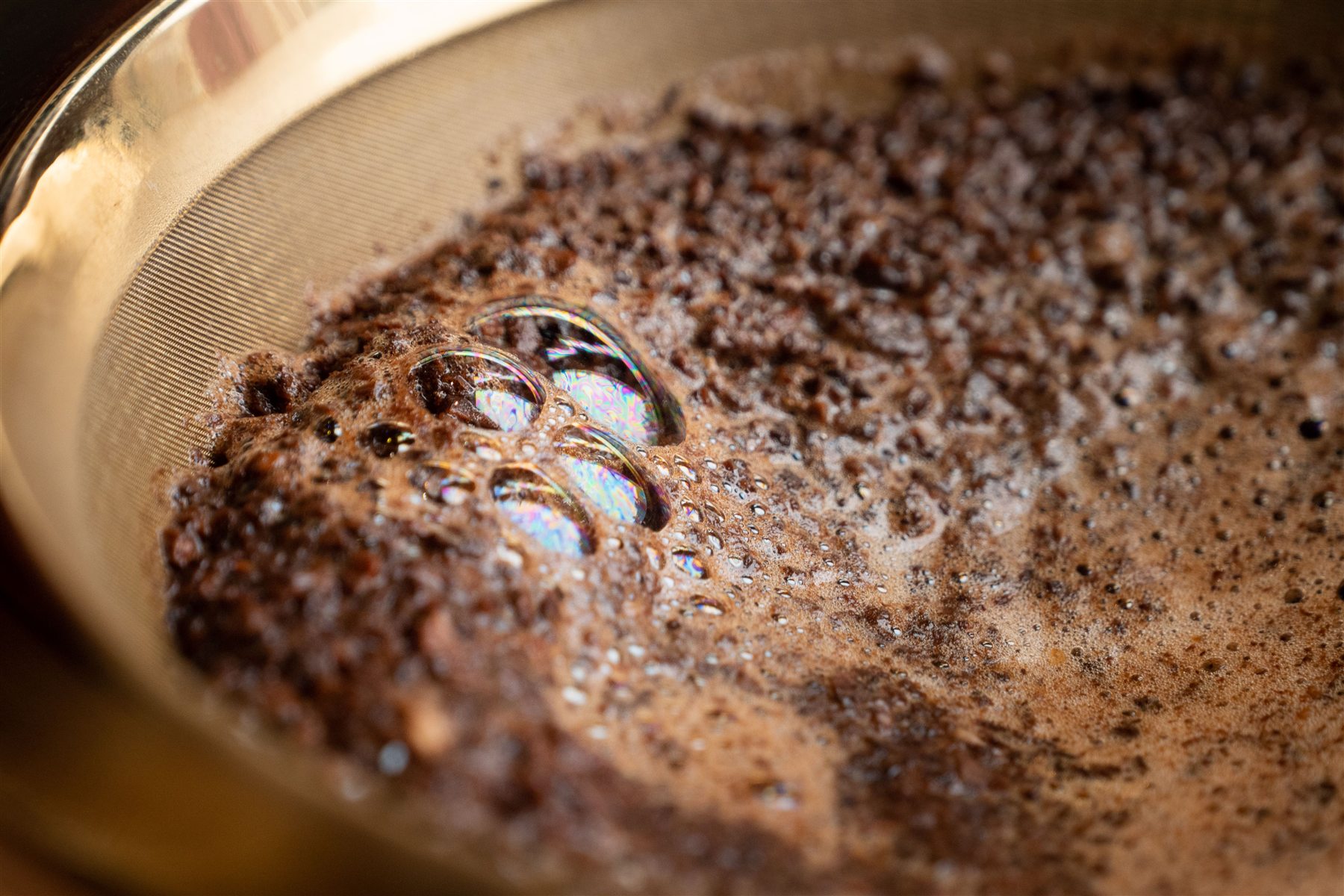
In a Vietnamese phin, water passes through coffee mainly under gravity. Without the extraction pressure used by an espresso machine, the most visible effects during initial wetting are often swelling grounds, rising bubbles and spreading aroma. Some of this comes from hot water displacing gas trapped in the grounds.
In many filter-brewing methods, initial wetting that allows gas to escape is called the bloom. A similar effect can occur in a phin. As water enters small spaces between particles, air and CO₂ can escape and cause temporary swelling or bubbling.
The bloom also depends on how water is poured. A large, forceful pour can disturb the grounds and create bubbles through water movement. Cooler water or a different grind size may produce another appearance. Pre-ground coffee stored for some time generally contains a different amount of gas from freshly ground beans.
This is why a dramatic bloom is not a certificate of pure or better coffee. A good phin cup also depends on grind, dose, water, the phin itself and storage. Blooming is another observation about brewing, not a replacement for tasting.
To see the effect more clearly, pour in enough water to wet the grounds, wait briefly according to your normal method, then add the rest. This is a home experiment, not a specific LOPHA operating parameter or a mandatory rule for all phins.
5. Do more crema or bubbles mean better coffee?
A common belief is that more crema always means better espresso, or a phin that bubbles vigorously proves the coffee is clean. Both ideas are too simplistic. Crema varies with Arabica-Robusta ratio, roast level, freshness, equipment and other factors. Bubbles in a phin cannot distinguish every ingredient or processing method either.
Imagine two espressos made from whole coffee beans. The first has thick crema but a harsh, unbalanced taste; the second has moderate crema, clearer aroma, a pleasant flavour and an enjoyable finish. It is hard to defend calling the first cup better solely because it contains more foam. The drink should be evaluated as a whole.
Likewise, a phin that produces little foam is not automatically proof that the coffee is old or adulterated. The beans may have rested longer after roasting, been ground earlier, reached a different roast level or been brewed with a different pour. Each possibility deserves consideration.
Repeatability is a more useful test: does the coffee give reasonably consistent results when the product, equipment and conditions are kept the same? If results vary, check the grinder, water temperature and time after roasting. CO₂ then becomes a clue for understanding the process, not an absolute score.
6. Compare two brews to recognise the differences
To explore changes after roasting, try a small experiment at home or at a coffee counter. Choose one LOPHA whole-bean coffee that suits your preferred brewing method. On two different occasions, use the same dose, grind setting and equipment. Record the roast date if stated on the bag, the opening date and how the coffee was stored.
6.1. What to observe when making espresso
For espresso, note the dose, beverage yield, flow time, approximate crema thickness just after extraction and flavour. Make sure the machine has reached stable operating conditions. If a café uses a grinder, check the actual dose rather than relying only on grinding time.
6.2. What to observe when brewing with a phin
For a phin, use the same amount of ground coffee—20 g in each test, for example—and keep water temperature, total volume, pouring technique and phin type consistent. Watch the first moments of wetting and record when dripping begins. Most importantly, taste the cups at similar temperatures so serving temperature does not distort the comparison.
The results may not follow a single pattern. Crema may decrease while flavour becomes more balanced; the phin may bloom less yet retain a pleasant aroma. Beans differ, and storage conditions may change between tests. For a more rigorous comparison, repeat the brews and invite another person to taste without revealing which sample came first.
This simple experiment does not measure the exact amount of CO₂. It helps you notice how coffee changes between brews and choose techniques suited to your preferences.
A simple record sheet can include bag-opening date, bean or ground format, coffee dose, water volume, grind, flow time and flavour notes. For espresso, add beverage mass; for phin, note when dripping begins and how the water penetrates the grounds. This offers a firmer basis for comparison than two crema photographs alone.
7. Adjusting your brewing method while coffee contains plenty of gas
When freshly roasted coffee produces inconsistent espresso, the answer is not necessarily to wait a very long time or change several settings at once. Check the machine, puck preparation, dose and grind. Adjust one factor at a time, then watch the flow and taste the result. This makes it easier to identify what actually helped.
For a phin, pay attention to the initial wetting: pour gently so the grounds become evenly saturated, then continue with your usual recipe. Avoid vigorous stirring if you are comparing blooming between brews. Likewise, do not change the grind, water amount and phin filter pressure all at once, or the reason for a change in drip rate will be unclear.
Let your brewing method and taste preferences guide your coffee choice. Someone who enjoys Arabica's clear acidity may react differently from a drinker who prefers bold, distinctly bitter Robusta; blends offer another experience. If you use whole beans, grinding only what you need before brewing reduces the time grounds are exposed to the environment.
For lovers of bold Robusta or clearly acidic Arabica, post-roast gas is just one part of the experience. You can choose beans suited to your equipment through LOPHA's online shop, then adjust brewing through actual tasting rather than crema thickness alone.