Packaging Coffee to Protect Its Flavour
Summary: Coffee can be roasted to the desired flavour and still lose quality if it is exposed to air, moisture or unsuitable temperatures. Appropriate packaging provides protection between the factory and the cup. In LOPHA’s journey, packaging is not merely about appearance: it helps preserve the coffee that earlier stages worked to produce.
Why coffee keeps changing after roasting
Opening a fresh bag of coffee can fill an entire kitchen with aroma. Leave the same coffee in an unsealed container for several days, however, and the experience may begin to change. Coffee continues to interact with its surroundings after roasting, even if the changes are not immediately visible.
Roasted-coffee quality does not stop mattering when the roaster is switched off. Roasting develops the flavour, while packaging and storage help preserve the result until someone prepares a drink. Both stages belong to the same quality journey.
A strong aroma from the beans alone does not describe everything about the eventual cup. Coffee that still smells intense can brew unevenly if its condition has changed or if extraction is unsuitable. Packaging helps protect the product but cannot replace correct brewing or an appropriate roast.
How oxygen, moisture, heat and light affect coffee
Oxygen is often mentioned first. When coffee contacts air, some compounds can undergo oxidation, leading to changes in aroma and flavour over time. Heat and light may also accelerate unwanted changes under certain conditions. Reducing unnecessary exposure is therefore a practical objective of packaging.
Moisture is another concern. Roasted coffee can exchange moisture with its surroundings if its container does not protect it adequately. A kitchen filled with steam from cooking or a poorly sealed storage area may create unsuitable conditions. Keeping coffee reasonably dry helps protect its quality.
Odours from the environment matter as well. Coffee may be affected by storage near strongly scented substances, shared containers or damaged packaging. Customers often focus on the roast date, but where and how a bag is kept can influence the experience long after it leaves the factory.
How a suitable bag protects coffee
Suitable packaging creates a barrier between the coffee and its environment. Protection against oxygen, moisture and light depends on the materials used, their layers and the construction of the bag. A one-way valve may be appropriate when roasted coffee continues to release gas, depending on the product and packaging design.
The seal is particularly important. Even materials with good moisture-barrier properties become less effective if the bag has a gap along its closure. Packaging checks should therefore consider the integrity of the seal rather than judging only the outside appearance.
Information printed on the pack also helps customers store and use coffee responsibly. Production and best-before dates provide useful reference points, while lot codes support traceability. Storage instructions give the customer practical guidance after purchase.
Packaging whole-bean and ground coffee differently
There is a significant difference between whole-bean and ground coffee: the surface area exposed to the environment. Grinding creates countless new exposed surfaces, so ground coffee may lose or change some aromas more quickly if it is not protected.
If you have a grinder and a suitable brewing setup, buying whole beans and grinding them just before use is an approach many coffee lovers prefer. Ground coffee is still a convenient choice, but its package should be closed carefully and used appropriately after opening.
Grind size should not be confused with freshness. Coffee ground for a Vietnamese phin may be unsuitable for espresso, and a difference in brewing results may come from particle size rather than age. Both the coffee format and the preparation method influence the final cup.
For cafés with high consumption, repeated opening of a large bag exposes coffee to air many times. Setting aside a practical amount for a work shift while protecting the remaining coffee can help reduce unnecessary exposure during daily service.
Storing coffee after opening the bag
Coffee is generally best stored in a clean, relatively cool, dry place away from strong odours and direct sunlight. After taking out the amount needed, seal the bag well or place the coffee in a suitable airtight container. Regular care matters more than complicated storage tricks.
The refrigerator is not automatically the best place for coffee that is opened every day. Refrigerated spaces contain moisture and food odours, and taking coffee in and out can create temperature changes and condensation risks. Storage choices should suit the actual conditions and the way the coffee is used.
Another mistake is buying far more coffee than needed simply because the price per gram looks attractive. If consumption is slow, an opened bag may remain exposed for an extended time. Choosing a package size that suits your routine can be more useful than keeping a very large amount for too long.
If coffee develops a musty smell, an unusual odour or clear signs of damaged packaging, do not try to disguise the problem by brewing it stronger or roasting it again. Unusual signs call for careful consideration of the product’s condition rather than an attempt to hide them.
Protecting quality from the factory to the cup
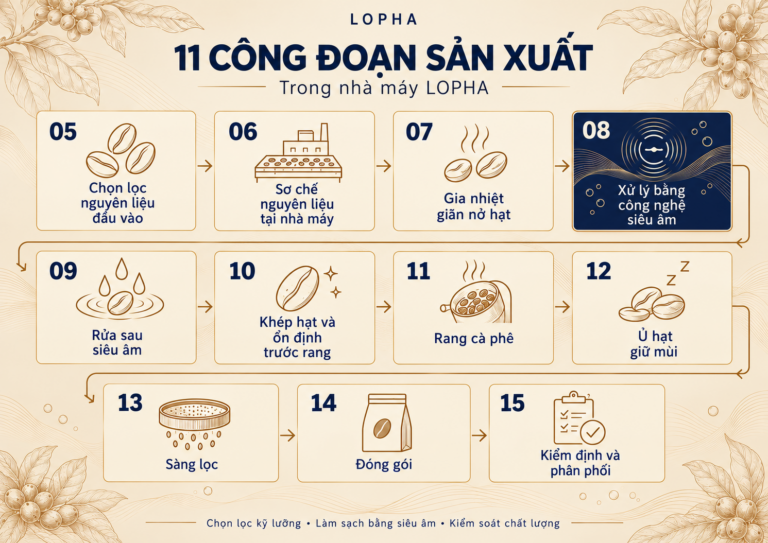
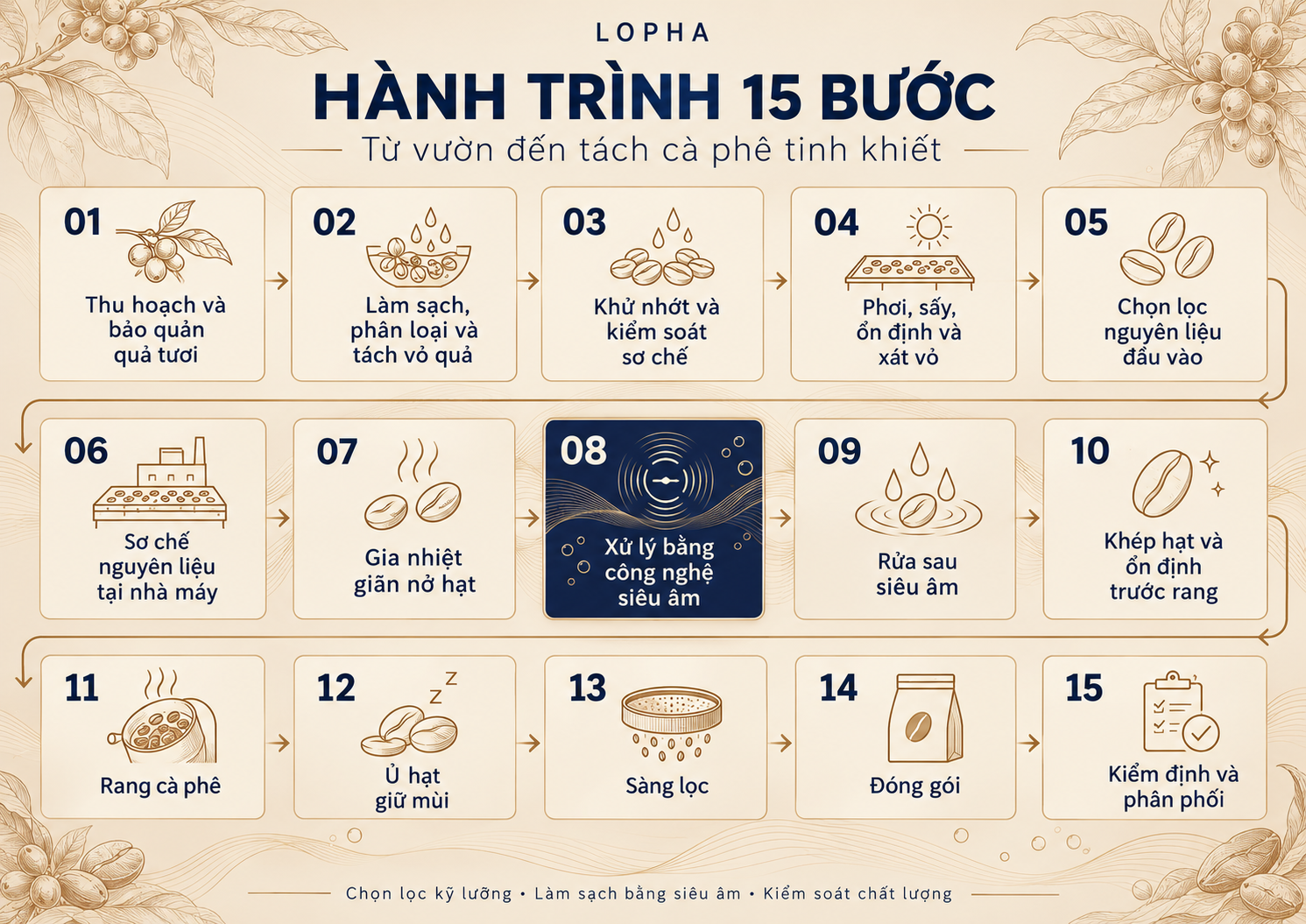
Within the full journey, packaging follows roasting, resting and sorting. It does not create the coffee’s flavour from the beginning; it helps preserve the result of those earlier stages during storage, distribution and use.
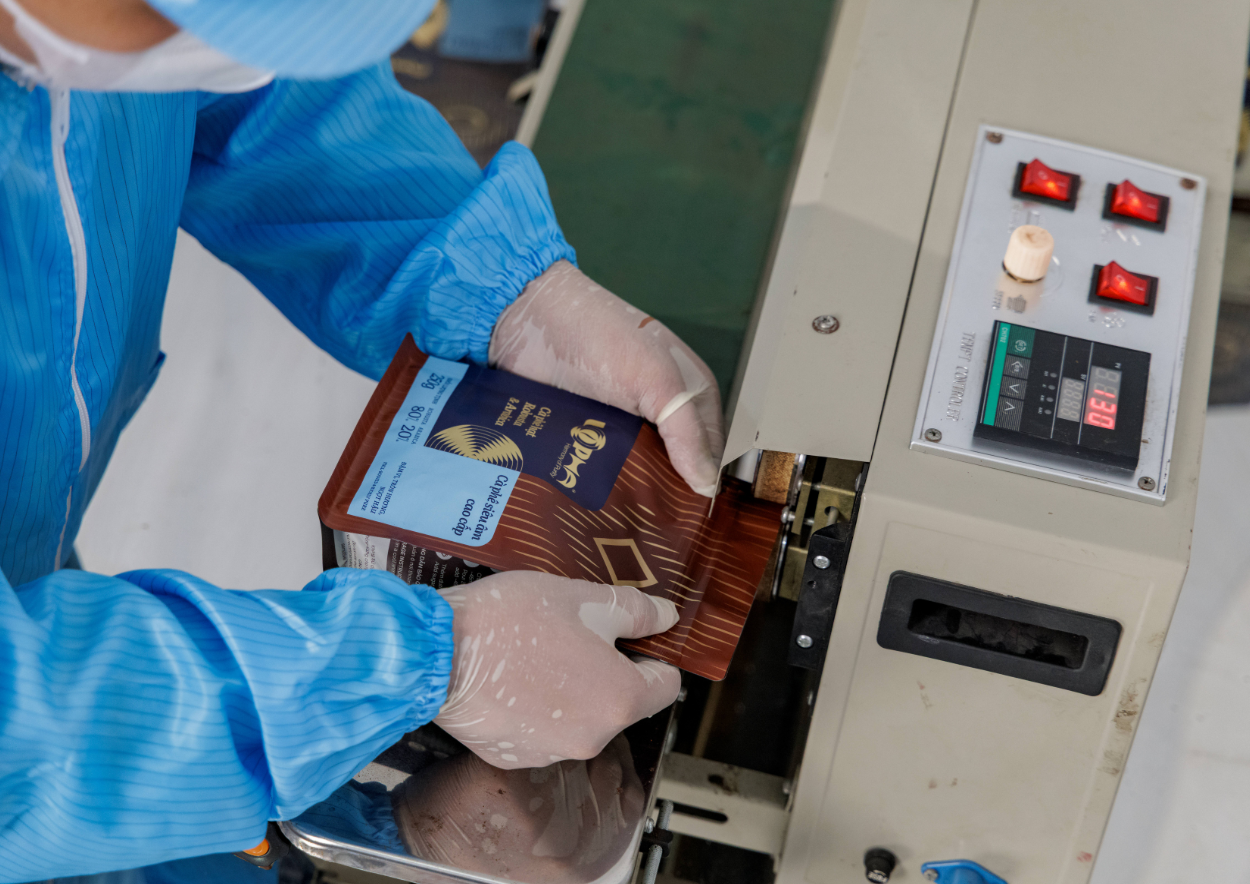
At the factory, packaging quality involves selecting suitable materials, checking seals and recording batch information. Once the product leaves, transport and storage conditions continue to affect how well the packaging can protect it.
Customers also play a role in the final part of the journey. By choosing a suitable pack size, keeping coffee dry and sealed, and using it within a sensible period, each person helps preserve the quality built through production.
For LOPHA, the coffee journey is complete only when the roasted product remains protected through packaging, distribution and use. Care at this stage connects the factory’s work with the customer’s everyday experience.
Suitable packaging helps preserve coffee aromas
Coffee does not stop changing when it leaves the roaster. Every protective element—from packaging materials and seals to storage practices—helps maintain the product’s condition. At LOPHA, good packaging is part of bringing the bean’s character safely and clearly from production to the cup.