LOPHA Ultrasonic Coffee Cleaning Technology
Summary: In LOPHA’s 15-step journey, ultrasonic technology is not a stand-alone demonstration. It receives green coffee that has already been selected, pre-cleaned and heated; afterward the beans must still be rinsed, stabilised and roasted. What matters is how these stages fit together: why suitable inputs are essential, how water quality affects treatment and how results should be evaluated. Only then can we understand the role of this technology within coffee production as a whole.
Why ultrasonic treatment is the eighth step
Before entering an ultrasonic tank, coffee has already travelled a long way. Cherries have been harvested, processed into green beans, stored and transported to the factory for selection, pre-cleaning and heating. Each operation prepares the material for the next. Placing ultrasonics at step eight means LOPHA does not treat the technology as a substitute for all the work that came before. The tank can only process the material that earlier stages have prepared.

In LOPHA’s production process, ultrasonics sit between controlled heating and bean rinsing. This connects the preparation of green coffee with the removal of substances that treatment may detach from its surface. Describing only what happens inside the ultrasonic tank, without the preceding and following steps, would not explain how cleanliness is maintained through the process.
For example, a lot containing pieces of parchment, coarse dust or small stones still needs appropriate mechanical sorting before specialised treatment. Once material has been loosened by ultrasonics, detached residue should not continue along with the beans. Connecting these operations is more meaningful than claiming that a single machine can solve every problem.
How incoming beans affect ultrasonic treatment
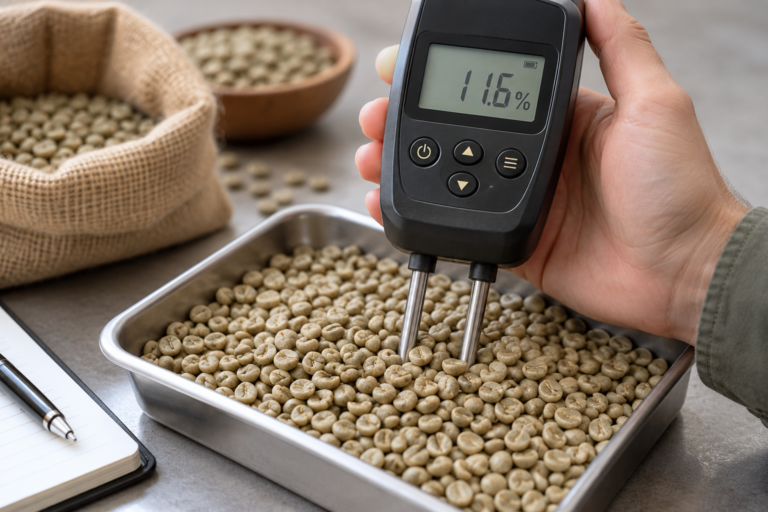
Green coffee beans are not identical from one lot to the next. Moisture, size, surface condition and storage history may vary, influencing how they interact with the treatment environment. Beans that have passed foreign-object screening and quality inspection enter the ultrasonic stage in a different condition from beans containing substantial damage or coarse debris.
A lot rejected at receiving cannot automatically become suitable simply because it enters an advanced treatment tank. Mouldy, spoiled or otherwise unusual beans require their own assessment. Ultrasonics can provide physical action that helps remove appropriate surface deposits; they are not a replacement for rejecting unsuitable raw materials.
LOPHA states that its technology uses ultrasonic frequencies in the range of 20–50 kHz. This figure introduces the technology’s operating principle but does not, by itself, determine the result for any batch. LOPHA explains acoustic waves and cavitation in more detail in its dedicated ultrasonic-technology content. Here, within the 15-step journey, the more important point is how bean condition, treatment water and the next stage work together.
Why water quality and treatment conditions matter
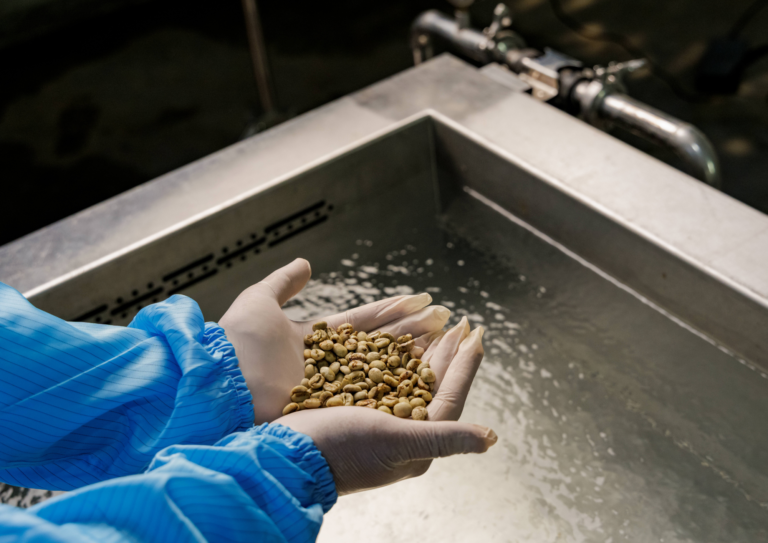
Ultrasonic cleaning takes place in a liquid. When sound waves travel through water, cavitation can occur, creating physical effects that help loosen material adhering to suitable surfaces. Yet water that comes into direct contact with coffee must still meet food-production hygiene requirements. Processing technology does not make unsuitable water safe for use with food.
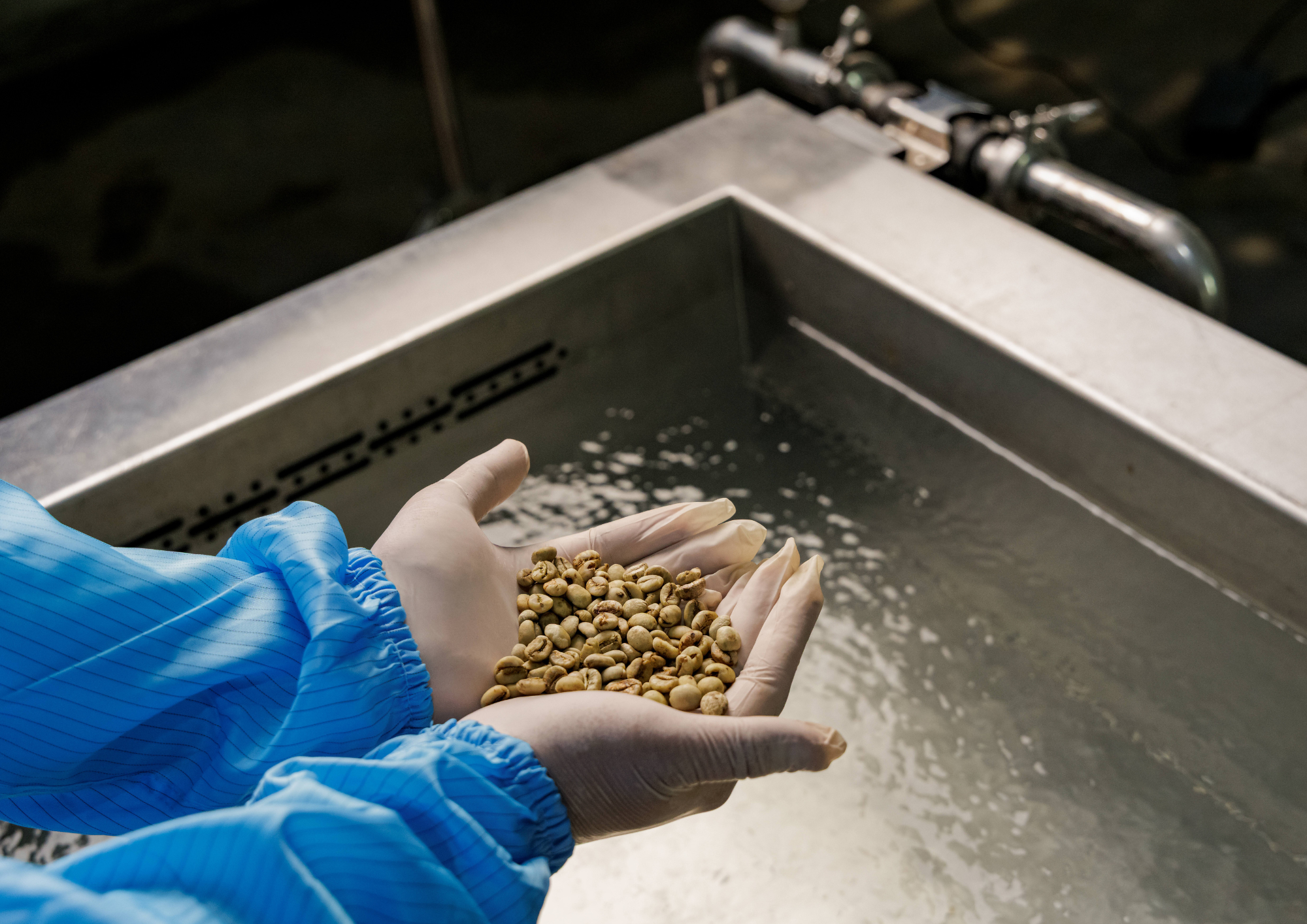
Imagine rinsing a clean utensil in dirty water: the act of rinsing would defeat its own purpose. The same applies to coffee beans. Water condition and the management of released residue influence treatment quality. Tank hygiene, the quantity of beans loaded and the way conditions are maintained should all follow actual operating procedures; the machine’s name alone proves nothing.
Technology is valuable when it helps perform a defined task in the production line. Ultrasonic waves do not replace green-bean selection or independently establish that every finished-product test has been passed. To assess LOPHA’s eighth step, we should ask whether the beans were suitable beforehand and what happens to the substances detached during processing.
From the ultrasonic tank to bean rinsing
Some deposits may loosen or detach from bean surfaces during treatment. But detaching residue does not mean it has disappeared from the environment in contact with the coffee. Without a subsequent step, it may remain in the water or travel farther along with the beans. That is why post-ultrasonic rinsing performs a separate task.
LOPHA places rinsing immediately after ultrasonic treatment. Rinsing helps remove loosened material from the bean stream while requiring hygienic water and equipment to reduce recontamination. The two stages are next to each other but have different functions: one uses physical effects from sound waves, and the other carries away material that has been separated.
After rinsing, the moisture and physical condition of the beans must be prepared for roasting. That is why stabilisation follows directly afterward. Consider these three steps together—ultrasonics, rinsing and stabilisation—and a connected sequence becomes clear: loosen surface residues, remove them from contact with the beans, and prepare the beans for heat during roasting.
What ultrasonics add to earlier cleaning steps
When green coffee arrives at the factory, screens and other mechanical sorting methods can separate materials according to size, weight and readily observed physical properties. Stones, parchment pieces or large foreign objects are best removed where those methods are most suitable, rather than carried forward to later operations.
Ultrasonics are added after these steps to help deal with a different type of surface deposit through physical effects in water. This does not make ultrasonics better than screening in every situation: they serve different purposes. Removing coarse contaminants first allows the water-based process to focus on tasks that suit its mechanism.
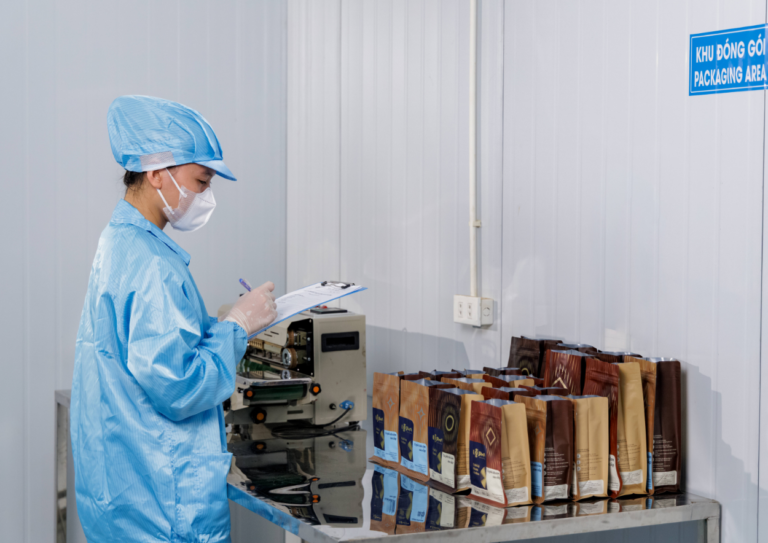
A production line with several layers of control is easiest to understand by considering what each layer does. Incoming selection assesses the beans; pre-cleaning reduces foreign objects; heating prepares their condition; ultrasonics provide water-based cleaning; and rinsing and stabilisation prepare the beans for roasting. No stage should be expected to do more than its actual function allows.
How cleaning results can be verified
Believing that modern technology must make coffee completely clean is not enough to judge the product. Different questions call for different tests: suitable visual criteria may help assess surface condition, while certain microbiological and chemical indicators need specialised laboratory methods. A claim of cleanliness should be connected to the specific parameter being evaluated.
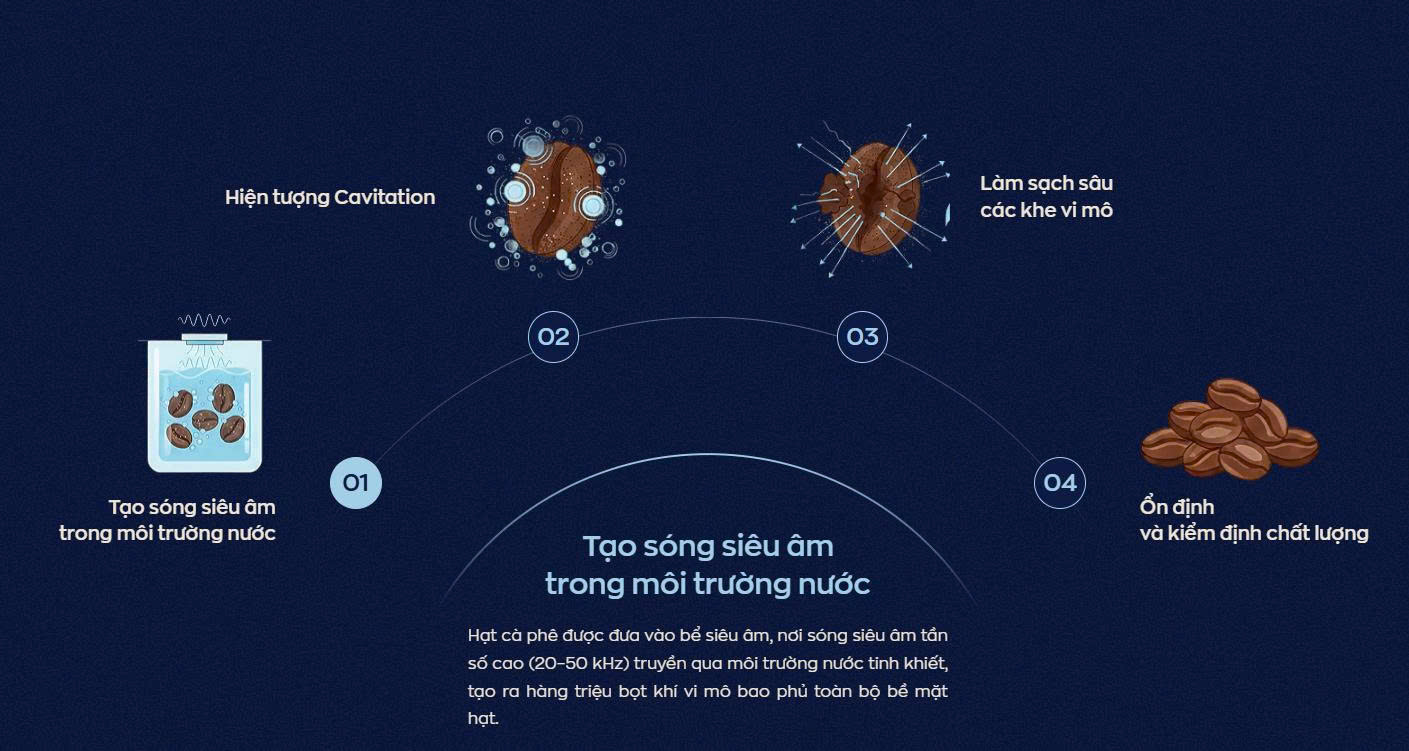
Cavitation can support cleaning under particular conditions, but results for individual contaminants are not necessarily identical. Treatment effectiveness depends on the material present, the condition of the beans, the water and the operating parameters. For this reason, any statement about removal performance should be assessed according to what was measured, rather than assumed to apply universally to every hazard.
At LOPHA, ultrasonic treatment forms part of a journey that also includes raw-material selection, screening, rinsing, roasting and quality inspection. The ultrasonic stage should therefore be evaluated as one component of a coordinated system, not as proof that all product safety and quality requirements have already been met.
How ultrasonics relate to flavour after roasting
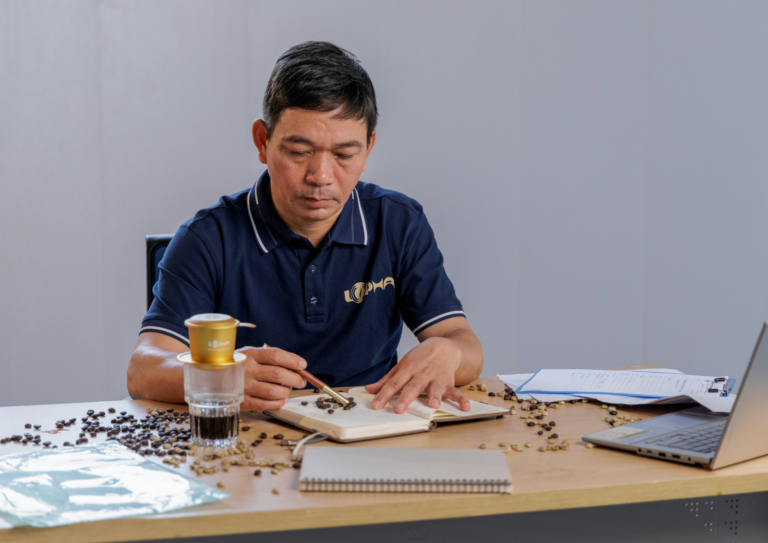
Coffee lovers care about the aroma and taste in their cup. It is natural to wonder whether a treatment before roasting changes those sensations. But flavour emerges from a long series of influences: variety, growing conditions, post-harvest processing, moisture, roasting and brewing. We cannot attribute every difference in the cup to the ultrasonic stage alone.
Robusta may have a strong body, noticeable bitterness and a lingering finish. Arabica often expresses clearer acidity, varied aromas and a different drinking experience. These qualities reflect characteristics of the beans and their preparation. Ultrasonic treatment is intended as a cleaning operation within that broader journey, rather than a way to make all varieties taste alike.
This gives the story a better balance. We can value a new technology without dismissing the role of the farmer, the raw material or the roaster. The cup is the outcome of many linked decisions, and each needs to be understood within its own scope.
The value of ultrasonic processing at LOPHA
Across the 15-step journey, ultrasonics are a distinctive element, but they do not stand alone. The equipment receives selected and prepared raw material, and the beans continue through rinsing, stabilisation and roasting afterward. Its role becomes meaningful through this connection with the rest of the line.
For a brand focused on pure coffee, clearly explaining what a process does matters more than making sweeping promises. LOPHA uses ultrasonic technology as one defined part of its approach to processing coffee, alongside care for raw materials and the stages that follow.
The eighth step shows how science can contribute to work that coffee drinkers rarely see in their cup. From here, the beans move onward through washing, preparation for roasting and the remaining steps that bring LOPHA coffee closer to the person enjoying it.