Small Foreign Objects in Green Coffee and How to Control Them
Summary: A sack of green coffee needs more than good-quality beans: it must also be checked for materials that do not belong in coffee. Small stones, husk fragments and other foreign objects may enter at various stages. Understanding how to detect and prevent them shows why mechanical cleaning remains important even when a factory uses more advanced processing techniques.
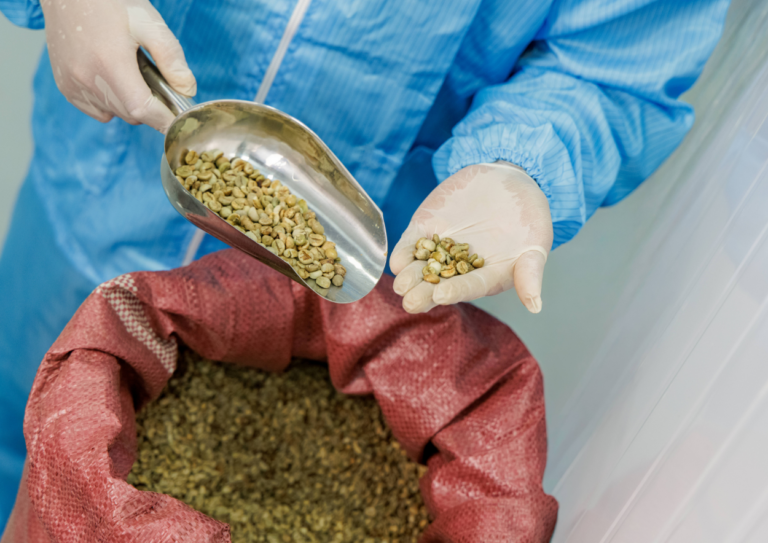
When we look into a sack of green coffee, almost everything we see is beans. But a tiny stone, a metal fragment or a few pieces of dry husk can change the quality picture. These are neither bean defects nor natural features worth preserving. They are foreign objects that must be controlled before the material enters further production equipment.
Some foreign objects are so small that they are hard to notice in a thick layer of beans. Selecting good coffee is therefore not enough: identifying unwanted materials also matters for equipment safety, cleanliness and reliable operation. Within LOPHA's journey, mechanical cleaning at the factory has its own role that ultrasound does not fully replace.
1. What counts as a foreign object in green coffee?

Foreign objects are non-coffee materials that may be present in a raw-material lot. Examples include small stones, sand, twigs, leaves, dry husks, sack fibres and sometimes metal fragments. These materials come from different sources and require different ways of controlling them.
Foreign objects should not be confused with defects in the coffee beans themselves. Insect-damaged, broken or immature beans are still coffee, even when they are unsuitable for a lot. Stones and sack fibres are not coffee raw materials at all. This distinction helps producers choose the correct removal methods.
Some foreign objects stand out because their colour or shape differs from a bean's. Others are similar in size or colour to green coffee, making visual identification difficult. Effective removal often requires a combination of techniques rather than one round of hand-picking.
2. Where can foreign objects enter a coffee lot?
Coffee makes contact with many surfaces before arriving at the factory. Cherries are picked in the field, collected, transported, pulped, dried, hulled, bagged and delivered for further production. Each stage has different working conditions; without suitable controls, unwanted materials may travel with the coffee.
2.1. From the growing area and initial processing
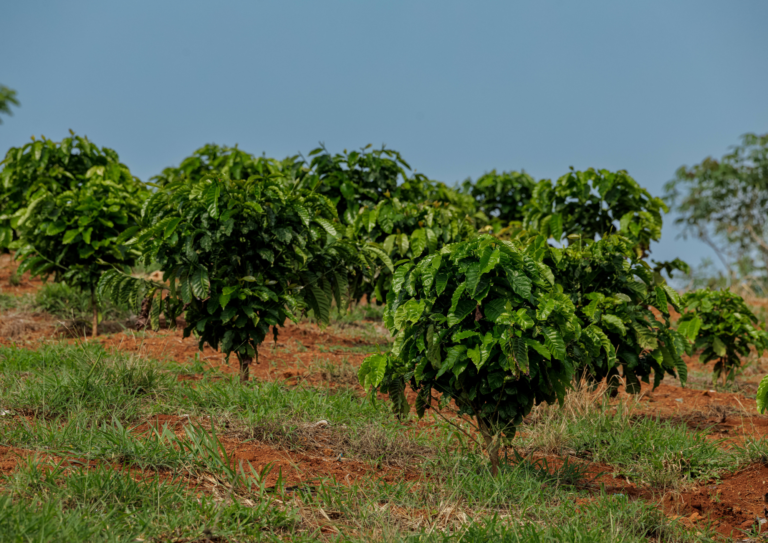
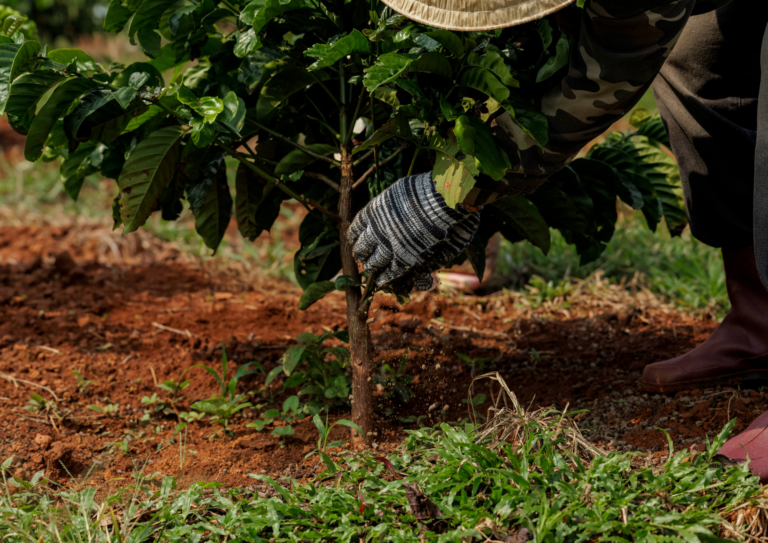
During harvesting, leaves and small twigs can fall into containers. Drying areas and activities involving contact with the ground can also introduce soil and stones if layout and hygiene are inadequate. After hulling, remaining pieces of husk need particular attention during screening.
One piece of dry husk does not automatically prove that an entire processing system is faulty. But an unusually high quantity can point to sorting procedures, cleaning practices or equipment conditions that need review. Finding the source of a problem is more effective than waiting to remove foreign objects only at the end of the line.
2.2. From bags, transport and equipment
Fraying sacks, unchecked utensils and worn machinery parts can add unwanted materials. Repeated transfers also expose the beans to more surfaces along the way.
Foreign-object control therefore begins with cleanliness and raw-material management, not just a screening machine. The earlier such materials are prevented from entering, the easier it is for later stages to perform their intended work.
3. Why do even small foreign objects matter?
A stone does not contribute to coffee flavour, but it may jam, strike or wear down machine parts if it passes through unsuitable equipment. Metal fragments introduce different risks and often need dedicated control measures. Unwanted materials can also reduce lot uniformity and increase sorting work before roasting.
For coffee drinkers, the basic expectation is straightforward: the product should be made from appropriate raw materials, without non-coffee objects mixed in. Yet it would be wrong to assume that one cleaning machine removes every foreign object. Each method has its own abilities and limitations depending on material, size and location.
Unexpected stoppages or reprocessing affect operational reliability as well. That is why foreign-object control protects both the beans and the stability of the production line. This preparatory care is rarely visible in the cup, yet helps prevent avoidable problems.
4. Common methods of foreign-object control work together

The right approach depends on the raw material, equipment and production requirements. Mechanical screens may separate foreign materials whose sizes differ from the target beans. When materials differ in weight or how they move through air, suitable air- or gravity-based separators may also help.
4.1. Screening and visual inspection
Screens remove items that are too large or too small relative to the target bean size. However, a foreign object similar in size to the beans may pass through the same mesh. Screening should therefore not be regarded as the only solution.
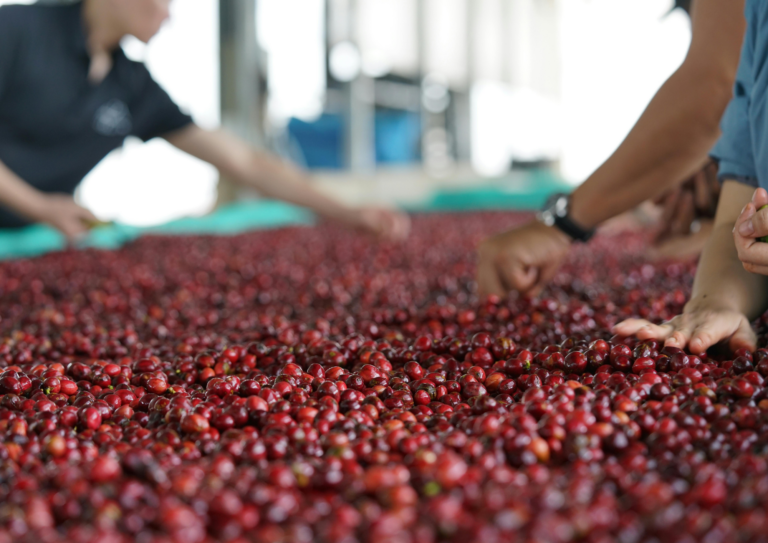
Visual inspection provides additional value, especially for unusual colours or shapes. Manual checking also has limits when volumes are large or foreign objects lie deep within the beans. A sensible combination of equipment and observation increases the chance of detecting problems.
4.2. Specific controls for particular materials
Metal has different properties from husks or stones. Depending on the production system, specialised measures for metallic material may be considered to control the relevant risk. These methods should not be treated as interchangeable, nor should the presence of one device be presented as proof that all foreign objects have been removed.
For LOPHA, mechanical cleaning at the factory is a preparation stage before ultrasonic treatment. Giving each stage a clear purpose avoids the mistaken assumption that cleaning the bean surface can replace every screening and foreign-object separation operation.
5. Why can't ultrasound replace foreign-object removal?
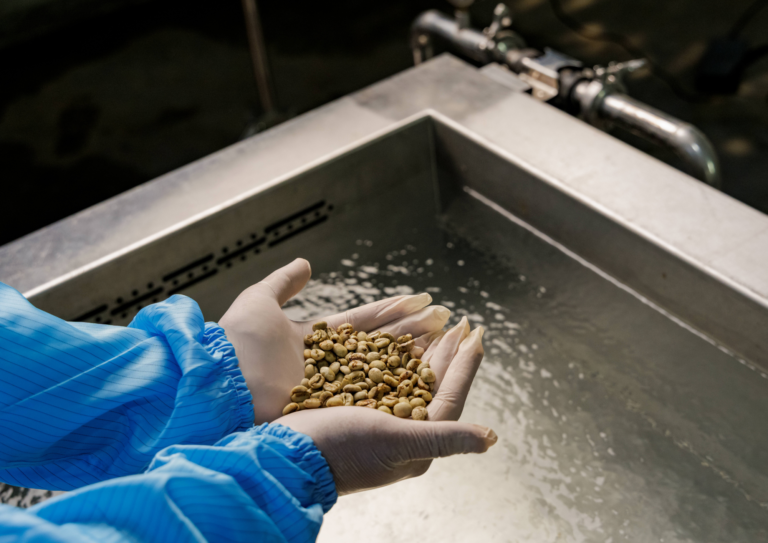
Ultrasonic technology creates physical effects in a liquid that may help detach certain substances adhering to the raw material's surface. But stones, metal and sack fragments loose within a mass of beans are different from dirt attached to the bean surface. They need to be recognised and separated by appropriate mechanisms.
Assuming ultrasound handles every foreign object would overlook the screening and inspection stages before it. Conversely, using only dry screening without considering surface cleaning may leave other concerns inadequately addressed. LOPHA's 15 stages connect because each focuses on a distinct set of requirements.
This explains why a factory uses several cleaning steps. Repeating the word 'cleaning' does not mean the operations are identical: screening foreign material, treating the bean surface, rinsing and managing bean condition each have a specific role.
6. What level of foreign-object reduction is good enough?
No universal percentage for every type of foreign object and every coffee lot can be established by observation alone. A metal fragment and a piece of dry husk have different implications, so their evaluation must differ too. An assessment requires clarity about the material checked, the test or removal method used and its limits.
For coffee buyers, an impressive percentage without any explanation of what was measured is not particularly helpful. It is more trustworthy to know that the lot passes through purposeful controls that are monitored and capable of detecting and addressing unusual conditions.
A quality-focused producer must distinguish what has actually been checked from what cannot yet be claimed. This is the approach LOPHA aims to take, from incoming-bean selection to final product inspection.
7. Clean beans begin with removing what does not belong
Small foreign objects are rarely mentioned on product labels, but controlling them is a real part of coffee production. It connects the growing area's raw-material quality with factory operations and helps subsequent processing stages fulfil their intended roles.
No single stage can replace care throughout the process. When raw materials are sorted clearly, equipment is cleaned appropriately and foreign objects are managed through suitable methods, the beans are better prepared for the remaining treatment steps.
Removing what does not belong in coffee may be one of the quietest tasks in the process. Yet these small actions help protect a cup made from suitable raw materials, rather than relying on last-minute troubleshooting.