Selecting Incoming Coffee Raw Materials
Summary: A lot of green coffee beans may look appealing at first glance without necessarily being suitable for production. Before using it, a factory needs to understand the coffee’s origin, storage history, moisture content and any unusual signs. At LOPHA, raw-material selection is the first of the factory’s 11 stated production stages and the fifth step in the complete 15-step journey.
Receiving coffee means more than weighing it
When a lot of green coffee arrives at the factory, the first visible tasks are often counting the bags and checking their weight. But weight only tells us how much coffee has arrived, not whether it is suitable for production. Two lots of the same weight may differ considerably in origin, moisture level, uniformity or defects that arose during primary processing.
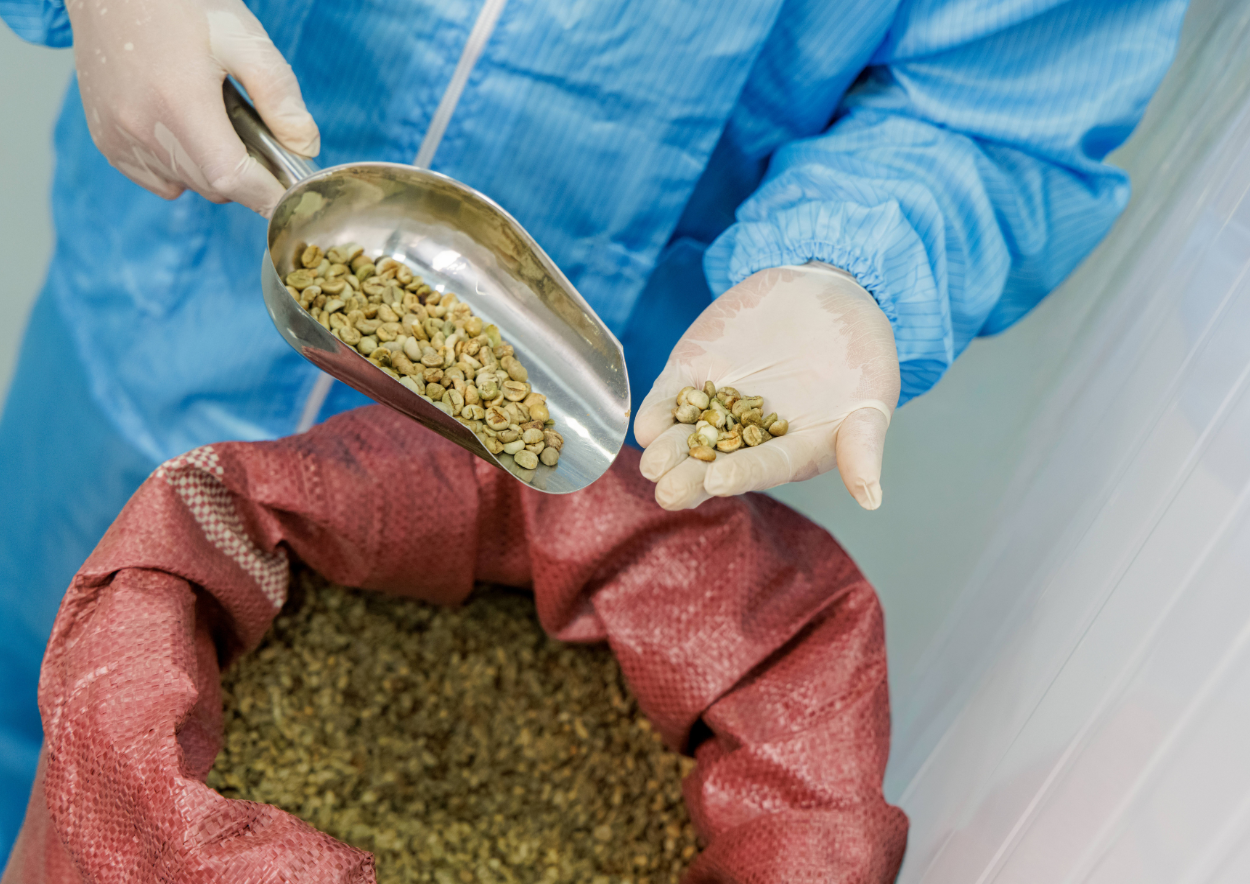
Incoming quality inspection therefore assesses the actual condition of coffee before it proceeds through production. The aim is not only to find defective beans but also to confirm the information needed to monitor the process. Once the factory understands the condition of its incoming material, it has a sound basis for adapting subsequent steps to the product requirements.
Receiving inspection must not be confused with finished-product testing. Before production, the aim is to assess the material and identify risks; afterward, it is to check that the product meets applicable requirements. Both are important, but they answer different questions.
Batch origin helps track quality
A green-coffee lot should be identified before it is mixed with other material. Useful details often include the lot name or code, supplier, coffee type, quantity, delivery time and processing information when available. The clearer the records, the easier it becomes to investigate any difference in quality.
For example, two bags labelled Robusta may come from different growing areas or harvest periods. If they are combined without recording those differences, it will be harder to trace the cause of inconsistent results during roasting. When the lot code is retained, staff can compare inspection findings with the original source.
Traceability does not mean every detail has to be printed across the entire raw-material bag. What matters is having a record system that reliably connects information to the correct lot. A short code that leads to dependable records can be more useful than pages of disconnected notes.
LOPHA approaches quality through the full journey of the bean, so incoming information links the growing and primary-processing stages to the factory. Maintaining that link makes it possible to trace back through cleaning, heating, roasting and packaging whenever product quality needs to be assessed.
Examining beans and recognising unusual signs
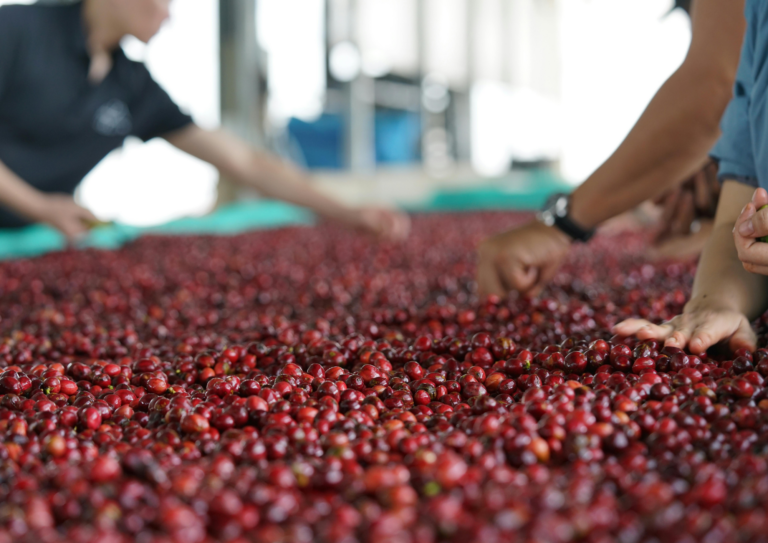
Sensory inspection offers a quick initial assessment before specialised equipment is used. Inspectors can observe colour, remaining parchment, cracked or broken beans, black beans and visible foreign matter. The smell of green coffee may also offer clues about storage or processing problems.
A lot with an obvious mouldy odour warrants more careful examination than one with a typical green-coffee smell. Odour, however, is only an initial signal. Appropriate testing is still needed to understand the cause or establish safety. Sensory inspection and specialised tests complement each other rather than replace one another.
Colour alone is not a reliable measure of whether coffee is good or bad. Arabica, Robusta, different processing methods and storage conditions can all produce different appearances. A light-coloured bean is not necessarily better than a darker one in every case; the important question is whether its appearance suits the type of raw material and the defined criteria.
Visual and sensory inspection is useful when it is conducted on representative samples and recorded consistently. If an inspector only examines beans from the outermost bag, problems elsewhere in the lot may be missed. Observation should therefore be combined with appropriate sampling and necessary measurements.
Moisture and defects must be assessed together
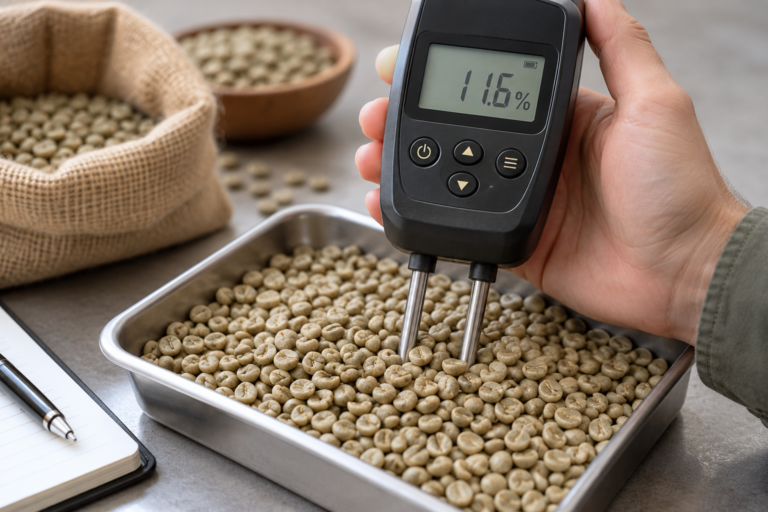
Moisture content affects storage and roasting. Green coffee that is too moist or has absorbed water again can create storage risks; moisture differences within a lot can also make even processing more difficult. That is why measuring moisture is a common concern when coffee is received.

Still, a moisture number cannot represent overall quality. A lot within a suitable moisture range may contain insect-damaged, broken or black beans, or foreign objects. Conversely, seeing a few defective beans is not enough to reject an entire lot without appropriate sampling and assessment.
Green-coffee defects can originate at many stages. Some relate to the harvested fruit, primary processing or storage; others arise from mechanical damage. For a fair assessment, defects should be evaluated using suitable classification methods rather than a vague impression that a lot “doesn’t look good.”
From LOPHA’s perspective, considering moisture, defects and material condition together helps protect later production stages. Even when a lot meets one requirement, other relevant criteria still need checking. Incoming quality control should never be reduced to a single measurement.
How to take meaningful samples
Not every factory can inspect every bean in a large lot. A practical solution is to sample in a way that suits the lot’s size and characteristics. Samples should reasonably reflect different parts of the lot rather than be chosen subjectively from the best-looking beans or easiest-to-reach bags.
Imagine a truck carrying many sacks of coffee. Sampling only from the top could overlook bags lower down that have experienced different conditions. Combining non-uniform groups into one sample without documenting their differences can also make the findings less representative.
After collection, samples need clear identification so they are not confused with another lot. The inspection time, responsible person and measurement method can be recorded under the applicable procedure. These details may sound administrative, but they are extremely helpful when an unusual result needs to be checked again.
Representative sampling is not a guarantee that every defect will be detected. It reduces the risk of making decisions from too few observations. When there are signs that a lot is uneven, the sampling plan may need to be adjusted or expanded. Reliable results always depend on how the sample was selected.
What happens when raw materials are unsuitable?
Not every unusual sign calls for the same action. A lot with excessive remaining parchment may need further sorting, while coffee that smells mouldy or shows deterioration requires more cautious assessment. Distinguishing these issues helps avoid two errors: rejecting material without adequate grounds or pushing unsuitable material into production.
An important principle is not to mix a questionable lot with accepted material until an appropriate decision has been made. Premature mixing makes problems harder to trace and may affect coffee that already meets the requirements. Where necessary, a suspect lot should be clearly identified and kept separate for further assessment.
The team can then check records, take additional samples or carry out specialised tests. Decisions should follow actual standards and procedures, not an effort to save costs at any price. Some problems may be addressed mechanically, but others cannot safely be fixed simply by washing or roasting.
For LOPHA, control at the beginning ensures that ultrasonic treatment and roasting receive suitable material. Later technologies each have their own tasks; they should not be expected to correct every defect that occurred beforehand.
Choosing suitable beans for the next stages
Even after a green-coffee lot is accepted, the beans still have many stages ahead. Mechanical cleaning removes dust and foreign objects; LOPHA’s ultrasonic technology performs a separate treatment in water; stabilising, roasting, sorting, packaging and final inspection follow. Each stage has a distinct purpose and contributes to the finished product.
Accepting a satisfactory incoming lot does not mean later operations will automatically succeed. Poor equipment hygiene, unsuitable intermediate storage or improper processing conditions can still affect quality. Conversely, sophisticated machinery cannot reliably turn a spoiled lot into good coffee. Both assumptions overlook the continuous nature of quality management.
For LOPHA, selecting green coffee marks the beginning of work at the factory, not the only beginning of quality. Harvesting, primary processing and hulling have already shaped the beans that arrive. The factory must recognise their condition, decide whether they are suitable and manage quality throughout later stages. A good lot therefore needs to be understood through data, observation and intended use, not the appearance of individual beans alone.
Selecting the right materials before processing
Suitability cannot be determined by attractive appearance or a single moisture reading. It requires several related observations and pieces of information. LOPHA’s selection stage gives the rest of production a clear foundation instead of relying on later technology to correct every earlier problem.