Quality Inspection and Distribution of LOPHA Coffee
Summary: The production journey does not end when a coffee bag is sealed. Finished products still need appropriate checks, clear identification and suitable storage and transport. In LOPHA’s 15-step journey, quality inspection and distribution connect the work done at the factory with the coffee people actually receive and drink.
Packaging is not the end of the journey
Many people imagine coffee production ends when the beans have been put into a bag and the seal is closed. From the customer’s point of view, a labelled pack may appear ready to use. Yet the producer still has work to do to check, identify and protect that finished product before it reaches the buyer.
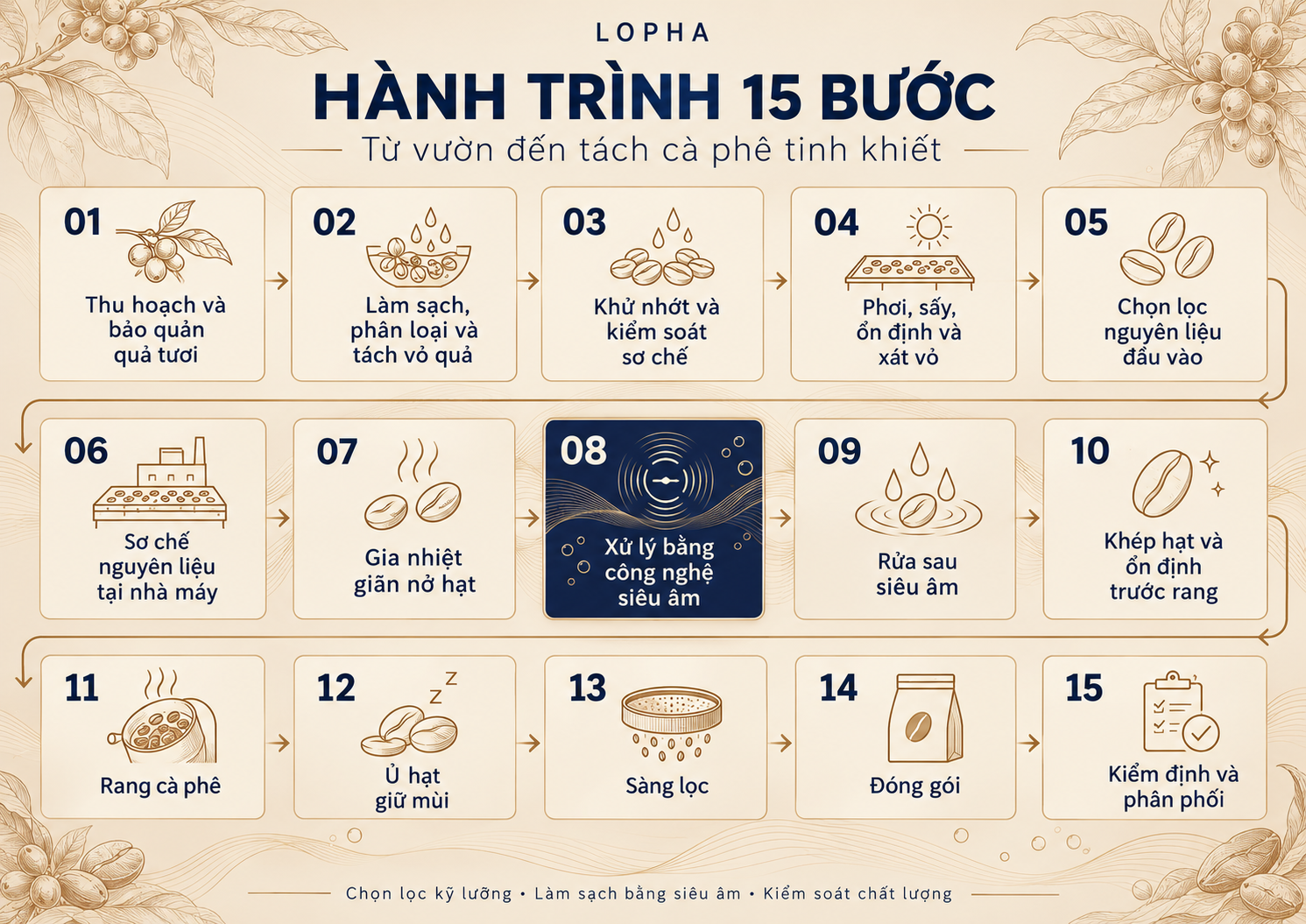
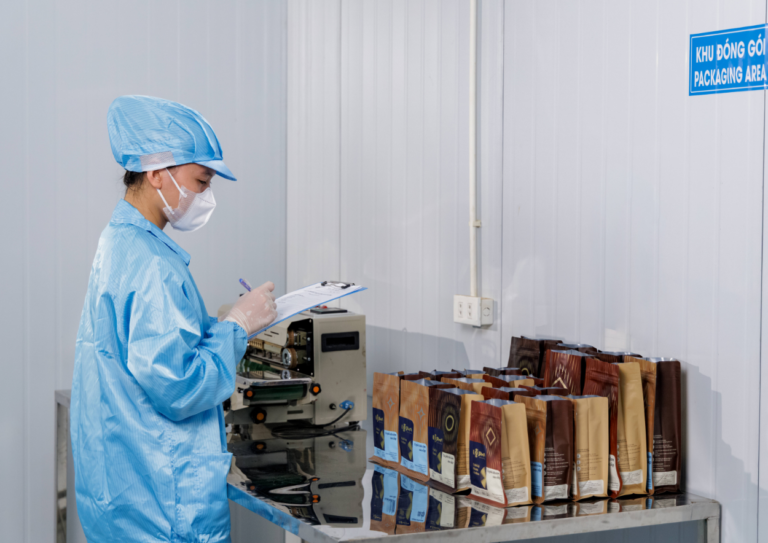
In LOPHA’s production process, quality inspection and distribution form the final stage. This step connects product completion with checks relevant to quality and with the conditions under which coffee is stored and delivered. Its purpose is not to change the coffee’s flavour after packaging, but to help protect what earlier stages have achieved.
That is why a brand cannot judge the entire product solely by the aroma immediately after roasting. Coffee may pass through warehouses, delivery vehicles and points of sale before being opened. Quality needs to be considered across those stages as well.
What does finished-product inspection cover?
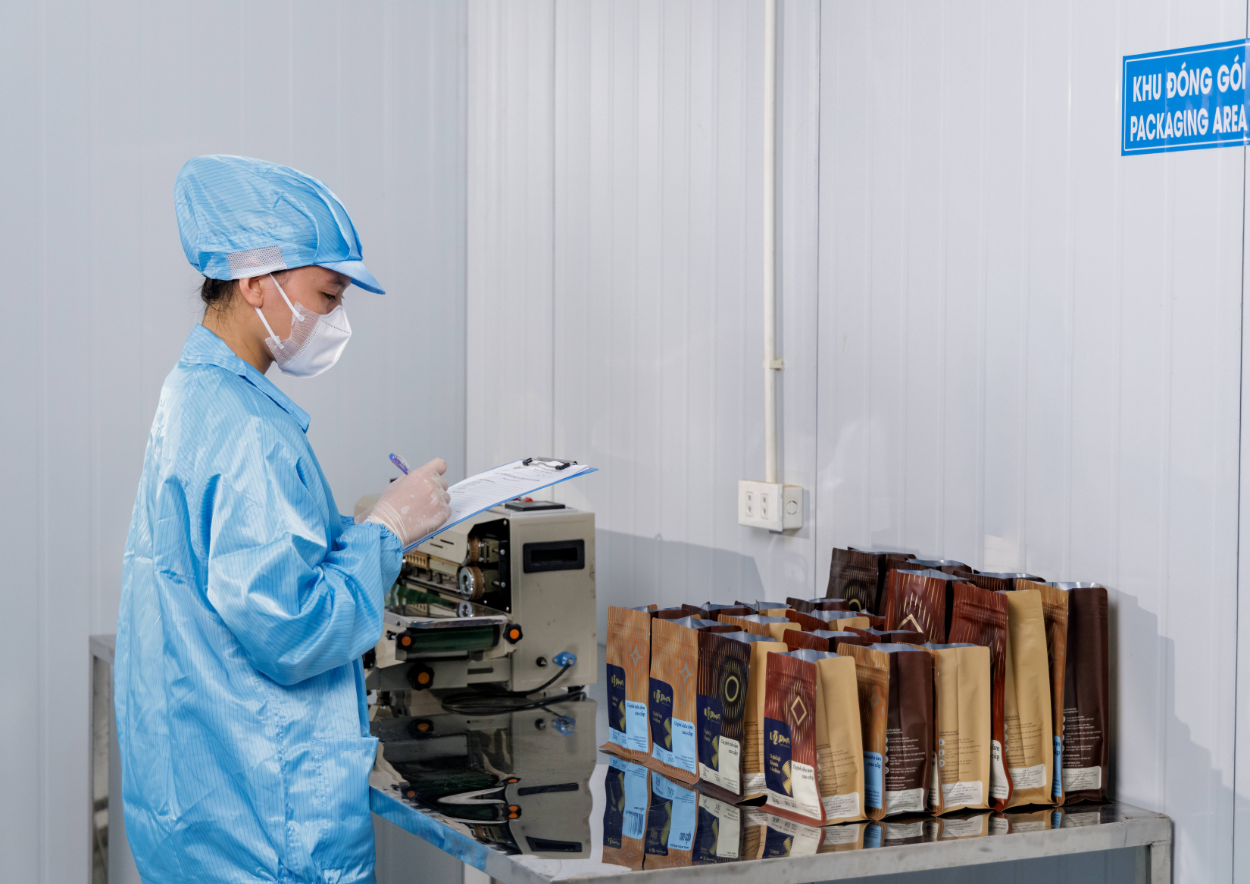
Quality inspection is not a single test. Depending on the product and control plan, evaluation may cover sensory properties, bean condition, packaging, labels, traceability details and specified laboratory indicators. Each check answers a different question about the product.
For example, inspecting a bag may reveal a faulty heat seal or missing label information, but it cannot show the result of a microbiological test. Likewise, evaluating roast colour does not replace checks on contaminants or lot records. Different objectives require the correct methods.
LOPHA’s published production information places final inspection after packaging. However, the exact indicators applicable to each product should follow the relevant actual quality-control plan and records. A general description of inspection should not be mistaken for an identical test list for every coffee lot.
Sensory evaluation and laboratory tests work together
Drinking coffee engages several senses. Aroma, body, acidity, aftertaste and mouthfeel can help us assess the character of a product. These are useful qualities for comparing coffee with the intended flavour profile, especially when samples are prepared consistently.
A pleasant-smelling cup, however, does not remove the need for food-safety controls. Microbiological indicators, mould-related concerns or pesticide residues are among the matters that may require specialised methods and suitable testing plans. They cannot all be reliably detected by smelling or tasting a drink.
Conversely, a coffee that meets relevant testing criteria still needs sensory quality appropriate to the brand. LOPHA develops Arabica, Robusta and blends with different drinking experiences in mind. Sensory assessment and laboratory testing complement each other; they do not answer the same questions.
How lot codes support coffee traceability
A bag of coffee represents a long series of activities: growing, primary processing, green-bean handling, factory treatment, roasting and packaging. A lot code links the finished pack to the production information recorded along that journey and helps distinguish one group of products from another.
If an issue is identified with packaging or product quality, lot information can help determine which group needs review, when it was produced and which records should be checked. Traceability makes investigation and responsible follow-up more practical.
Reliable traceability depends on information being recorded accurately and connected to the right product. Printing a code on a bag does not, by itself, prove that every record is available or accurate. The value comes from the system and practices behind the code.
Storing coffee properly to protect its aroma
Roasted coffee remains sensitive to air, moisture, temperature and surrounding odours. Packaging offers protection, but its effectiveness also depends on how products are stored. Prolonged heat exposure, excess moisture or unsuitable conditions can reduce how well a bag protects the coffee inside.
Warehouse organisation should allow batches to be identified and storage time to be managed. Practices such as first-in, first-out, or prioritising products according to appropriate shelf-life rules, can help maintain orderly distribution. A clear inventory system also supports traceability if a product later needs attention.
The same principle is familiar to home coffee drinkers: keep coffee in a dry, relatively cool place, out of direct sunlight, and close the bag after opening. The factory manages this at a larger scale, but the underlying need to protect the product is similar.
How transportation can affect coffee quality
A pack of coffee may travel through several stages before reaching the buyer. In transit it can be shaken, stacked, exposed to temperature changes or subjected to mechanical pressure. Appropriate handling reduces the risk of damage to the packaging and the coffee it contains.
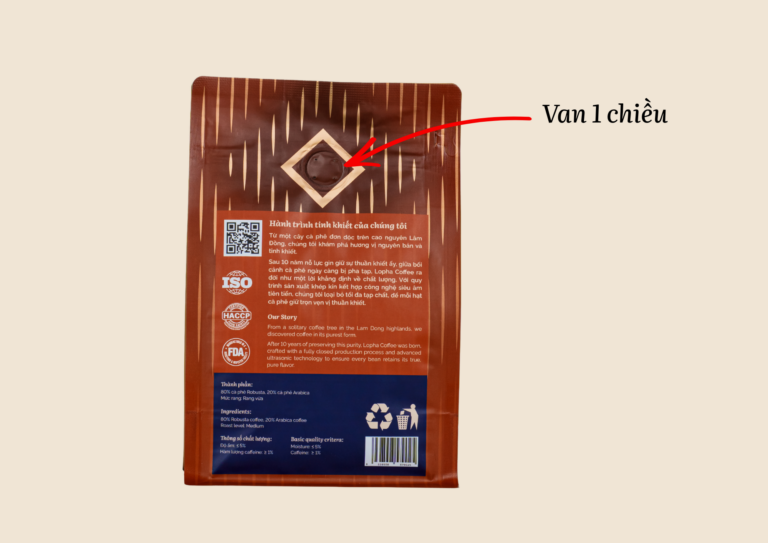
If the bag tears, the seal fails or a one-way valve is damaged, its ability to limit air and moisture entering may be affected. Not every jolt causes a problem, but repeated unsuitable handling can increase the chance of damaged products reaching customers.
LOPHA aims to serve individual drinkers and business partners. Quality at factory release therefore needs to be followed by appropriate delivery and storage practices, whether the order is a single bag or a larger supply for a café or office.
Understanding quality records and certificates
Customers and business partners researching a coffee brand may encounter laboratory reports, management-system certificates or registrations. These documents have different purposes. A system certification relates to a defined management framework and scope; a laboratory result relates to the particular sample and parameters tested.
It is important to read each document’s title, scope and period of validity instead of assuming that one certificate proves every claim about a product. For example, a facility registration or management-system document is not automatically an approval of every individual coffee batch by a regulatory authority.
LOPHA may share information on standards or test results according to its actual records and the appropriate scope. B2B customers should compare the relevant product, current documents and intended market requirements rather than rely on general statements detached from context.
The final step connects the entire journey
Looking across all 15 steps, from harvesting ripe cherries to examining the finished product, we see that a cup of coffee cannot be understood through one stage alone. Quality is built through linked decisions, each with its own limits and responsibilities.
Inspection and distribution come last, but they remain connected to every earlier operation. Clear lot information, appropriate finished-product condition and suitable storage help carry the outcome of that long journey beyond the factory.
For LOPHA, the values of Purity, Honesty and Authenticity are best understood through the way the brand shares information about its raw materials, processes and products clearly and responsibly. The journey reaches the customer not as a single technology claim, but as a cup of coffee shaped by many connected steps.