What Does the One-Way Valve on a Coffee Bag Do?
Summary: Some bags of roasted coffee have a small circular valve. It is designed to let built-up gas escape while limiting airflow back into the bag, according to its operating mechanism. However, the valve cannot replace high-barrier packaging materials, properly sealed seams or correct storage. Understanding its function and limits provides a more realistic view of coffee packaging.
If you have ever held a coffee bag with a small round valve, you may have wondered: why does the bag need to be sealed to preserve aroma if there is also a way for gas to escape? That tiny detail is connected to how beans behave after roasting and how the packaging protects them.
A one-way valve addresses part of the challenge of gas building up inside the bag. But the valve's quality, the seals and the packaging film each have their own role. Understanding the distinction prevents us from treating one design feature as a guarantee that every bag with a valve preserves aroma equally well.
1. Why might a roasted-coffee bag need a one-way valve?
Coffee beans generate and retain some carbon dioxide (CO₂) during roasting. After cooling and packaging, the remaining gas may continue to escape. If it accumulates in a sealed bag without an appropriate means of managing it, pressure can increase and the bag may swell. The degree of swelling depends on coffee type, packaging time, remaining gas, bag construction and storage temperature.
A swollen coffee bag is not necessarily evidence of spoilage; it can result from post-roast gas release. However, swelling alone cannot establish the cause, because packaging and storage conditions can create other situations. Producers need solutions suited to their products rather than treating bag swelling as irrelevant.
The one-way valve is a common option for roasted coffee. Under a suitable pressure difference, it provides a path for gas to exit, allowing a sealed bag to manage part of the gas released after roasting.
This also explains why valves are often associated with whole-bean coffee. But not every coffee bag must have one: packaging time, coffee condition, material structure, product objectives and packaging technologies can lead to different choices.
Roasted coffee does not stop releasing gas the moment it leaves the roaster. Some gas continues to leave the beans and may accumulate in the bag. Packaging design must therefore consider the coffee's condition, time after roasting and packing method. A valve is an engineering solution, not a mandatory badge of good coffee.
2. How does a one-way valve work?
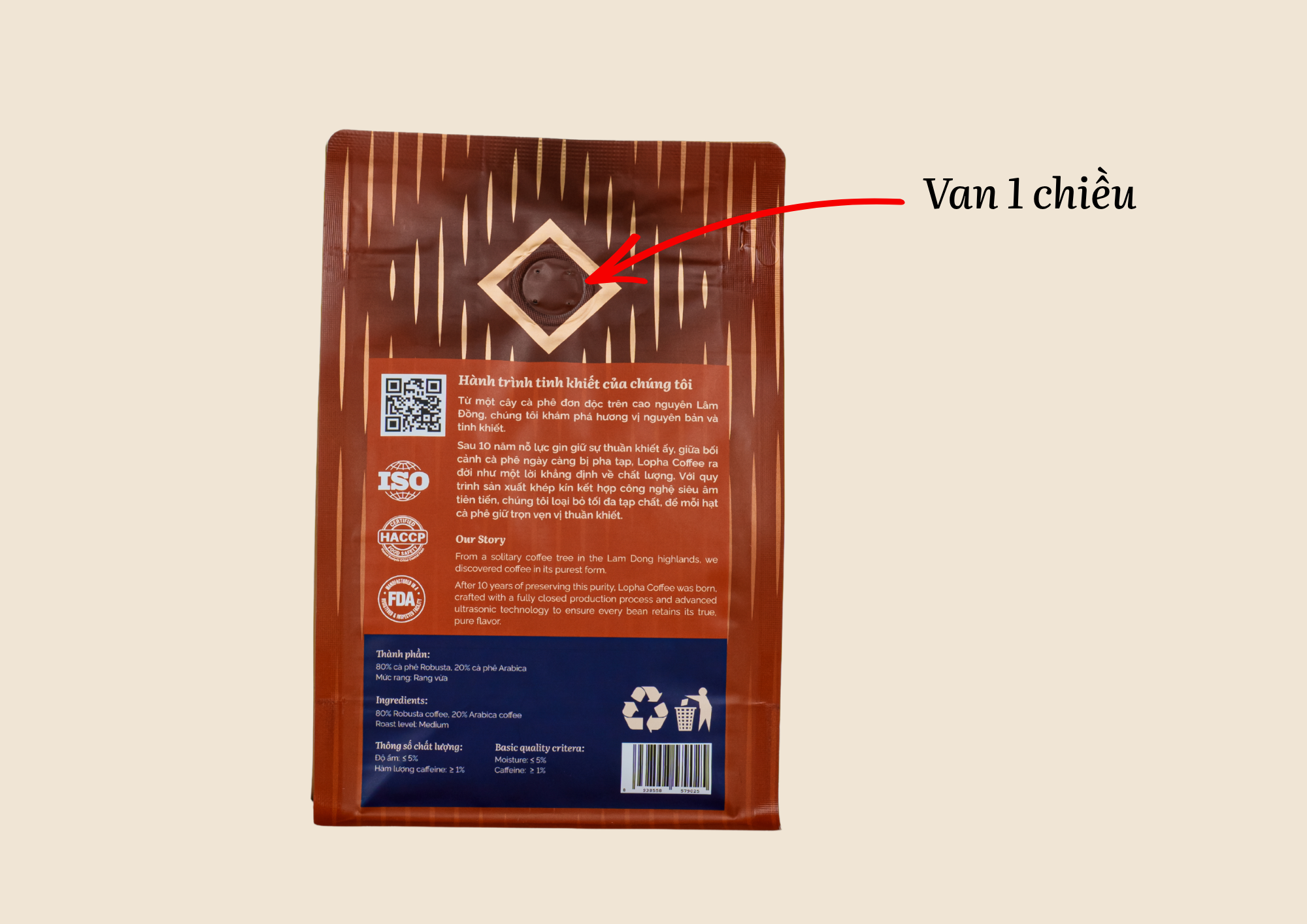
A coffee-packaging valve usually includes a body attached to the bag, a gas pathway and a mechanism that opens or closes in response to pressure differences. The internal design varies by manufacturer. The shared aim is to let gas move more readily from inside the bag to outside than in the reverse direction when the valve works as intended.
Think of a coffee bag as a relatively enclosed space. As gas accumulates and creates sufficient pressure, the valve mechanism allows some to escape. Once the pressure is no longer enough to open it, the valve returns to a closed state or restricts reverse flow. This is a pressure-management mechanism, not a cap the customer must twist open every day.
From the outside, the valve may look like a small plastic disc with holes or slots. The components responsible for its operation are within the valve structure and the area where it attaches to the bag. Two valves that look alike may therefore have different opening conditions, tightness or durability.
The valve itself is not the only concern. If its attachment leaks, surrounding seals are inadequate or the bag material is a poor gas barrier, the package's overall protection may suffer. Good design treats the valve as part of the complete packaging system, not as an isolated accessory.
A valve should not be imagined as actively 'sucking' every bit of gas out. Without sufficient pressure difference, it may not open. It does not create a vacuum or kill microorganisms either; its role is to help manage gas movement within the packaging design.
3. If CO₂ escapes through the valve, can aroma be lost too?
This is a reasonable concern. Roasted coffee contains many volatile aromatic compounds, and its aroma can change on exposure to the environment. Some volatile components may also travel with the gas as it escapes. A valve is therefore not a device that 'retains 100% of aroma', despite occasional exaggerated descriptions.
Its main purpose is to manage gas within an appropriate storage design. A valve can reduce the need to leave the bag opening unsealed so that gas can escape, supporting better product protection. But aroma retention also depends on barriers against oxygen and moisture, seam integrity, temperature, light and how the bag is used.
Oxygen matters because it can contribute to changes that reduce coffee's sensory quality. Unlike CO₂ released from the beans, external oxygen is something a producer generally wants to limit. One-way-valve design reflects this distinction, but it should not be assumed that a valve absolutely blocks every gas molecule under every condition.
A well-protecting bag combines suitable roasted coffee, sensible packaging time, a valve where needed, appropriate barrier materials and reliable seals. The valve has meaning as part of that whole system.
4. Can coffee be stored without a one-way valve?
A bag without a valve is not automatically inferior. Different packaging options may suit different coffees and production plans. Some products can be packed after a period of resting, when their remaining gas has changed. Gas-atmosphere management or alternative packaging structures can also be considered as appropriate.
The key is compatibility between the product and the bag. Roasted whole beans and ground coffee release gas differently. Under comparable conditions, whole beans tend to retain gas longer; grinding increases the exposed surface area and creates more paths for it to escape. Packaging design can therefore differ between these formats.
A properly designed and sealed bag without a valve can still meet product-quality requirements when used under suitable conditions. Conversely, a valve cannot compensate for poor seals or adverse storage conditions.
This is why coffee should not be selected solely by whether a round valve appears on the bag. Check the stated production or roast date, the integrity of the seal, storage instructions and product information.
5. Are one-way valves always airtight and reliable?
Small packaging components are affected by design, materials and use. A valve may fail to perform properly if damaged, installed incorrectly or subjected to mechanical stress around its mounting point. Failing to open at the intended pressure, or failing to close adequately, can both compromise the bag's function.
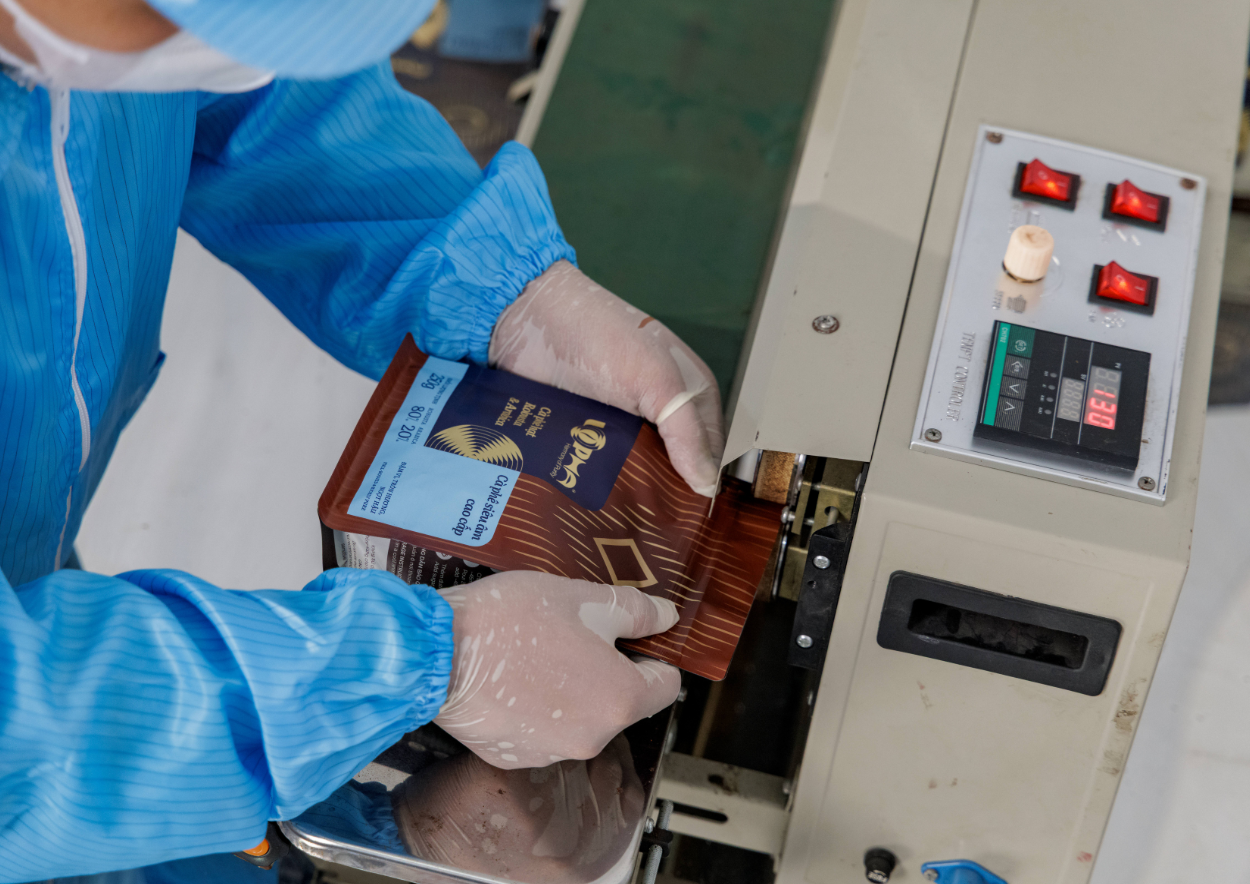
During packing, the valve attachment and surrounding seals deserve as much attention as other sealing points. Checking only the top seam while ignoring the valve area is not enough. Practical checks should follow the bag's specifications and suitable test methods rather than rely only on squeezing the bag by hand.
For consumers, a punctured or torn bag, an open seal or a detached valve is a reason to review the product's condition. A valve that looks intact does not guarantee good protection if the bag has been open a long time or stored somewhere hot and humid.
Even with a valve, conditions inside the bag change over time. High temperatures, leaks around the valve or unsuitable packaging materials can all affect protection. The valve needs to function properly together with the entire bag.
If the valve loosens, tears or its bonded area leaks, air can pass through a point that should be controlled. An unsealed seam elsewhere on the bag can also reduce protection. Packaging cannot be evaluated solely by the valve's presence.
6. Why do bag materials and sealing matter just as much?
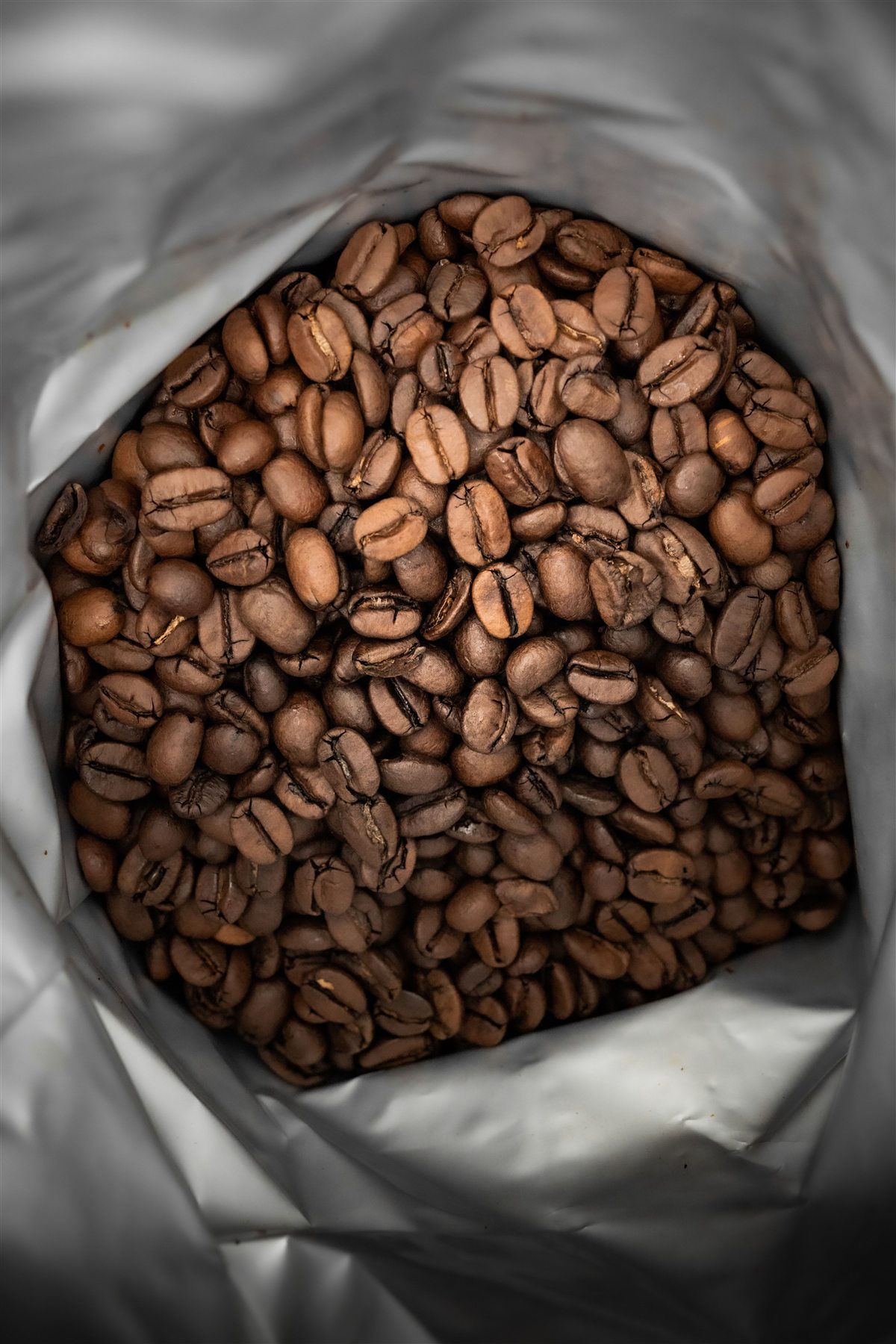
A correctly functioning valve cannot compensate for packaging that lets oxygen or water vapour pass too easily. Coffee packaging materials are generally chosen for product protection and suitability for food contact. Different layers can offer different moisture, gas and light barriers. Their actual barrier performance cannot be determined accurately from the bag's thickness or external colour alone.
Seal integrity is equally important. If the opening, folded corners or bottom has gaps, air can enter through paths unrelated to the valve. Suitable packaging therefore involves material selection, packaging technology and inspection of the finished bag.
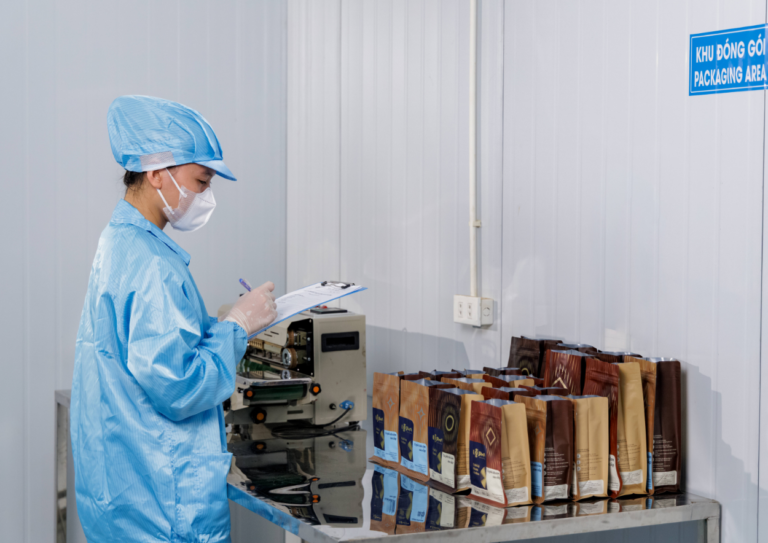
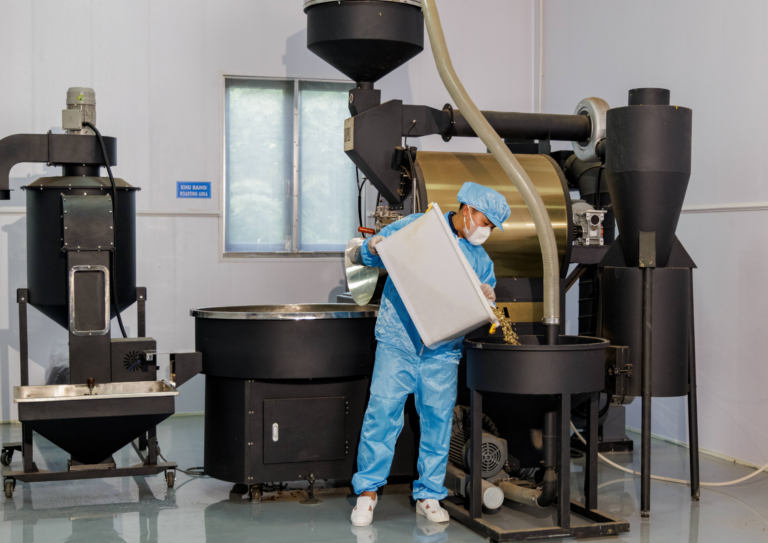
In LOPHA's production journey, packaging follows roasting, resting and post-roast sorting. The bags need to protect aromas created during those earlier stages. A one-way valve is an option considered according to the product format, not a replacement for bag materials or airtight seams.
The bag structure may differ according to the actual product and format. When buying coffee, inspect the specific packaging in your hands rather than assuming that every coffee bag or every product from the same brand is constructed identically.
It is difficult to judge how well a coffee bag blocks gas or protects aroma from colour or thickness alone. The film, seals and valve attachment must all suit the coffee inside. Packaging quality cannot be reduced to one visible feature.
7. Understanding a small valve helps protect a big part of flavour
If espresso crema and phin blooming reveal CO₂ during brewing, a one-way valve shows that producers may need to consider that gas at the packaging stage. Its presence addresses a particular technical need, not an automatic guarantee that every aspect of quality is perfect.
Suitable coffee packaging should help preserve aroma and limit harmful environmental exposure. In LOPHA's 15-step journey, packaging follows careful work from raw-material selection and cleaning through roasting. The small valve only fulfils its purpose alongside suitable materials, reliable seals and proper storage.