Controlled Heating of LOPHA Coffee Beans Before Ultrasonic Treatment
Summary: When people hear that coffee beans are heated, they usually think of roasting. In LOPHA’s process, however, a separate heating stage takes place before ultrasonic treatment. This seventh step prepares the condition of the beans. Understanding its purpose helps distinguish raw-material preparation from the roast that develops coffee flavour.
Where heating fits into LOPHA’s process
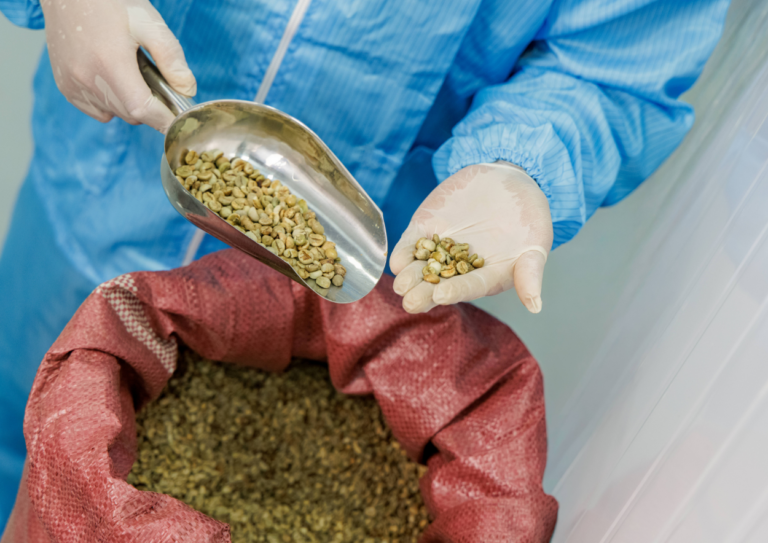
When people hear about heat in coffee processing, roasting often comes to mind first. Roasting gives coffee its familiar brown colour and distinctive aroma. In LOPHA’s production process, however, heat is also applied at a different point: after green beans have been selected and pre-cleaned, but before ultrasonic treatment.

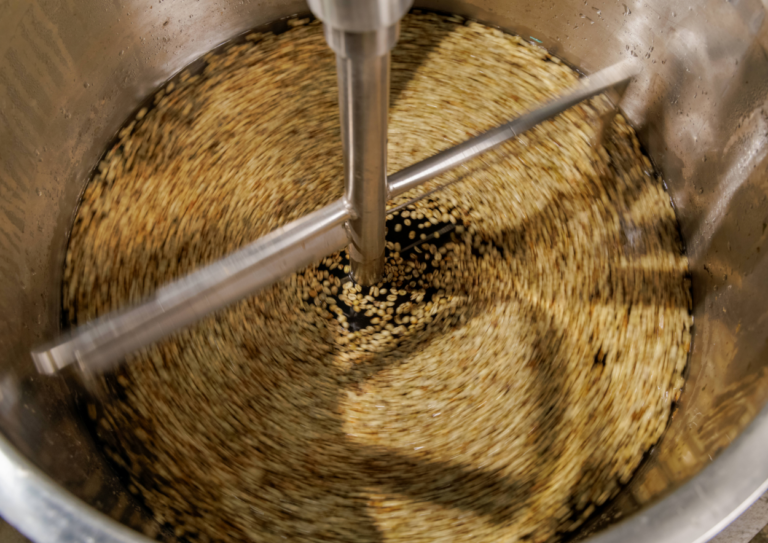
LOPHA calls this stage controlled bean heating and expansion. The name describes the preparation of raw material through a controlled thermal treatment. The beans then undergo ultrasonic treatment in water, washing and stabilisation before moving on to flavour-developing roasting.
Its place in the sequence matters. The word ‘heating’ alone may suggest a preliminary roast, but the purpose of any stage must be understood in the context of the full production chain. Preparatory heating does not perform the same function as roasting, nor does it replace prior bean selection or removal of foreign matter.
On LOPHA’s published production-process page, the heating and expansion stage appears immediately before ultrasonic cleaning. This arrangement shows that LOPHA treats it as part of specialised raw-material processing, rather than as a separate stage for creating ready-to-drink roasted coffee.
What happens to coffee beans when they are heated?
Green coffee beans have a complex natural structure and retain a certain amount of water. When exposed to heat, both the water and the structure of the beans may change. The extent of those changes depends on temperature, exposure time, initial moisture and the characteristics of each type of coffee.
Think of gently warming a material that contains water: the outer surface receives heat first, and heat then moves inward. If that transfer is uneven, different parts of the material may change to different degrees. Coffee beans therefore require controlled treatment to avoid unwanted effects on raw-material quality.
Arabica and Robusta beans may also differ in size, density, structure and starting condition. We should not assume that every batch responds identically to heat. Process control needs to reflect both the intended outcome and the actual condition of the coffee.
Preparatory heating is not the same as roasting
Roasting is the stage that develops coffee flavour. During roasting, the beans receive enough heat to undergo substantial changes in colour, structure and aroma-forming compounds. Roasters manage these transformations to develop the desired sensory characteristics of Arabica, Robusta or other coffee products.
LOPHA’s controlled heating and expansion takes place earlier, before ultrasonic treatment and rinsing. Its stated purpose is to prepare the physical condition of the beans for subsequent processing. Measures such as attractive roast colour, caramel aromas or roast intensity should not be used to describe the results of this initial heating stage.
An everyday comparison helps: warming an ingredient to prepare it for another operation is not the same as cooking the finished dish. Both involve heat, but their goals and evaluation criteria differ. In coffee processing, this distinction is especially important because excessive or inappropriate heating can affect raw-material condition before later treatment.
In LOPHA’s coffee journey, heating and roasting are two separate stages. This also explains why cleaning technology should not be confused with roasting technique. Each stage has its own purpose and control requirements.
Why must temperature be controlled?
One common misunderstanding is that stronger heating must be more effective. In reality, higher temperatures do not automatically produce better results when exposure time or raw-material condition is unsuitable. Batches with different sizes or moisture levels may react differently under the same settings.
If heat is unevenly applied, some beans may change more than others. Preparatory treatment aims to create suitable conditions for the next stage, so uncontrolled variation can make subsequent processing less consistent. Temperature, exposure time and the way beans move through the equipment therefore need to be defined in the technical process.
Keeping raw materials clean and preventing cross-contamination are also essential. Heating equipment may run at the correct settings but still affect the material adversely if hygiene is poor. This stage must therefore be considered alongside earlier selection and pre-cleaning as well as the subsequent ultrasonic treatment.
Because the stage prepares raw material, assessment should focus on the condition of the beans afterward and their suitability for ultrasonic processing. There is no single temperature or duration that is right for every coffee. What is clear in LOPHA’s process is that controlled heating has its own place, distinct from roasting to develop aroma.
How heating connects with ultrasonic treatment
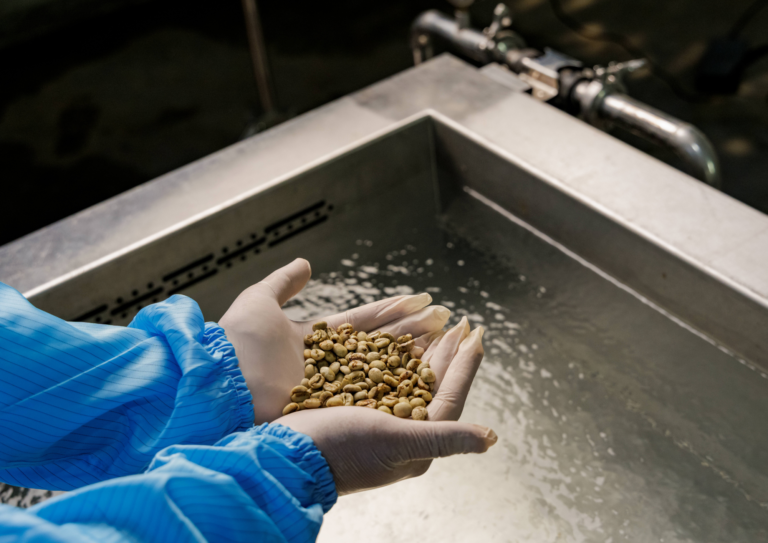
After heating, LOPHA transfers the beans to ultrasonic treatment. When ultrasonic waves travel through a liquid, they may generate cavitation: tiny bubbles form and collapse, creating localised physical effects. This principle is used in suitable applications to assist surface cleaning.
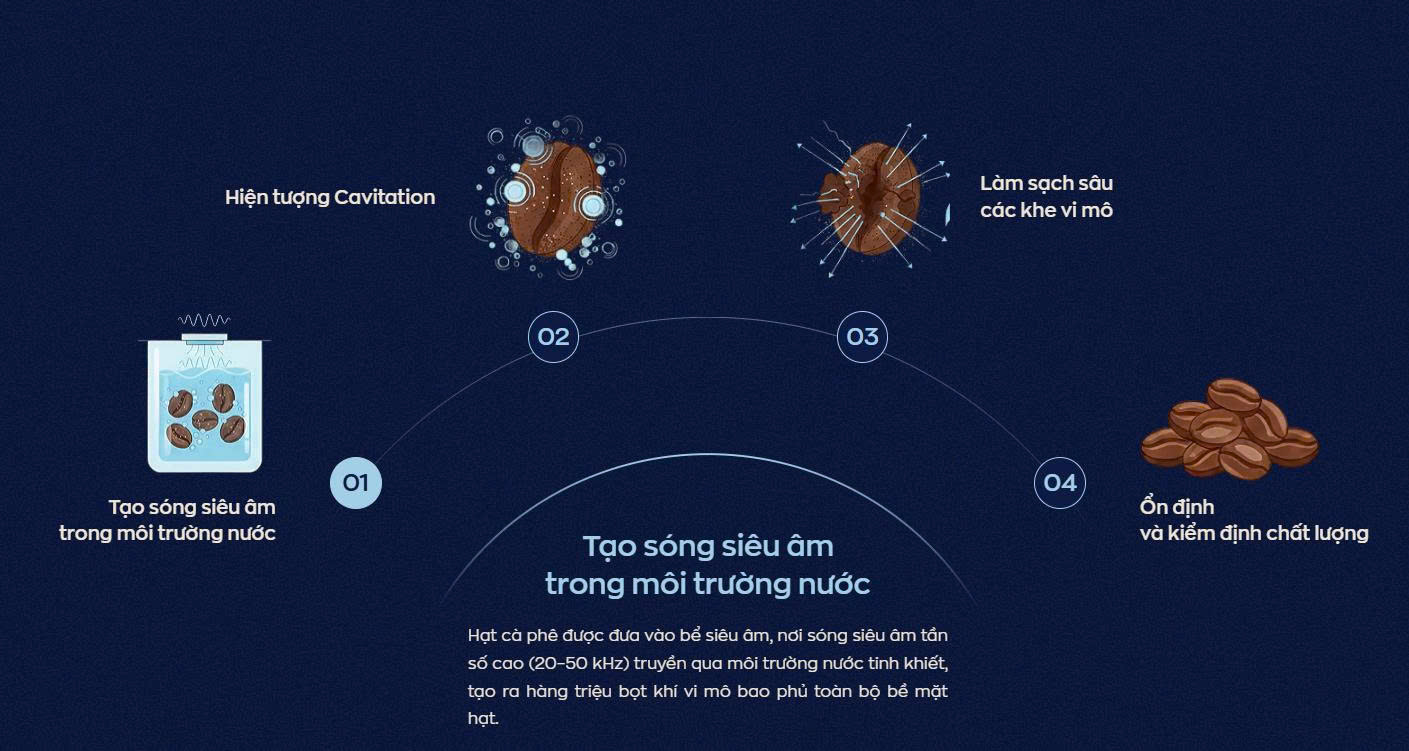
Heating and ultrasonic treatment are not two names for one technique. The first uses heat to prepare the beans; the second relies on the physical effects of sound waves in water. The beans are then rinsed to carry away detached residues and stabilised before roasting.
Without controlled comparative testing, it would be incorrect to claim that heating increases the effectiveness of ultrasonic cleaning by any specific percentage. Actual cleaning performance depends on many factors, including the type of residue, bean condition, water quality and operating conditions.
In the LOPHA system, ultrasonics provide a specialised cleaning stage, while heating is part of the preparation beforehand. Understanding each stage’s task helps us assess the technology realistically instead of focusing solely on a striking piece of equipment.
Technology cannot replace suitable raw materials
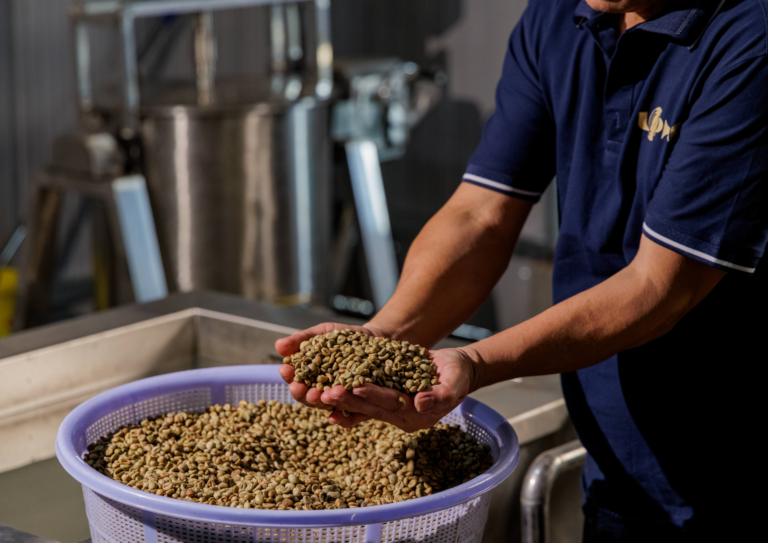
Imagine two batches of coffee beans. One has been processed, dried and stored appropriately; the other already contains many defective beans or has an unusual odour. Sending both through the same heating system will not automatically make them equal in quality.
Heating cannot turn a mouldy bean into a sound one, nor can it replace the removal of stones, parchment fragments or damaged beans before production. Problems that originate early in the chain need to be identified and addressed with suitable methods. That is why LOPHA places selection and preliminary cleaning before its heating stage.
Likewise, the ultrasonic treatment after heating has its own scope of action. Coffee quality should be evaluated across the whole journey, from incoming material through every processing stage to the finished product. One technology must not be assigned responsibility for guaranteeing every other property of the coffee.
For coffee drinkers, this sequence has a simple meaning: LOPHA cares not only about the aroma of the final cup, but also about how the beans are prepared before their flavour is developed. Work that cannot be seen in the cup still contributes to consistent quality.
One small stage in a longer journey
A production step should be judged by the result it is intended to achieve, not by how advanced its name sounds. For heating and expansion, the key is understanding its position and purpose: to prepare beans for ultrasonic treatment, not to roast them for flavour.
The whole journey becomes clearer when the steps are connected. Coffee is selected and pre-cleaned first. Heating prepares the beans; ultrasonic treatment and rinsing contribute to cleaning; and stabilisation brings the material into a suitable condition for roasting. After roasting come sorting, packaging and quality inspection.
The notable feature is not that any one stage can replace all the others. LOPHA’s process gains value from connecting purposeful operations to produce pure coffee that reflects the individual character of each type of bean.
Technology matters when it is positioned correctly in the production chain and appropriately controlled. Seen this way, heating and expansion is no longer an obscure technical phrase: it is a preparatory step in LOPHA’s approach to handling coffee before roasting.
The purpose of heating before ultrasonic treatment
Heating and expansion prepares coffee beans within LOPHA’s process; it is not another name for roasting. Recognising its position helps us better understand how incoming beans, mechanical cleaning, ultrasonic technology and pre-roast stabilisation work together.