Rinsing Coffee Beans After Ultrasonic Treatment
Summary: Ultrasonic treatment can help loosen deposits on coffee beans, but the cleaning work does not end as soon as the sound waves stop. Residues that have been detached still need to be removed from the material stream. That is the purpose of rinsing after ultrasonic treatment, step nine in LOPHA’s 15-step journey.
Why rinsing is still needed after ultrasonics
Imagine cleaning a dusty drinking glass. Loosening the dust is one thing; carrying the loosened dust away from the surface is another. Ultrasonic treatment and subsequent rinsing have a similar relationship. The physical effects of ultrasound can help detach suitable deposits, while rinsing helps remove the resulting material from contact with the coffee.

In LOPHA’s production process, rinsing immediately follows ultrasonic treatment. This position has a clear purpose: it completes the cleaning sequence by dealing with substances that have already been loosened. The steps support one another without being interchangeable.
If we overlook their connection, we may mistakenly believe that ultrasonics automatically make every contaminant disappear. In reality, detached material can remain in the water or among the beans. The rinsing stage helps address that part of the process and needs appropriate hygiene controls of its own.
What may remain after cleaning
Not everything adhering to a bean has the same characteristics. Some deposits consist of fine dust, some of parchment fragments or organic material from earlier processing, and others require different assessment methods. The way a substance responds to treatment depends on its nature and where it is located.
After treatment, some material may be suspended in the water or trapped among the beans. If treatment water is used under unsuitable conditions, detached residues may remain in contact with the coffee or spread to other material. Rinsing is therefore about managing the environment around the beans, not simply giving them a better appearance.
This also explains why visual observation is only one part of evaluation. Clearer-looking rinse water can be a useful sign, but it cannot establish the absence of every microbial or chemical hazard. Those questions need relevant testing and quality-control methods.
Why water quality matters more than we think
Water comes into direct contact with coffee during this stage. Its quality must therefore be taken seriously. Water that introduces new unwanted material defeats the purpose of removing deposits from beans that have already passed through a cleaning process.
Water used in food processing must be managed in line with applicable requirements. The source, supply system, storage and equipment surfaces can all affect its condition. Maintaining suitable water is as important as understanding the cleaning action itself.
Using more water does not automatically mean washing more effectively. Results also depend on how water reaches the beans, how loosened material is removed, and whether the equipment and water flow are organised appropriately. The relevant question is what condition the coffee reaches after rinsing, not simply how much water was used.
Rinsing and preventing recontamination go together
Recontamination occurs when material contacts a source of unwanted substances after it has already been cleaned. This can arise from poorly maintained tanks, pipes, collection trays, handling equipment or the surrounding environment. Keeping the rinsing area hygienic is therefore part of protecting the results of ultrasonic treatment.
A simple comparison is washing vegetables with clean water and then placing them on an unclean tray. The final condition depends on everything that happens afterward, not just the water used. Coffee beans similarly need clean handling and an appropriate transfer route after rinsing.
Clear organisation of processing areas, containers and material flows also helps avoid mixing treated and untreated coffee. This is valuable for both hygiene and batch traceability: each stage should receive beans whose previous handling is understood.
Post-ultrasonic rinsing versus washing after mucilage removal
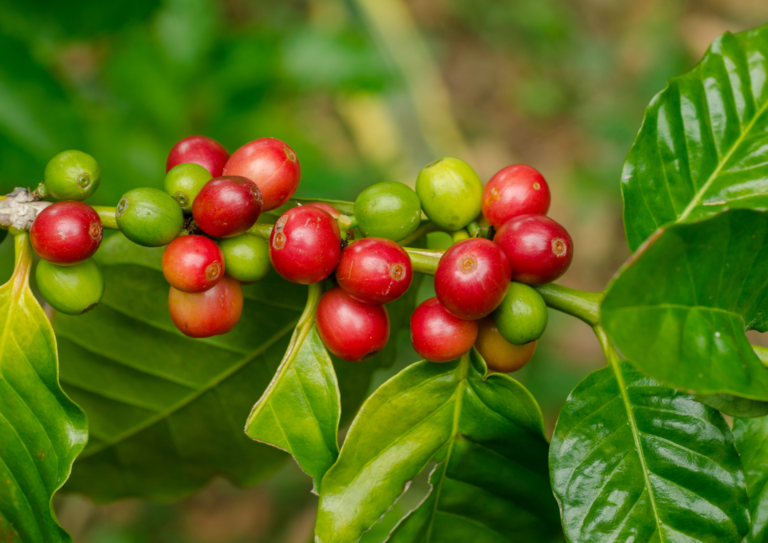
LOPHA’s 15-step journey includes more than one operation involving water, but they do not serve the same purpose. During fresh-cherry processing, washing after mucilage removal may help clear the natural sticky coating that has been broken down or mechanically detached, depending on the processing method.
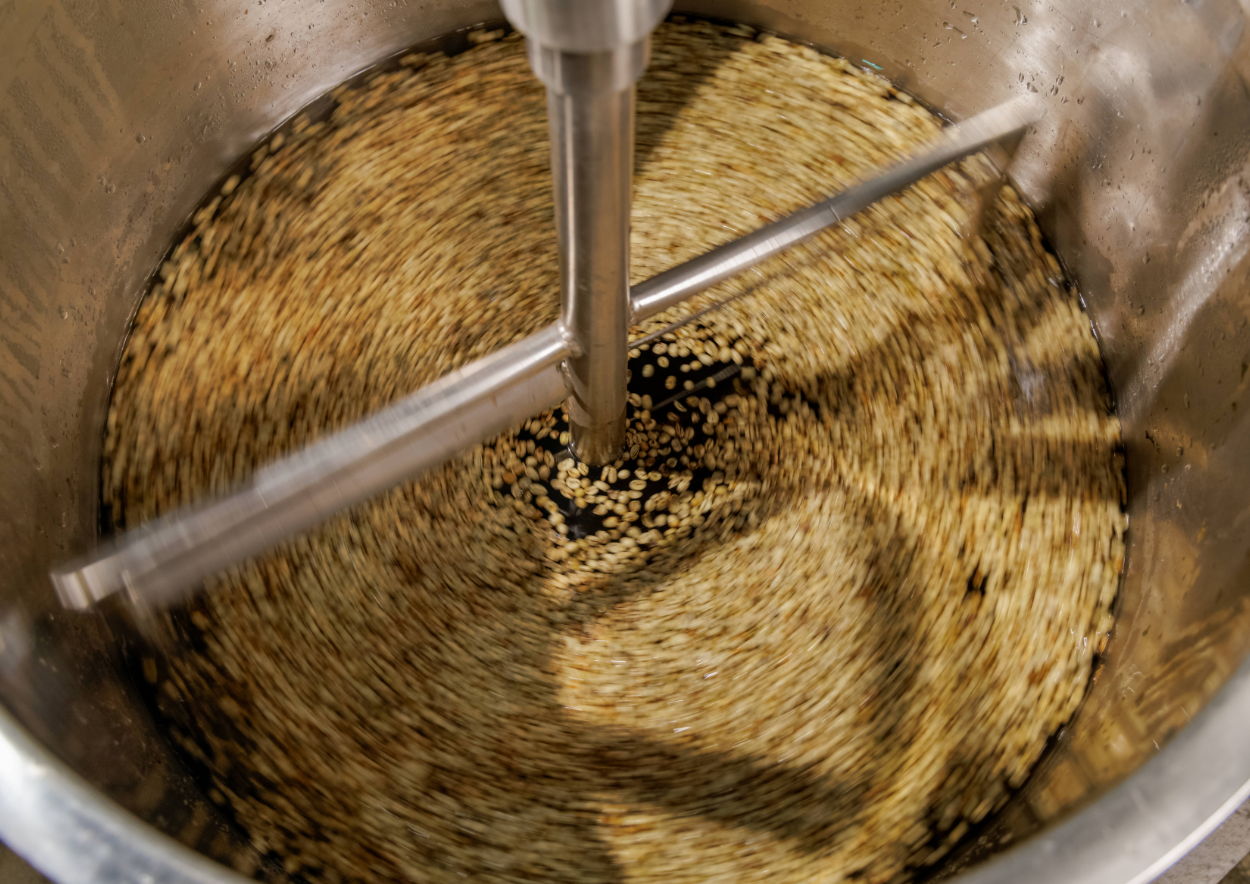
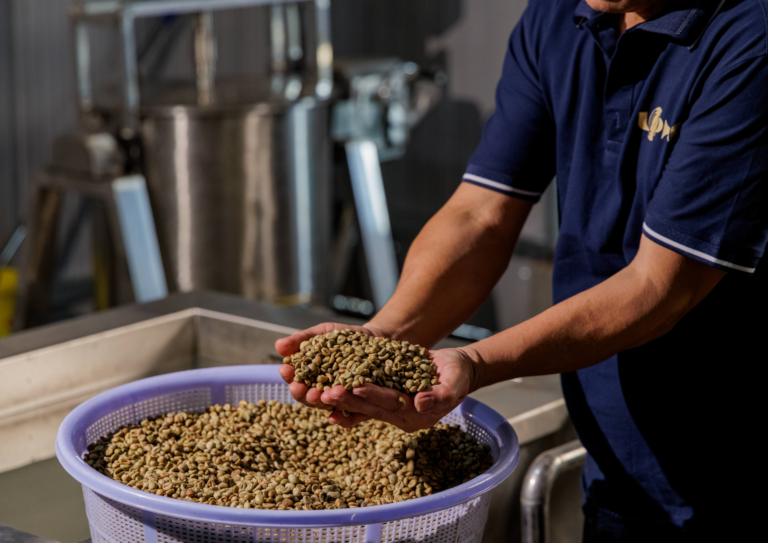
At the LOPHA factory, rinsing after ultrasonics acts on green coffee that has already been selected, pre-cleaned and treated. Here, the focus is removing residues detached by the ultrasonic stage rather than clearing fresh-cherry mucilage.
The distinction shows why every use of water in coffee processing needs a clearly defined objective. Water may help sort cherries, wash after demucilaging or carry away residues after ultrasonic treatment. The operations may sound similar, but their position, material and evaluation criteria differ.
Effective rinsing cannot be judged by sight alone
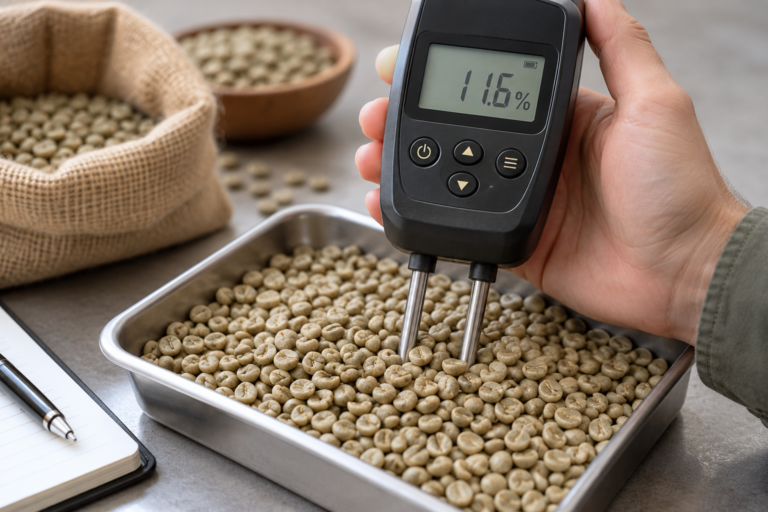
A good rinsing stage should be evaluated against its specific objective. Observing the beans and water can provide initial information, but some quality and safety questions require appropriate measurements or laboratory tests. Looking clean is not identical to being verified against every relevant standard.
Test findings must also be read within their scope. A sample passing one parameter does not prove that every other batch will pass, or that all possible hazards have been eliminated. Sampling, methods and the parameters tested matter when interpreting results.
For LOPHA, ultrasonic cleaning is a distinctive technology, yet rinsing reminds us that quality is also built through the careful work surrounding that technology. The entire sequence needs controls appropriate to each task.
From rinsing to preparing the beans for roasting
After contact with water, the beans must be prepared for the application of heat during roasting. If their moisture condition is inconsistent, they may respond differently within the same roast batch. The purpose of the next stage is to bring the beans into a suitable and more stable condition.
That is why LOPHA follows rinsing with a stage described as bean closing or pre-roast stabilisation. The term refers to preparing and controlling the condition of the coffee before roasting, not to a second roast or a way of reversing every earlier change.
A coffee drinker may not be able to distinguish the contribution of a single rinse in the finished cup. But tracing green coffee through ultrasonic cleaning, rinsing and stabilisation shows why these less visible steps are connected.
How rinsing contributes to LOPHA’s purity journey
LOPHA’s 15-step journey does not include this operation merely to make the process look more advanced. Rinsing after ultrasonics has a practical objective: to help move loosened material away from the coffee before the beans continue to subsequent processing.
When evaluating any cleaning method, we should look both before and after the treatment. Were the incoming beans selected appropriately? Was the water suitable? Was loosened residue removed, and were the beans protected from recontamination? These questions offer a more useful understanding than the name of any single machine.
For LOPHA, purity is presented as a continuous process. Ultrasonics have their role, rinsing has its own, and later stabilisation and inspection continue the work. Each step contributes to a journey that begins with raw materials and ends with coffee ready for the customer.