How to Assess Coffee Cherry Ripeness at Harvest
Summary: A basket full of red coffee cherries does not necessarily represent a uniform harvest lot. To assess ripeness at harvest, samples need to be taken from different locations, cherries sorted into groups and signs of bruising or damage recorded. Discover how to interpret ripeness assessments, why the percentage of ripe cherries matters and why two lots with similar percentages can still differ in quality.
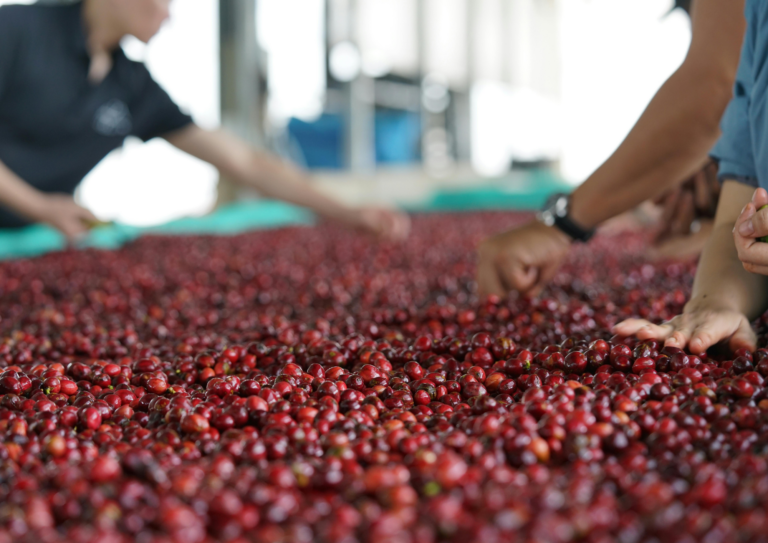
A freshly harvested lot of coffee cherries can look beautiful: plenty of red fruit, with few leaves or twigs mixed in. But is a glance at the basket enough to know whether the cherries have reached the right ripeness? The answer lies in assessing the entire lot, not just a handful of attractive cherries on top.
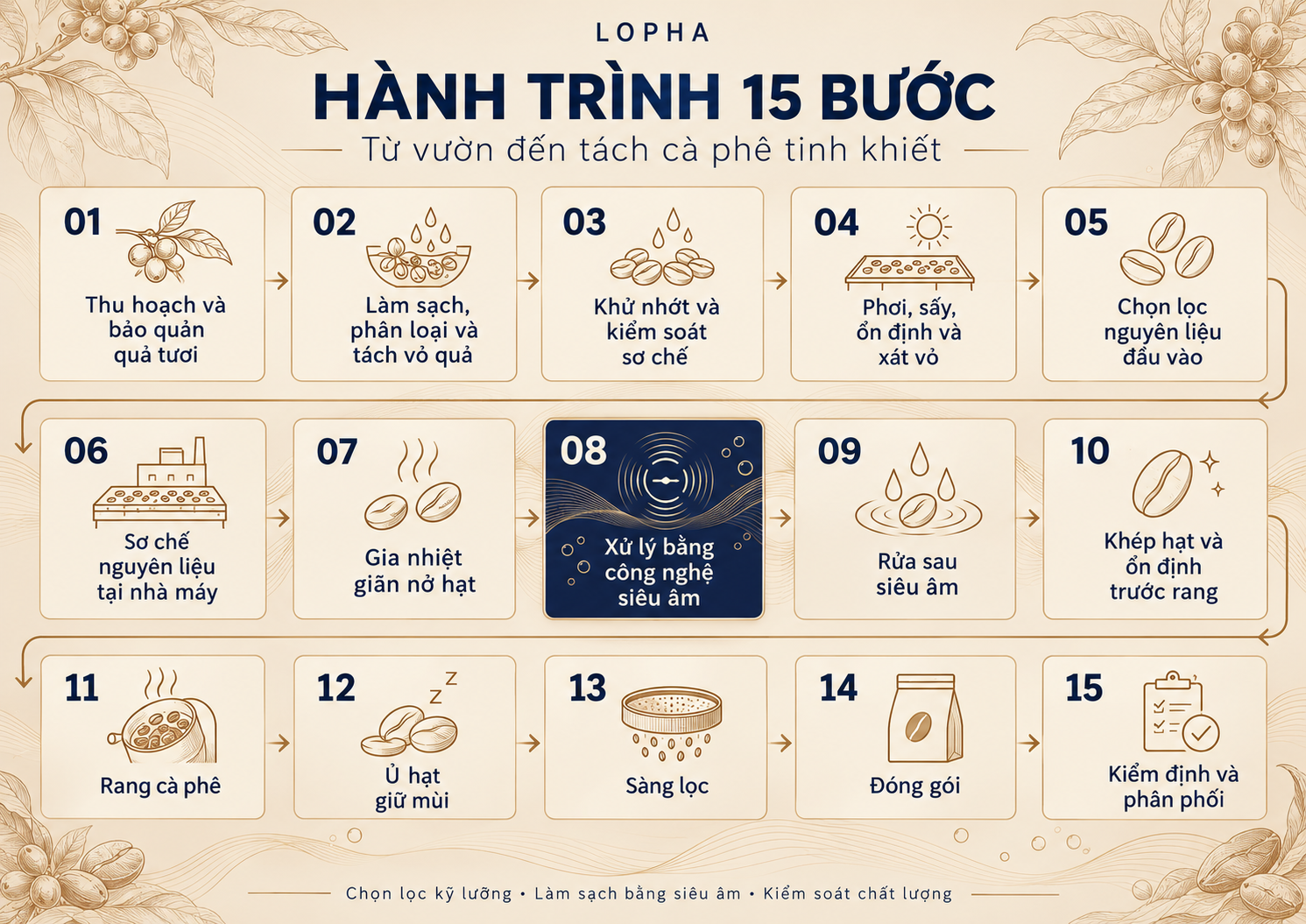
In LOPHA's 15-step journey, selecting ripe cherries goes beyond filling a basket with appealing fruit. Sampling, classifying cherries and calculating the ripe-fruit percentage help assess consistency at the source and identify issues before the cherries move into primary processing.
1. How is assessing an entire lot different from inspecting individual cherries?
When we look at a coffee branch, we often judge whether each cherry is ripe by the colour of its skin. That is helpful when picking individual cherries from the tree. After harvesting, however, fruit from different branches, trees and sometimes different parts of the same growing area is brought together. The question then changes from 'Is this cherry ripe?' to 'How many cherries in the whole lot have reached suitable ripeness?'
That is the distinction between examining one cherry and assessing an entire lot. An attractive red cherry may make a lovely photograph, but it cannot represent the hundreds or thousands of cherries in other baskets. To understand how uniform a lot really is, we need to inspect several parts rather than choose a few striking pieces of fruit from the surface.
Quality is not determined solely by the number of ripe cherries. A cherry may be suitably ripe but still need separate attention if it is badly bruised or covered in soil. Conversely, slightly different shades do not necessarily indicate different ripeness stages, particularly where coffee varieties and lighting conditions vary.
Assessing a harvested lot therefore means combining ripeness checks with identification of unusual conditions. The findings are most useful when they tell the receiving team whether the lot is consistent, where further sorting is needed and what requires attention before primary processing begins.
2. How can coffee cherries be sampled to represent a whole lot?
2.1. Take samples from several locations
Imagine that a coffee lot has just reached a collection point. If we take cherries only from the top of one basket, the sample may be biased towards the fruit that is easiest to see. Cherries in the middle or bottom may be in a different condition. The larger the lot, the more important it becomes to examine different locations.
A sensible approach is to take cherries from different parts of the lot rather than selecting only the most attractive pieces. If the fruit is stored in several baskets or containers, sampling from just one may not reflect the rest. The guiding principle is representativeness, not finding a beautiful sample to demonstrate quality.
Once collected, the sample must be divided consistently into groups. Suitably ripe cherries are recorded separately, as are unripe, overripe or damaged cherries. A percentage is meaningful only when everyone assessing the fruit shares the same definition of 'ripe'. If one person counts overripe cherries as acceptable while another sets them aside, their results cannot be compared fairly.
The final calculation may be based on the number of cherries in the sample, but sampling methods and sample sizes should suit each facility's assessment purpose. There is no single sample size or observation procedure that automatically fits every lot: quantities, containers, harvest conditions and the way fruit settles during transport may all differ.
The most important mistake to avoid is sampling repeatedly from the same convenient spot. A mathematically accurate calculation can still mislead if the original sample does not reflect the lot. When sampling reveals differences between different parts of a lot, that information already has practical value, even before the final percentage is calculated.
2.2. Avoid attractive but unrepresentative samples
When evaluating a lot of raw material, the hardest part is not counting cherries; it is choosing a fair sample. If a lot is divided among several sacks, a handful taken from the opening of the first sack reveals only a tiny corner of the shipment. Fruit deeper inside may differ in ripeness, bruising and cleanliness. Sampling locations should therefore be planned in advance, rather than chosen wherever the fruit looks most appealing.
For example, if a coffee lot arrives in four baskets, checking a small portion from each gives a better picture than selecting only the basket with the most red cherries. The aim is to observe enough of the lot to avoid missing green, bruised or overripe fruit.
3. Classify cherries before calculating ripeness
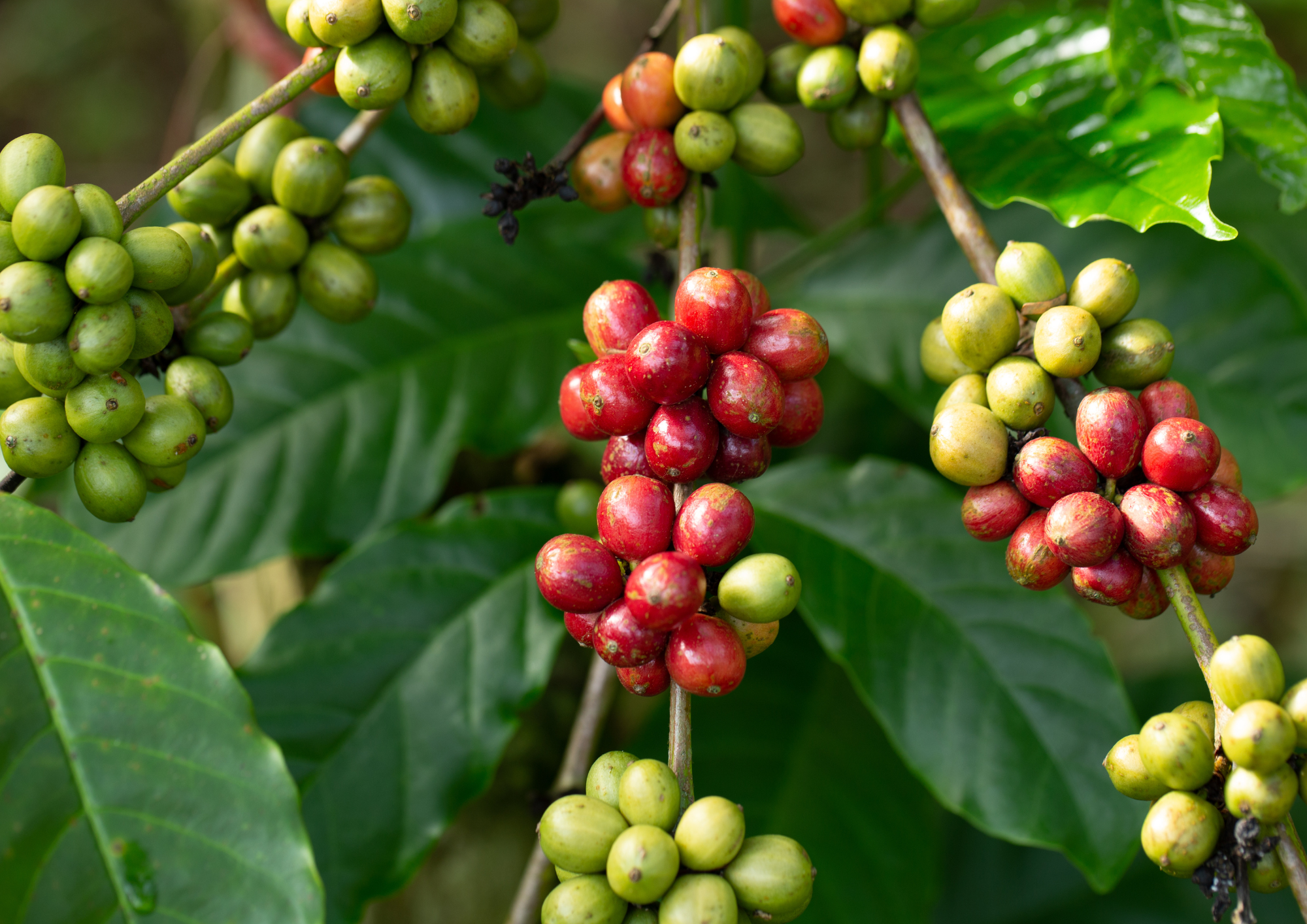
Unripe cherries still show characteristics of an earlier growth stage. Depending on the variety, their skins may be green or just beginning to change colour. When mixed with large quantities of ripe fruit, they can reduce uniformity and make later pulping, mucilage treatment or sorting less consistent.
Suitably ripe cherries are the priority at harvest. In red-ripening varieties they generally display the characteristic colour of that variety at maturity; yellow-ripening varieties have different visual signs. Even within the acceptable group, badly bruised or visibly damaged cherries should be separated rather than treated as though all fruit were of identical quality.
Overripe fruit is not automatically better simply because it looks darker. Cherries left too long on the tree may split, dry out or show signs of unwanted fermentation, making them quite different from fruit harvested at a suitable stage. Fallen fruit requires particular care because it has a greater risk of collecting debris and coming into contact with the surrounding environment.
4. How to determine the percentage of ripe cherries in a lot
For quality control at the source, LOPHA has established a minimum ripe-cherry criterion of 95%. This figure reflects a commitment to harvesting cherries at a suitable stage rather than picking regardless of condition simply to increase immediate yield. When most fruit in a lot is ripe, receiving and primary processing have a stronger foundation for maintaining consistency.
Imagine checking a sample of 100 cherries and finding that 95 are suitably ripe. The ripe-cherry percentage is then 95%. The calculation is straightforward, but the result is trustworthy only when the sample reasonably reflects the entire lot, rather than the most attractive cherries on the surface.
Even a lot with a high ripe-cherry percentage still needs proper storage and processing. If fresh cherries wait too long, are bruised in transit or become mixed with material of uncertain origin, the benefits of careful harvesting can be diminished. The percentage should therefore be treated as an early control point, not an absolute guarantee of quality.
More importantly, the percentage makes it possible to discuss quality in specific terms. Rather than simply saying 'our coffee is picked ripe', we recognise that ripeness must be assessed across the lot against consistent criteria. This creates a clearer basis for communication among those who harvest, receive and process the cherries.
Ripe-cherry percentage (%) = (Number of cherries classified as suitably ripe / Total cherries assessed) × 100. The arithmetic is simple; the crucial step is agreeing in advance on what counts as 'suitably ripe'. A ripe but badly bruised cherry may need a separate damage mark. One percentage alone should not conceal those distinctions.
At LOPHA, focusing on ripe-cherry percentage is a way to establish consistency from the outset. Even so, every lot must be assessed for bruising, signs of damage and post-harvest storage conditions. Cherries picked at the right maturity offer a good beginning; every later stage must help preserve that advantage.
5. Why can two lots with the same ripe-cherry percentage differ in quality?
Imagine two lots with similar percentages of ripe cherries. Looking only at that number, they may appear equivalent. Yet the remaining 5% in the first lot might consist mostly of fruit that has not fully changed colour, while the second contains many bruised or overripe cherries. These are clearly not the same raw-material conditions. An identical percentage does not mean identical risks.
Differences also arise within the group classified as ripe. A lot of cherries that have reached very similar stages of maturity may be easier to process than one with a broader range, even though both fall within the accepted group. Those differences can be difficult to see if only a single final figure is recorded.
The interval between harvesting and primary processing can matter just as much. Fresh cherries continue changing after they leave the tree. If they are piled up, poorly ventilated, exposed to excessive heat or bruised during transport, their condition may change before treatment begins. The original ripe-cherry percentage does not fully capture these developments.
When assessing a coffee lot, the question should therefore go beyond 'What percentage is acceptable?' We also need to understand what the remainder contains, how much fruit is damaged and how the cherries have been handled between picking and arrival. Assessing the lot as a whole is more useful than chasing an attractive number.
Where two lots have similar ripeness percentages, the real difference often lies in the remaining cherries. A few partially coloured cherries present a different situation from numerous bruised, split or fallen pieces of fruit. Alongside the percentage, recognising and separating unusual cherries is therefore essential.
6. Is skin colour enough to judge ripeness?
Skin colour is the clearest visual signal in a coffee garden. In many red-ripening varieties, a shift from green to yellow, red and deep red accompanies fruit development. Some varieties, however, ripen yellow. A single shade of red cannot therefore serve as the standard for all coffee varieties.
Even in red-ripening varieties, lighting changes how colours appear. A deep-red cherry in shade may look different from one at the same maturity in sunlight. Wet surfaces, dust or reflected light can also make visual distinctions harder. Colour is useful for initial screening, but it is not enough to determine everything about the bean inside.
Beyond colour, the person receiving the cherries should consider their condition. Is the skin intact? Is the fruit split, bruised, pest-damaged or showing unusual deterioration? These signs do not replace ripeness assessment, but they help identify cherries that could complicate primary processing.
Some people also look at the sweetness of cherry juice when examining ripeness more closely. However, sweetness in the fruit pulp does not directly determine the sweetness of coffee after roasting. What we taste in the cup also depends on processing, roasting and brewing.
A beautifully coloured ripe cherry is a useful harvest sign, but it does not tell the whole story of the green bean within. Receivers must also consider sample uniformity, physical damage and how the fruit has been protected since picking.
Colour should therefore be treated as a quick screening tool, not a final verdict. Looking at fruit condition, lot consistency and transport conditions provides a fuller picture. Even for coffee buyers, this perspective matters: selecting good raw material is a process, not merely a lovely photograph of red cherry clusters.
7. Common errors when assessing ripeness
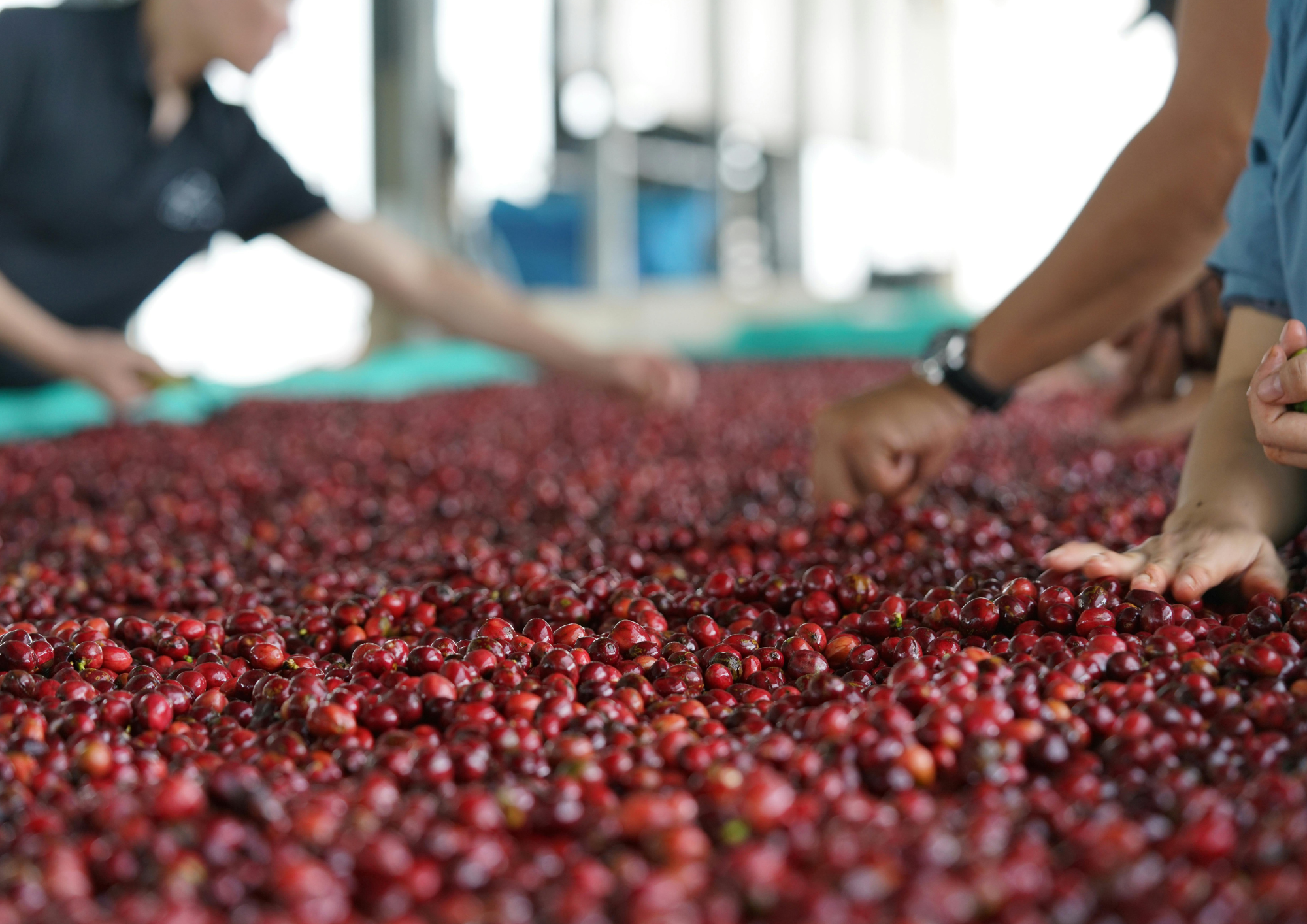
Even a reasonably large sample can be misleading when the cherries chosen do not reflect the lot as a whole. Taking fruit only from a sack opening, for instance, can miss cherries at the bottom, where bruising or green-fruit content may differ. Where and how a sample is taken matters just as much as counting it.
The grouping criteria must also be consistent. If the same partially coloured cherries are classified as ripe in one assessment and unripe in another, the percentage changes even though the raw material has not. In production, the assessment method should reflect both the coffee variety and the applicable intake criteria.
When a result lies close to the control threshold, examining an additional part of the sample can be more helpful than drawing a quick conclusion from one inspection. Ripe-cherry percentage is valuable quantitative information, but it is trustworthy only alongside damage condition, handling conditions and raw-material origin records.
8. How does the assessment help with primary processing?
After harvesting, coffee cherries generally pass through appropriate stages before becoming green coffee beans. Depending on the processing method, these may include cleaning, sorting, pulping, mucilage treatment and drying. Each step is easier to manage when the condition of the incoming cherries is understood.
Cherries at different maturity stages can differ in firmness, skin structure and ease of pulping. If many groups are mixed in a lot, the processing team may need additional sorting before feeding the fruit into machinery. This does not mean every unripe cherry inevitably produces a defective bean; the concern is that large differences between groups can make processing less uniform.
For processing methods involving mucilage treatment, the condition of the incoming fruit and beans also affects how control measures are chosen. Overripe, bruised or unusually changed cherries deserve particular attention because unwanted developments can occur while they wait for treatment. Greater uniformity gives producers a better basis for monitoring the process and spotting deviations.
Consistency remains important during drying, but it does not replace moisture and environmental control. A harvested lot that meets the ripe-cherry criterion still needs correct drying. If drying conditions are inconsistent, the final quality may not reflect the effort invested in selecting good fruit.
When sampling data is recorded by harvest date and area, processing teams have a clearer basis for organising raw materials. Early classification can inform pulping adjustments and the inspection of different lots, without suggesting that every machinery setting can be determined by ripe-cherry percentage alone.
9. Protect quality by getting the first stage right
Lot-level ripeness assessment helps us look beyond the appealing red colour of a basket of cherries. A ripe-cherry percentage is meaningful when based on a representative sample, clear fruit classifications and continued care for the harvest after picking.
At LOPHA Coffee, ripeness assessments support consistency right from the growing area. A suitably ripe lot does not guarantee that every cup will taste identical, but it creates stronger foundations for the cleaning, processing and roasting stages in LOPHA's production journey.