Common Defects Found in Green Coffee Beans
Summary: Green coffee beans can carry signs of harvesting, primary processing and storage: black beans, insect damage, cracks and incomplete development. Not every visual difference is a defect, and not every quality problem is visible to the eye. Identifying defect categories correctly helps explain why raw-material selection before roasting is so important.
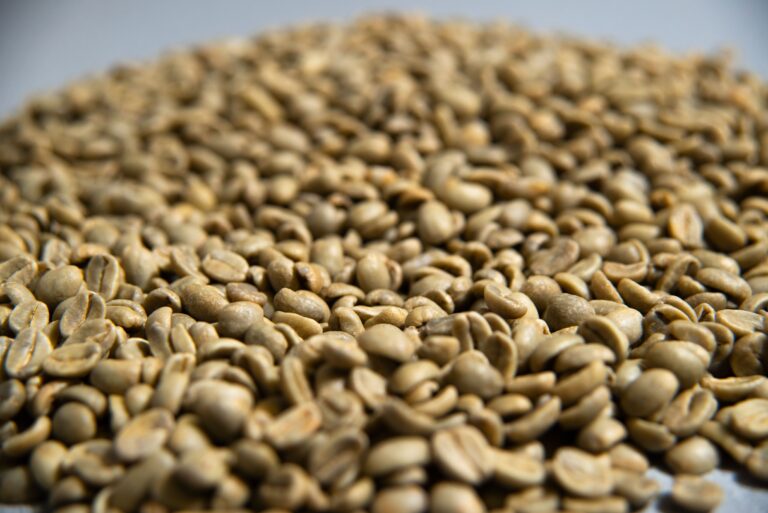
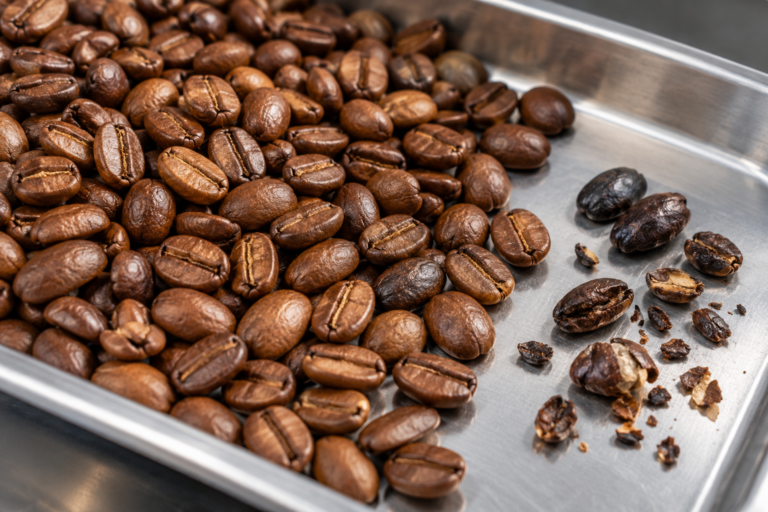
Before roasting develops its inviting aroma, coffee looks quite different: green beans retain their natural colours and sometimes show traces of harvesting, processing and drying. Pour a sample onto a tray and you might find broken beans, insect-damaged beans or unusually coloured ones.
What do those signs tell us? Is every unevenly coloured bean defective? Understanding what to look for explains why LOPHA selects raw materials before roasting rather than waiting until the coffee is finished to assess quality.
1. A difference in appearance does not necessarily mean a defect
Green coffee is not a manufactured product with precisely identical sizes and colours. Shape can vary with variety, growing conditions, processing and storage. Arabica beans often differ in shape from Robusta; some are rounder or have a different central crease. Two beans looking different does not automatically mean one is suitable and the other should be rejected.
The distinction is between natural characteristics and abnormal signs. A lot containing several bean sizes may be graded for a particular roasting purpose. By contrast, beans affected by fungal damage, insects or unwanted discolouration should be assessed against the relevant defect criteria. Appearance is only the beginning: inspectors must also consider the lot's origin, processing method, drying condition and applicable quality requirements.
In practice, a bean with remaining silverskin, a shell-shaped bean and a yellowish-green bean cannot all be judged by the same rule. The question is whether the feature is natural to the material, a result of processing or a sign of deterioration. Accurate distinctions prevent unnecessary rejection of acceptable beans without overlooking defects that matter to the final product.
Appearance can differ because of variety, size, processing method or natural variation. A smaller bean is not automatically spoiled; a slightly unusual shape alone does not prove that its flavour will be poor. What matters more is whether the green bean shows damage, deterioration or characteristics inconsistent with the lot's requirements.
2. Common green-coffee defects
2.1. Black beans and unusual discolouration
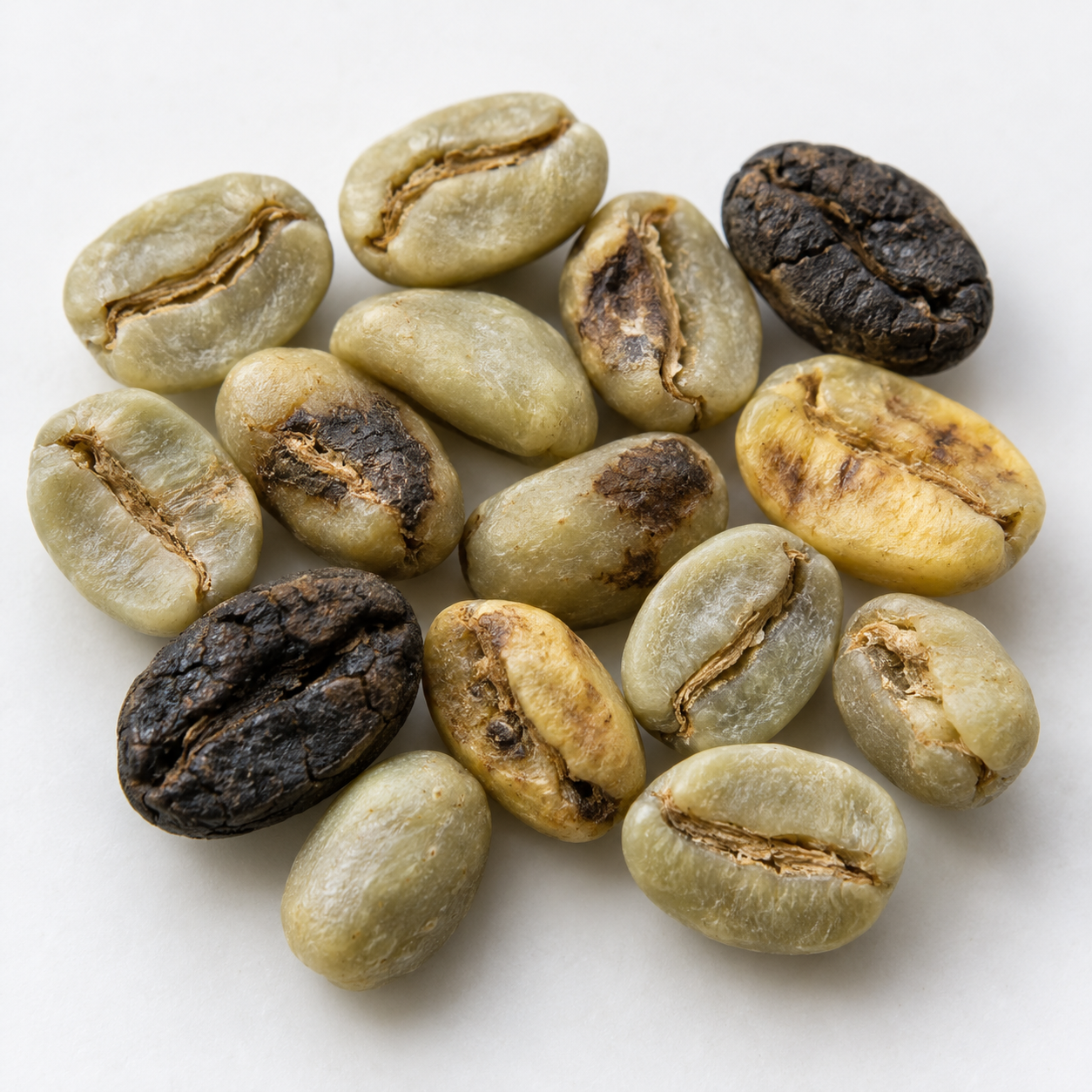
Black-bean defects can range from a dark patch to a bean whose surface is almost entirely black. Professional grading systems often distinguish full-black from partial-black beans. Causes are not always the same: the condition of the original cherry, post-harvest processing and storage can all play a part.
Not every bean darker than its neighbours should be classified as a black-bean defect. Natural green-coffee colour also depends on variety and processing. What deserves attention is unusual colour relative to similar material, particularly when accompanied by off-odours or other signs of spoilage.
2.2. Insect-damaged beans and holes
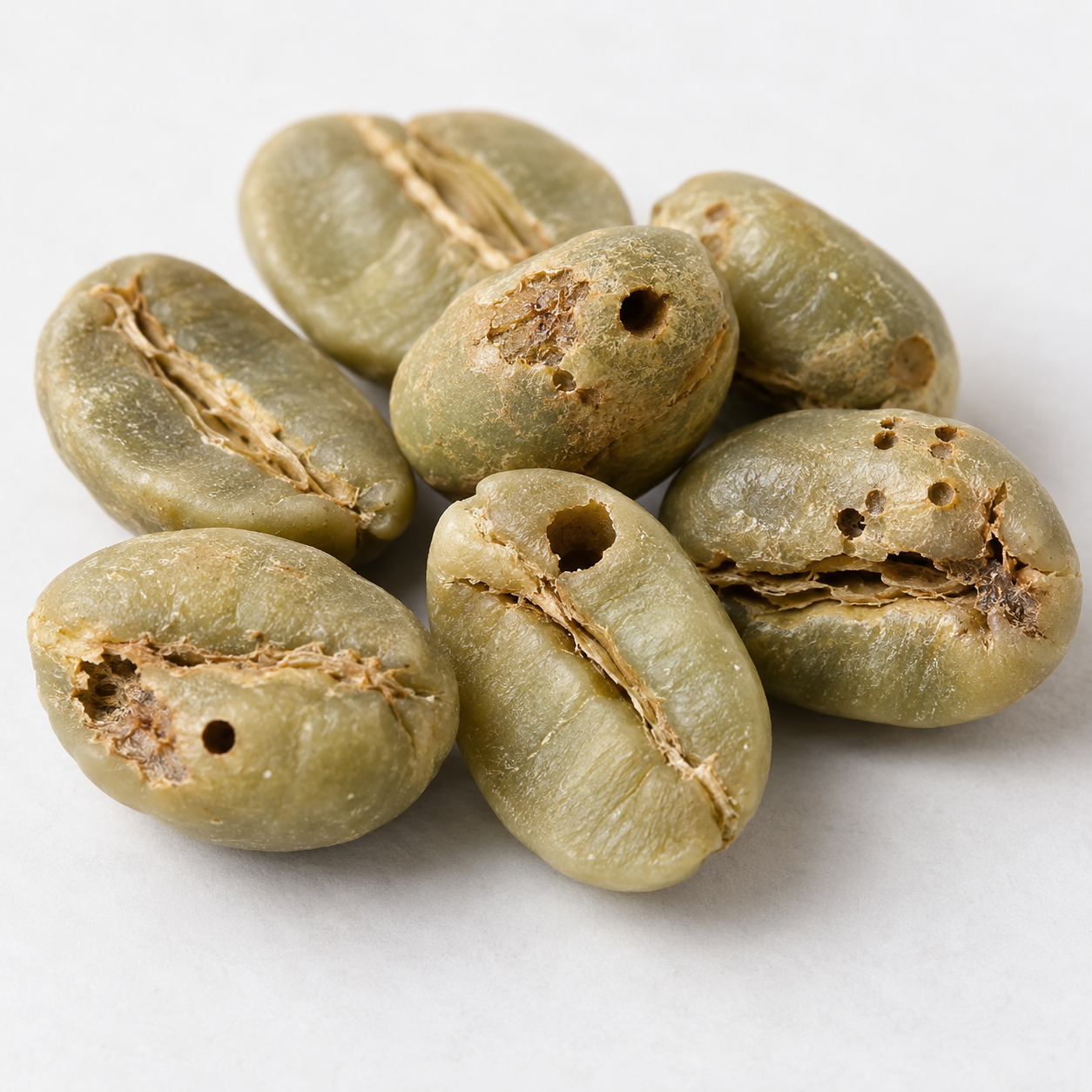
Some beans have small holes or other signs of insect activity. Damage may range from a tiny spot to the loss of a substantial portion of the bean. Where the structure is no longer intact, affected areas may respond differently to heat during roasting.
Even so, not every hole or mark establishes the same cause. Classification should consider the actual shape and an appropriate inspection method rather than labelling every marked bean simply as 'insect-damaged'.
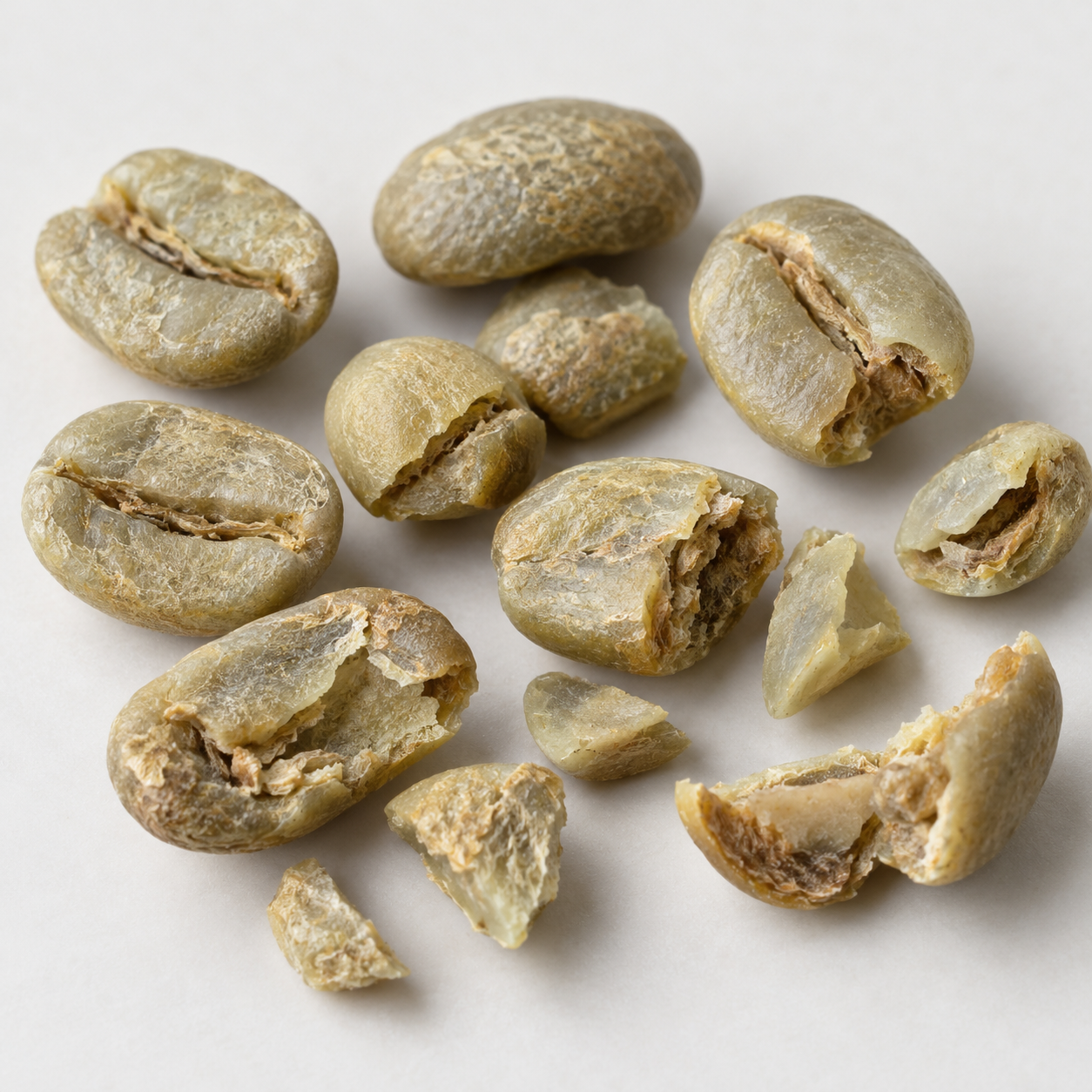
2.3. Broken, chipped and cut beans
These are among the easiest defects to see: a missing corner, a bean split in two or an exposed interior along a cut. Damage can arise during pulping, hulling, transport or other mechanical handling stages. A small proportion of broken beans may be present, but an unusually high level is a reason to trace where the damage occurred.
Broken beans differ in size and heat response from intact beans. Small fragments may change colour more quickly under the same roasting conditions, creating differences worth managing. This does not mean every broken bean produces its own off-flavour; it explains why green-bean integrity can influence roasting uniformity.
2.4. Immature, shrivelled and underdeveloped beans
Some beans are small, wrinkled or visibly different in structure from fully developed beans. These signs may reflect cherry development or raw-material conditions before processing. When roasted together with fully developed beans, immature beans may also present challenges because their internal structure and condition differ.
It is important to distinguish genuinely immature beans from naturally small varieties or beans that have lost moisture during storage. Judging by size alone can be misleading. Comparisons should be made within the same material group, with reference to origin and product criteria.
Defects are commonly separated into categories to make inspection clearer. Broken beans need to be distinguished from insect-damaged or unusually coloured beans because their causes and suitable responses may differ.
This distinction has real value. A stone in a coffee sack, an insect-damaged bean and an underdeveloped bean all require attention, but their causes, risks and handling methods are not the same. Calling everything 'bad coffee' loses important information during selection.
3. Where do defects develop between cherry and green bean?
A defect discovered at the factory may have begun long beforehand. For example, cherries harvested before suitable maturity can produce less uniform raw material. Bruised cherries held too long under unfavourable conditions can undergo unwanted changes. During pulping, unsuitable equipment settings may chip or cut the beans.
During drying, excessive moisture exposure, poor ventilation or weak process management create different risks. Once coffee becomes green beans, the warehouse and packaging continue to matter. A lot that was dry enough on arrival can change if stored in damp surroundings or exposed to water.
Thinking across the entire process explains why final sorting cannot 'repair' every problem. Screening may remove unsuitable beans or foreign objects, but it cannot restore a cut bean or return deteriorated material to its original condition. LOPHA therefore views coffee production as a connected sequence, from incoming-material control to finishing the product.
Some cuts or chips may be associated with pulping and hulling machinery, while insect marks reflect earlier biological damage. Darkened beans can arise through several different pathways, from the initial material to processing or storage. One visible sign is therefore not enough to establish a single definitive cause.
Recording defects by type and lot can help producers trace concerns back to the relevant stage. That is the value of classification: not just removing unsuitable material, but identifying where problems arise.
4. How can defects affect roasting?
Roasting transfers heat into beans with natural structures. A batch containing large differences in size, density or damage may be harder to roast uniformly than one with relatively consistent material. Small beans and broken fragments may change surface temperature or colour at different rates from whole beans. Underdeveloped beans may also express different cup characteristics.
Cup flavour does not always let us trace a problem to one exact defect. An unpleasant taste may also stem from roast level, brewing, water or storage. Equally, one slightly chipped bean does not prove that an entire roast will taste poor.
Green-bean inspection is valuable because it reduces risks before roasting, not because it replaces tasting the finished coffee. Quality teams can observe and classify defects, assess how frequently they occur and combine those findings with sample roasting or sensory evaluation when appropriate. Several sources of information together support sounder raw-material decisions.
Defective beans do not always respond to heat like intact ones. Small fragments may change colour faster, while underdeveloped beans may behave differently because of their structure. What matters is the type and proportion of defects across a whole lot, not an immediate judgement based on one bean.
Nor can a single flavour note be rigidly assigned to every bean of a given defect type. Cup flavour also depends on roast level, the proportion of affected beans, blending and brewing conditions. Visual assessment should therefore be complemented by sample roasting, tasting or other appropriate checks when needed.
5. What cannot be determined by appearance alone?
Looking at green coffee helps reveal broken beans, insect damage and many surface conditions, but it has clear limits. A lot that looks evenly coloured may not have suitable moisture content. Certain microbial hazards, mycotoxins and chemical indicators cannot be determined just by looking or smelling.
Ochratoxin A, for example, is a mycotoxin of concern in coffee safety control. Its presence or absence at a given level cannot be confirmed by inspecting a bean visually; appropriate testing is required. Similarly, lot moisture should be measured with a method suitable for the raw material and meaningful sampling.
Unrepresentative samples create another limit. Checking only attractive beans near the sack opening can underestimate defects. Selecting only a few of the worst beans and declaring the entire lot poor is equally unfair. Sound assessment requires clarity about which defects are being examined, how the sample was taken and which criteria apply.
A tray of green beans with uniform colour may be reassuring, but appearance does not reveal every aspect of lot condition. Moisture and certain safety indicators require appropriate tests; sight alone cannot tell the whole story.
6. What do defect limits in raw-material specifications mean?
LOPHA sets specific requirements when selecting different types of green coffee. For Honey-processed Robusta, the specified proportion of black, broken and other defective beans is no more than 2%, with moisture no higher than 12%. For washed Cau Dat Arabica, the corresponding defect proportion is no more than 1%, and moisture is likewise limited to 12%. These criteria clarify raw-material selection before beans enter the factory's subsequent stages.
Different coffees have different characteristics and need not share identical specifications. Washed Cau Dat Arabica and Honey-processed Robusta follow different primary-processing methods, so assessment needs to match the material. Even when two lots have similar amounts of broken beans, moisture, insect damage or discolouration may still result in different quality outcomes.
One common confusion is treating the number of defective beans and the severity of defects as identical. Broken, insect-damaged and black beans may be evaluated differently across coffee-grading systems. Alongside the overall percentage, it is therefore important to know which defect types are most common so the response can be appropriate.
The aim is not to display an attractive row of figures on paper, but to ensure that incoming beans really suit their intended processing. Knowing which defects occur and how frequently gives LOPHA a stronger basis for selecting raw material and maintaining consistency in later roast batches.
7. Why does LOPHA select green beans before roasting?
In LOPHA's 15-step journey, green coffee reaches the factory after harvesting and primary processing at the source. Selection identifies important differences before the raw material moves to later cleaning and treatment stages. Finding unsuitable beans early also avoids passing them through multiple operations only to remove them afterwards.
Selection is not merely about appearance. It helps manage conditions that can affect roast uniformity and cup quality. Good beans still need proper treatment, but even advanced processing cannot automatically turn spoiled raw material into high-quality coffee.
LOPHA uses ultrasonic technology as a distinct stage in its cleaning sequence, but that stage serves a different purpose from identifying defective green beans. LOPHA's ultrasound treatment is intended to help remove suitable surface-adhering material; recognising broken, insect-damaged, immature or deteriorated beans requires appropriate raw-material inspection and classification.
A good coffee bean need not look identical to all its neighbours, but it should be suitable for the product's quality objectives. Accurate defect recognition and suitable checks provide a clearer foundation for later stages to develop the natural qualities of LOPHA Arabica, Robusta and blends.
Well-selected green coffee gives cleaning, factory treatment and roasting a better opportunity to fulfil their roles. No later operation can restore a severely damaged bean to its original intact shape. Selection matters not because it makes a tray look prettier, but because it reduces avoidable sources of variation.