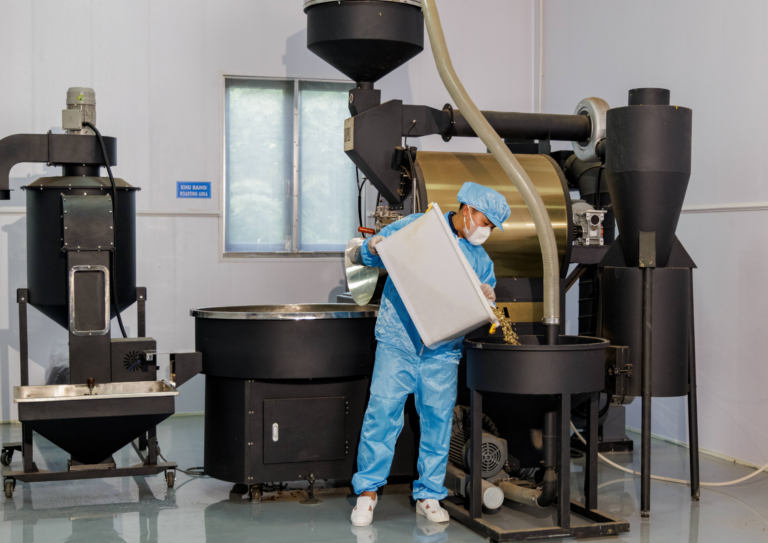
Sorting Coffee Beans After Roasting
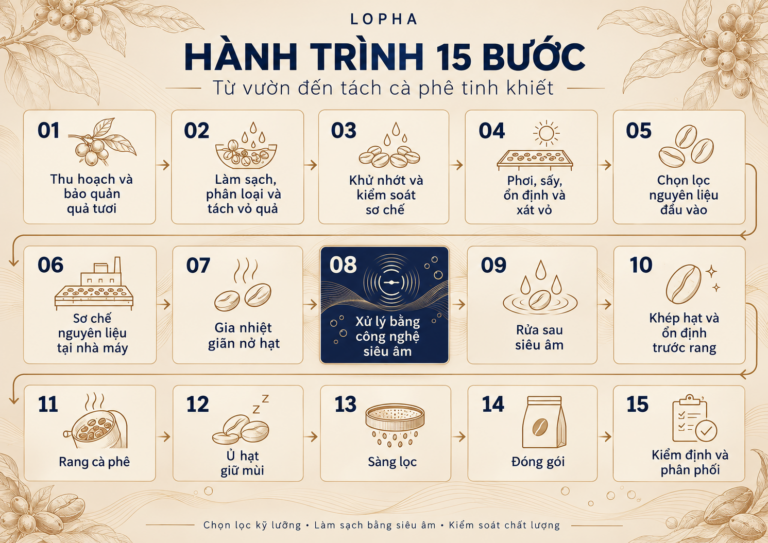
Summary: A freshly roasted batch does not always consist of perfectly uniform beans. It may contain broken pieces, beans with different colours or material that should be removed before packaging. LOPHA places post-roast sorting at step thirteen to help complete the product before it reaches customers.
Why roasted coffee still needs sorting
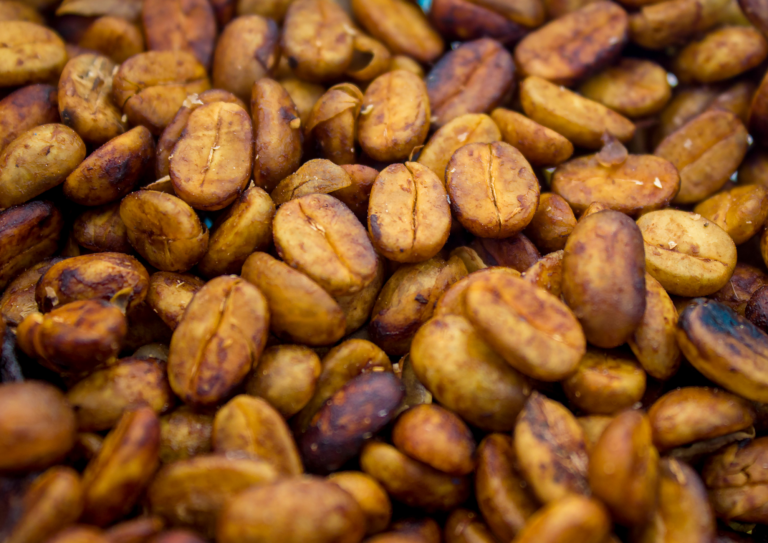
A tray of roasted coffee may look like a collection of very similar brown beans. Look more closely, however, and you may find smaller pieces, cracked beans or beans with a different appearance. These differences do not always mean the same thing, but they deserve attention before the coffee is packed.
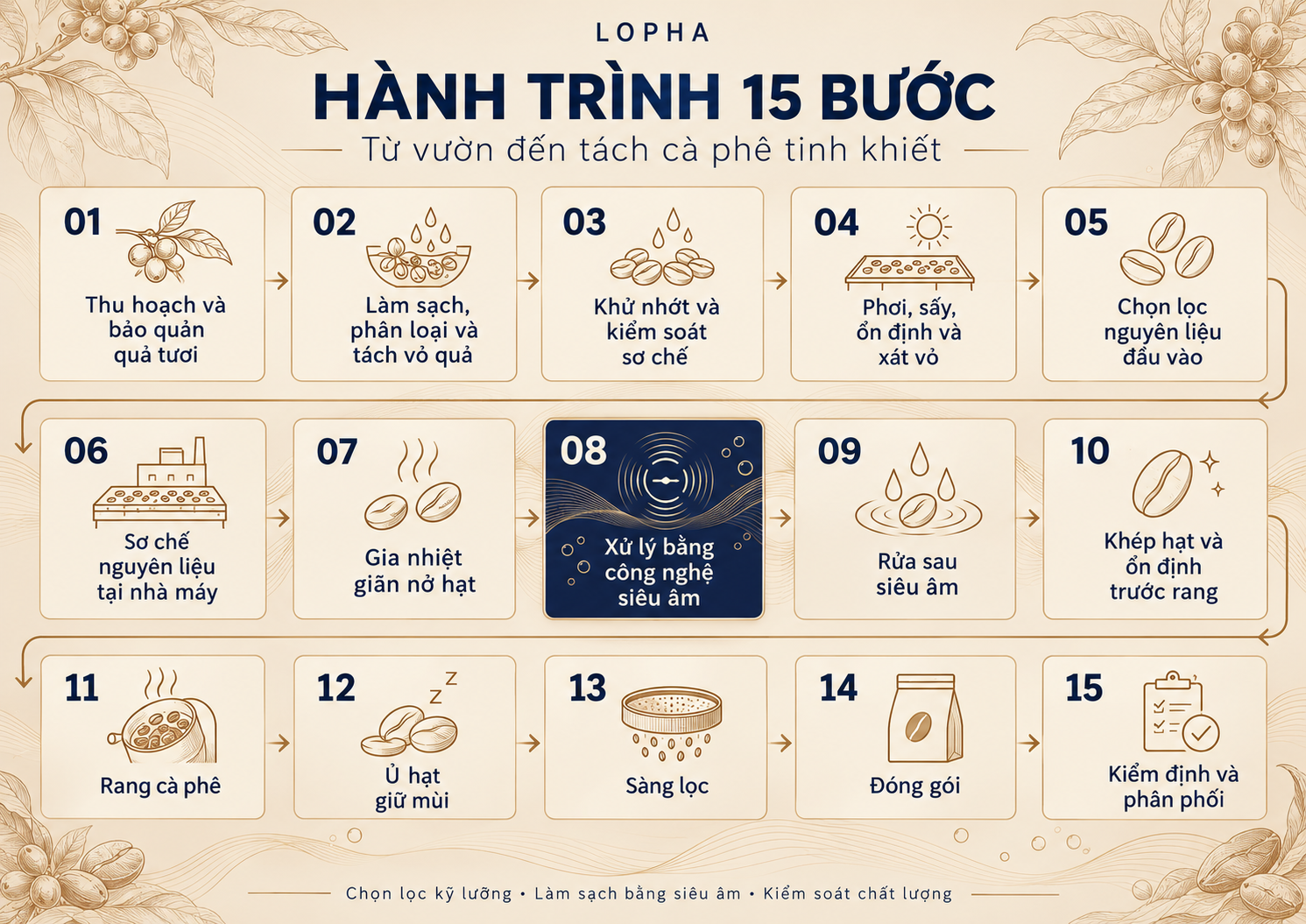
LOPHA positions sorting after roasting and the resting stage. Its purpose is to continue removing unsuitable material before packaging. The step adds another quality check after the heat treatment that developed the beans’ aromas and colour.
Customers may not immediately notice an unusual bean in the bag. Yet proactive sorting helps the producer pay attention to consistency and to any visible issue that might otherwise move forward into the finished product.
Where broken and defective beans come from
Some broken beans originate before roasting, through mechanical contact during pulping, hulling or transport. A bean that already has a crack may be more vulnerable when it is handled and heated. Not all breakage, therefore, begins in the roaster itself.
Beans with different colours may reflect differences in size, density, moisture or development of the raw material. Within one batch, uneven beans can respond differently to heat. A colour variation may have several causes and needs to be assessed rather than automatically assigned to one defect.
Some problems are visible, while others become apparent only through aroma, flavour or different inspection methods. Sorting is consequently one part of quality management, not a guarantee that everything affecting the cup can be judged by eye.
Identifying beans that do not meet requirements
Signs that deserve attention in roasted coffee include unusually scorched beans, extensive breakage, visible foreign matter or beans with markedly different colour. These observations help indicate which material may need to be separated or examined further.
A darker-looking bean may result from its roast level or structure, but it can also reflect uneven heat absorption. To understand the difference, the producer needs to consider the intended product and observations from the roasting process, rather than relying on colour alone.
LOPHA seeks consistent products, so post-roast sorting is most useful when paired with observation and quality feedback. Every unusual sign is an opportunity to consider its cause and whether an earlier stage needs attention, not merely a reason to remove an isolated bean.
Equipment sorting and visual inspection
Coffee sorting can combine sensory observation with equipment that separates beans by size or other physical properties, depending on the production line. The methods should match the task they are expected to carry out and the characteristics of the roasted material.
What customers need to know is that the value of the stage does not depend on the name of a machine. Whatever suitable method is used, the desired result is greater consistency and the removal of unwanted material before packaging.
For example, size screening may separate small fragments, but it cannot automatically identify every flavour defect. An intact bean may still have an unusual aroma. That is why physical sorting and other appropriate checks complement one another.
Post-roast sorting versus green-bean selection
Incoming green-bean selection and post-roast sorting may sound similar because both involve removing unsuitable material. Yet they take place at different points in production and examine material in very different conditions. Green-bean selection focuses on the raw coffee before it undergoes factory processing.
After roasting, the beans have changed greatly in colour, brittleness and aroma. Sorting now concentrates on the condition of roasted coffee and on defects or fragments relevant to the finished product, rather than repeating exactly the same intake assessment.
If a green-coffee lot developed a mouldy odour during unsuitable storage, post-roast sorting cannot turn it into safe raw material. Conversely, careful green-bean selection does not eliminate the need to check the roasted result. The two stages have distinct but connected roles.
How uniformity relates to the drinking experience
Coffee lovers often value consistency when preparing the same product several times. That experience depends on the beans, roast level, grinding, water and brewing method. More uniform roasted coffee can support predictable preparation, although it is not the only factor involved.
Coffee brewed with a Vietnamese phin is experienced differently from espresso or pour-over. When beans within a product vary substantially in roast condition or structure, grinding and extraction may become less consistent. Sorting is one step that helps reduce unwanted differences before the coffee reaches the brewer.
For LOPHA, post-roast sorting provides an additional control layer before the coffee is delivered to customers. Its value is easiest to see alongside the preceding work of selecting, treating and roasting the beans, rather than as a stand-alone promise about taste.
Understanding the limits of sorting
No one sorting method can find every possible coffee problem. Attractive-looking beans do not necessarily meet every flavour criterion, and an even-looking batch still needs the appropriate product checks. Sorting should not be confused with comprehensive safety testing.
Conclusions need to be linked to a specific standard. If broken beans are being assessed, their proportion matters. If foreign objects are being checked, the type of object and the chosen detection method matter. A statement such as ‘everything has been sorted’ is not enough without a defined purpose.
In LOPHA’s journey, packaging and final quality checks still follow sorting. This arrangement shows that the coffee must be protected and assessed further even after visible unwanted material has been removed.
Protecting quality before packaging
After sorting, coffee moves to packaging. Roasted beans are sensitive to oxygen, moisture, heat and surrounding odours. Even coffee that has passed a careful sorting stage still needs protection from conditions that could change its aroma and quality.
Sorting is not a reason to leave roasted beans exposed for extended periods. A good process manages transfers between stages, clean contact surfaces and suitable handling conditions, so earlier work is not undone before the bag is sealed.
The thirteenth step of LOPHA’s journey reminds us that purity is not defined only by prominent technologies. Sometimes quality is preserved by quietly identifying and removing what should not continue into the finished product.