From Research to Commercial Production: Bringing a Coffee Product to Life
Summary: A successful research result does not automatically become a consistent product as production volumes increase. Transferring research into production requires connecting sample evaluation with operating instructions, lot management, factory activity and customer feedback. LOPHA's 2022–2025 journey shows that moving from research to commercial production is about organising people and information, not simply installing more equipment.
A coffee recipe that performs well during sample testing is good news for the research team. But once it moves to production, a different question arises: how can similar results be achieved across many batches, operated by different employees and within real delivery schedules?
This is where research meets commercial production. For LOPHA Coffee, the period from 2022 to 2025 was marked by factory development and improvements in how production was organised after years of research. Turning a chosen solution into a consistent product on the market requires more than a machine or a formula.
1. Why Is a Good Research Result Not Enough for Production?
In a trial, the sample may be small and conditions can be monitored closely. When volume increases, beans arrive from multiple lots, production schedules must be coordinated with deliveries, and all stages need to work in rhythm.
A small change in waiting time, raw material quantity or operating technique can affect the result. Moving to commercial production therefore means more than increasing the amount of coffee entering a machine.
1.1. How Are Small Samples Different from Large Batches?
With a small test sample, staff can observe the entire quantity and make adjustments as soon as they notice something unusual. At a larger scale, they need to consider raw material uniformity, heat exposure, internal transport time and equipment limitations.
Doubling the number of beans in a batch, for example, does not necessarily mean doubling the processing time. The outcome also depends on equipment configuration and the process's objective. Such decisions need to be tested and evaluated under suitable production conditions.
Imagine a research team achieving good results with 2 kg of raw material, while the factory needs to process batches many times larger. Increasing the quantity can affect processing time, handling speed and staffing arrangements. A successful 2 kg result cannot simply be scaled mathematically to guarantee identical outcomes in a larger batch. Before increasing scale, the team must identify which conditions need to remain stable and what will be monitored during subsequent runs. This example illustrates the principles of technology transfer; it is not a record of internal LOPHA trials.
1.2. Why Must Results Be Repeatable?
A batch with the desired flavour is valuable, but customers do not buy just one batch. They expect to find broadly consistent characteristics when they return.
Repeatability does not require every bean to be exactly alike. It requires the business to recognise raw material differences, use suitable operating approaches and define what makes a finished product acceptable.
2. What Information Is Needed to Transfer Research into Production?
When researchers hand over a processing approach to the factory, the intended results must be described in ways operators can carry out and monitor. If the knowledge exists only in one person's memory, scaling up will be difficult.
2.1. From Test Results to Work Instructions
A transfer package might describe the applicable raw materials, the process's purpose, preparation conditions, points to record and actions to take when deviations occur. It need not be complicated, but it must be clear enough for different teams to understand the same requirements.
For instance, if the goal is to maintain a consistent roasting style, the business should explain the desired finished-product characteristics and the factors to monitor. Simply telling new staff to 'roast it like the sample' gives them little guidance when incoming raw materials change.
2.2. Which Teams Need to Coordinate Implementation?
R&D understands the research goals, production teams understand operating schedules, quality management follows evaluation criteria, purchasing secures raw materials, and sales hears customer feedback. A commercial product emerges when these perspectives are connected.
A change in raw materials may affect how equipment is operated. Customer feedback about flavour may require reviewing the product and brewing guidance, not necessarily changing only the roast settings.
3. How Does a Factory Turn Research into a Finished Product?
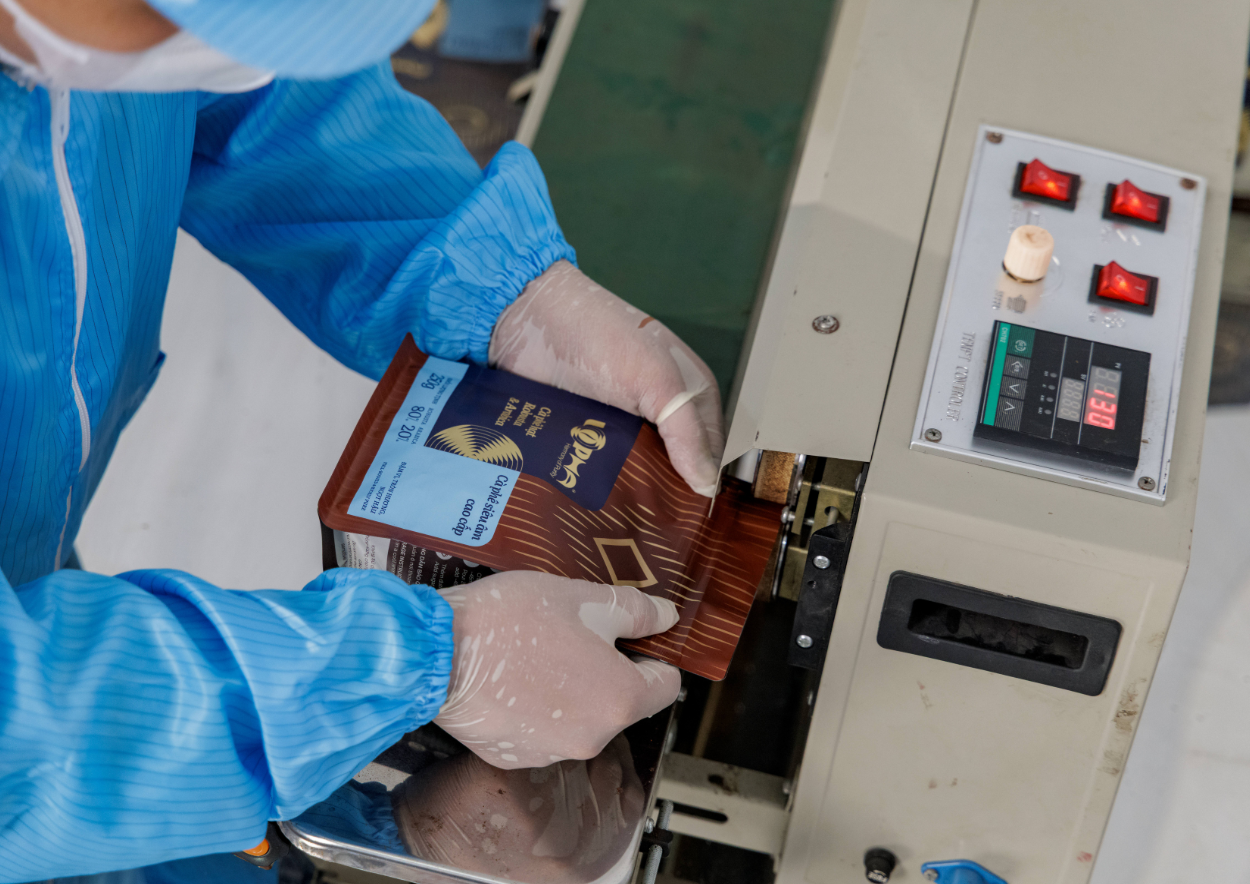
Investing in a production facility makes it possible to organise work with clearer sequences and responsibilities. Yet a factory is more than a collection of machines; people and information systems make consistent operations possible.
3.1. Actual Output Is Different from Rated Machine Capacity
The rated capacity of one machine does not mean the entire factory achieves that output every day. Production is affected by operating schedules, raw material supply, cleaning, maintenance and the coordination of many other tasks.
LOPHA's factory in Lam Dong covers approximately 0.5 hectares and currently produces 300 tonnes of coffee each year. This figure describes the business's production activity, not the design capacity of any one piece of equipment.
3.2. Lot Records Help Maintain Consistency
When raw materials are managed by lot and production records are maintained, a business can investigate variations in quality between deliveries. Lot codes, production dates and assessment results help distinguish raw material problems from issues arising during operations.
The same principle supports improvement: when a change produces positive results, teams can review the conditions that led to it instead of relying on memories of a particularly good batch.
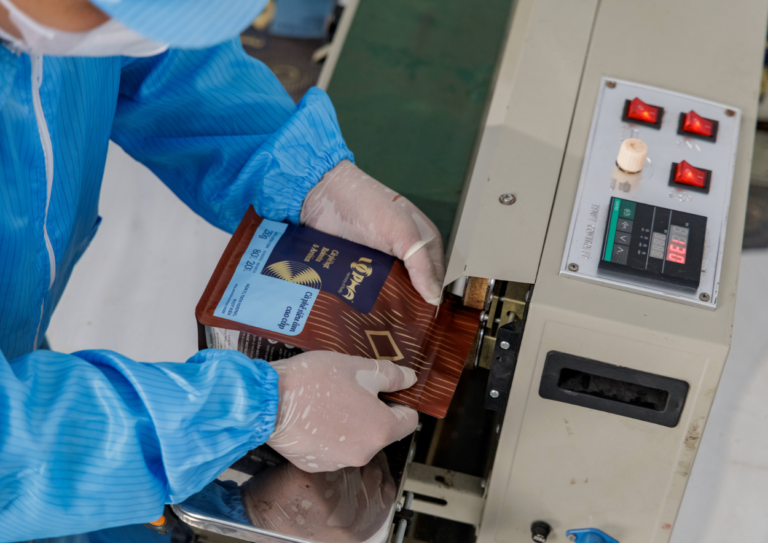
Imagine a customer reporting that the coffee in a newly purchased bag tastes different from their last purchase. If the packaging includes a lot code and production date, customer service can forward a more identifiable report to the factory. The responsible team can then review relevant raw material records, roasting conditions and storage history. Instead of guessing from a general comment, the company has a basis for narrowing down and investigating potential causes.
4. How Is Consistent Quality Built?
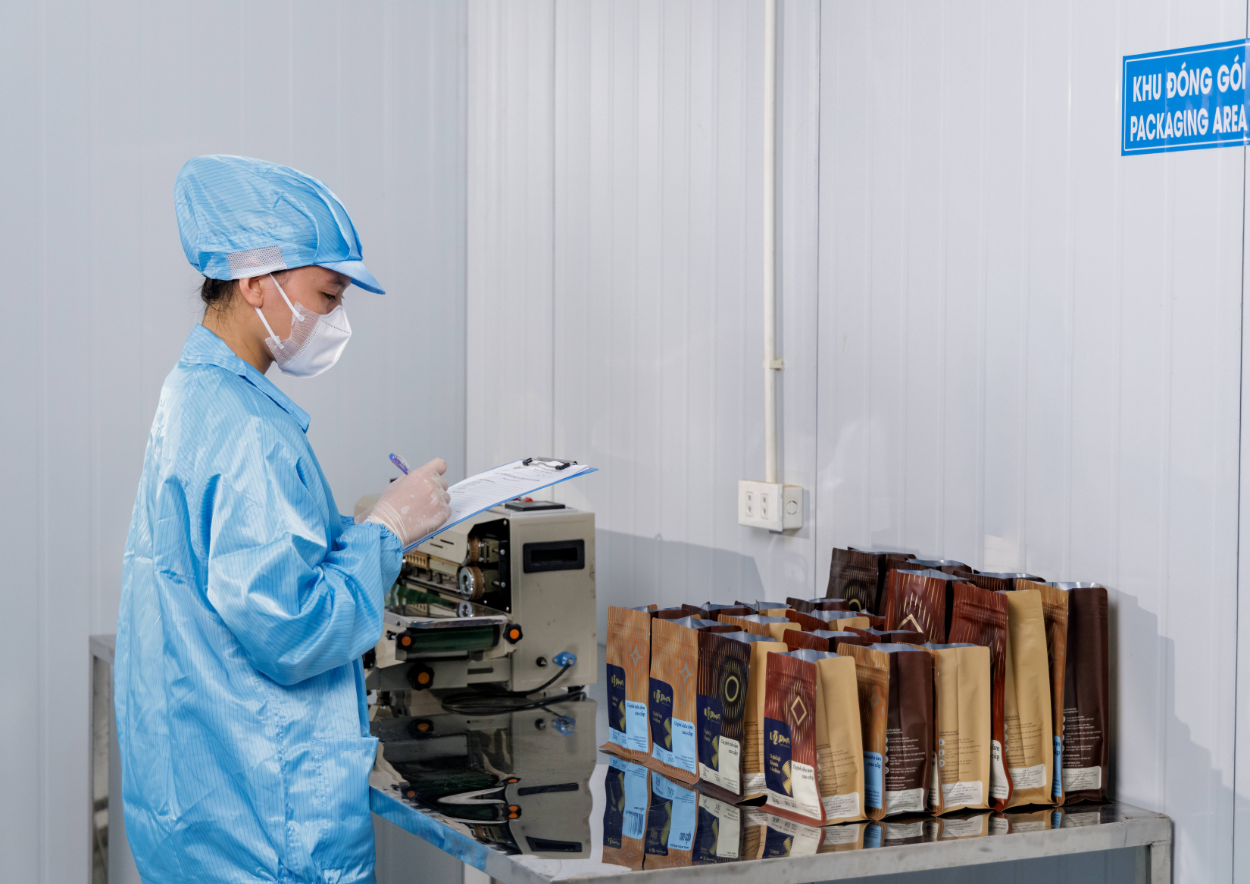
Coffee drinkers rarely see a factory's quality-control procedures. They experience the results through consistency between purchases, product information and whether the coffee suits their tastes.
4.1. Clear Criteria Reduce Subjective Disagreement
A comment such as 'this batch tastes better' is useful feedback, but it cannot be the only production criterion. Businesses need to define characteristics that can be recorded using suitable methods, while conducting sensory evaluations consistently.
Arabica, Robusta and Blend products do not share identical target characteristics. Maintaining quality means staying true to the intended profile of each product, not making them all equally bitter or aromatic.
4.2. Customer Feedback Needs to Reach Production
If a customer reports a flavour change, the business needs sufficient information to review the product, storage conditions and brewing method. Not every complaint originates in the factory; grind size or equipment at the point of sale may also matter.
A structured approach turns feedback into an opportunity to learn rather than an entirely subjective discussion. That is an important connection between commercial production and customer needs.
5. How Did LOPHA Move from Research to Operations?
From 2016 to 2022, LOPHA focused on raw material and technology research. Between 2022 and 2025, it accelerated production development to connect those results with factory operations.
5.1. Ultrasonic Technology Is Part of a Multi-Stage System
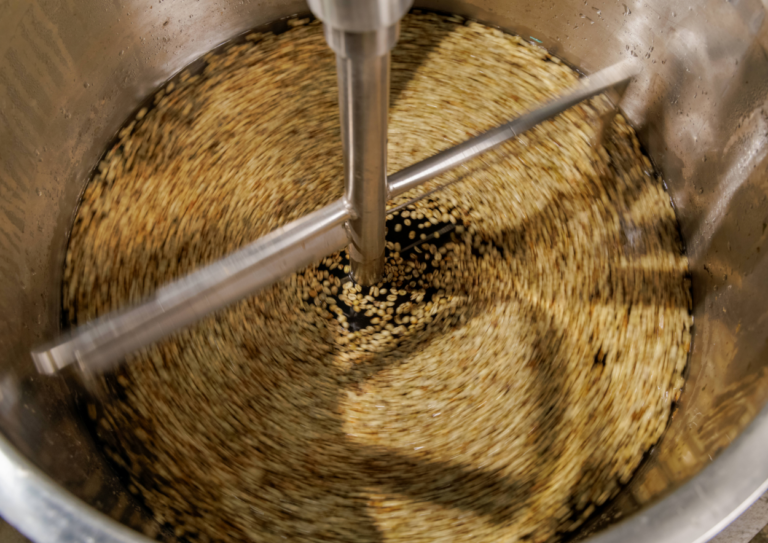
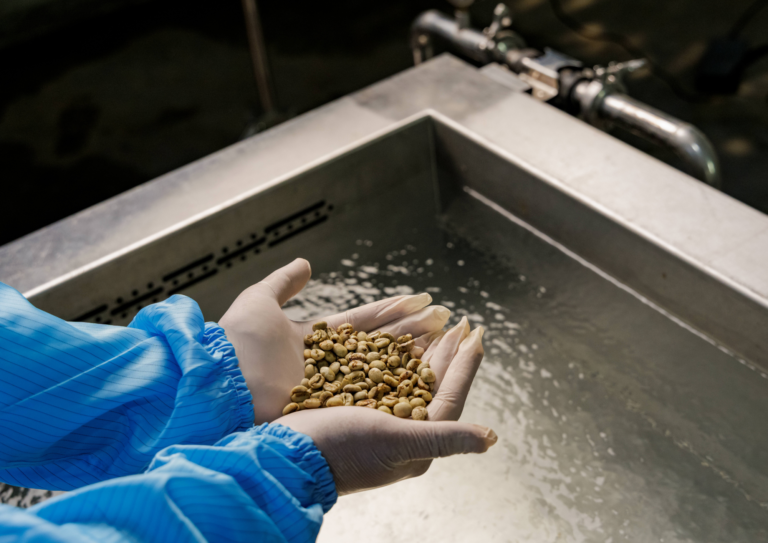
At LOPHA, ultrasound is one stage that helps clean the surface of raw beans before roasting. It is connected to raw material selection, preparation, roasting, finishing and other management tasks within the production system.
The key to successful transfer is not simply moving a machine into a factory. It means deciding where it operates, how it connects to other processes and how outcomes will be monitored against the product's goals.
5.2. Commercial Production Must Suit the Market
LOPHA develops different product choices: Arabica with pronounced acidity, Robusta with full body and distinct bitterness, and balanced Blends. Once sold commercially, each needs clear ingredient information, formats and directions for use to help customers choose.
For business customers, the requirements extend to delivery planning and continuity of supply. These needs become particularly apparent when research results enter real commercial operations.
6. The Journey from Research to Production Is About People
Scientific findings can open up new processing directions, but production quality also depends on cooperation among researchers, operators, quality staff and customer-facing teams.
LOPHA's 2022–2025 journey was about bringing its commitment to purity closer to the products people use every day. Research findings needed to become work that could be carried out, monitored and improved.
A trustworthy product is not created by one successful trial. It is built when good results can be sustained through many production runs and many repeat purchases.