Cooperatives and Businesses: Building a More Sustainable Future for Vietnamese Coffee
Summary: Every bag of coffee reaching a customer is the result of cooperation between growers, cooperatives and businesses. Long-term partnerships are about more than purchasing prices; they involve harvest information, raw material requirements and each party's responsibilities. With an initial growing area in Lam Dong and a network of 10 cooperatives, LOPHA is developing a sourcing approach based on transparency and better coordination throughout the coffee chain.
Behind every bag of coffee we enjoy is the work of many people. Growers care for their trees through the seasons, cooperatives connect farming households, companies organise purchasing, and factories develop finished products. If these parts of the chain meet only when a sale is made, maintaining a reliable long-term supply can become difficult.
Partnerships between cooperatives and businesses therefore involve more than the purchase price. They enable information to be exchanged, plans to be shared and raw material quality to receive attention earlier. LOPHA Coffee works with a network of 10 cooperatives alongside its initial growing area in Lam Dong as part of its commitment to connecting production more closely with farmers.
1. Why Should Coffee Businesses Work with Cooperatives?
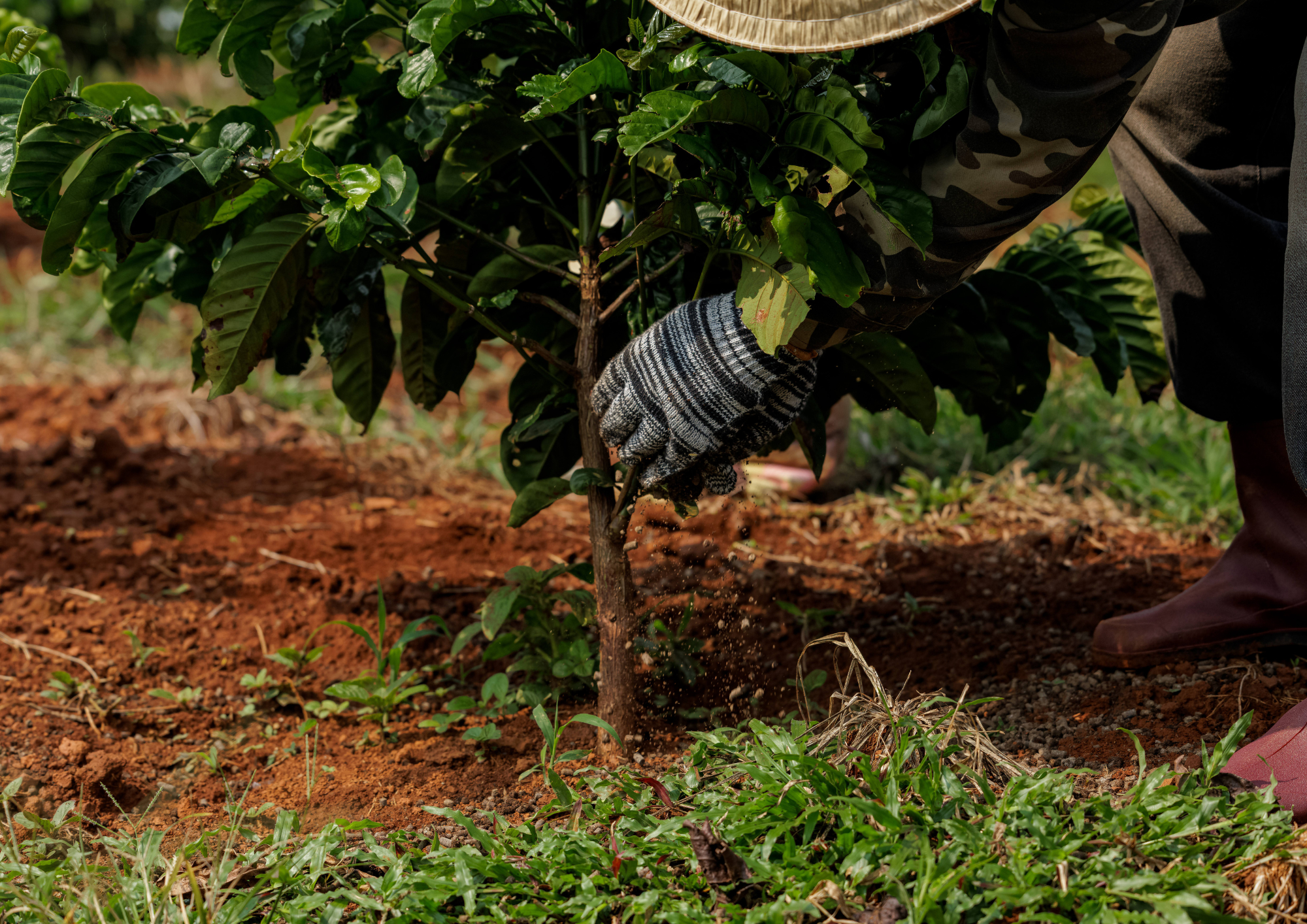
Agricultural raw materials often come from many farming households with different land areas and cultivation conditions. When every transaction happens separately, collecting information, scheduling purchases and forecasting output can require considerable effort.
Cooperatives can help connect members and establish channels of communication between farmers and businesses. Their exact role depends on the model and agreement, but they can provide a more organised framework for working together.
1.1. What Do Growers Gain from a Partnership?
Clear purchasing arrangements can help farmers understand what materials a company needs, when it expects to buy and which delivery and quality criteria apply. Having this information before harvest gives growers a better basis for planning their work.
Partnerships do not, however, guarantee that farmers will always receive the highest possible price. Markets fluctuate, and benefits depend on the terms agreed. Lasting value comes from transparent discussions and coordinated responses when conditions change.
1.2. What Do Businesses Gain Beyond More Raw Materials?
Working with a cooperative network gives businesses an opportunity to discuss volume requirements, receiving schedules and sourcing information earlier. This can reduce the need to find replacement suppliers urgently during busy periods.
Partners who understand the product requirements also make it easier for a business to provide feedback on raw material conditions. Long-term relationships allow both sides to learn, provided responsibilities and information remain clear.
2. How Are Long-Term Partnerships Different from Spot Purchasing?
Spot buying offers flexibility and remains common in the coffee market. Businesses can adjust their sources in response to prices and demand. However, relying entirely on short-term transactions may make it more difficult to forecast supply volumes and characteristics.
2.1. The Benefits of Planning Together Before Harvest
When businesses and cooperatives discuss timing, expected quantities and specifications in advance, organising labour and transport becomes easier. If weather shifts the harvest schedule, both sides can agree on adjustments instead of leaving problems until the last minute.
That does not mean everyone has to sign the same type of contract. The value is in maintaining communication, sharing updates and resolving differences between forecasts and reality.
2.2. What Helps Maintain Trust Between Partners?
It is important to agree clearly on how quantity and quality are assessed, the purchase price, payment times and procedures for resolving issues. A partnership that talks only about benefits but not responsibilities may struggle when market prices fluctuate.
Businesses also need to listen to growers' feedback about the season, costs and on-the-ground conditions. A lasting partnership works in both directions: one party should not set every requirement while the other bears all the risk.
Imagine the harvest arriving earlier than expected. If the cooperative gives the business advance notice of an earlier delivery, the receiving schedule can be adjusted. Conversely, if the factory changes its requirements without discussion, growers may face uncertainty over labour and sales. These seemingly small updates determine how well the partners work together. Alongside agreements on price and volume, a good partnership therefore needs clear points of contact, regular updates and a way to confirm changes to the plan.
3. Why Should Raw Material Quality Be Discussed from the Start?
Coffee bean characteristics begin to develop in the growing region and are affected by cultivation, harvesting, initial processing and storage. A factory can perform its own work well, but it cannot rewrite everything that happened to the raw material beforehand.
3.1. Supply Information Helps Match Materials to Needs
Lots may vary in their growing regions, harvest seasons and condition at intake. Sharing these details helps a business decide which product plans a particular source is best suited to.
For example, a full-bodied Robusta product may require different raw material choices and a different roast approach from a more balanced Blend. This is a product development decision, not a demand for every farming household to produce identical beans.
3.2. Factory Feedback Must Reach the Growing Region
If the receiving team repeatedly notices an issue across a group of lots, well-supported feedback helps partners understand the problem and look for improvements together. To be useful, that feedback needs to be more specific than saying that the beans 'do not look good' or the quality 'is not satisfactory'.
A good partnership allows information to flow in both directions: from the growing region to the factory and from production needs back to the farmers.
4. What Raw Material Foundations Does LOPHA Have Today?
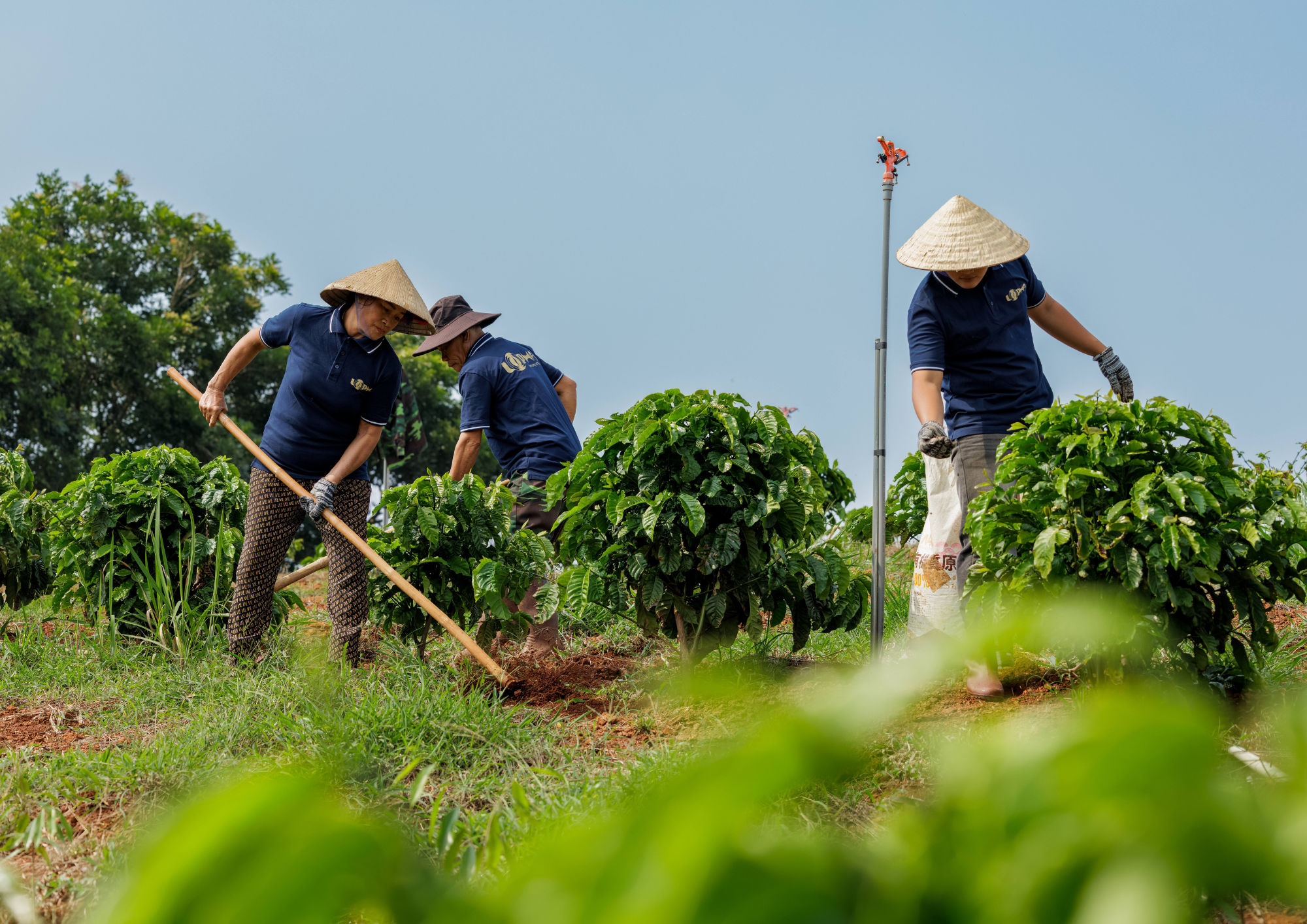
LOPHA's initial growing area in Lam Dong covers about 10 hectares, is associated with Robusta and produces around 55 tonnes of fresh cherries annually. The brand also currently works with 10 cooperatives within its supply network.
These figures describe different aspects of the business. The 10 hectares and 55 tonnes relate to the initial growing area, while the 10 cooperatives represent its network of partners. They should not be combined to calculate a total production volume without corresponding data.
4.1. A Larger Network Does Not Mean Uniform Raw Materials
Working with several partners can make supply more flexible, but beans from different regions and seasons still need to be assessed against their intended use.
That is why LOPHA's sourcing direction is closely connected to its coffee production system. Developing products requires knowledge of the raw material, not simply making sure there is enough of it.
A network of 10 partner cooperatives describes the reach of those relationships; it does not mean all the coffee comes from the initial 10-hectare growing area. Those two facts cover different scopes. For each source, details of location, harvest and raw material condition help LOPHA understand the context before deciding how to use it. Keeping these distinctions clear respects each partner's characteristics and avoids unrealistic expectations that every lot will be exactly alike.
4.2. The Value of Partnership Is Growing Together
A partner network has meaning when both sides stay in contact, improve their forecasting and gradually strengthen the work for which they are responsible. Expansion should not simply mean adding more cooperative names; it should create relationships that connect sourcing and production more clearly.
5. What Do Consumers Gain from Growing-Region Partnerships?
Someone buying a bag of coffee does not directly witness the discussions between a cooperative and a company. But clear origin information, greater consistency between lots and the ability to explain the raw material's journey all depend in part on how the supply chain is organised.
That does not mean partnerships automatically make every cup taste better. Their practical value is in helping the parties plan how they manage raw materials, compare records when needed and respond promptly.
In LOPHA's purity journey, the growing region is part of the brand's development story, not merely a place name used to decorate the packaging.
6. Sustainable Cooperation Is a Shared Responsibility
The strength of cooperation between businesses and cooperatives cannot be measured by the number of agreements signed. It also depends on real coordination, transparency and the ability to adapt to market or harvest changes.
For LOPHA, growing-region partnerships provide an important foundation connecting the business to the places where its coffee beans originate. Growers, cooperatives and the factory have different responsibilities, but all take part in bringing pure coffee to the people who drink it.
A good relationship does not remove market uncertainty; it gives people a better basis for navigating it together.