Why Can Coffee Beans Become Recontaminated After Rinsing?
Summary: Rinsing removes residues loosened from coffee beans, but clean beans will not stay clean if they later encounter unsuitable conditions. Water, equipment surfaces and handling practices can all introduce recontamination risks. Understanding this shows why hygiene after rinsing is as important as the rinsing stage itself.
Rinsing coffee after ultrasonic treatment is easy to understand: residues already loosened from the beans are carried away so further processing can continue. But one issue receives less attention. If freshly rinsed beans contact unsuitable water, poorly cleaned utensils or a contaminated workspace, the value of the rinsing stage may be compromised.
This situation is called recontamination: material that has been cleaned later comes into contact with a new source of contamination. It does not mean that a coffee lot is automatically unsafe; it is a risk to manage. For LOPHA, distinguishing 'cleaning' from 'keeping material clean afterwards' helps give the rinsing stage its full meaning.
1. What does recontamination after rinsing mean?
In food production, materials pass through different environments and touch different surfaces. After cleaning, beans still need to be collected, moved and prepared for the next stage. If post-rinsing conditions are unsuitable, impurities or microorganisms from the environment may come into contact with them again.
Not every contact causes a problem. The aim is to identify and manage points of risk. A tray that has been cleaned appropriately is different from a surface that just held untreated material. Likewise, a well-managed water system differs from a source whose quality is not monitored.
The idea of recontamination also corrects a common misconception: the stronger the cleaning stage, the less attention later stages need. In reality, poor control after cleaning can reduce the benefits of earlier work even when the cleaning equipment performs its intended task.
2. How can water become a source of recontamination?
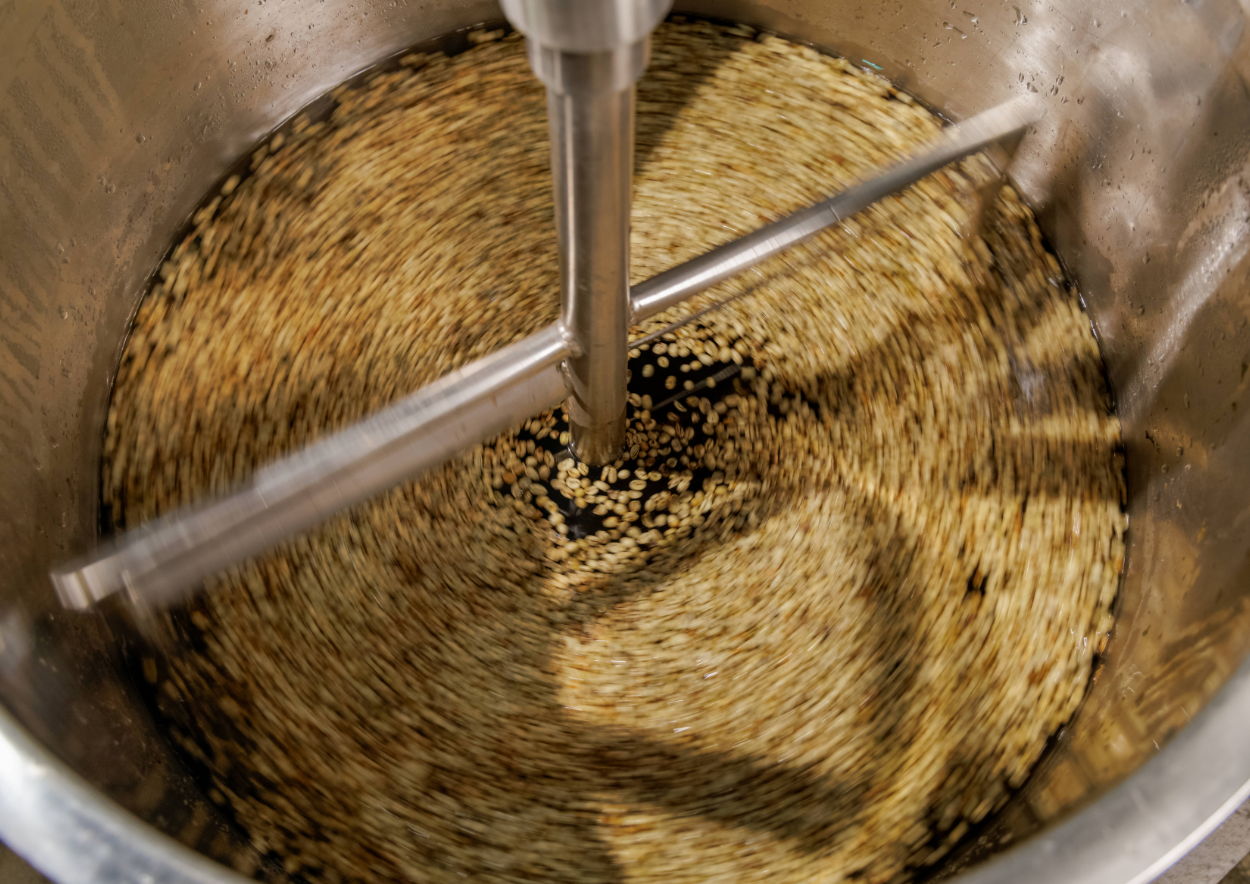
Water is central to rinsing. Used according to requirements, it helps carry residues away from the beans. Yet unsuitable water quality, poorly managed supply systems or water that is not changed or treated appropriately can create problems.
2.1. Incoming water versus water after contact with beans
Water before use needs to be distinguished from water that has already contacted the raw material. After rinsing, water may contain residues detached from the beans. If water movement and handling are poorly arranged, these substances may contact the coffee again at undesirable points.
Clear-looking water is not necessarily suitable, because some quality indicators cannot be assessed by sight. Conversely, slight discolouration from washed-off material does not automatically establish the safety of the entire process. Water quality must be judged against relevant requirements using appropriate methods.
2.2. Containers and water-handling equipment matter too
Tanks, pipes, valves and other surfaces touching water can accumulate residue if not cleaned as required. Areas that are difficult to see sometimes need more attention than the visible outside of the equipment. Cleaning rinsing tanks and water pathways is therefore part of maintaining the effectiveness of the stage.
A food-production environment need not be imagined as completely free of microorganisms. The more practical goal is to apply controls suited to relevant risks and standards, while monitoring unusual signs and acting promptly.
3. Why are surfaces in contact with beans important?
Depending on the production line, rinsed beans may move through baskets, trays, conveyors or transfer equipment. Every contact point needs attention to hygiene and equipment condition. If a surface previously held untreated coffee or accumulated residue, the risk of cross-contact may rise.
3.1. Raw materials need a sensible route through production
A clearly organised process reduces the chance that freshly rinsed coffee has to travel back through areas holding dirty raw material. Separating areas, utensils or handling sequences where appropriate can help prevent cross-contact between materials in different conditions.
This does not necessarily require an elaborate production line. Simple actions such as using the correct tray, washing hands and equipment according to procedures and keeping utensils dedicated to their intended tasks can help protect coffee after rinsing.
3.2. Clean equipment is a necessity, not a cosmetic detail
A machine with a beautifully polished exterior may still have poorly cleaned surfaces that contact the beans. Conversely, a factory does not need brand-new-looking equipment to demonstrate quality. What matters is that cleaning, inspection and maintenance actually take place and are applied consistently.
When residue or hard-to-clean points are found, improving equipment and procedures can bring greater long-term benefits than merely reprocessing one unusual batch. Good control means finding the source of a problem, not repeatedly washing beans when something looks wrong.
4. Does moisture after rinsing affect recontamination risks?
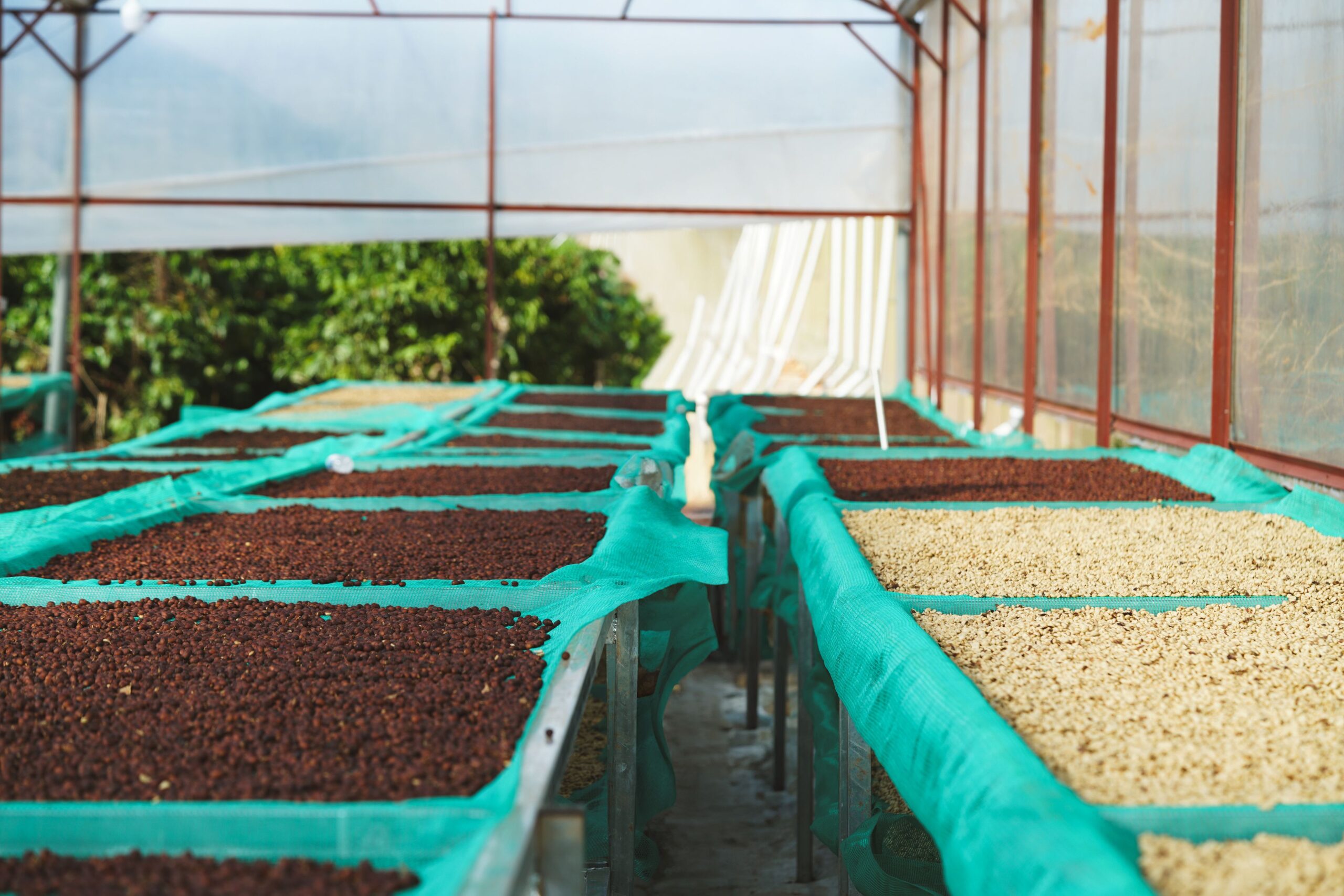
After exposure to water, beans need to reach a suitable condition for the next stages. If wet material remains for too long in unfavourable conditions, risks of quality changes can increase. That does not mean any bean that is still wet has necessarily been recontaminated.
The concern is the combination of surface water, waiting time, ventilation, equipment condition and the surrounding environment. These factors become particularly important as coffee enters the pre-roast stabilisation stage.
Think of kitchen utensils washed clean but then left for a long time in a damp, poorly ventilated place. We normally let them dry and store them properly rather than assuming a single wash protects them forever. The same broad principle applies to coffee, even though production scale and requirements are very different.
5. How can recontamination be limited in production?
First, manage a water supply that meets the requirements for its intended use. Next, clean all relevant bean-contact surfaces, maintain equipment and organise the material flow so treated coffee has less chance of meeting sources of risk again. These controls need to fit the production line's actual conditions.
Second, monitor and record unusual signs. Strange odours, accumulated residues, changes in water condition or prolonged waiting times may signal a need for investigation. However, noticing a sign does not replace appropriate testing when a firm conclusion about quality or safety is required.
Third, train operators. Even sophisticated equipment cannot compensate for incorrect utensils or skipped hygiene steps. Coordinating people, machinery and the work environment reduces risk more effectively than focusing only on a machine's capacity.
In LOPHA's production process, post-ultrasonic rinsing is not an isolated operation. Hygiene and bean-condition controls continue through later stages to preserve the value of earlier cleaning work.
5.1. Why clean-looking beans are not the whole quality assessment
A bean that looks clean may have had visible residue removed, but its appearance does not tell us every indicator that should be controlled. Conversely, a naturally coloured mark is not automatically evidence of a safety problem. Assessment should start from a specific question: which impurity, raw-material condition or microbiological indicator is being examined?
For coffee drinkers, what matters is that production is organised to limit relevant risks, hygiene is managed and testing is used where necessary. An absolute promise of 'zero risk forever' is unrealistic: food production requires continual monitoring and improvements when problems are identified.
In LOPHA's 15-step journey, each stage connects with the next. Looking at the entire sequence shows that quality is not simply the result at the moment a machine stops, but the ability to protect the raw material until the finished product is ready.
6. Rinsing is one step; maintaining cleanliness requires continuity
Recontamination is a risk that may arise when cleaned material meets unsuitable conditions afterwards. Understanding it does not make coffee drinking complicated; it helps explain why a sound process must pay attention to what happens before, during and after each operation.
Water, tools, equipment and material movement all help preserve the results of rinsing. Such care may not make a dramatic claim on a coffee bag, but it is directly connected to consistent production.
For LOPHA, rinsing after ultrasound means more than carrying residues away. It also provides the transition to raw-material stabilisation, where the benefits of cleaning need to be maintained appropriately.